Hidden
Hidden
Morning
The sun
Could not be more hidden.
The book says:
“The bright is appearing over the earth.”
Where is it
The fire?
Hidden
Morning
The sun
Could not be more hidden.
The book says:
“The bright is appearing over the earth.”
Where is it
The fire?

With the World Series tied at 1-1, it’s a good time to look back to the baseball musical Damn Yankees. Its most famous song, sung in the clubhouse of a losing team, is Heart. (The same trope appears in one of the only really great football movies, The Replacements. Coach Jimmy McGinty (Gene Hackman) is asked by a reporter the secret to his ragged team of replacement players. He just pounds his chest and simply says “Heart”.)
So whether you’re an Indians fan, a Cubs fan, or no fan of baseball whatsoever, here’s some encouragement. You’ve gotta have…. Well, you know.
You’ve gotta have heart
All you really need is heart
When the odds are sayin’ you’ll never win
That’s when the grin should start
You’ve gotta have hope
Mustn’t sit around and mope
Nothin’s half as bad as it may appear
Wait’ll next year and hope
When your luck is battin’ zero
Get your chin up off the floor
Mister you can be a hero
You can open any door, there’s nothin’ to it but to do it
You’ve gotta have heart
Miles ‘n miles n’ miles of heart
Oh, it’s fine to be a genius of course
But keep that old horse
Before the cart
First you’ve gotta have heart

Above is an ad from the back cover of TV Guide from July 9, 1960. It is for Parliament cigarettes. The image shows a man (judging by the hands) measuring a cigarette with a ruler, while a woman looks on with a mysterious, Mona Lisa-like expression. Is she thinking about taste? About how “your lips and tongue never touch” the filter? She is also holding a cigarette. Hers is lit and smoking.
In 1957, journalist and social critic Vance Packard published his groundbreaking bestseller The Hidden Persuaders, “the first book to expose the hidden world of “motivation research,” the psychological technique that advertisers use to probe our minds in order to control our actions as consumers.” Chapter 8 is entitled The Built-in Sexual Overtone.
Since then, discussions about the role of psychology in advertising have continued unabated. Setting aside those discussions, it can be said that sometimes a cigarette is just a cigarette, a ruler is just a ruler, etc. On the other hand, every picture tells a story. So what’s the story here?
From The Hill:
In an interview with Florida’s WJXT-TV, Trump touted his endorsement from the national Fraternal Order of Police as well as other groups and organizations.
“We had a fantastic meeting with the folks, [a] pretty large group of folks, and they’re very upset about the way they’re being treated, and I understand that fully,” Trump said.
“And they’ve endorsed me, endorsed me fully. I’ve been endorsed by virtually every police department and police group. And I’ve been endorsed largely, conceptually at least, by the military and by the vets,” he continued. (emphasis added)
It’s time to stop talking about Donald Trump as a candidate. Now let us consider him as one of the most creative political thinkers of this or any era.
There are so many examples of how he has turned conventional political thinking inside out and upside down. It is sometimes hard to tell whether he does it out of cleverness or by accident and ignorance. Either way, we continue to be exposed to one novel thought after another.
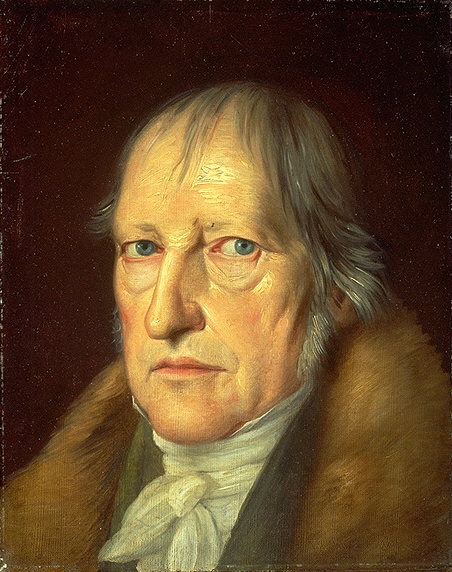
The latest is this idea of the “conceptual” endorsement. As with many advanced political philosophers—Hegel and others come to mind—it is sometimes hard to tell exactly what he means. He knows, but even he struggles to make it clear to lesser minds like ours.
So we now have some sort of endorsement that isn’t “actual” in the conventional sense. Instead, these military folks have “endorsed” him without technically “endorsing” him. Instead, they embrace a “concept” that endorses Trump, if concepts could endorse a candidate. That might totally misconstrue what Trump meant. But no matter what Trump meant, the idea of conceptual endorsement, as with so many innovations he has given us, will live on long after this election is over.
Are we all happy and enlightened now?

The rope fails to raise
Water
From the Well.
The pitcher is broken.
Calamity.
From Hexagram 48 – Jing/The Well
The World Series begins tonight. I am consulting the I Ching about it, and I will explain my purpose carefully.
As I’ve written before, in my view the I Ching is not a predictive oracle, a divining tool, a crystal ball, though it began that way thousands of years ago and is still used that way around the world. It is an insight tool, and an unsurpassed one, offering vision into circumstances and situations so that we may act more knowingly.
Which itself would be useful, if I was Manager of the Indians or Cubs. I could use it to help determine the lineup, or to decide when to pull the starting pitcher. And if I was a pitcher, I could use it to help figure out which pitches to throw, or as a batter which pitches to expect. I’m none of those.
The point here is to look into the attitude a fan might have as the Series proceeds on its roller coaster.
My lifelong love of baseball necessarily includes these ups and downs, measured in innings, in games, in seasons. Or in the case of the Cubs, who have been waiting 108 years to win a World Series, in centuries.
The I Ching is all about ups and downs. It is by title and essence The Classic of Changes. So why not ask it about the changes we are about to experience, as the Indians, this season’s little engine that could, defy the odds. Starting tonight on a very cold but still green fall field in Cleveland.
Some brief excerpts from I Ching commentaries on the received hexagram follow. As for interpretation, feel free to consider it all as the Series plays out.

Hexagram 48
Jing/The Well
The structure of the gua is Water above, Wood below. This image gave the ancient sage the picture of a well. The water in a well was practically an inexhaustible resource. It was in constant use yet continually refilled. It was the source of life. The image also suggests that the roots of a plant draw water from the soil to nourish the stalk and leaves.
Decision
Neither loses nor gains.
Coming and going, drawing, drawing.
Nearly out of the well,
Break one’s bucket—misfortune.
Commentary on the Decision
Nearly out of the well,
The achievement has not yet been fulfilled.
Break one’s bucket;
There is misfortune.
Commentary on the Symbol
In correspondence with this,
The superior person encourages the people at their work
And urges them to help one another.
Judgment
At the Well.
The rope fails to raise
Water
From the Well.
The pitcher is broken.
Calamity.
On the Image of the Hexagram
Water above Wood,
The True Gentleman
Comforts the Folk;
He gives encouragement.

Captain Kirk faced a crisis on the Enterprise. He summoned his ship’s doctor and his ship’s engineer. Bones says, “Damn it Jim, I’m a doctor, not an engineer.” Scotty says, “I’m an engineer, Captain, not a doctor.” Who is right?
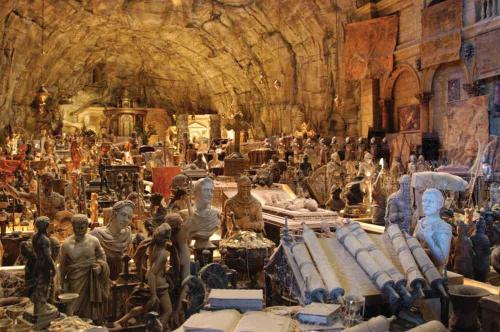
Being Jewish, or Buddhist, or Christian, or Muslim, or part of any tradition, is not primarily an identity, though it is used that way so that community can be established and maintained.
It is a key to a treasure room, different rooms for different traditions. In that room are items whose true value is not inherent or obvious, despite others putting price tags on these items. These, they say, are the most valuable, while these others are less important or completely unimportant.
If you are invited into the treasure room, or invite yourself in, you can look at the price tags, but should also explore and discover for yourself. Keep your eyes and mind open. Just calling something treasure does not make it so. And what is dismissed or little noticed may be the greatest treasure of all. You are not there just to find treasure, though there is plenty of it. You are there to learn about treasure and about yourself.
For ER, at a special moment on his treasure hunt.

If you were wondering whether the Trump soap opera/nightmare would end sometime before the actual vote, it is now official.
Cut Ties to Donald Trump, Big Donors Urge R.N.C. reports the New York Times:
Several of the Republican Party’s most generous donors called on the Republican National Committee on Thursday to disavow Donald J. Trump, saying that allegations by multiple women that Mr. Trump had groped or made inappropriate sexual advances toward them threatened to inflict lasting damage on the party’s image.
To an elite group of Republican contributors who have donated millions of dollars to the party’s candidates and committees in recent years, the cascade of revelations related to Mr. Trump’s sexual conduct is grounds for the committee to cut ties with the party’s beleaguered standard-bearer, finally and fully….
Bruce Kovner, a New York investor and philanthropist who with his wife has given $2.7 million to Republicans over the same period [since the 2012 election], was just as blunt. “He is a dangerous demagogue completely unsuited to the responsibilities of a United States president,” Mr. Kovner wrote in an email, referring to Mr. Trump.
It is indeed unfortunate that money speaks so much louder and more forcefully than the voice of ordinary people in current, post-Citizens United America. But if at this moment, this helps us to move on, even just a little, from this bizarre political hell we seem to be stuck in, I’ll take it. When the fat cats sing, the parties listen. And this particular song should be music to our ears.

The Great Way is not difficult
for those who have no preferences.
When love and hate are both absent
everything becomes clear and undisguised.
Make the smallest distinction, however,
and heaven and earth are set infinitely apart.
Thus begins one of the most famous Zen texts, Verses on the Faith-Mind (Xinxin Ming), attributed to Jianzhi Sengcan (d. 606), the Third Ancestor of Zen.
This is one of the most common themes for way seekers. And as difficult as it is ubiquitous.
Smart or less smart, knowledgeable or less knowledgeable, all of us have preferences and opinions about this and that. We make distinctions. Good and bad. Better and best. All of us. All the time. Some people more than others.
There can be practical reasons. We want to know what to embrace or avoid. And if we think we know that, we want to tell others. On the less practical side, we may want to demonstrate just how discerning we are. How smart we are. That happens.
The point is to be watchful of our tendencies to fill our lives and time with those preferences and distinctions. They will, without our noticing, take us over.
Zen goes one step further. The reason to give up preferences is not primarily to improve something about ourselves and our relationships with others, though that may be an effect. More than that, those preferences and distinctions don’t exist. At all. We just impose them on whatever is. This idea seems not just unlikely from our experience, but impossible.
Don’t believe Zen? Believe Jesus, who made the same point. “Do not judge and you will not be judged” is not just about being fair and self aware and not being hypocritical. It is about the hollowness of judgments themselves. Of course we will make judgments, but clinging to them and making them the centerpiece of our time and life is not the way.
Infinitely large and infinitely small;
no difference, for definitions have vanished
and no boundaries are seen.
So too with Being and non-Being.
Waste no time in doubts and arguments
that have nothing to do with this.
One thing, all things;
move among and intermingle,
without distinction.
To live in this realization
is to be without anxiety about nonperfection.
To live in this faith is the road to nonduality,
because the nondual is one with the trusting mind.
Words!
The Way is beyond language,
for in it there is
no yesterday
no tomorrow
no today.
From Hsin-Hsin Ming: Verses on the Faith-Mind, translated by Richard B. Clarke
I can’t resist unpacking this statement from Donald Trump Jr., talking about his father’s infamous Access Hollywood comments:
“I’ve had conversations like that with plenty of people where people use language off color. They’re talking, two guys, amongst themselves. I’ve seen it time and time again. I think it makes him a human. I think it makes him a normal person, not a political robot. He hasn’t spent his whole life waiting for this moment to run for the presidency.”
Off color: This is sort of a quaint description, usually meaning foul or coarse language. It is true that Trump used coarse language in his otherwise highbrow conversation with Billy Bush. But that is hardly the issue.
A normal person: Normal is a moving target, of course, both in terms of culture and of time, i.e., the old normal v. the new normal. To quote a favorite line from Arcade Fire’s Normal Person, “If that’s what’s normal now, I don’t want to know.”
He hasn’t spent his whole life waiting for this moment to run for the presidency: This is the best one. It implies that everybody—or at least “two guys”— always talks this way, unless they are going to run for President, in which case they keep it all behind closed doors. Junior doesn’t explain how a guy and a girl might talk, or how two girls might talk, if they are running for office. Presumably, the same rules apply.

