Bob Schwartz

Category: Music

Mountains Walking

Jesus, Dogen and Donovan each have something to say about mountains. In some ways the same thing.

Jesus says that faith can move mountains, by which he may mean that understanding the nature of things, including mountains, will allow us to see that mountains are always moving, if we will see it. Jesus is all about what we don’t see that is right in front of us.

Dogen says that mountains are mountains and mountains are walking. If you can walk, mountains can walk. Those without eyes to see mountains cannot notice, understand, see, or hear this reality.

Donovan sings about this reality of mountains appearing, disappearing, appearing.


Jesus

He answered, ‘Because you have so little faith. In truth I tell you, if your faith is the size of a mustard seed you will say to this mountain, “Move from here to there,” and it will move; nothing will be impossible for you.’ (Matthew 17:20, New Jerusalem Bible)


Dogen Zenji

Priest Daokai of Mount Furong said to the assembly, “The green mountains are always walking; a stone woman gives birth to a child at night.”

Mountains do not lack the characteristics of mountains. Therefore, they always abide in ease and always walk. Examine in detail the characteristic of the mountains’ walking.

Mountains’ walking is just like human walking. Accordingly, do not doubt mountains’ walking even though it does not look the same as human walking. The buddha ancestor’s words point to walking. This is fundamental understanding. Penetrate these words.

Because green mountains walk, they are permanent. Although they walk more swiftly than the wind, someone in the mountains does not notice or understand it. “In the mountains” means the blossoming of the entire world. People outside the mountains do not notice or understand the mountains’ walking. Those without eyes to see mountains cannot notice, understand, see, or hear this reality.

If you doubt mountains’ walking, you do not know your own walking; it is not that you do not walk, but that you do not know or understand your own walking. Since you do know your own walking, you should fully know the green mountains’ walking.

Green mountains are neither sentient nor insentient. You are neither sentient nor insentient. At this moment, you cannot doubt the green mountains’ walking.

From Mountains and Waters Sutra, Shobo Genzo, Fascicle 15 (1240)


Donovan

The caterpillar sheds his skin to find a butterfly within
Caterpillar sheds his skin to find a butterfly within
First there is a mountain, then there is no mountain, then there is

From There Is a Mountain


(What’s So Funny ‘Bout) Peace Love and Understanding?

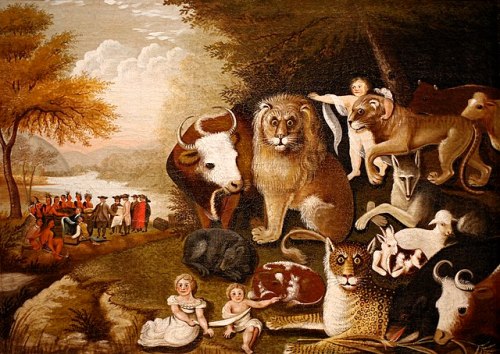
Edward Hicks, The Peaceable Kingdom (ca. 1833)

As I walk on through this wicked world,
Searching for light in the darkness of insanity,
I ask myself, is all hope lost?
Is there only pain, and hatred, and misery?

And each time I feel like this inside,
There’s one thing I wanna know,
What’s so funny ’bout peace, love, and understanding?

And as I walked on through troubled times,
My spirit gets so downhearted sometimes,
So where are the strong?
And who are the trusted?
And where is the harmony?
Sweet harmony

‘Cause each time I feel it slipping away, just makes me wanna cry,
What’s so funny ’bout peace, love, and understanding?

(What’s So Funny ‘Bout) Peace Love and Understanding?, written by Nick Lowe, performed by Elvis Costello


Masters of War

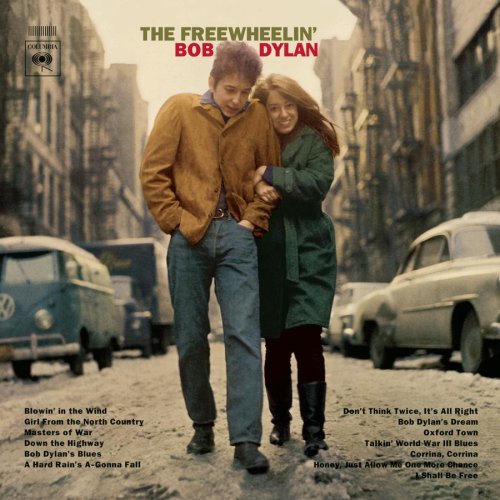
Freewheelin' Bob Dylan

Even Jesus would never
Forgive what you do
–Bob Dylan, Masters of War

Masters of War is a track from The Freewheelin’ Bob Dylan (1963). As a recording, it couldn’t be farther from current slick production values. It is a young brilliant artist strumming a guitar, singing in a pretty idiosyncratic way.

It is a song about war, but it isn’t an anti-war song; listening to it reveals that, and Dylan later confirmed it. It is about the people behind the curtain, the people on the battlefield, the people caught in the crossfire. War is a serious business that we don’t take seriously enough. Let all us put our motives, prejudices and and agendas brutally on the table, setting aside high-minded and sometimes dishonest pretexts, explanations and excuses.

All the verses are critical, but the last verse is bitter, angry and vindictive. Is that justice? What should we do with the masters of war? We have tried in modern times to build reasoned ethical oversight and standards of justice. After World War I, the war to end war, the Geneva Conventions. After World War II, trials –and executions–of perpetrators and international courts of justice. But what happens when the oversight and standards are breached and belittled? Would Jesus forgive? Should we?


Come you masters of war
You that build all the guns
You that build the death planes
You that build the big bombs
You that hide behind walls
You that hide behind desks
I just want you to know
I can see through your masks

You that never done nothin’
But build to destroy
You play with my world
Like it’s your little toy
You put a gun in my hand
And you hide from my eyes
And you turn and run farther
When the fast bullets fly

Like Judas of old
You lie and deceive
A world war can be won
You want me to believe
But I see through your eyes
And I see through your brain
Like I see through the water
That runs down my drain

You fasten the triggers
For the others to fire
Then you set back and watch
When the death count gets higher
You hide in your mansion
As young people’s blood
Flows out of their bodies
And is buried in the mud

You’ve thrown the worst fear
That can ever be hurled
Fear to bring children
Into the world
For threatening my baby
Unborn and unnamed
You ain’t worth the blood
That runs in your veins

How much do I know
To talk out of turn
You might say that I’m young
You might say I’m unlearned
But there’s one thing I know
Though I’m younger than you
Even Jesus would never
Forgive what you do

Let me ask you one question
Is your money that good
Will it buy you forgiveness
Do you think that it could
I think you will find
When your death takes its toll
All the money you made
Will never buy back your soul

And I hope that you die
And your death’ll come soon
I will follow your casket
In the pale afternoon
And I’ll watch while you’re lowered
Down to your deathbed
And I’ll stand o’er your grave
’Til I’m sure that you’re dead


Thanksgiving: Simple Gifts

Shaker Sewing Table

The Shaker dance song Simple Gifts (Joseph Brackett, 1848) is the ultimate Thanksgiving song. It is also the ultimate American song, provided we recognize that in America, the most religious and richest nation on earth, simplicity and humility are ideals worth aspiring to and striving for.

Ken Burns writes this about his documentary The Shakers:

They called themselves the United Society of Believers in Christ’s Second Appearing, but because of their ecstatic dancing, the world called them Shakers. Though they were celibate, they are the most enduring religious experiment in American history. They believed in pacifism, natural health and hygiene, and for more than 200 years insisted that their followers should strive for simplicity and perfection in everything they did.

Shaker design, including furniture and baskets, may be familiar to you. So may the melody of Simple Gifts. It is frequently used in pop culture, and is most famous musically in Aaron Copland’s orchestral masterpiece, Appalachian Spring. And while the tune is often heard, the lyrics are not as frequently sung. Here is an appropriately unadorned version by Judy Collins.

Even if you can’t read music, you can look at the musical score and see how very simple this song is:

Here are the lyrics. Happy Thanksgiving.

‘Tis the gift to be simple, ’tis the gift to be free
‘Tis the gift to come down where we ought to be,
And when we find ourselves in the place just right,
‘Twill be in the valley of love and delight.

When true simplicity is gain’d,
To bow and to bend we shan’t be asham’d,
To turn, turn will be our delight,
Till by turning, turning we come ’round right.

Music: O-o-h Child (things are gonna get easier), The Five Stairsteps

O-o-h Child

Ooh child
Things are gonna get easier
Ooh child
Things’ll get brighter
Ooh child
Things are gonna get easier
Ooh child
Things’ll get brighter

Some day
We’ll put it together and we’ll get it undone
Some day
When your head is much lighter
Some day
We’ll walk in the rays of a beautiful sun
Some day
When the world is much brighter

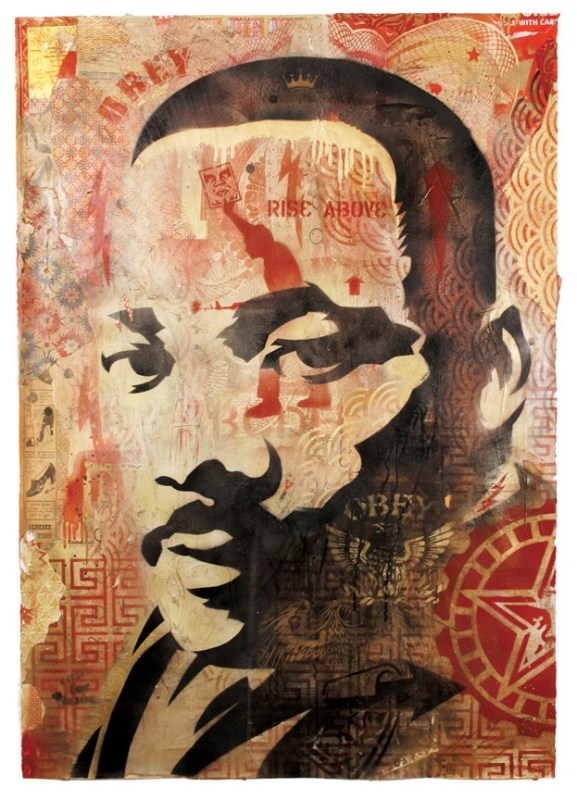
MLK: “There’s a king at the glory river”

Come on, people, come on, children
There’s a king at the glory river
And the precious king, he loved the people to sing
Babes in the blinking sun sang “We Shall Overcome”

I got fury in my soul, fury’s gonna take me to the glory goal
In my mind I can’t study war no more

Laura Nyro – Save the Country

Come on, people, come on, children
Come on down to the glory river
Gonna wash you up and wash you down
Gonna lay the devil down, gonna lay that devil down

Come on, people, come on, children
There’s a king at the glory river
And the precious king, he loved the people to sing
Babes in the blinking sun sang “We Shall Overcome”

Come on, people, sons and mothers
Keep the dream of the two young brothers
Gotta take that dream and ride that dove
We can build the dream with love, I know
We can build the dream with love

I got fury in my soul, fury’s gonna take me to the glory goal
In my mind I can’t study war no more

Save the people
Save the children
Save the country

Cambridge Soundworks Ensemble Speakers: Retiring Another Audio Component

Note: A while back I wrote about replacing an audio receiver after many years (The STR-AV1010 Is Dead ). It was a sentimental moment, since it played such a role in the soundtrack of our lives. This week another of the venerable audio components is retiring, significant not only to us but to the history of audio electronics.

Above is an ad from exactly thirty years ago, introducing the Cambridge Soundworks Ensemble Speakers. Developed by audio legend Henry Kloss, this was a breakthrough in the way quality speakers were marketed. It was relatively inexpensive compared to big-name brands, and it was being sold direct to consumers, without retail stores in the middle. These days, of course, most consumers buy speakers without hearing them first.

New York Times, February 19, 1989:

Now a new approach to speaker shopping is being promoted by a manufacturer who says, in effect: Buy my speaker by mail, sight unseen and sound unheard. If you don’t like it, send it back within 30 days, and we’ll refund your money.

One would tend to distrust such a proposition if it came from anyone less reputable than Henry Kloss, a hallowed name in audio history. During the 1950’s and 60’s – the gestation period of modern audio technology, Mr. Kloss advanced prevailing standards of speaker design with such classic innovations as the original Acoustic Research and Advent loudspeakers, which were among the first bookshelf speakers capable of wide-range sound.

Later he founded KLH, the first company to produce compact components and to make extensive use of transistorized circuits. It was partly Henry Kloss’s ideas from which, a few years later, the Japanese audio industry took its cue and rose to predominance.

I bought the speakers right away. I am not a listener with genius ears, but I appreciate good sound and good value. These speakers have been with us in all our houses, throughout the chapters of our lives. But just lately, I have heard the distortion symptom of one of the speakers failing. It is time for another set.

As with the passing of the receiver, sentiment is balanced with functionality, and so new speakers are on the way. The Ensemble will go back in the same box that arrived at our door those years ago and that they have been moved in again and again. I suspect they will be discarded someday, but not now.

Thunder and Lightning, Fire and Ice

The wheel is turning and you can’t slow down
You can’t let go and you can’t hold on
You can’t go back and you can’t stand still
If the thunder don’t get you then the lightning will
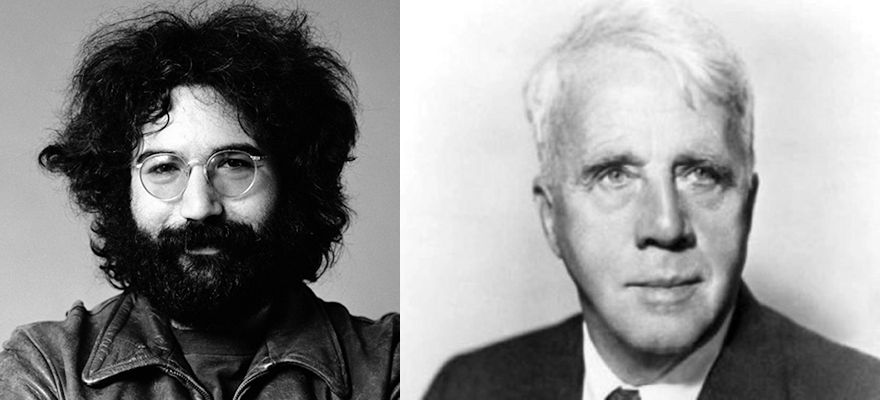
Jerry Garcia, The Wheel

Some say the world will end in fire,
Some say in ice.
From what I’ve tasted of desire
I hold with those who favor fire.
But if it had to perish twice,
I think I know enough of hate
To say that for destruction ice
Is also great
And would suffice.
Robert Frost, Fire and Ice

Music: Surf’s Up

It’s summer. Time for surf music. Not the Beach Boys, great as they are. Strictly instrumental, crazy guitar and crazier drums.

Listen. Put on your board shorts or bikini or both. Whether in the desert, where the ocean is just a crazy-from-the-heat mirage, or in your bedroom, dance like the fate of the world depended on it. Because it does. Surf’s up!

Marianne Williamson may not belong in the field of Democratic candidates, but she has a message and a point (Sowing the Seeds of Love edition)

Of the two dozen people running for the Democratic presidential nomination, a number have no prospect of being on the ticket, as president or vice-president. They are presumably running to advance their careers, to influence the direction of the party and/or to send a message.

Marianne Williamson is one who has no prospect, but does have a few messages. She voiced those messages in the debate—messages that were variously mocked or treated kindly, sometimes both.

In her closing statement, she said this:

This man [Trump] has reached into the psyche of the American people and he has harnessed fear for political purposes. So, Mr. President — if you’re listening — I want you to hear me please: You have harnessed fear for political purposes and only love can cast that out. So I, sir, I have a feeling you know what you’re doing. I’m going to harness love for political purposes. I will meet you on that field, and sir, love will win.

She is absolutely right, at least about the lack of and need for love in our politics. It may sound wholly New Age and non-pragmatic, but America is indeed suffering from spiritual dis-ease. How we contracted it is an interesting question for a later time, but right now it is clear that unless and until we start treating it, versions of the last two years are going to keep repeating themselves.

I presume that when Marianne Williamson talks about love, it is an umbrella expression for all the beneficent qualities featured in all of our religious traditions—compassion, empathy, selflessness, courage, care, etc. All the things that we now discover are missing from some high-level public leaders and from some members of the body politic.

So we owe Marianne Williamson a bit of thanks. And a song: