Bob Schwartz

Day of National Healing: November 9, 2016

Day of National Healing

Day of National Healing

You may say I’m a dreamer
But I’m not the only one
I hope someday you’ll join us
And all the world will live as one
John Lennon, Imagine

I declare November 9 a Day of National Healing.

Please stop snickering. Or pitying my naiveté in the face of so many unpleasant realities.

Our need for national healing is massive. Huge. We are literally sick and tired of this election. The thought going around, and it is not ridiculous and I’ve said it myself, is that things may actually get worse after the election.

Another thought, also not ridiculous, is that we might still want to find a way through this. In fact, we have to. If we are sincere about getting on with our lives, personal and national, we have got to start somewhere, sometime. The day after Election Day seems as good a time as any.

I am inspired and informed, as I often am, by the I Ching. Here is what the text says to us today:

Hexagram 38
Kui/Diversity

Diversity.
Little things:
Good fortune.

All beings diversify,
But their functions are the same.
Great indeed is the time and significance of diversity.

The superior person seeks common ground on major issues
While reserving differences on minor ones.

“In the course of diversifying, there is still similarity—this is the unique wisdom of the I Ching….Diversity is natural and unavoidable. The key is in seeking harmony. To the Chinese, all diversity can be harmonized, no matter whether it is between members of a household, or members of a society, or between nations of the world. The clue lies in one’s attitude. If both sides are willing to come together in sincerity and truthfulness, no problem cannot be solved.” (Alfred Huang)

In one sense, it is hard to see how the day after the election will be an unconditionally good day for many people. Millions will celebrate having avoided whatever horror they foresaw, millions of others will plan ways to deal with the horror they see taking place. That is not a formula for healing.

We have got to try something, something else than what we’ve been experiencing. A new way on November 9 can’t come soon enough.

After 70 Years of Progress, America Must Face Itself Again

Church

Black Church Burned, With ‘Vote Trump’ Scrawled on Side

In 1945 America helped defeat Nazi Germany, a global force that threatened to engulf the world in virulent hate and tyranny. In the aftermath of a brutal but noble victory, and despite deserved self-congratulation, America was forced to look at itself. It was not immune to or unfamiliar with similar levels and types of hate within—in certain places, among certain people.

We worked at identifying and eliminating that sort of hate, institutionally and individually, to the extent that is ever possible. There were missteps and resistance, along with denials and rationalizations. Progress was made, sometimes in fits and starts, and the work goes on.

This has been a year of staggering, stupefying realizations. Among the things we know better, as if we weren’t aware, is that there are plenty of people with hate in their hearts who for a long while have felt marginalized and silenced by a degree of public decency. Another thing we learned, and should know, is that once public decency is called into question or invalidated, those same people will be encouraged and emboldened.

I wrote about this eight months ago, in a post Unleashing the Dogs of Hate. If you haven’t noticed, that hate is barking louder and starting to bite.

Like it or not, these are our countrymen. Pretending they are not has never worked, nor has giving up because there’s nothing to be done. Progress has been made, and though it would be comfortable to believe things inevitably move forward, they don’t. Backwards happens, but not if we start by facing up again to who we are and hope to be. And then get back to work.

Baseball Poetry: Joy and Tragedy in Mudville

Oh, somewhere in this favored land the sun is shining bright…

Baseball has inspired more literature, novels, stories, essays, poems, than all other sports combined. It isn’t that those other sports haven’t inspired some great works. It’s just that the volume of baseball writing is so huge.

I’ve mentioned Bart Giamatti before: Yale University President, baseball commissioner, writer of exquisite baseball elegies. Also the recently deceased W.P. Kinsella, author of the ultimate novel about baseball magic, Shoeless Joe, and many other baseball stories. For other classic baseball novels among the hundreds published, see The Natural by Bernard Malamud and Bang the Drum Slowly by Mark Harris, to name a few.

And then there are thousands of baseball poems, by professional and amateur writers/baseball fans. Poems about baseball in general, about particular teams, about particular seasons, about particular players. Multiple volumes of baseball haiku.

Here is a favorite baseball poem:

The Pitcher
by Robert Francis

His art is eccentricity, his aim
How not to hit the mark he seems to aim at,
His passion how to avoid the obvious,
His technique how to vary the avoidance.
The others throw to be comprehended. He
Throws to be a moment misunderstood.
Yet not too much. Not errant, arrant, wild,
But every seeming aberration willed.

And then there’s the most famous baseball poem ever, Casey at the Bat by Ernest Thayer. Note well: This poem, published in 1888, has been popular for more than a century. And it is a tragedy. Casey battles a nameless pitcher in the ninth inning, with two out, men on second and third. Casey strikes out. Any game that inspires such a poem, and any fans who embrace such a poem, understand something about something that goes beyond the simple and conventional. They understand baseball.

The outlook wasn’t brilliant for the Mudville nine that day:
The score stood four to two, with but one inning more to play,
And then when Cooney died at first, and Barrows did the same,
A pall-like silence fell upon the patrons of the game.

A straggling few got up to go in deep despair. The rest
Clung to the hope which springs eternal in the human breast;
They thought, “If only Casey could but get a whack at that—
We’d put up even money now, with Casey at the bat.”

But Flynn preceded Casey, as did also Jimmy Blake,
And the former was a hoodoo, while the latter was a cake;
So upon that stricken multitude grim melancholy sat,
For there seemed but little chance of Casey getting to the bat.

But Flynn let drive a single, to the wonderment of all,
And Blake, the much despised, tore the cover off the ball;
And when the dust had lifted, and men saw what had occurred,
There was Jimmy safe at second and Flynn a-hugging third.

Then from five thousand throats and more there rose a lusty yell;
It rumbled through the valley, it rattled in the dell;
It pounded on the mountain and recoiled upon the flat,
For Casey, mighty Casey, was advancing to the bat.

There was ease in Casey’s manner as he stepped into his place;
There was pride in Casey’s bearing and a smile lit Casey’s face.
And when, responding to the cheers, he lightly doffed his hat,
No stranger in the crowd could doubt ‘twas Casey at the bat.

Ten thousand eyes were on him as he rubbed his hands with dirt;
Five thousand tongues applauded when he wiped them on his
shirt;
Then while the writhing pitcher ground the ball into his hip,
Defiance flashed in Casey’s eye, a sneer curled Casey’s lip.

And now the leather-covered sphere came hurtling through the
air,
And Casey stood a-watching it in haughty grandeur there.
Close by the sturdy batsman the ball unheeded sped—
“That ain’t my style,” said Casey. “Strike one!” the umpire said.

From the benches, black with people, there went up a muffled
roar,
Like the beating of the storm-waves on a stern and distant shore;
“Kill him! Kill the umpire!” shouted someone on the stand;
And it’s likely they’d have killed him had not Casey raised his
hand.

With a smile of Christian charity great Casey’s visage shone;
He stilled the rising tumult; he bade the game go on;
He signaled to the pitcher, and once more the dun sphere flew;
But Casey still ignored it and the umpire said, “Strike two!”

“Fraud!” cried the maddened thousands, and echo answered
“Fraud!”
But one scornful look from Casey and the audience was awed.
They saw his face grow stern and cold, they saw his muscles
strain,
And they knew that Casey wouldn’t let that ball go by again.

The sneer is gone from Casey’s lip, his teeth are clenched in hate,
He pounds with cruel violence his bat upon the plate;
And now the pitcher holds the ball, and now he lets it go,
And now the air is shattered by the force of Casey’s blow.

Oh, somewhere in this favored land the sun is shining bright,
The band is playing somewhere, and somewhere hearts are light;
And somewhere men are laughing, and somewhere children
shout,
But there is no joy in Mudville—mighty Casey has struck out.


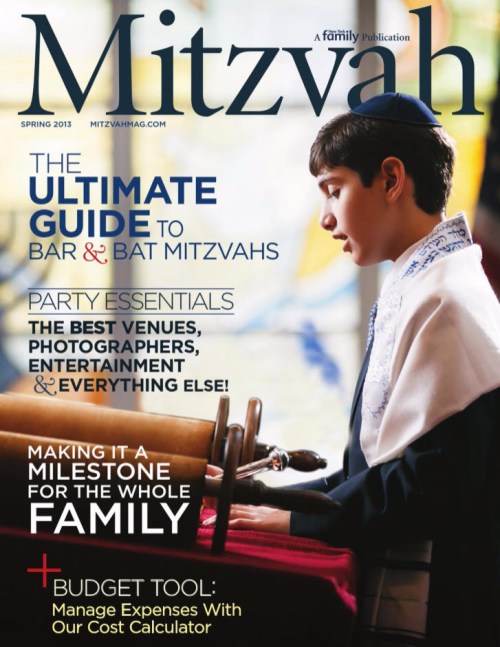
Bar Mitzvah: The Spiritual Edge of Thirteen and Clueless

Mitzvah Magazine

Like many Jewish young people, I marked my thirteenth birthday by participating in a bar mitzvah (bat mitzvah for girls). This is a traditional rite of passage, marking the time when you take on the privileges and responsibilities of being a full adult member of the community. There are services and celebrations, but as a religious matter, you don’t actually have to do anything or say anything to achieve this status. It just happens with time.

I attended religious school classes, before and after my bar mitzvah. I took part in the bar mitzvah services and celebration. I performed well at the services and enjoyed the celebration. Here’s the thing, speaking only for myself, and not for any others who went before or after me, including the most recent bar mitzvah of a family member I lovingly attended: I see now that I was pretty much religiously and spiritually clueless. This isn’t surprising, given that thirteen year olds are a bit—or a lot—clueless in general, no matter what they think at the moment.

This doesn’t mean that not understanding or thinking very deeply, if at all, about the spiritual particulars you are taught and that are recommended to you by earnest teachers and rabbis, or about the bigger picture of Judaism or other traditions, is a bad thing. You might well go from thirteen to 20 or 30 and not think often or ever about these. Some do, some don’t. You might actually go all the way to the very end without giving this much consideration. No blame.

But seeds are planted, and you never know what grows. Water, light, and fertilizer. I sent my beloved family member a bunch of books about Judaism, which may be read, now or eventually, sooner or later. They are a much more complete and interesting collection than the few I received when I was a bar mitzvah, but that doesn’t guarantee anything. I wasn’t interested when I was thirteen. That changed, a lot. My rabbi, my cantor, my congregation expected good things of me religiously. It took a few years to grow, and grow it did, although I’m not sure the fruit is exactly what they expected or thought would be good for Judaism or the community.

Me, I had no thoughts about stuff like that at the time. Being bar mitzvah, thirteen and clueless.

Mirror Telescope Microscope

Mirror Telescope Microscope

The mirror is an accident
An incident above the sink
A reluctant glance
With the first water
Of the morning.
The telescope
The microscope
Are no accident.
Seeking words
Long and wide
To guide me
Tell me
What this is
Who this is
In the mirror.

The morning begins with coffee, reading, and sitting. It actually begins a few moments earlier, with a visit to the bathroom, where, naturally, there is a mirror. There is little to learn from the mirror. There is more to learn from the texts.

Another Joke Break: Snail on the Front Porch

Jokes

The half-life of a blog post is about a day. Within a week, nobody is reading. Within a year, it might as well never have been published.

Which is what makes my post Joke Break: Duck Walks into a Drugstore so amazing to me. Not a day passes when somebody doesn’t read that post—which was published three years ago.

It is a great joke, and I am so happy that so many people are getting a much-needed laugh, especially these days. But it makes me feel like maybe I can dip into my well of classic jokes and find just one more that would have legs (web feet?) like that. (If you’re wondering what a Jokes folder looks like, see the photo above.)


Guy finds a snail on his front porch. He picks it up and throws it across the street. One year later, he hears a knock at his door. The man goes to the door, opens the door, looks down, and there he sees the same snail on his front porch. The snail looks up at the guy and says, “What the hell was that all about?”

Three Orchids

Orchid

Three Orchids

Three orchids.
One blooming
One resting
One dying without hope.
I care for the two
But the the third,
Leaves still green
But curling,
What am I to do?

Note: As mentioned earlier, orchids have floated into my usually non-green world. I have begun learning how to reward the gift they give. They are, as experts say, and as is obvious, unusual plants. They rest for a while and, with proper care, will wake up more beautiful than ever.

But not always. And not forever.

Beresheet: The Beginning

bereshit

Today the annual Torah reading cycle begins again with the portion Beresheet (also transliterated as Bereshit, Genesis 1:1-6:8).

It is a big Torah, a bigger Jewish Bible (Tanakh), and an even bigger Christian Bible. In all that expanse, nothing compares to the way it begins.

Bereshit: “When God Created …” This first word of the first book of the Bible serves both as the Hebrew name for the book Genesis and as an idiom for “Creation.” Because of its pride of position at the “start” of creation, as well as its uniqueness (the word never appears again in Scriptures), the word is subjected to intensive and varied exegetical analysis. Many, many meanings are derived from this one six-letter word….Jewish tradition has also held the six letters contain secrets that the wise will understand. (The Encyclopedia of Jewish Myth, Magic and Mysticism, Geoffrey W. Dennis)

In English, it goes like this:

When God began to create heaven and earth—the earth being unformed and void, with darkness over the surface of the deep and a wind from God sweeping over the water—God said, “Let there be light”; and there was light. God saw that the light was good, and God separated the light from the darkness. God. (New Jewish Publication Society translation)

Or this:

In the beginning when God created the heavens and the earth, the earth was a formless void and darkness covered the face of the deep, while a wind from God swept over the face of the waters. Then God said, “Let there be light”; and there was light. And God saw that the light was good; and God separated the light from the darkness. (New Revised Standard Version translation)

Or this:

When God began to create heaven and earth, and the earth then was welter and waste and darkness over the deep and God’s breath hovering over the waters, God said, “Let there be light.” And there was light. And God saw the light, that it was good, and God divided the light from the darkness. (Robert Alter translation)

Unformed. Void. Darkness. Wind. Welter. Waste. Light. When God began to create.

Maybe you once read or studied the Bible, in any of its versions. Maybe you still do. Maybe you don’t anymore or maybe you never did. Maybe you had deep discussions about God, about creation, and about whether there was something out of which creation was made or whether there was nothing and then there was something (ex nihilo). Then again, maybe not.

No matter your beliefs, consider this first portion, the first words, and the very first of the first words consisting of six Hebrew letters. Are there “secrets the wise will understand”? Are you that wise one?


Friendly Fire and Ice

Friendly Fire and Ice
based almost entirely on Fire and Ice by Robert Frost

Some say that friendships end in fire,
Some say in ice.
From what I’ve tasted of desire
I hold with those who favor fire.
But if it had to perish twice,
I think I know enough of hate
To say that for destruction ice
Is also great
And would suffice.

With deep apologies and appreciation to Robert Frost for the misuse of his poem.

The phenomenon of friendships fading and ending is for me akin to observing or experiencing illness and death. Of all the many things I don’t pretend to understand, this is in some ways the deepest mystery. As many reasons and explanations as I can come up with—time, distance, divergence, ignorance—the extinction of the flame of friendship remains as chilly as the extinction of the flame of love. Maybe because the best friendships, for me at least, are identical with and indistinguishable from love.

Making America Crazy Again: How to Survive and Thrive After the Election

make-america-crazy-again

You don’t want to hear this, but things may get crazier after the election.

If Hillary Clinton wins, she will be the least liked, least trusted President to ever take office. All the assumptions and suppositions about how the Clintons’ good intentions have been mixed with and compromised by expedient centrism, ambition, greed, secrecy and overall ugliness have been confirmed.

Progressives who tried an insurgency within the Democratic Party will learn that if they have a place at the table, it will be set with modest meals, if not mere crumbs.

Republicans will be gleeful at the prospect of obstructing everything and unwinding anything, without much of a plan of their own. Their glee is misplaced, since there is no Republican Party left, not one recognizable as such. Instead, it is merely the shaky platform for another set of would-be Presidents to start jockeying for position as the candidate in 2020.

And then of course there’s Donald Trump, whose hat should have first read Make The GOP Crazy, then Make The Election Crazy, and finally Make America Crazy Again. He is good at each of these. There is no doubt, whatever form his public pathology takes, he will help make 2017 a year we will not forget, just as 2016 is an election we will not forget, no matter how we try.

And so, some suggestions for getting on with our lives, not just surviving, but thriving, after the election.

  1. Religion, spirituality, philosophy, or something like them. Principled views of reality and the world can be very helpful. There is nothing inherently wrong with making stuff up as we go along. Except that when the wind blows, which it does pretty much all the time, and sometimes with hurricane force, we might want to have something to keep us steady.
  1. Media diet. When I see the ad for that cheeseburger with six strips of crisp bacon on top, something in me wants one. Except I don’t eat cheeseburgers any more, don’t eat bacon anymore, and if I did, I don’t think it would be in that particular configuration, since I plan to live a long and healthy life. The news media, even the supposedly respectable ones, are mostly offering us the equivalent of 1-pound burgers with an entire package of bacon on top, hour after hour. If you don’t want to be crazy unhealthy, please watch what you eat.
  1. Learning. You don’t have to learn about anything or anyone. You can learn exactly as much as you need to get on with your life and through the day. If you do choose to be interested in something, including public affairs, do try to learn and discern. We have spent the past year in a storm of misinformation and disinformation, lies and nonsense. That is not going to stop after the election. In fact, it could get worse, hard as that is to believe.
  1. Silence.