Bob Schwartz

William Goldman Dies at 87

“As a writer I believe that all the basic human truths are known. And what we try to do as best we can is come at those truths from our own unique angle, to reilluminate those truths in a hopefully different way.”
William Goldman, Adventures in the Screen Trade

New York Times:

William Goldman, who won Academy Awards for his screenplays for “Butch Cassidy and the Sundance Kid” and “All the President’s Men” and who, despite being one of Hollywood’s most successful screenwriters, was an outspoken critic of the movie industry, died on Friday in Manhattan. He was 87.

In his long career, which began in the 1960s and lasted into the 21st century, Mr. Goldman also wrote the screenplays for popular films like “Misery,” “A Bridge Too Far,” “The Stepford Wives” and “Chaplin.” He was a prolific novelist as well, and several of his screenplays were adapted from his own novels, notably “The Princess Bride” and “Marathon Man.”

There are plenty of reasons to admire William Goldman—as a writer and as a writer who cast a realistic light on writing—but nothing is higher than The Princess Bride.

The movie, written by Goldman and directed by Rob Reiner, is a gem, worth watching at least once a year. But in its own way, his novel from which he adapted the screenplay, is even better.

If you know the movie, it is a comic romance and adventure set in a fantasy kingdom, framed by a grandfather reading this story to his grandson. But the novel is much more meta. Goldman places himself in the novel, as a writer with a fictionalized family, condensing and adapting a book by S. Morgenstern that his father had read to him, which adaptation is…The Princess Bride. The trick that Goldman pulls off is that you come away believing that everything he has told you—about his career, his family, the non-existent book by the non-existent S. Morgenstern—are all true.

The bigger trick—the bigger truth—is that everything he wrote in The Princess Bride is absolutely true. Even though he made it all up. If you are a writer or a reader, and don’t fully understand that, read William Goldman, starting with The Princess Bride.
Trump’s Ten Commandments Checklist

The Ten Commandments constitute the most concise and famous list of moral values in the Western world. There are other lists, of course (see, for example, the Beatitudes). But if you want a quick checklist, the Ten Commandments are handy.

We don’t expect ourselves or others to achieve a perfect score, which could mean keeping every one or breaking every one. But the list does provide a way of keeping track and keeping score, in hopes of improvement.

For Trump:

You shall have no other gods beside Me: Unknown.
Trump appears to have little or no theological knowledge or belief. But until he expressly claims to be an atheist or polytheist, we can’t know what’s in his heart.

You shall make you no carved likeness: Broken.
This is the idolatry commandment. Trump has made an idol of himself. And in those rare cases when he can stop idolizing himself, he has occasionally made idols of others—often unworthy others.

You shall not take the name of God in vain: Broken.
This is commonly treated as the cursing commandment, and it is commonly broken. If it is cursing we are talking about, we are certain that Trump, whose private language is known to be crude, has broken this one.

Remember the sabbath day: Broken.
The Sabbath commandment is so regularly broken that Trump’s failure is hardly remarkable.

Honor your father and your mother: Kept.
Giving Trump his due, he seems to have genuine reverence for his parents—though the relationships were complicated. If this includes being a good parent, that may be another story.

You shall not murder: Kept.
We suppose not, certainly not directly, but given the sorts of people he has long associated with, we just don’t know.

You shall not commit adultery: Broken.
On a scale of 1 to 10, this goes to 11.

You shall not steal: Broken.

You shall not bear false witness: Broken.
As with adultery, this goes to 11. Or 12.

You shall not covet: Broken.

That makes seven Broken, two Kept, and one Unknown. How do you think it stacks up?

Trump’s Breakdown

Crazy, I just cannot bear
I’m living with something’ that just isn’t fair

Mental wounds not healing
Who and what’s to blame?

I’m going off the rails on a crazy train

Ozzy Osbourne, Crazy Train

Trump has broken down.

The first week after the midterm elections provided clear and convincing evidence. It is admittedly hard to tell with someone so publicly erratic and eccentric in the first place. “Trump is just being Trump, just a little more so” is an easy if uncomforting excuse.

But this is different. And not at all surprising. Whatever his preexisting psychological disorders, there are realities and pressures that even his walls of denial are struggling to contain.

One of the many signs this past week is his disappearance at events that even he knew were appearances he was expected to make and could have used as opportunities for his usual grandstanding. Not once but twice he missed high-profile events honoring American veterans. And two high-level Asian conferences that he was scheduled to attend will now see Mike Pence instead.

His immediate firing of Jeff Sessions and his attempt at appointing a loyal lackey as Attorney General is the first step in what will be a sea change in his inner circle. He feels more personally besieged than ever. He is demanding complete and utter loyalty, no questions asked, no internal resistance allowed. One could look at this as simply strategic in the face of great difficulties. But one could also look at it as the workings of a troubled and paranoid leader who believes the world is against him, and no counter attack is too extreme. This is war, and he needs a war cabinet around him.

If Trump has already broken down, or is in the process, there may be little we as citizens can do about it. He has a world-class powerful bureaucracy at his personal command. Congress, even with the upcoming Democratic House, can do little, even if there was bipartisan will, which there isn’t. Removal from office through impeachment requires two-thirds of the Senate to convict, which won’t happen. The 25th Amendment disability procedure is even more unlikely, since that provision begins with his Vice President and Cabinet. That won’t happen either.

The only “better” possibility is if Trump goes so far over the edge and over the top that even Republican Senators, and Pence and the new Cabinet, face the fact that psychologically, Trump can no longer be trusted with the office, having reached the point where “Trump being Trump” is no longer acceptable. Do we want to wait for that? Do we have a choice?

Bob Woodward and Seth Meyers have criticized CNN for suing the White House over the pulling of Jim Acosta’s press credentials. With all due respect to Woodward, you’re wrong.

Noted legal scholar Seth Meyers

The White House pulled the press credentials of CNN journalist Jim Acosta because Trump doesn’t like his questions, his attitude or him. The First Amendment does not allow this. CNN has sued.

Bob Woodward, an extraordinary and legendary journalist who has made his indelible mark on American history, has criticized CNN for feeding Trump’s appetite for lawsuits. So has Seth Meyers, an amusing entertainer legendary for nothing.

Lawyers are not that special. But lawyers are a bit more sensitive than some others to how unopposed government assaults on constitutional rights tend to gather momentum, sliding down a slippery slope. Waiting only makes things worse.

So to Bob Woodward, who deserves infinite respect for all he has done and continues to do, in this case you are wrong. And to Seth Meyers, who is well rewarded for working within the protection of the First Amendment, please remember that the First Amendment needs protection too. It is the First Amendment that allows those who are funny and sometimes ill-informed to express themselves without government interference.

Veterans Month and Mental Health

It is appropriate to talk about this Veterans Day 2018—Sunday, November 11—when talking about veterans and mental health.

Veterans Day was originally celebrated as Armistice Day, the day that World War I ended. This Veterans Day marks the one hundredth anniversary of the end of “the war to end all wars.”

Modern awareness of the widespread psychological effects of warfare began early in World War I, with the phenomenon of “shell shock.” In looking back at the war, there is still a question of how many cases were, in terms then used, “commotional” (due to explosions at close range) and how many cases were “emotional” (due to the psychological experience of war). In either case, numbers of warriors came home different and troubled—troubles which might last for the rest of their lives, and even serve to shorten those lives.

In the wars since, different theories and treatments have been developed, different labels have been attached. Today, those of us on the outside of this experience know it as PTSD. Those on the inside know it as the hell of war and its aftermath.

This will be another month—since a day is absolutely not enough—of honoring veterans. Judging by the still inadequate attention and support, they are more honored in the breach than in the observance. Among the failures too long to list is insufficiently acknowledging and taking responsibility for the mental health of those who we send to serve.

If you don’t want war—blessed are the peacemakers—then work for that. If you want war, or reluctantly think that war is necessary, treat those you send to fight for you as your own family, your own siblings, your own children. Because they are somebody’s.

“A Republic, if you can keep it.”

Possibly the most famous and prophetic quote from the American Constitutional Convention is attributed to Benjamin Franklin. America was not just a new nation; it was a new kind of nation, so naturally people wondered just what kind of a nation it was to be:

As Benjamin Franklin left the Constitutional Convention, on September 18, 1787, a certain Mrs. Powel shouted out to him: “Well, doctor, what have we got?,” and Franklin responded: “A Republic, if you can keep it.”

America has voted, there will be a Democratic-led House, and it appears that the Republic, which has been under serious internal siege for the past two years, is a little closer to again being kept.

It is just one step toward having an effective check on a leader and a ruling party intent on subverting virtually all of the principles that Franklin and friends embodied in the new nation. But a step in the right direction it is.

Franklin and friends are cautiously relieved. They, more than any, know how hard this is. So they are smiling a little. And so are many Americans.

“Honoring Pittsburgh synagogue victims, Pence appears with ‘rabbi’ who preaches, ‘Jesus is the Messiah’”


Washington Post:

Two days after the deadliest attack on Jews in U.S. history, Vice President Pence bowed his head at a rally on Monday in Michigan as a religious leader who casts himself as a “rabbi” offered a prayer for the victims in Pittsburgh.

But the man who shared a stage with Pence, Loren Jacobs, preaches Messianic Judaism, a tradition central to Jews for Jesus, a group condemned by Jewish leaders as faux Judaism that seeks to promote Christian evangelism. The major Jewish denominations join the state of Israel in viewing followers of Messianic Judaism as Christian, not Jewish.

His appearance drew outrage on social media.

When I read this story, my reaction—I am not kidding—was: Oh Jesus!

I haven’t covered this issue of messianic Judaism much, though I’ve talked with others about it plenty. The last time I wrote about it was in discussing Roy Moore.  You may recall that his controversial and unsuccessful run for the Senate, along with including questions about Moore’s inappropriate behavior with a young woman, also included claims that Moore was anti-Semitic. To counter the charge, Moore’s wife pointed to their having a Jewish attorney. It turned out that the attorney was a messianic Jew.

The Post story does a good job of outlining the issue. Suffice it to say that if you believe that Jesus was the Jewish messiah, you are free to believe that. But according to any accepted normative theology held by any Jews, Jesus was not the Jewish messiah, and believing that he was makes you by definition not Jewish. (To go into a little more detail, a number of Jews historically gave up on the coming of any messiah, while a small minority still believe in the future possibility of a messiah. Jesus has no place in either of those schemes.)

Along with the question of whether the “rabbi” Pence invited was actually a rabbi or a Jew, the whole approach is inappropriate by any spiritual or humane lights. That is, under the tragic and sensitive circumstances, bringing this person to that event and having him say what he said (including endorsing Republicans) was about as un-Jesus-like as anything imaginable. Pence’s “rabbi” is no Jew, and with this stunt, neither Pence nor his “rabbi” appear to be very good Christians either.

Music: The Polyphonic Spree – Light & Day/Reach for the Sun

It’s never easy to find the right music, especially if the moment is sad and frustrating, where if hope is the thing with feathers, as Emily Dickinson says, it seems not to be perched but rather to have flown away.

There is plenty of upbeat music, but that isn’t enough, not the whole story. Sometimes you need something that just hits the spot—the place where you can suspend shade and pragmatism in favor of joy and celebratory naiveté, even for just three minutes. It’s going to be alright because it already is alright. Right now.

Thank you Polyphonic Spree.

Light & Day/Reach for the Sun

Light and day is more than you’ll say
Because all
My feelings are more
Than I can let by
Or not
More than you’ve got
Just follow the day
Follow the day and reach for the sun

You don’t see me flying to the red
One more you’re done
Just follow the seasons and find the time
Reach for the bright side
You don’t see me flying to the red
One more you’re nuts
Just follow the day
Follow the day and reach for the sun

Sympathetically Misrepresenting anti-Semitism to Protect Trump

In the wake of the Pittsburgh synagogue massacre, there is universal recognition and condemnation of anti-Semitism. But there is a subtle split on the approach to this commendable sympathy and call for improvement. Some want to look at the big picture, some want to focus on the individual elements that brought us to this moment.

Among the big picture painters is the Wall Street Journal:

Americans would do well to ignore this toxic habit of political blame for murderous acts by the racist, anti-Semitic or mentally disturbed. We are all responsible for our rhetoric, and that includes Mr. Trump, as well as Hillary Clinton and Eric Holder.

But the blame artists are distracting attention from the real sickness, which in this case is anti-Semitism, a hatred that goes back millennia. That is the toxin to banish as much as possible from American life, even if it can’t be purged entirely from human souls.

There is something missing, something not quite right, something intended to misdirect the focus. As long as anti-Semitism is broadly presented as one of history’s most durable social diseases, as long as the “blame game” is dismissed as missing the point, we are not even half-way to self-awareness, let alone a solution.

Antisemitism is people. People as victims and targets, and people as perpetrators, enablers and ignorers. The Holocaust demanded that we break such a huge phenomenon down into its most significant pieces: the individuals who suffered and the individuals who, directly or indirectly—but culpably—made the horror possible.

There is nothing wrong in using this incident to bring generalized attention to anti-Semitism in America, which has persisted under the surface even as progress has been made. But treating it mostly as a pernicious social phenomenon avoids dealing with the individual responsibility for those who either actively promote or at least turn a blind eye to it.

When Trump references the “goodness” of the anti-Semitic marchers in Charlottesville (“Jews will not replace us”), when he calls himself a “nationalist” (though not that kind of a nationalist, we are assured), when he says and does a hundred things that promote hate and intolerance as the way to a Great America, of course anti-Semites, stable or crazy, are going to take it as an endorsement and seal of approval.

Anti-Semitism is people—perpetrators, fellow-travelers and enablers. All the rhetoric in the world won’t change that. And Trump is one of those people.

“Will Pittsburgh Shooting Be A Wakeup Call For Jews Who Enable Trump?”

The Forward today includes an opinion piece, Will Pittsburgh Shooting Be A Wakeup Call For Jews Who Enable Trump by Ben Faulding, that ends like this:

Now that Jewish blood has been spilled, will the leaders recognize the threat they’ve been ignoring for so long?

Trump’s behaviors and policies continually contravert practically every core principle of Judaism. But even when white nationalists in Charlottesville directly expressed their anti-Semitism with chants like “Jews will not replace us,” important Jewish supporters and White House staff didn’t object to Trump’s equivocation of “good people on both sides.” We have a transactional president in transactional times, so if ignoring even anti-Semitism is the price you pay for support of Israel, tax benefits, etc., well, that’s the art of the deal.

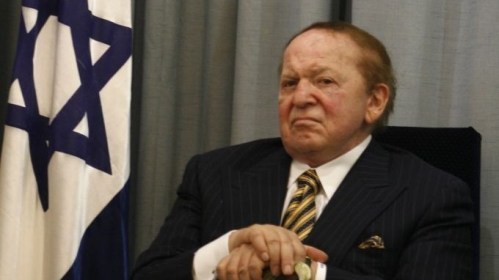
The answer to whether this horror will be a wakeup call is mostly No. Jews who have cast their lot with Trump, from billionaires like Sheldon Adelson on down, either don’t know what Jewish principles actually are or have rationalized their support in relation to those principles. They aren’t asleep so they can’t wake up. They are just not very good Jews, if Jews at all.