Right now there at least 240,000 Covid deaths and 10 million Covid cases counted in America. Without major behavioral and policy interventions, there may be 400,000 deaths and 1 million cases a week by the end of year. Yet some governors insist on staying the course, and some people think that even the current restrictions are too much.
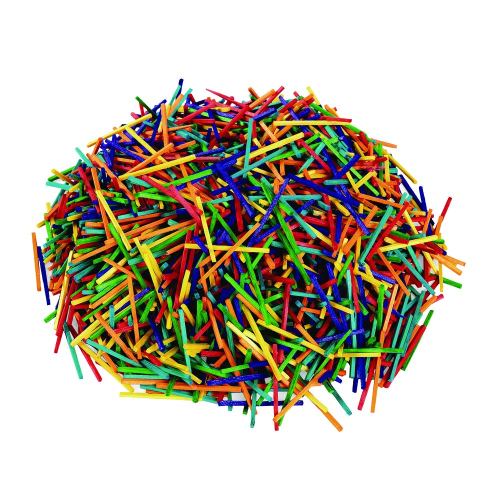
It is of course not appropriate to show images of 240,000 dead Americans in this post. So matchsticks will stand in their stead.
Each pile below includes about 1,000 matchsticks. Shown are 10,000. Multiply by 24. Or 40. Do the math and imagine.
The expression goes: Some people, you just can’t tell them. Maybe we can show them.
There is good news about possible Covid vaccines. With that news comes the reality that widespread deployment of a vaccine still won’t take place until some time in 2021.
Imagine this scenario in the coming months, a time when it is projected that nationally there may be 200,000 Covid cases a day—that’s 6 million a month—and there may be 400,000 total deaths by February 1:
A patient who has been infected with Covid is suffering symptoms, maybe severe enough to require hospitalization, maybe even courting death.
Someone—maybe one of our reluctant leaders—arrives to offer good wishes and this comfort:
“You will be happy to know that a vaccine for this terrible disease is right around the corner. You can stop worrying.”
What those reluctant leaders should be saying—now—is that it is inevitable that things are going to get much worse while we wait for the relief of a vaccine, so some difficult measures will have to be taken—now. This takes intelligence and vision, the courage to throw off ideology, and a willingness to be unpopular. All for the sake of saving suffering and lives.
Birds flying high you know how I feel Sun in the sky you know how I feel Breeze drifting by you know how I feel Fish in the sea, you know how I feel
River running free, you know how I feel Blossom on the tree, you know how I feel Dragonfly out in the sun you know what I mean Butterflies all havin’ fun, you know what I mean Sleep in peace when day is done, that’s what I mean
And this old world, is a new world And a bold world for me
It’s a new dawn It’s a new day It’s a new life for me And I’m feeling good
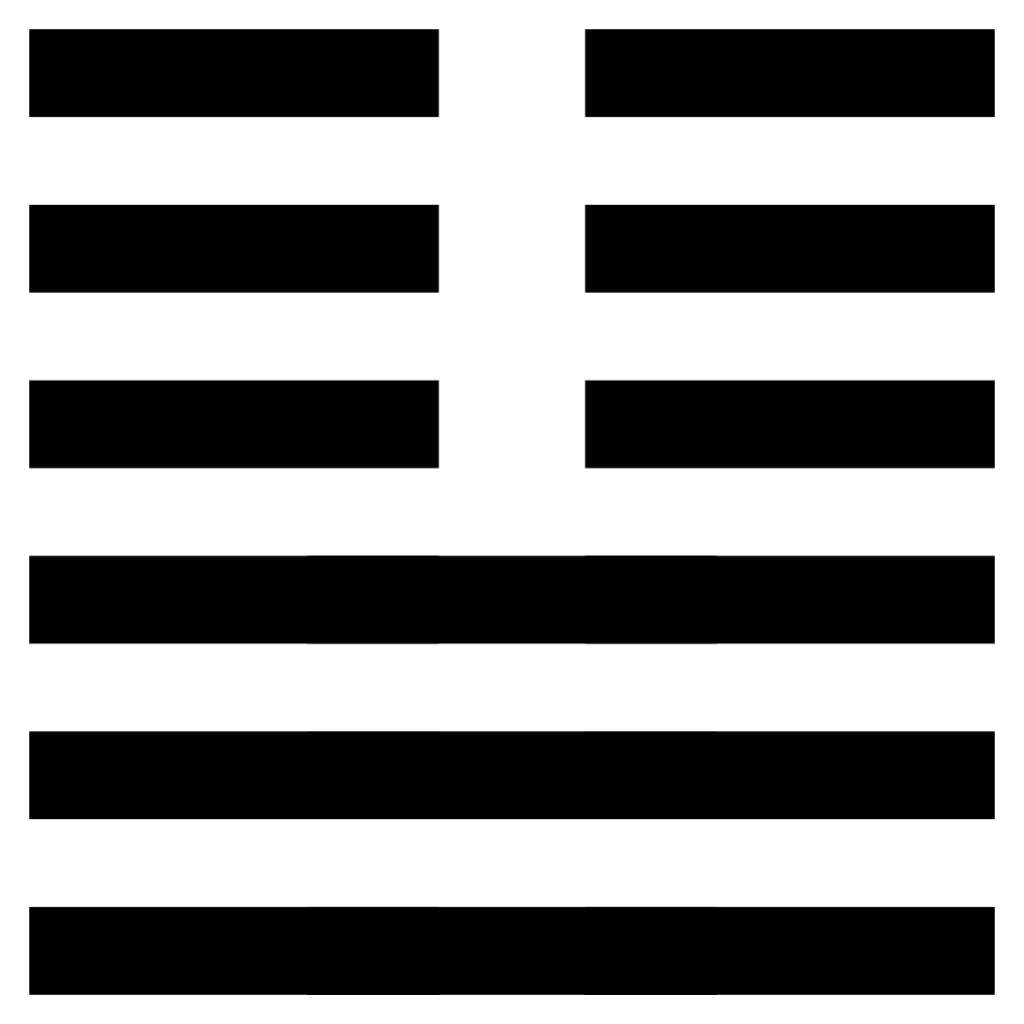
“Wu Wang means truthful, honest, and sincere, without any fabrication. It was considered to be the natural state of the individual.”
“This gua tells us that after King Wu overthrew the Tyrant of Shang, there was decay among the people. It was corrected before it had gone too far. The social norm returned in a short period of time. King Wen said that the principle of the new administration should be truthfulness.”
At this moment, the outcome of the election remains undetermined. So as many thoughts as there may be, there is nothing to say. The I Ching, asked again about the election, has plenty of valuable insight, as it has had for thousands of years. People are, after all, people, then and now.
Wu Wang literally means not untruthful. Wilhelm translates Wu Wang as Innocence (the Unexpected) and Blofeld as Integrity, the Unexpected. In this book I adopt the term Without Falsehood. In Chinese, Wu means not, and Wang is untruthful, dishonest, or insincere. Thus, Wu Wang means truthful, honest, and sincere, without any fabrication. It was considered to be the natural state of the individual.
DECISION
Without Falsehood. Sublimely prosperous and smooth. Favorable to be steadfast and upright. If one’s intention is not truthful, There is trouble. Unfavorable to have somewhere to go.
COMMENTARY ON THE DECISION
Without Falsehood. The firm comes from the outer And becomes the host of the inner. Movement with strength; The firm is at the central place and has a correspondent. Great prosperity and smoothness through its correctness. This is the will of Heaven. If one’s intention is not truthful, One will fall into errors. It is unfavorable for one To have somewhere to go. When truthfulness is gone, Where can one go? When the will of Heaven will not protect, How can anything be done?
COMMENTARY ON THE SYMBOL
Under Heaven, Thunder rolls. An image of all things accompanied by truthfulness. In correspondence with this, The ancient king enriches his virtue in harmony with the time And nurtures myriad beings.
SIGNIFICANCE
This gua displays the wisdom of holding to the truth—that is, no matter how situations change, truthfulness never changes. The ancient Chinese did not have a personal God; they submitted to the will of Heaven and resigned themselves to their fate. They believed that to live and act in harmony with the will of Heaven was the nature and the duty of humanity. To act in accordance with the virtue of Heaven would eventually bring everlasting fortune and success. If one had this faith, then one was able to not count on the harvest while plowing. This attitude does not neglect the law of cause and effect. What is important is whether one’s attitude and motivation are aligned with the virtue of Heaven. What is considered first is not the reward one will attain, but whether the work is really good for humanity. Fostering and nurturing the myriad beings is the virtue of Heaven.
The solid line at the bottom and the solid line at the fifth place are qualified to be the hosts of the gua. However, the bottom line is the starting point of a gua. In this gua, one starts with truthfulness. Truthfulness is the nature of humanity. When one approaches a task, one should start with truthfulness. For this reason, the bottom line is more suitable to be host of this gua.
This gua tells us that after King Wu overthrew the Tyrant of Shang, there was decay among the people. It was corrected before it had gone too far. The social norm returned in a short period of time. King Wen said that the principle of the new administration should be truthfulness. He accepted the lessons learned from decay and pointed out that if one’s intention, especially that of a leader, was not truthful he would fall into error. It would not be favorable for him to move in any direction. The Duke of Zhou recalls that advancement with truthfulness brought good fortune. For a just cause one should count on neither the harvest nor the result while recultivating old land. Even if truthfulness encounters misfortune, one should still remain steadfast and upright. But in taking action, if the direction is lost, there would be no advantage.
“Tai is one of the most auspicious words in the Chinese language.”
“It is the law of Nature: when things have proceeded to an extreme, they return to their opposite. It is wise for one to know one’s predestined fate. One should not try to alter natural law by using force. Recognize the situation. In ancient times when there were serious calamities an emperor often issued a “self-blame decree,” a mea culpa, to calm people’s indignation. Through self-examination and by being central and steadfast, wait for another cycle from Hindrance to Advance. Out of the depths of misfortune comes bliss. Be patient; there is always hope.”
The I Ching is asked about Election 2020. For comment, not for prediction. For what it’s worth.
Tai is one of the most auspicious words in the Chinese language. Originally it meant “more than” or “most.” It generally indicates a condition of being more than great. Tai also means peace, safety, security, good health; or it suggests progression, proceeding, advancing. Both Wilhelm and Blofeld translate Tai as Peace. In this book, the word Advance is adopted.
The ideograph of Tai consists of two parts. The upper portion represents greatness. The ancient Chinese believed that Heaven and Earth were great, and that human beings were also great. Thus, the ideograph looks like a person standing with arms and legs wide open. Underneath the two legs, there is the ideograph of water, sui. It looks exactly like the primary gua Kan , or Water, standing upright. This ideograph presents the picture of running water proceeding forward smoothly with great ease. This is the primary meaning of Tai in the I Ching.
Sequence of the Gua: After fulfilling one’s duty with composure, one feels peaceful and safe.Thus, after Fulfillment, Advance follows.
Heaven is above and earth below—that is the natural phenomenon we find in our daily life. However, in this gua, Qian (Heaven) descends to the lower gua, and Kun (Earth) ascends to the upper gua. The situation seems inappropriate. Naturally, Heaven stands above and moves downward, and Earth stands below and moves upward. Yet in Tai, Heaven and Earth are moving together in communion. In this way they fulfill their duality.
There is a mountain named Tai that stands on the eastern coast of China. Mount Tai was regarded as a sacred mountain that connected Heaven and Earth. Each spring, the emperor would climb the mountain peak, making offerings there with great reverence. The purpose was to ask for harmony between human beings and their natural surroundings. The Chinese believed that when harmony between people and their surroundings was established then, in peace, safety, security, and good health, they would progress, proceed, and advance with great ease. Thus the meaning of Tai embraces all these auspicious meanings. Through thousands of years, the Chinese have sought guo tai ming an—a prosperous country and people at peace.
Traditionally, this gua represents the first month of the Chinese lunar calendar. It carries the message that spring is coming round to Earth once again. Heaven and Earth bring peace and blessing to all living beings. Myriad beings will renew their lives and move forward again. This concept represents the actual meaning of Tai. It is an auspicious time of prosperity and peace. There is an ancient Chinese saying that out of the depth of misfortune comes bliss. This bliss is Tai.
DECISION
Advance. The little is departing, The great is arriving. Good fortune. Prosperous and smooth.
COMMENTARY ON THE DECISION
Advance. The little is departing; The great is arriving. Good fortune. Prosperous and smooth. Heaven and Earth unite; All beings come into union. The upper and the lower link; Their wills are the same. The inner is the yang; the outer is the yin. The inner is the strong; the outer is the gentle. The inner is the superior; the outer is the inferior. Thus, The way of the superior is expanding; The way of the inferior is shrinking.
SIGNIFICANCE
In this gua, the significance of the union of Heaven and Earth is employed to display the importance of union among people. When people communicate sincerely and truthfully, harmony is created, and things will be achieved easily and smoothly. In Chinese, this situation is called Tai, Advance. The Yao Text of this gua is extremely difficult to understand. Different scholars have varying ideas. To the Chinese, the opposite of Tai is Pi. To go from Tai (Advance) to Pi (Hindrance) or vice versa is a natural law, as is the waxing and waning of the moon. The wise prefer to live in harmony with the laws of Nature. Be content with one’s fate, and never blame Heaven or others.
This gua also displays the wisdom of keeping a state of prosperity and preserving a period of bliss. In human society, starting any undertaking is difficult, but maintaining the achievement is even harder. One should not sleep on the accomplishment and feel complacent, but instead be aware that when the achievement reaches a climax, it begins to decline. The interconnection between Heaven and Earth sets the example for mutual communication between human beings. People with the same faith and goals should maintain their mutual love and care and support each other; then the blissful situation can last longer.
The yielding line at the top reaches the final stage of Advance. A turning point from Advance to Hindrance is waiting ahead. The Yao text gives warning: the castle wall returned into the moat. It is the law of Nature:when things have proceeded to an extreme, they return to their opposite. It is wise for one to know one’s predestined fate. One should not try to alter natural law by using force. Recognize the situation. In ancient times when there were serious calamities an emperor often issued a “self-blame decree,” a mea culpa, to calm people’s indignation. Through self-examination and by being central and steadfast, wait for another cycle from Hindrance to Advance. Out of the depths of misfortune comes bliss. Be patient; there is always hope.
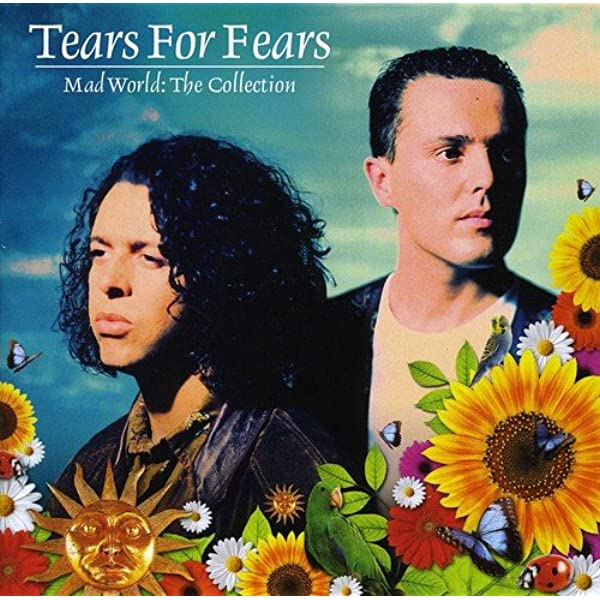
Tears for Fears: Mad World. Everybody Wants to Rule the World. Sowing the Seeds of Love.
Happy Election Day. Happy gardening.
Mad World
All around me are familiar faces Worn out places, worn out faces Bright and early for their daily races Going nowhere, going nowhere Their tears are filling up their glasses No expression, no expression Hide my head, I want to drown my sorrow No tomorrow, no tomorrow
And I find it kinda funny, I find it kinda sad The dreams in which I’m dying are the best I’ve ever had I find it hard to tell you, I find it hard to take When people run in circles it’s a very very Mad world, mad world
Everybody Wants to Rule the World
Welcome to your life There’s no turning back Even while we sleep We will find you Acting on your best behaviour Turn your back on mother nature Everybody wants to rule the world
It’s my own design It’s my own remorse Help me to decide Help me make the most Of freedom and of pleasure Nothing ever lasts forever Everybody wants to rule the world
Sowing the Seeds of Love
High time, we made a stand And shook up the views of the common man The love train rides from coast to coast DJ’s the man we love the most
Could you be, could you be squeaky clean And smash any hope of democracy As the headline says you’re free to choose There’s egg on your face and mud on your shoes One of these days they’re gonna call it the blues
Sowing the seeds of love, seeds of love, sowing the seeds Sowing the seeds of love, seeds of love, sowing the seeds
Stand still. The trees ahead and bushes beside you Are not lost. Wherever you are is called Here, And you must treat it as a powerful stranger, Must ask permission to know it and be known. The forest breathes. Listen. It answers, I have made this place around you. If you leave it, you may come back again, saying Here. No two trees are the same to Raven. No two branches are the same to Wren. If what a tree or a bush does is lost on you, You are surely lost. Stand still. The forest knows Where you are. You must let it find you.
Above is this week’s Time magazine cover, created by visionary artist Shepard Fairey—most famous for his Obama “HOPE” poster. It is the only time in its history that the magazine has replaced its name on the cover. (I’ve referenced Shepard’s work multiple times before: here, here and here)
He writes:
I’m honored to have created my third cover for Time magazine, especially since this issue focuses on the civic duty of voting. The art I created for the Time cover addresses the very unique situation we are in as a country as we face the Covid-19 pandemic, unrest around police brutality and racial discrimination, voter suppression, and intense political division. In this illustration, the normally clear-cut rebel symbol of a bandana covering a face takes on a different meaning during Covid, becoming an emblem of safety, respect for one’s fellow citizens, and a sign that the wearer believes in science. The image on the bandana, including the ballot box speaker, is part of a piece of art I created called “Our Hands – Our Future.” Even though the subject in the portrait knows there are additional challenges to democracy during a pandemic, she is determined to use her voice and power by voting. The future is not shaped by voting alone, but voting is crucial to make a healthy, functional democracy. In my opinion, those who claim to believe in democracy and ask for the honor to represent the people should be looking for ways to make voting easier, not more difficult. I’d like to see the implementation of an election holiday as well as secure electronic voting options. Until then, mail in your ballot or mask-up and head to the polls… the future of our democracy is in your hands! -Shepard
We have transformed the ways we live and work during the pandemic, like it or not. That forced transformation will be continuing for a while. In fact, it is now predicted that some of those changes, like work at home, will last long after they are needed for public health reasons.
There has also been talk about how this has transformed us personally, individually and in our relationships. There’s not much doubt that some of those changes involve psychological and emotional effects that are negative and unwelcome.
There is one more layer beneath all this. Pandemic or not, working at home or in the office, in touch in person or online, last March when it began or next March when it might be over, we are who we are, but more importantly, we can be who we can be. In the times, with all the outside transformations, we can be transformed inside. We can transform ourselves.
How? Why? In what ways? There are thousands of guides, from massive religious traditions to smaller philosophical and psychological practices to individual books and teachers.
This extreme moment, extreme in many ways, has given us an opportunity rarely seen. We can’t go back and we can’t stand still. So, paying the price of cataclysm, we might as well do a complete assessment of how things are and who we are. And make of it and ourselves what we can. It doesn’t look like it right now, but this might be paradise, if we are brave enough to be the ones who live there.
Here are a few of those who should come forward in these two weeks before the election. Whether it has any effect on the election we don’t know. It will certainly establish what history will want to know: which side of history were you on?
Former President George W. Bush: It is hard to know exactly what Bush 45 is telling himself as he remains silent in the face of a possible Trump re-election. He certainly doesn’t believe Trump is any good for the country. Maybe W believes his voice is not needed, and that in a post-Trump Republican Party, sane leaders who didn’t take sides will be needed. His confidence in a Trump defeat is misplaced. And in the event of a Trump victory, his name will be added to the list of those who should have spoken up but didn’t.
The Generals: The Generals, including those who have served in various civilian national security and intelligence positions, have often expressed a chain-of-command reluctance to speak out and oppose Trump’s re-election. That is, Trump is still the commander-in-chief, even if they are retired. Again, this may work on that basis, but only if they are willing to be on history’s very naughty list.
Dr. Anthony Fauci: Trump is now abusing Dr. Fauci every day, including misusing him in ads, censoring his media appearances, and just today calling him a “disaster,” who if we had listened to, would have cost us hundreds of thousands additional lives. All of that unfortunate, since without Dr. Fauci, most Americans would have no one to trust in the administration. Dr. Fauci has been at his important national work for decades, and no doubt thinks that he can do more on the inside, even if minimized and abused, than on the outside. So he walks a tightrope, issuing measured responses that keep him on the job.
Dr. Fauci is wrong. Other than his huge public respect, he is not being listened to anyway within the administration. Whether he resigns or responds in a way that demands firing, his departure will end the Trump administration. And, in the event of a new administration, one of the first things to happen will be Dr. Fauci hired back in his old position at NIH, where he will actually be listened to and do the good he obviously can.





 Bob Schwartz