These are some of the oldest stories. People are exiled and journey to an unknown land. People arrive exiled into an unknown land. People are subject to catastrophe, natural or human, that fundamentally changes the land they live in, making it an unknown land. A flood inundates the earth and only a few remain to float and start again. A civilization flees across the desert to start again. The Bible includes the earliest of many stories, especially science fiction, of strangers in strange lands—even when that strange land is their once-familiar home.
There have been a few of these stories in modern times. Weapons, first atomic, then hydrogen, transformed this into a world that might disappear in an instant. A disease infected the world. A technology, artificial intelligence, seems capable of, to use the cliché, changing everything. This is now another strange land.
Our history of dealing as strangers in a strange land, starting with the Bible, is mixed. Early concerns about nuclear weapons—“Ban the bomb” rallies—gave way to dangerous proliferation. The covid pandemic led to welcome emergency scientific vaccine breakthroughs, but also to millions of unnecessary deaths, as some number of people stubbornly refused to believe it was as bad as science said, or bad at all. Arriving in the strange lands of nuclear annihilation or covid, some wanted—still want—to go back to the way things were. They just wanted to go home to a familiar land. We don’t know how we will do in the strange land of AI, though some current indicators are not promising.
In the words of Grateful Dead lyricist Robert Hunter in The Wheel:
The wheel is turning and you can’t slow down You can’t let go and you can’t hold on You can’t go back and you can’t stand still If the thunder don’t get you, then the lightning will
“Pope Leo, his papal predecessors and his contemporary brethren are calling for returning to Christian roots, with one simple concept: War is fundamentally antithetical to the Gospel of Jesus Christ.”
I am adding a short opinion piece in the New York Times, It’s Time to Put This Catholic Teaching to Rest, by James Grimaldi, former executive editor of The National Catholic Reporter. The teaching referred to is just war theory. Excerpt follows:
It isn’t every day that a pope calls for an overhaul of a more than 1,000-year-old teaching of the Catholic Church, but that’s exactly what Pope Leo XIV did last month. In his inaugural encyclical, “Magnifica Humanitas,” which was mainly an exploration of how to protect human dignity in the age of artificial intelligence, Leo devoted a brief but critical passage to just war theory.
In a break with a foundational principle of Catholic thought on conflict, Leo called the theory “outdated” and made it clear that the teaching has been twisted to justify wars for decades, most recently the war in Iran. It is about time for the change.
Just war theory holds that wars must meet strict conditions: They should be in self-defense, and only if alternatives have been exhausted; the use of force should be proportional; there should be a likelihood of success and the threat should be imminent. Since World War II at least, several popes have criticized world leaders for using the theory as a fig leaf.
While Leo did not cite any specific war in the encyclical, he clearly had President Trump’s war on Iran in mind. On June 6, in remarks en route to Madrid for a visit, he was asked if a “just war” was being waged in Iran. The pontiff replied: “I believe this has already been made very clear: In Iran, the criteria for a just war are not present.” Leo wasn’t done. “The theory of the just war dates back to centuries when it was impossible to imagine the weapons and the destructive capacity available to humanity today,” he added….
In casting doubt on the usefulness of just war teaching in the modern era, Leo’s encyclical preserved “the right to self-defense in the strictest sense.” Instead of suggesting a new framework for justifying war, Leo all but rules out war’s legitimacy. “Humanity possesses far more effective and capable tools for promoting human life and resolving conflicts, such as dialogue, diplomacy and forgiveness,” Leo wrote. “The use of force, violence and weapons reflects a relational poverty that always has disastrous consequences for civilian populations.”
Overhauling just war teaching will be among the top issues to be discussed on Friday and Saturday at a consistory, or meeting of the pope’s cardinals, at the Vatican, according to Vatican News, the Holy See’s official outlet. The cardinals should not pull their punches. The moment urgently calls for new guidance, not just discussion. In reformulating the church’s view of war, the stakes for Catholicism, the United States and the world are high, and the Vatican needs to get this right. The universal church, with millenniums of moral reasoning and clergy on the ground in virtually every conflict zone, is uniquely situated to articulate a new intellectual framework on just war theory — especially as A.I. increasingly automates decisions on the battlefield.
The answer is deceptively simple. Leo, his papal predecessors and his contemporary brethren are calling for returning to Christian roots, with one simple concept: War is fundamentally antithetical to the Gospel of Jesus Christ.
The Democratic Party is now loudly concerned that insurgent progressives running under the Democratic Socialist banner are hurting the party. As if the party isn’t hurting itself just fine.
Where to begin? Two years ago, instead of intervening, telling Biden he shouldn’t/couldn’t run for the nomination, holding a real nominating contest, and selecting a strong and charismatic candidate to defeat Trump…we know what happened. And then, as Trump set out on a mission to demolish democracy—and the White House East Wing—the Democratic Party tried to figure out what it was and how to respond. One-and-a-half years later, it is still dithering, trying to decide. When newer and younger leaders emerged, with ideas the party found too bold and risky, the party could not suppress them fast enough.
Leading to two things. One, Democrats, that is the remaining people still willing to be included in that group, are disaffected beyond disappointment, and are showing their lack of enthusiasm in a way the party understands, as donor support is cratering. Two, those newer and younger leaders are catching fire, no matter how much the party tries to put that fire out.
America desperately needs an effective opposition party in this existential crisis. The Democratic Party, as now established, is not it.
Philosophy is embedded in all that we do, believe, and is done to us. It often goes unrecognized and unattended. Among other places, it appears in our religious traditions, though we receive the philosophies of God, the founders and the wise people as givens which we follow and practice. The same goes for calls to patriotism, nationalism and war.
There are those whose lives and careers are devoted, in whole or in part, to philosophy. Some are in the academy, some are outside. If philosophy is important, and it is, it should be front and center. If media reports regularly included philosophical notes or discussions with philosophers, events and issues could go far and deep beyond “He said, he said, this country attacked, this country fought back, these children were killed, the killing is unfortunate but excusable.” Like that.
Philosophers don’t come more forward, or out at all, for many reasons. Some philosophers, brilliant and insightful as they are, are not easily comprehensible to ordinary people—including other philosophers. This lack of communicative clarity keeps media from regularly including philosophers in their interviews and round-tables. When issues are hot and controversial, as they are now, it is risky for philosophers to offer any insights, especially when the very higher ed institutions they work for are under investigation and assault.
Nevertheless, we need to dig deeper into war and the death of democracy, or the dozens of other issues we face, beyond black and white, good guys and bad guys. Philosophers can do that, as they have always done, when they are given a platform and can make themselves understood.
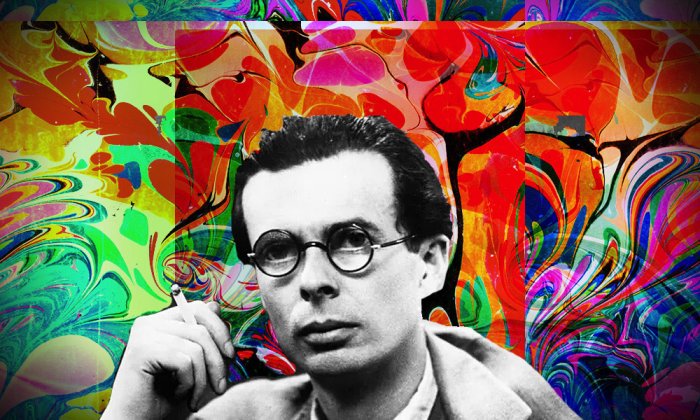
“If the doors of perception were cleansed every thing would appear to man as it is: Infinite.” –William Blake, The Marriage of Heaven and Hell
Aldous Huxley used this quote for the title of his 1954 essay, The Doors of Perception, about his experiences with mescaline.
It is commonly, if simplistically, thought that psychedelic experiences open the floodgates of perception and cognition, control valves that in everyday life are regulated and closed down to allow our lives to go on in a relatively orderly and productive way. The response to those experiences may be happy delirium (Oh wow!) to scary delirium (Oh shit!), and levels in between and with variously lasting impact. One might conclude, as Blake, Huxley and others have, that one will have experienced infinity—whatever that might be.
It is mentioned here to suggest what may be one of the biggest overall problems we now face—and it is not psychedelics, though strangely related.
We are living in a time when in some ways the floodgates of perception and cognition are wide open 24/7. Just as most people, despite their confidence in their balance and stability, are not ready or able to handle 24/7 psychedelic experiences, or at all, so are most not ready or able to handle the flood of everything we seek or is thrown at us. This is not to say that most people are walking around tripping, though that imagined scene is intriguing. This is to say that with those floodgates of perception and cognition open, keeping balance is an overwhelming challenge.
Immediately some will point out that this analysis fails, because so many are still engaged in productive and constructive activities. That would be impossible if, as is posited, everyone is going around, doors cleansed, experiencing infinity all the time.
That misses the point. We can find a way to handle this flood, which for the moment seems inevitable and unavoidable. Just as, from the earliest days of psychedelics, there are those able to manage the flood beneficially, so that they become or remain balanced, stable and sane.
Since we are now drowning in media and thinking, this is not going to be easy. So much stuff. If we want to extend this possibly tortured metaphor, we need to pay attention to our dosage. Whether or not is good for us, here it is, not going away, just growing everywhere all the time.
There may be a bit of confusion about the above image, so a clarification.
No, this is not him as the Buddha, unlike images that appear to claim that he is Jesus. This is an image of him in Buddhist meditation.
No, he is not sleeping, although meditation has been known to lead to that, and he is known for spontaneous sleeping. This is an image of him in Buddhist meditation.
It would be good for America and the world if he followed any of beneficent traditions. By his own admission (sometimes) he is not much of a Christian or anything else. Whatever faith he may hold seems to include heaven and hell, since he has said he does not expect to go to heaven.
If he doesn’t want to adopt an entire Buddhist view, just sitting in meditation daily could do wonders for him and for all of us.
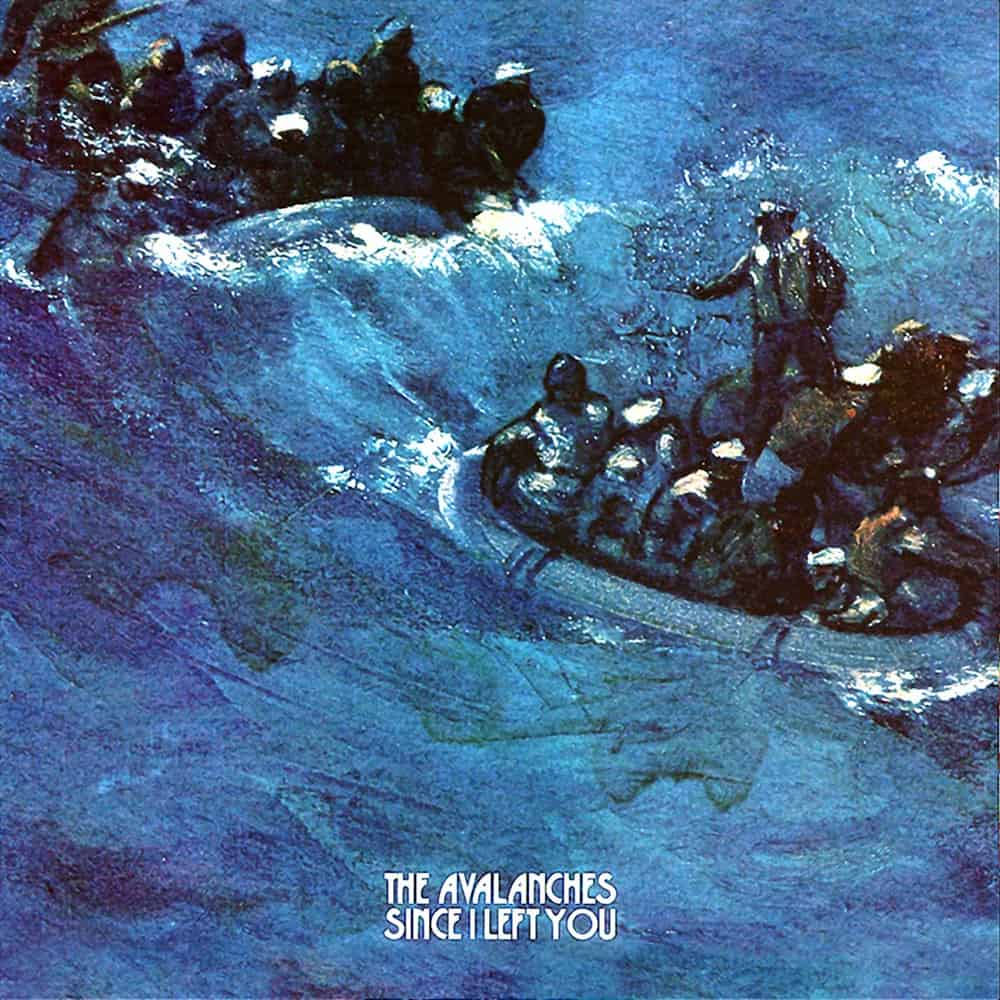
The Avalanches are bent on filtering their all-encompassing record collections through sampling and original instrumentation that owes most to hip-hop. The Australian group truly arrived in 2000 with Since I Left You. An expansive suite in the lineage of sample-based landmarks such as Public Enemy’s It Takes a Nation of Millions to Hold Us Back, the Beastie Boys’ Paul’s Boutique, and DJ Shadow’s Endtroducing….., the album distinguished itself with an unbridled sense of joy — exemplified not only by the sound of whinnying horses — and minimal original vocal content, left to ingeniously recontextualized voices from disparate sources. Even in the wake of numerous awards, sales certifications, and the attainment of a global following, its stature continued to heighten through the release of the group’s long-anticipated 2016 follow-up, Wildflower, a more collaborative effort that offered new shades of psychedelia and topped the Australian album chart. We Will Always Love You, another wide-ranging set filled with imaginative pairings of featured artists, returned the group to the Top Ten. They reappeared in 2026 with “Together,” an ecstatic dancefloor collaboration with Nikki Nair, Jessy Lanza, and Prentiss.
Before the Avalanches took shape in 1997, core members Robbie Chater and Toni Di Blasi, along with fellow founding member Darren Seltmann, were in the Melbourne-based noise-punk band Alarm 115. The deportation of drummer Manabu Etoh prompted a new project, the making of a sample-based demo — utilizing scores of used records…
In the works for over two years, a period lengthened by sample clearances and other business matters, Since I Left You, the Avalanches’ first album, was issued first in Australia in November 2000. A continuous hour-long collage pieced together with thousands of samples, it received a response from critics and the public similar to its glowing quality. The group even had the blessing of Madonna, who allowed them to use the bass line from her early hit “Holiday.” Beggars Banquet offshoot XL issued the album in the U.K. in May 2001, and a U.S. edition on Sire followed that November. “Frontier Psychiatrist” and the title track charted in Australia and were Top 20 hits in the U.K., where the album reached number eight. Remixes from the select likes of formative inspiration Prince Paul, Stereolab, and Cornelius enhanced the Avalanches’ image. The album led to four ARIA awards and was eventually certified platinum in Australia.
Admiration for Since I Left You seemed to intensify with each year that passed without a follow-up. What early supporters and converts got instead was a handful of scattered remixes for the likes of Belle and Sebastian, Wolfmother, and Franz Ferdinand until 2007, when the group seemed to disappear entirely, leaving only rumors of a potential second album. In truth, they had started banking material that over time grew to 40 songs. Nothing resembling an album was ever finished, though, as the Avalanches devoted surplus energy to other projects, like scoring a King Kong musical and working on an animated film that never saw the light of day.
The silence ended in July 2016 when the Avalanches — essentially Chater, Di Blasi, and De La Cruz — made their proper return with Wildflower. The trippy album drew from their interim projects, and while it boasted its own lengthy list of sample sources, it also featured numerous guest instrumentalists and vocalists across the fields of left-field rap and underground rock, from MF Doom and Danny Brown to Jennifer Herrema and David Berman. Warmly received by listeners and critics, Wildflower topped the Australian chart, went Top Ten in the U.K., and entered the Billboard 200 at number 27….We Will Always Love You, was released in December 2020 and entered the Australian chart in 2020.
It is never too late to discover previously unknown-to-you creators and creations, whether you’ve missed them for decades or centuries. Where there’s life there’s listening.
I just discovered The Avalanches, their first album released twenty-six years ago. It is like unwrapping a gift that has been under the tree all this time.
Above is a good description, though reading about music you haven’t heard is a poor substitute, especially when it is a kind of music you have little reference for. When The Avalanches music emerged, not just using samples but mostly composed of samples, the term “plunderphonics” was used. (However, the samples are all cleared, not stolen.) Like creating a mosaic out of found objects, it could be a mess, but if you are artists, it could be a masterpiece.
I know this music is good, not just because I like it or because of the reviews and regard, but because when it was playing this morning, a very discriminating and picky listener passed by and said, “good music.” It is. Up. Lifting. Listen.
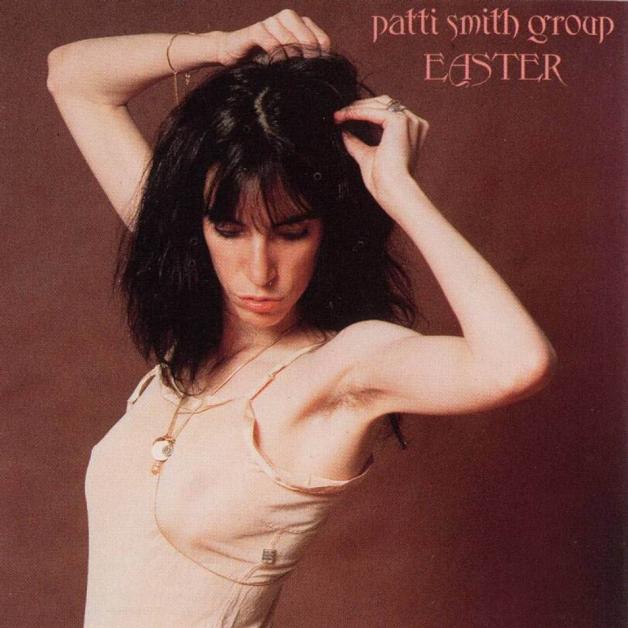
Sometimes it is done with Patti Smith. She (along with Zen masters, along with other musicians like Kurt Cobain) is in the lineage of the Beat Poets, who faced with a crazy world, talked crazy. Or so it seems. Songbird inmates of the asylum. Don’t try to get out; you were never in.
This from Space Monkey on Patti Smith’s Easter:
Space monkey, sign of the time, time Space monkey, so outta line, line Space monkey, sort of divine And he’s mine, mine, oh he’s mine
A stranger comes up to him Hands him an old, rusty Polaroid It starts crumbling in his hands He says, “Oh man, I don’t get the picture This is no picture, this is just, this just a, this just a”
“This is my jack-knife, this is my jack-knife This is my jack-knife, this is my jack”
Thirteen years ago, a North Carolina minister, Bishop William Barber II, began the Moral Mondays movement. I posted about here.
Join us for Moral Mondays: A Southern Call to Conscience as we engage in a season of nonviolent moral resistance against extremism in government. Founded in 2013 in North Carolina by Bishop William J. Barber, II, Moral Mondays is a protest movement that centers impacted people, people of faith, and moral leaders who hold elected leaders and government accountable to enact a moral agenda that responds to the urgent needs of the poor.
We are calling on people of moral conscience to join us for Moral Mondays throughout the summer and fall as we work to enact a moral budget and moral public policies for the nation.
Though this was 2013, a few years before the Trump era, there has never been a time when regressive movements in America tried to take us back to a less humane, democratic and moral time. Fortunately, there has never been a time when progressive, humane and moral movements have not pushed back and forward. Moral Mondays was one of those.
Why do I emphasize that progressive Christians can save America now and restore humane and moral democracy? There are of course millions of non-Christians and non-religious citizens who have gotten behind that work in the past and millions are doing that today. Our efforts are worthy and necessary.
Progressive Christians are in a unique position. There have been and are a large number of Christians who believe as a matter of faith that America is a Christian nation and that their faith demands that much of our 21st century progress, like much of the 19th and 20th century progress, is not what God or Jesus wants. It is fine for Jews, Muslims, Buddhists, and those of other faiths or no faith to argue otherwise. But other Christians who believe differently are not so easily dismissed, although dismissed they have been and will be. We can look to the most prominent Christian in the world, Pope Leo (who happens to be American), as an example of what can be said and done.
This is a call that progressive Christians stand up and stand out together for an alternative vision of America—a humane, democratic and above all moral America. Moral Mondays was and is such a movement.
It wasn’t and isn’t easy. Christian churches supported slavery, using the Bible as proof text. Opposing Christians tried to explain that as a matter of Christian principle and as a matter of humane morality, they were wrong and it was wrong.
It is Monday. Moral Monday. We would like to think of every day of the week—including the sacred days for our various faiths—as Moral days. But if one day a week is all we can handle, it’s a start.
This song was written in New York City Of rich man, preacher, and slave If Jesus was to preach what He preached in Galilee, They would lay poor Jesus in His grave. –Woody Guthrie, Jesus Christ
It is Sunday, a day of worship for many Christians. It is Flag Day, established in 1912 by President Woodrow Wilson to honor the American flag. It is the birthday of President Trump, which he is honoring by holding a UFC event on the lawn of the White House.
Among these four—Jesus, the American flag, President Trump and the UFC—I’ve selected Jesus. I would hope that faithful Christians would agree with that selection, but who knows?
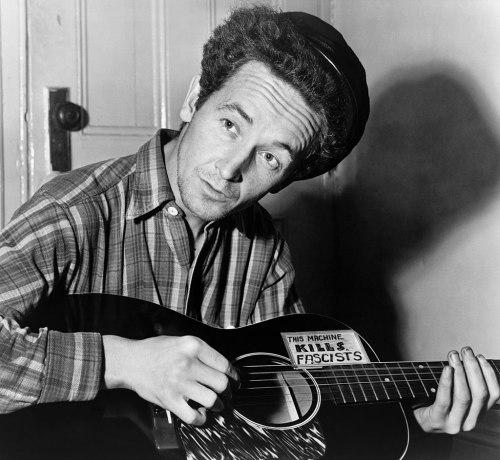
Woody Guthrie is one of the most significant musicians in America. He was not the first or last to use song to protest and feature many national infirmities, but he may be the best.
Many think that his song This Land is Your Land should be chosen as our new national anthem. His family has resisted this, saying that in the wrong hands, it could be used for malevolent purposes. They may have a point. Look at how the American flag and American patriotism has been misused.
Today’s song is Woody Guthrie’s Jesus Christ. When it comes to misuse and misunderstanding, some versions of that faith may be at or near the top of the list.
Jesus Christ was a man who traveled through the land A hard-working man and brave He said to the rich, “Give your money to the poor,” But they laid Jesus Christ in His grave
Jesus was a man, a carpenter by hand His followers true and brave One dirty little coward called Judas Iscariot Has laid Jesus Christ in His Grave
He went to the preacher, He went to the sheriff He told them all the same “Sell all of your jewelry and give it to the poor,” And they laid Jesus Christ in His grave.
When Jesus come to town, all the working folks around Believed what he did say But the bankers and the preachers, they nailed Him on the cross, And they laid Jesus Christ in his grave.
And the people held their breath when they heard about his death Everybody wondered why It was the big landlord and the soldiers that they hired To nail Jesus Christ in the sky
This song was written in New York City Of rich man, preacher, and slave If Jesus was to preach what He preached in Galilee, They would lay poor Jesus in His grave.