Bob Schwartz

Category: Uncategorized

America needs a strong, smart, strategic Democratic Party to restore sanity. We don’t see that from the party…yet.

If you are a Democrat, you are receiving maybe dozens of texts and emails each day from various Democrats running for various offices or from organizations promoting various good causes. The messages vary in content and tone from “You’re a good person who has helped before and can help again” to today’s annoyed text:

“We begged you to help overturn [Citizens United]. We pleaded with you. And still…nothing.”

The text includes pictures of Amy Klobuchar and Adam Schiff.

All this, at a time when Democrats justifiably have little confidence that the Democratic Party, with its current establishment, has a hope or a clue to restoring democracy in America. (Ironic, given the name of the party.) The reasons for that lack of confidence are too many to list.

Are there glimmers of hope and effective action? Yes. Glimmers, and thanks to those who provide them. But overall, the reaction of the Democratic Party to a dire America and to the disaffection of their own members is: Stay the course, because this American travesty will collapse under its own unpopularity and damage. Trust us, people. And give us money.

There are dozens of people—maybe hundreds—who could engineer and lead a Democratic insurgency. The party’s response to that is—again—stay the course. We know what we’re doing. Look at how successful we’ve been. Maybe there are a few minor repairs needed, but why fix it if it’s essentially not broken?

Adlai (twice). Hubert. George. Walter. Michael. Al. John. Hillary*. Kamala.

*Bill not included, though despite winning twice, he never received a majority of popular votes.

The point of all religions and spiritual traditions is to have us see and hear openly and clearly

The point of all religions and spiritual traditions is to have us see and hear openly and clearly.

At times, some have seen and heard openly and clearly. When they have, they may have taken it upon themselves to help others do the same, realizing that this would be of general benefit and would reduce general malificence.

How they did that is how we have ended up with an overwhelming set of different traditions. Stories, texts, practices, philosophies, on and on. So much so that experts ancient and modern sometimes miss or avoid the point, some out of selfish expediency, many out of good intent but occasional incomplete understanding. Some have gotten the point and try to refocus our attention on it. Sometimes it works sometimes it doesn’t.

When people see and hear openly and clearly, they see and hear themselves and everyone and everything in the best possible way. Things will not immediately or ever be perfect. They can’t. But things will be better.

Every word in the Bible, whichever version old or new, was meant and is meant to reach this point. The connection isn’t always obvious. Some direct and didactic guidance and teaching is not exactly beside the point, since it is apparently aimed at making us better people who are better together. Still that is not quite there. Then there are the stories that defy interpretation as making things and us better, though interpreters try. Again, the point remains, even if more obscure.

Whatever your tradition or philosophy, you can trace it back to someone who saw and heard openly and clearly, and whose followers tried as best they could to perpetuate it effectively, sometimes keeping the point, sometimes losing the point.

The good news is that each of us can dedicate ourselves, within and without those traditions, to the point. Once there, as the progenitors knew, better is on the way.

© 2026 Bob Schwartz

Weirdest, wackiest and most concerning Trump moment EVER?: “Our Reflecting Pool is taller than skyscrapers”

“If you lay the skyscrapers on the ground our Reflecting Pool is taller.”

“Jawdropping” is usually a figure of speech. Except as I watched this presidential moment, my jaw did literally drop. I’ve noted above it is weird, wacky and concerning. Weird and wacky can be fun and funny. Concerning is when the presentation tells you something—everything—about the very powerful man proudly making the presentation.

Jaw dropped and…speechless.

Putin got what he wanted—an American president. Why did he want that?

Putin thinks or would like to that Russia is still one of the top superpowers in the world. It isn’t, but he has a plan to get there.

All he has to do is knock one of the two superpowers from the top spots. Russia is never going to dethrone China. But he believes America is vulnerable. Putin is an expert and experienced intelligence officer–and dictator–so he knows vulnerabilities and can read people. He read Trump from first encounter. A man who thinks he’s smart but isn’t. A man who could be compromised and manipulated. Most of all, a man who, in the right position, could create chaos.

There are some particular American policies that Putin would like to see Trump adopt; weak support for Ukraine, for example. Mostly though, Putin wants to incite dissension and chaos in America because Putin, as a student of history and geopolitics, knows that internal dissension and chaos lead directly to national weakness.

Putin may not yet be able to declare mission accomplished. But every day he is getting closer to success.

© 2026 Bob Schwartz

Establishing an Abrahamic Israel in 1948

In 1948, as much of the world was recovering from World War II, the world also felt guilty and ashamed at not having intervened sooner to save 6 million Jews from Hitler.

A Jewish haven was established in Israel. There was widespread, though not universal, support for this. Whether this “worked” is a matter of perspective. It was bound from the inception to be a source of conflict, which continues to this moment.

What might have been more broadly acceptable and peace-inducing would have been an Abrahamic state, rather than just a Jewish one. It could have been a democracy where human rights were guaranteed for all people—Jews, Christians, Muslims, other believers, non-believers. It could have been an official home for all three traditions that honor Israel/Palestine as a foundational sacred space. Differences in beliefs, some not insubstantial, could be subsumed to common principles. The Abrahamic religions are literally siblings. Like all siblings there are conflicts, but like children of the same father, they are also family.

Write that speculative history. You will find it is not perfect—what history is?—but you will also find less enmity and more comity. What could be wrong with that?

Where is a time machine when you really need one?

© 2026 Bob Schwartz

Amateur administration: Why Trump keeps picking increasingly less qualified people for critical government jobs

Bill Pulte surrounded by homes that are actually spies!

Trump has nominated Bill Pulte to be Director of National Intelligence:


Bill Pulte is the grandson of William J. Pulte, founder of PulteGroup, a residential home construction company. He studied broadcast journalism at Northwestern University. Pulte founded Pulte Capital in 2011, a private equity firm, and founded The Blight Authority, a nonprofit that clears empty homes, in 2015. Amid a leadership dispute, Pulte was named to PulteGroup’s board in 2016, serving for a four-year term.


It isn’t worth discussing whether Bill Pulte is qualified to be DNI. He is not.

What is worth discussing is why Trump wants so many manifestly unqualified people to help him run the country. There are too many unqualified—and sometimes vengeful and wacky—officials to list here.

A few reasons:

Many of the unqualified are rich, which means they can give Trump money and loyalty in exchange for prestigious positions.

      Many of the unqualified are even less smart and knowledgeable than Trump, so he is not threatened by them.

      Some number of Trump hardcore supporters are the sort of regular people who think that if they only had the opportunity, they could do a better and more patriotic job than some of the so-called expert communist enemies of America who once held these positions. They may not ever get nominated, but they can at least see that other unqualified people are getting the chance.

      Americans need to pay undistracted attention: Focus and flow

      You are floating down a running river. The changing scenes along the banks are so interesting. You are lost in the views. But the river still demands attention and focus. As distracting as the scenery may be, there is the possibility of danger in the water.

      The mass of new scenery in American life is staggering. It is possible that as this is written, a million Americans are generating videos, and eventually there will be a million media channels to show them. The government of America once proceeded with a limited number of news items, occasionally outrageous, often important, but mostly plain. Now we seem to be at one outrage a day, or even an hour. The river is running, dangerous rapids ahead, but the passing scenery, beautiful or horrifying, is so alluring.

      Focus Americans. Be attracted or disgusted if you must by the constantly changing news and content. The flow. But keep diligent and vigilant focus on what matters. Some who do not mean you or most of us well are depending on distraction, hoping that like a child or pet, you will be fascinated by whatever shiny object is dangled in front of you. Please focus.

      Ambient music: Hiroshi Yoshimura

      Ambient music is characterized by atmospheric, textural soundscapes. Brian Eno’s Ambient 1: Music for Airports (1978) is credited with starting and naming the genre. He described ambient music as being able to “accommodate many levels of listening attention without enforcing one.” Definitions are fuzzy, so adjacent genres—ambient, neoclassical, minimalist, New Age—may seem to blend and merge. Erik Satie called his own works “furniture music”, which doesn’t seem very different than airport music.

      Hiroshi Yoshimura (1940 – 2003) is my current favorite. A Japanese artist, musician, composer and sound designer, his first album, Music for Nine Postcards (1982), came just a few years after Brian Eno, and Yoshimura is sometimes called the Brian Eno of Japan.

      Below are a couple of tracks, Clouds and Blink, from Music for Nine Postcards.

      Even if you are familiar with ambient music, you may not have heard/heard of Yoshimura. If you are not familiar with ambient music, convinced it is just some more of that New Age “stuff”, give it a try. One of my experiences is to walk among the songbirds, one ear on Yoshimura, one ear on the birds. Nice.

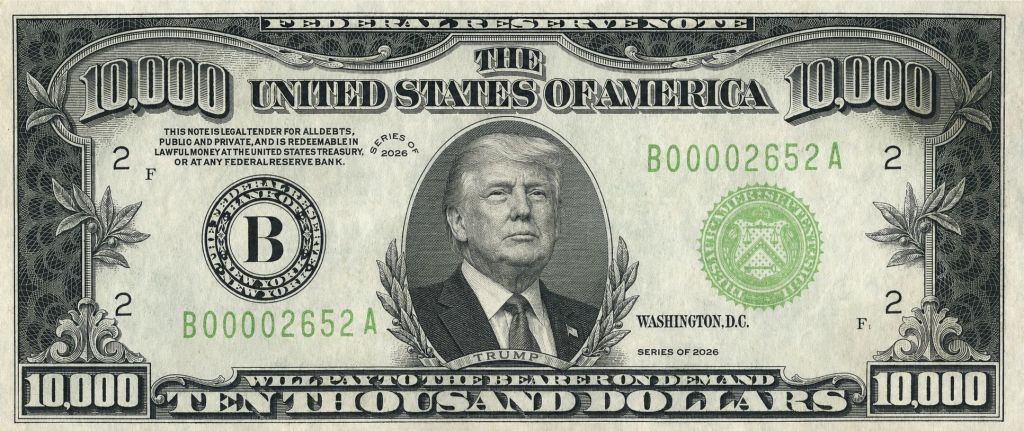
      Will Trump reactivate the $10,000 bill with his portrait on it? (May 9) No, he will try to issue a new $250 bill with his portrait on it. (Today)

      Three weeks ago I published the image above and the post below. It was not meant as a joke.

      Joke’s on us. Trump is asking the Treasury to issue a $250 bill with his portrait on it, to celebrate America 250. The law does not allow the portrait of a living person to appear on currency, so Congress is being asked to change the law. (Or alternatively, the Treasury will simply break the law, since the president controls federal law enforcement, so who is going to arrest them?)

      The lesson here, one we should have learned, is that Trump is totally predictable. Trump supporters praise Trump’s leadership style, saying it works because he is unpredictable. No. Maybe I got the denomination wrong, but the idea was right. As I said recently about Trump’s war strategies, he is not playing three-dimensional chess, he is playing zero-dimensional chess. You can see his craziness coming from a mile away. The American dilemma is what to do about it.


      The U.S. $10,000 bill was discontinued in 1969 and was last printed in 1945.

      This may be the year it is printed again. Will Trump order the Treasury to resume printing the $10,000 bill, this time with his portrait instead of Salmon P. Chase? Chase was Abraham Lincoln’s Secretary of the Treasury.

      Stranger things have happened and are still happening.

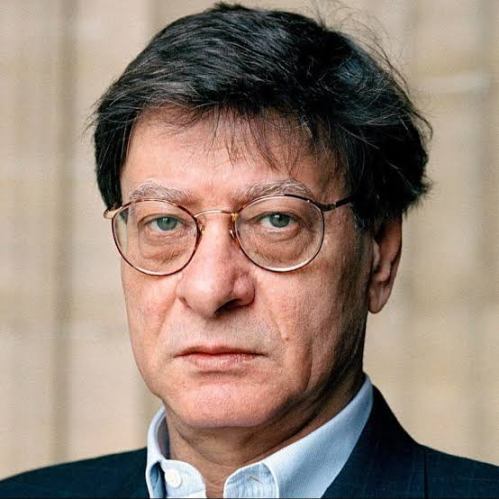
      A Palestinian legend for a Palestinian moment: Poet Mahmoud Darwish

      We have on this earth what makes life worth living:
      a tyrant’s fear of songs.
      Mahmoud Darwish – On This Earth

      Israeli minister confirms goal of large-scale expulsion of Palestinians from Gaza
      Human rights groups and lawyers say ‘voluntary migration’ policy amounts to ethnic cleansing
      The Guardian, May 29, 2026

      The news this morning about “cleansing” Gaza brought me back to poet Mahmoud Darwish (1941-2008), featured here a year ago.

      “Mahmoud Darwish is a literary rarity: at once critically acclaimed as one of the most important poets in the Arabic language, and beloved as the voice of his people. A legend in Palestine, his lyrics are sung by fieldworkers and schoolchildren.”

      From the start of this Israeli war on Gaza and its people, I have focused not just on the depraved indifference to Palestinian lives but also on the cultural decimation. Not long ago Trump threatened to end a civilization in Iran. While he hasn’t followed through yet on the threat, Israel appears to have no such compunctions in Gaza.

      Mahmoud Darwish is one of the Palestinian cultural treasures. Fortunately, he is out of reach of current events. Fortunately, his poems cannot be destroyed by the most deadly weapons.

      Following is just one poem. Please consider Unfortunately, It Was Paradise: Selected Poems or any of his poems, some of which are online.

      Please also consider the vital message that “a tyrant’s fear of songs” does make life worth living.


      On This Earth
      By Mahmoud Darwish
      Translated by Munir Akash and Carolyn Forché

      We have on this earth what makes life worth living: April’s hesitation, the aroma of bread
      at dawn, a woman’s point of view about men, the works of Aeschylus, the beginning
      of love, grass on a stone, mothers living on a flute’s sigh and the invaders’ fear of memories.

      We have on this earth what makes life worth living: the final days of September, a woman
      keeping her apricots ripe after forty, the hour of sunlight in prison, a cloud reflecting a swarm
      of creatures, the peoples’ applause for those who face death with a smile,
      a tyrant’s fear of songs.

      We have on this earth what makes life worth living: on this earth, the Lady of Earth,
      mother of all beginnings and ends. She was called Palestine. Her name later became
      Palestine. My Lady, because you are my Lady, I deserve life.