Three weeks ago I published the image above and the post below. It was not meant as a joke.
Joke’s on us. Trump is asking the Treasury to issue a $250 bill with his portrait on it, to celebrate America 250. The law does not allow the portrait of a living person to appear on currency, so Congress is being asked to change the law. (Or alternatively, the Treasury will simply break the law, since the president controls federal law enforcement, so who is going to arrest them?)
The lesson here, one we should have learned, is that Trump is totally predictable. Trump supporters praise Trump’s leadership style, saying it works because he is unpredictable. No. Maybe I got the denomination wrong, but the idea was right. As I said recently about Trump’s war strategies, he is not playing three-dimensional chess, he is playing zero-dimensional chess. You can see his craziness coming from a mile away. The American dilemma is what to do about it.
The U.S. $10,000 bill was discontinued in 1969 and was last printed in 1945.
This may be the year it is printed again. Will Trump order the Treasury to resume printing the $10,000 bill, this time with his portrait instead of Salmon P. Chase? Chase was Abraham Lincoln’s Secretary of the Treasury.
Stranger things have happened and are still happening.
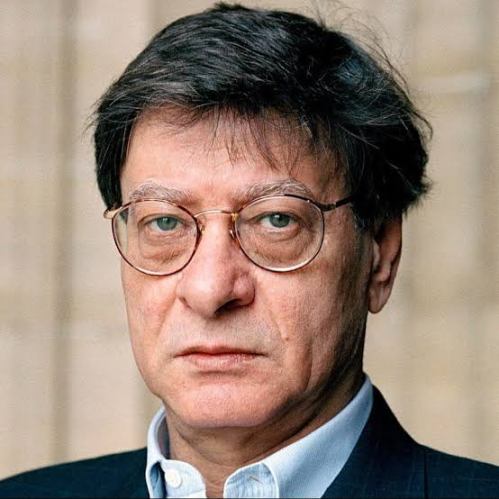
The news this morning about “cleansing” Gaza brought me back to poet Mahmoud Darwish (1941-2008), featured here a year ago.
“Mahmoud Darwish is a literary rarity: at once critically acclaimed as one of the most important poets in the Arabic language, and beloved as the voice of his people. A legend in Palestine, his lyrics are sung by fieldworkers and schoolchildren.”
From the start of this Israeli war on Gaza and its people, I have focused not just on the depraved indifference to Palestinian lives but also on the cultural decimation. Not long ago Trump threatened to end a civilization in Iran. While he hasn’t followed through yet on the threat, Israel appears to have no such compunctions in Gaza.
Mahmoud Darwish is one of the Palestinian cultural treasures. Fortunately, he is out of reach of current events. Fortunately, his poems cannot be destroyed by the most deadly weapons.
Please also consider the vital message that “a tyrant’s fear of songs” does make life worth living.
On This Earth By Mahmoud Darwish Translated by Munir Akash and Carolyn Forché
We have on this earth what makes life worth living: April’s hesitation, the aroma of bread at dawn, a woman’s point of view about men, the works of Aeschylus, the beginning of love, grass on a stone, mothers living on a flute’s sigh and the invaders’ fear of memories.
We have on this earth what makes life worth living: the final days of September, a woman keeping her apricots ripe after forty, the hour of sunlight in prison, a cloud reflecting a swarm of creatures, the peoples’ applause for those who face death with a smile, a tyrant’s fear of songs.
We have on this earth what makes life worth living: on this earth, the Lady of Earth, mother of all beginnings and ends. She was called Palestine. Her name later became Palestine. My Lady, because you are my Lady, I deserve life.
UFC Octagon being built in front of the White House for America 250
Most Americans remain outraged and demoralized daily by the administration of the nation. If you are one who has grappled with these and other emotions, please do try to be of good mind and spirit.
One other response is that those Americans are simply exhausted. As the expression goes, what fresh hell will today bring? Pictures of the UFC Octagon being built in front of the White House fit that thought.
More is to come, especially as we draw closer to July 4, planned as a peak moment to celebrate the 250th anniversary of the Declaration of Independence. America 250 has already been and will become a distortion of the history and of the values it represents. Among other things, at that historic moment 250 years ago, enlightened and oppressed people believed they could do better than living under a tyrant who cared nothing about them and everything about power and enriching himself and his friends. Because that sounds so familiar today, too close to home, we won’t hear anything about it in the official America 250.
Which is why, late as it is (so many responses to Trump are late and ineffective), we need alternatives to the official America 250. For just one example, we are going to be asked to sing both The Star Spangled Banner (official national anthem) and Lee Greenwood’s God Bless the U.S.A. (unofficial national anthem). I can think of many other songs we should be singing together that tell the American story, and you can too. That’s just one example of an alternative possibility.
Think and talk about how 2026 can be turned into an accurate and positive celebration of America’s admittedly imperfect history—then do it. America began as a somewhat enlightened, somewhat self-serving attempt to throw off the chains of unenlightened rule. For the rest of this year, and for the rest of this administration, we will be facing powerful attempts to rewrite history. We have the power to correct that and to transcend the unenlightened. We have the power to pursue and create alternatives. Starting with America 250.
It is Memorial Day, not Veterans Day, but there are never enough days to celebrate the sacrifice of our veterans.
In July 2020, Senator Tammy Duckworth was asked whether George Washington’s owning slaves should lead to taking down his statues. She said this question deserved a national dialogue.
Trump’s campaign responded:
“After saying she was open to tearing down statues of George Washington, Tammy Duckworth is now using her military service to deflect from her support for the left-wing campaign to villainize America’s founding. If she can’t defend George Washington, our first Commander-in-Chief, those of us who still respect our Founding Fathers’ immense sacrifice and think America is worth fighting for will hold her accountable for cowering to the far-left fascists in the Democrat Party.”
Trump talking about “immense sacrifice”, especially with respect to Senator Duckworth or any others who have served and sacrificed, including the ultimate sacrifice, is beneath comment. For those not familiar with the military career and the public service of Senator Duckworth:
Senator Tammy Duckworth is an Iraq War Veteran, Purple Heart recipient and former Assistant Secretary of the U.S. Department of Veterans Affairs who was among the first handful of Army women to fly combat missions during Operation Iraqi Freedom. Duckworth served in the Reserve Forces for 23 years before retiring at the rank of Lieutenant Colonel in 2014. She was elected to the U.S. Senate in 2016 after representing Illinois’s Eighth Congressional District in the U.S. House of Representatives for two terms.
In 2004, Duckworth was deployed to Iraq as a Blackhawk helicopter pilot for the Illinois Army National Guard. On November 12, 2004, her helicopter was hit by an RPG and she lost her legs and partial use of her right arm. Senator Duckworth spent the next year recovering at Walter Reed Army Medical Center, where she quickly became an advocate for her fellow Soldiers.
One doesn’t have to have served in the military to honor those who have. Officials pretending to be patriots while ignoring the plight of veterans is nothing new in America, though the current administration seems to have perfected the strategy.
Thanks to all those who served in the military and in war, whether currently in government, public service or civilian life. More than mere lip service, they deserve the best we as a people can provide, and also deserve our respect. Claiming that Senator Duckworth was “cowering to the far-left fascists in the Democrat Party”, or that Senator Mark Kelly, another combat veteran—and an astronaut!—should be tried for treason and hanged is not a sign of respect for veterans or for selfless sacrifice. From some quarters that don’t seem to understand sacrifice, such respect would be far too much to expect.
We look for answers that account for the most evidence. If the questions regarding Trump are “Huh? Wha?”, the answer is not what you and others might think.
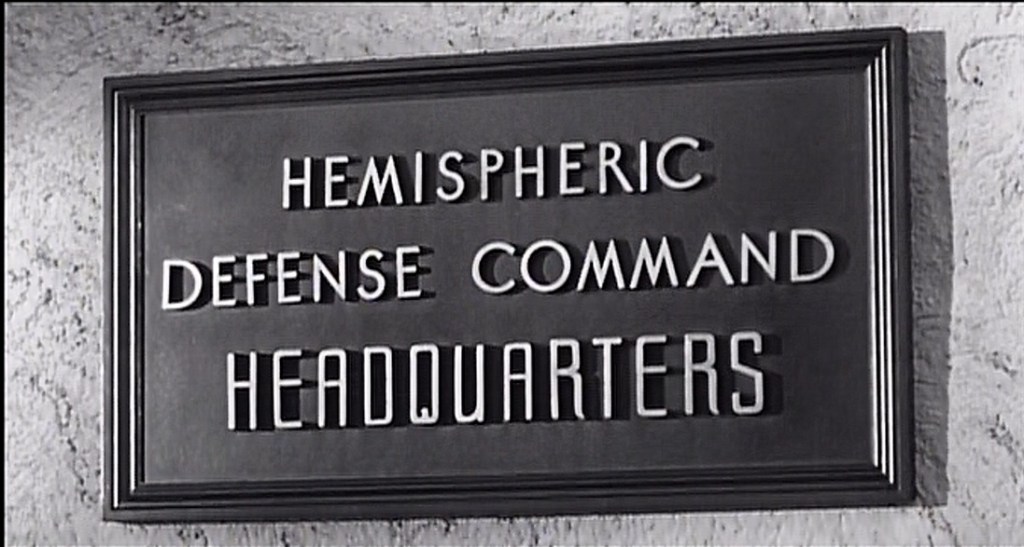
The sign reads “Hemispheric Defense Command”. In the movie, reports of flying saucers were investigated by the Hemispheric Defense Command. My mind raced. Hemispheric Defense. The Trump Doctrine. Flying saucers.
It’s true that the Epstein story remains one of the continuing coverups in Trump’s life. But what if there is something else that is hidden, something bigger, something that explains…everything.
If you had arrived on a flying saucer, wouldn’t you be sure you were smarter and better than any mere earthlings? Wouldn’t you often sound a little—or a lot—crazy to those earthlings?
He arrives as a child by flying saucer in Queens. He is adopted by a local family, the Trumps, just as Kal-el was adopted by the Kents. Just as Kal-el’s earth identity is Clark Kent, the child from the saucer becomes Donald Trump. Just as Kal-el/Clark is actually a superman, so the young Donald is a superman too.
If we have only one lesson about authoritarian government, it’s this: You may believe that you are protected because you are supportive of those in power. Only “wrong thinking” citizens will be subject to exclusion and punishment, which they deserve.
Historically, that is nonsense. A hallmark of authoritarians is that everyone and everything is either useful for their ambition or an obstacle. There is no such thing as loyalty. You may think it is impossible for an authoritarian to turn on you—you, a true believer—but you are deluded. Besides being ambitious and self-interested, authoritarians are whimsical, often to the point of seeming craziness. If they wake up and decide there is something or someone they don’t like, it won’t matter what or who has been on their side before.
This is the heart and soul of democracy. Ideally, though it isn’t always achieved, those in power act without fear or favor. If you think this can be selective, you may not understand. If you think that you are the chosen, while the others who are punished are the justified victims, you are wrong. In an authoritarian regime, the next victim is you.
Do we want smarter people or better people? This is in some ways a trick question, because an instant answer is that we want both. But if we can’t have both, at least not at the same time, which do we want first?
Here, smarter people means those who can think things through reasonably. They are knowledgeable and are curious and can find ways to learn what they don’t know and need to know. They are discerning.
Here, better people means those who maintain a balanced view of what is good for themselves and good for others, and are guided by a commitment that however they reach what is good for themselves, out of necessity or desire, the effect on others is at least as important or more important.
When we see people who are not so smart, in positions of power and authority or among our neighbors, we are sure we want smarter people.
When we see people who are not so good, in positions of power and authority or among our neighbors, we are sure we want better people.
Nevertheless, at least until I reach the end of this writing, I am going for better people. We have problems that smart people solve. We have problems that smart people create. But smart, whether from other people or within ourselves, cannot wholly solve the problems of soul, theirs and ours. Good people, better people, can.
Mindfulness is a growing movement and a good one. It continues to help many to improve themselves and their lives, reducing stress, enabling calm, increasing focus, and developing an overall sense of well-being. Much better than mindlessness.
Finding your mind is an essential step. But once you are there, what are you going to do? Different religious, spiritual, philosophical and psychological traditions offer different recommendations, some of which are expressly related to mind and mindfulness. Buddhism is one of the traditions that puts your mind at the absolute center. Once you have found your mind, the next step is to transform it for the better.
The Dalai Lama has frequently taught about Eight Verses for Training the Mind, a Tibetan Buddhist text by Geshe Langri Tangpa (1054-1123). The following is from The Dalai Lama’s Book of Transformation:
GENERATING THE MIND FOR ENLIGHTENMENT
For those who admire the spiritual ideals of the Eight Verses on Transforming the Mind it is helpful to recite the following verses for generating the mind for enlightenment. Practicing Buddhists should recite the verses and reflect upon the meaning of the words, while trying to enhance their altruism and compassion. Those of you who are practitioners of other religious traditions can draw from your own spiritual teachings, and try to commit yourselves to cultivating altruistic thoughts in pursuit of the altruistic ideal.
With a wish to free all beings I shall always go for refuge to the Buddha, Dharma and Sangha until I reach full enlightenment. Enthused by wisdom and compassion, today in the Buddha’s presence I generate the Mind for Full Awakening for the benefit of all sentient beings.
As long as space endures, as long as sentient beings remain, until then, may I too remain and dispel the miseries of the world.
In conclusion, those who, like myself, consider themselves to be followers of Buddha, should practice as much as we can. To followers of other religious traditions, I would like to say, ‘Please practice your own religion seriously and sincerely.’ And to non-believers, I request you to try to be warm-hearted. I ask this of you because these mental attitudes actually bring us happiness. As I have mentioned before, taking care of others actually benefits you.
Continuing on this path, you will also begin to appreciate the value of human life, how precious it is, and the fact that as human beings we are capable of reflecting on these questions and following a spiritual practice. Then you will really appreciate a point emphasized again and again by many great Tibetan masters: that we should not waste the opportunity offered to us in this life, because human life is so precious and so difficult to achieve. As life is valuable it is important to do something meaningful with it right now, since, by its very nature, it is also transient. This shows how you can bring all the elements of the various spiritual practices together so that they have a cumulative effect on your daily practice.
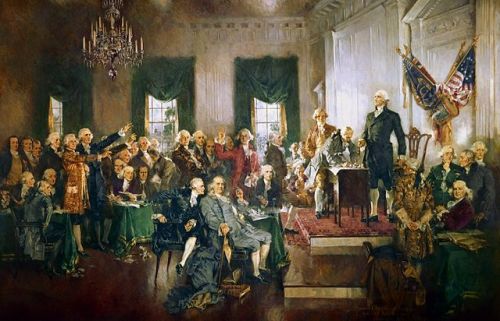
239th anniversary of the signing of the Constitution in 1787
The U.S president is making a BIG DEAL of the 250th anniversary of the Declaration of Independence. This is bizarre. The Declaration set off a revolution against a TYRANT and tyranny, so it is ironic that this comes from a tyrant or at least a tyranny wannabe.
The real anniversary we should be celebrating every year is the signing (1787) or ratification (1788) of the U.S. CONSTITUTION and its added BILL OF RIGHTS. This is a president who has done everything but publicly burn a copy of the Constitution, along with copies of any inconvenient laws. Soon we may see American history that identifies some of the founders and signers as “too woke” who should be eliminated from our schools. Thankfully, there are still judges, including those appointed by this president (see below), who are sworn to uphold the Constitution and the laws. The Constitution, The Bill of Rights, and the First Amendment live.
Texas philosophy professor Idris Robinson said he was breathing a bit easier this week nearly halfway through what he called “the most stressful month of fatherhood so far”.
That’s because Robinson was faced with losing his paycheck from Texas State University beginning 31 May, along with his academic affiliation, after he was fired for a talk he gave in another state on what he called “the liberation of Palestine”. The incident would have made it nearly impossible for him to find another job teaching – all with a 16-month-old son at home.
But then Trump-appointed district court Judge Alan Albright ruled in his favor this week and ordered Texas State to continue paying him for another year or until his lawsuit against the school reaches an outcome, whichever comes first. The state “put Dr. Robinson’s career in grave danger by violating his First Amendment rights”, Albright wrote in his decision.
“It’s the right decision,” Robinson said in an interview. “I didn’t do anything wrong. I do my job and I do it well.”
The complaint, reported by the Guardian in March, alleges that the school violated Robinson’s constitutional rights by ending his contract after a 2024 talk he gave in North Carolina on Palestine and Israel. A fight broke out before he could finish the talk. Neither Robinson nor anyone else at the event mentioned his job at the university.
Toward the end of the hour-long hearing on Tuesday, Albright highlighted that “the state really hasn’t made an effort to argue that the speech that the plaintiff gave [wasn’t] in some role or another a motivating factor” in the university’s decision to terminate his contract, according to Yarden Azoulay Katz, a member of Robinson’s legal team who attended.
The decision in favor of continuing to pay Robinson is a “shot across the bow for many universities who have violated free speech rights”, said Zach Greenberg, director of Faculty Legal Defense at the Foundation for Individual Rights and Expression (Fire), an organization with local counsel involved in the case. “It bodes well for academic freedom.”
The university’s termination of Robinson’s contract was “an adverse action, carried out for an unlawful reason”, said Samantha Harris, his attorney. The judge’s decision not only made Robinson’s near future a lot brighter – “it also showed there’s a substantial likelihood of success with regard to Dr Robinson’s claim of first amendment retaliation,” said Harris, who has worked on such claims for two decades.
Prior to this incident, Robinson had four years of stellar performance reviews, according to the complaint.
Robinson pointed out that others in academia have been disciplined for speech on Palestine, as well as other subjects, such as Charlie Kirk’s killing.
“I hope [the judge’s decision] sets a precedent – so people see they can stand up and fight, see things out to the end,” he said.
The philosopher, who has recently published a book, The Revolt Eclipses Whatever the World Has to Offer while fighting the university’s actions, has centered much of his research on societies in conflict and revolution.
He believes the US is in its third “Red Scare”, after those prior to the first world war and after the second world war, which focused on perceived threats from communism. “Repression around speech is part of the new Red Scare,” he said. “Being a Black, leftist philosopher, I’m a target.”
“But it’s not just ‘F this communist’, or ‘F this terrorist’. It’s also good old-fashioned racism,” he added – noting that online harassment after his case went public has included such comments as: “I hope this [N-word]’s whole family commits suicide.”
A few weeks ago, someone texted his wife: “Idris f’d up.” He has no idea how they got her number.
Nonetheless, he said, “I’m still taking up space in their minds – so I’m winning.”
Robinson also allowed that the experience has had a chilling effect on his scholarship. He wrote two chapters about Israel and Palestine in his new book after Texas State began its disciplinary proceedings – and “deliberately avoided using the words ‘Israel’ or ‘Palestine’ and instead referred vaguely to ‘the holy land’ … to avoid further scrutiny”, he noted in an affidavit accompanying the lawsuit.
Robinson emphasized that the talk that apparently led Texas State to discipline him “wasn’t about me giving my opinion … it was about my analysis of what’s right in front of me, about trying to clarify this world historical event” of 7 October and its aftermath. Then, he said, “everyone made this big mess about a talk I didn’t even finish”.
And though the days leading up to this week’s hearing were stressful, he said, “it’s nowhere near as stressful as being a father in Gaza who can’t feed or protect his children”.
While the lawsuit takes its course, Robinson said he’d like to “concentrate on philosophy”– including a book on Austrian-British philosopher Ludwig Wittgenstein, the mid-20th-century thinker on logic, language and political thought.
As for Albright’s decision: “I hope it helps other academics who have been facing disciplinary actions to fight on. Even in a state like Texas, you can win.”
The column below is from the Economist in 2023. Joe Biden was president. Robert F. Kennedy Jr. was emerging on the national scene, planning to oppose Biden for the Democratic nomination. We are now living in the future, where Kennedy Jr., who appears to have serious problems, is the chief health policy maker of America. He works for the chief executive of America, who also appears to have serious problems.
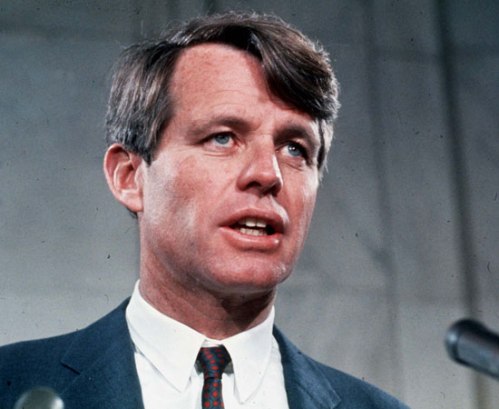
This column is about the late Robert F. Kennedy. I have included Bobby Kennedy in at least a dozen posts over the years. He deserves as much attention as ever in 2026. Maybe we can and should use every appearance of his namesake son as a reminder to consider the worth of the father.
The point of the Economist column is as valid today as it was three years ago. If Democrats are lost—they are—and willing to admit they need models—they do—the simple suggestion is that they have one. Whether 2026 is a worse time than 1968 doesn’t matter. What matters is that when you are in such times, leaders may come along who are what we need. We will never know whether Bobby Kennedy was fully the one to elevate us above 1968, since he was assassinated in June of that year. Is there a Democrat out there who can elevate us above 2026? One who truly, not just superficially, is like Bobby Kennedy?
What Democrats can learn from Bobby Kennedy The father—not the son—was the party’s last great populist
The Economist Sep 7th 2023
Of all the what-ifs of post-war American politics, none is more haunting than the vision in which an assassin did not shoot down Robert Kennedy while he was running for president in 1968. Had Kennedy lived, runs this counterfactual history, he would have become president, and America would have left Vietnam years earlier. There would have been no Nixon administration, no Watergate scandal to sharpen cynicism and no successful Republican “southern strategy” to deepen racial division. The Democrats would have become the party of the multiracial working class, rather than of the multiracial professional elite.
Now, as his father challenged President Lyndon Johnson for the Democratic nomination, Robert Kennedy junior is challenging President Joe Biden. You might hear echoes of the father’s politics, as when the son inveighs against “the warfare machine that is bankrupting our country” or against the Democratic Party for “inviting Wall Street to strip-mine the American public”.
But unlike his father, this Kennedy has little chance of the nomination. Rather than falling in love with him, leftish journalists are tearing him apart for his opposition to vaccination and his yen for conspiracy theories, including about the murders of his father and his uncle, John Kennedy. Having supplied the tragedy in 1968, history is offering up the farce.
And yet an unflattering comparison could also be made with most other modern Democratic campaigns, even allowing for mythmaking: they all seem a bit pallid beside Kennedy’s blazing, tragic 82-day race. A mix of idealism and pragmatism led him to try to reassemble the Democrats’ New Deal coalition, fractured by the Vietnam war and the civil-rights movement. He got in late, after the New Hampshire primary. Another Democratic challenger, Eugene McCarthy, a cerebral senator from Minnesota, had claimed the hearts of affluent, educated opponents of the war.
Kennedy set out to build on his support among black voters by showing working-class white Americans they had common interests. His policies were heterodox, aimed at holding families and communities together, to nurture civic pride and a spirit of mutual obligation. For decades liberals had linked the growth of the federal government to the expansion of rights and freedom, but Kennedy sensed Americans felt they were losing control to a distant government with giant, one-size-fits-all programmes. He argued that people wanted the dignity of work rather than welfare, and he favoured local, public-private jobs schemes. “He sensed and managed to articulate that feeling of disempowerment experienced by ordinary Americans, including the white working class, black and Hispanic voters and other groups excluded from the mainstream of American prosperity and respect,” says Michael Sandel, a political philosopher and author of “Democracy’s Discontent”.
As riots tore inner cities apart, Kennedy called for “law and order”, courting the disdain of some liberals who, then as now, heard that as racist code. But he always twinned his call for law enforcement with demands for racial justice, saying white Americans bore responsibility for black violence.
To housewives in Terre Haute, Indiana, he cited Camus, urging empathy with the hopelessness of destitute families. In Indianapolis, on the night Martin Luther King was killed, Kennedy defused the anger in a crowd primed to riot. He quoted Aeschylus on the wisdom that comes with despair and added, “Let us dedicate ourselves to what the Greeks wrote so many years ago: to tame the savageness of man and make gentle the life of this world.”
He often said what voters did not want to hear. “You sit here as white medical students, while black people carry the burden of fighting in Vietnam,” he scolded students at Indiana University, saying he wanted to take their draft deferments away. “He sort of respects our intelligence,” a farmer told a reporter in Nebraska, where Kennedy freely admitted he had no idea how to milk a cow.
The honesty and intensity of Kennedy’s campaign—along with his decision to visit Native American reservations, where presidential candidates seldom bother to go, to draw attention to their wretchedness—may have resulted in part from the sense of doom suffusing it. Like the reporters covering him, the candidate feared he would eventually be shot.
From George Wallace to Donald Trump
Yet Kennedy insisted on so exposing himself that supporters would make off with his jacket and even his shoes. He ended his campaign in Indiana with a nine-hour ride in an open car inching through black and white communities. The reporter Jules Witcover described an “unbroken display of adulation and support” as he rode through neighbourhoods “that ran smack against one another, and you read their racial or ethnic composition in the faces that looked up at him, in the colour of the hands that stretched out to him, in the accents that shouted out at him”. Kennedy did not succeed with well-off white voters. Instead, he won the Indiana primary by carrying 86% of black voters along with working-class white Democrats, including many who had defected to the segregationist George Wallace four years earlier.
Kennedy would go on to lose the primary in Oregon, an affluent white state, but he won Nebraska, South Dakota and California. There, after his victory speech at the Ambassador Hotel, he broke one of his own rules. Instead of wading through the crowd he left through the kitchen, where his assassin waited.
It is impossible to know what Kennedy might have achieved. Yet it is also hard to believe Donald Trump would have achieved so much had the Democrats modelled themselves less on McCarthy and more on Kennedy. He was, in short, the last great Democratic populist. Kennedy loved to paraphrase George Bernard Shaw: “Some people see things as they are and say, ‘Why?’ I dream of things that never were and say, ‘Why not?’” These days both questions seem worth asking.






 Bob Schwartz