Gold refining is one of the most common metaphors in Buddhist teaching.
The Upakkilesa Sutta (Defilements, Corruptions, Impurities) names five metals that contaminate gold: iron, copper, tin, lead, and silver. Contaminated gold is brittle and dull. These are matched to the five hindrances: sensual desire, ill will, sloth and torpor, restlessness and worry, and doubt. Once they are removed, the mind becomes pliant and radiant.
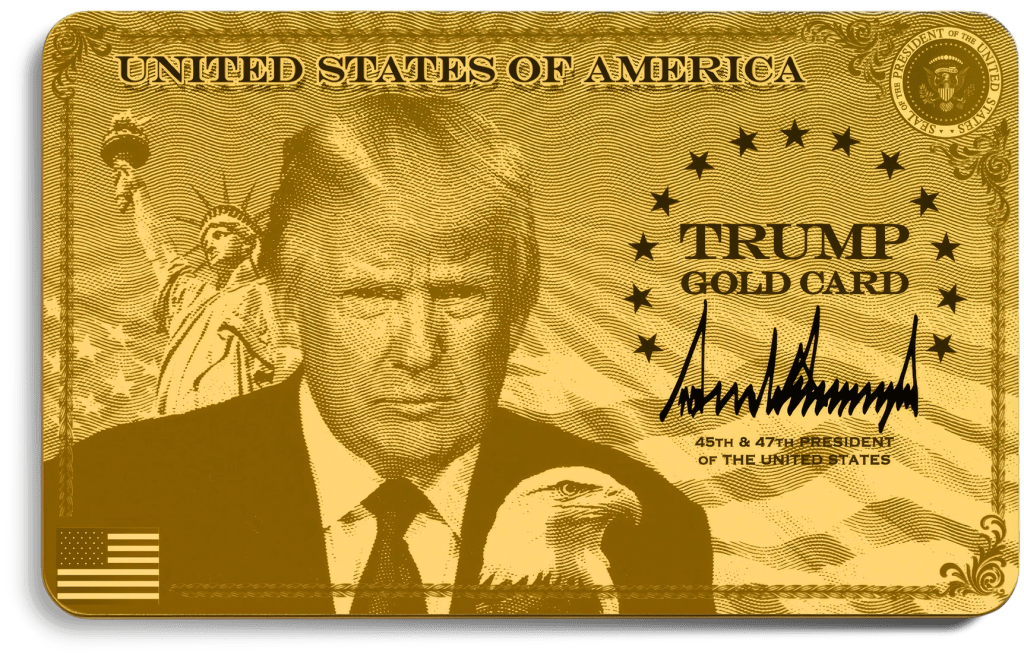
Some might say that Trump appears to have an unhealthy obsession with gold.
Maybe it is not unhealthy. Maybe it is not what it appears to be. Maybe Trump is aware, maybe unconsciously, of his impurities and corruption. Maybe, as Buddhism teaches, he is looking for a way to remove those impurities. Maybe the gold is a constant reminder to him of his need for refining so that his mind will become pliant, radiant and compassionate.
Macklemore announces Free Palestine tour to benefit humanitarian aid organisations Macklemore has announced a “Free Palestine” tour, a series of live shows that will feature the US rapper performing alongside musicians and friends to raise funds for humanitarian causes in Palestine. —Guardian, 24 Sep 2026
If these last couple of weeks have shown us anything, it’s that something has shifted over the last three years. There has been a collective awakening around Palestinian liberation, the power of billionaires that try to censor that call, and what we expect from artists right now.
It’s 2026. Being apolitical during a genocide doesn’t work anymore. People are asking artists to show up, educate themselves and be in community. To use the stage for more than entertainment. To push back when the call for a Free Palestine is met with attempts to silence it.
What happened to me is bigger than one artist or one stage. When the billionaire class can decide which voices are allowed on stage and which ones are too dangerous to hear, everyone should be paying attention.
Because of how quickly all of this has come together, a lot of the conversations, schedules and details are still being worked out. But this is a moment of momentum, and there is work to be done.
–Macklemore announcing the Free Palestine Tour
Macklemore’s tour will begin in Dublin on 26 October. Further dates in Paris (29 October) and London (30 October) have been announced, with North American dates to follow. Fans hoping to get tickets are encouraged to sign up for presale access at macklemore.com.
I am not, it goes without saying but saying anyway, a prophet. But we sometimes confuse prophets with those who predict the future, which they sometimes do. Mostly they just observe what is happening and say what they see. This post from eight years ago observes that “Trump recognizes that anything or anyone that cannot help him or that might harm him must be destroyed.” Same person, same power, same scorched America. This time bigger flames.
scorched-earth: relating to or being a military strategy involving deliberate and usually widespread destruction of property and resources (such as housing and factories) so that an invading enemy cannot use them.
Trump knows nothing about history or about military strategy. He is, as his closest advisers have said, an idiot. But instinctively, he recognizes that anything or anyone that cannot help him or that might harm him must be destroyed.
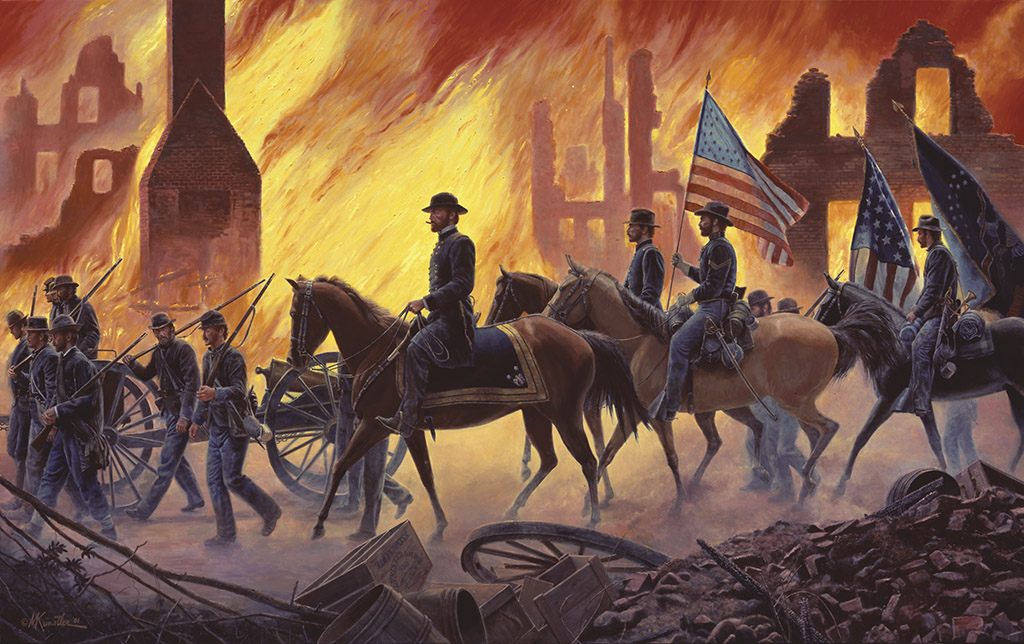
A scorched-earth strategy has been used throughout history. In America, this has happened a number of times, including most famously during the Civil War. General Sherman’s March to the Sea, including the burning of Atlanta, caused $100 million (1863 dollars) in damage to Georgia.
Trump’s March includes the attempted destruction of government institutions, public servants, the free press, the rule of law, truthfulness, core American and moral principles, and more. In this, he has been aided and abetted by numerous Republican enablers, who either don’t realize that this is a scorched-America strategy, or who do recognize it and want to be part of the victorious army.
In war, it must be devastating beyond description to watch the land you love, live in, and have developed be totally destroyed. In America, we are learning how that feels.
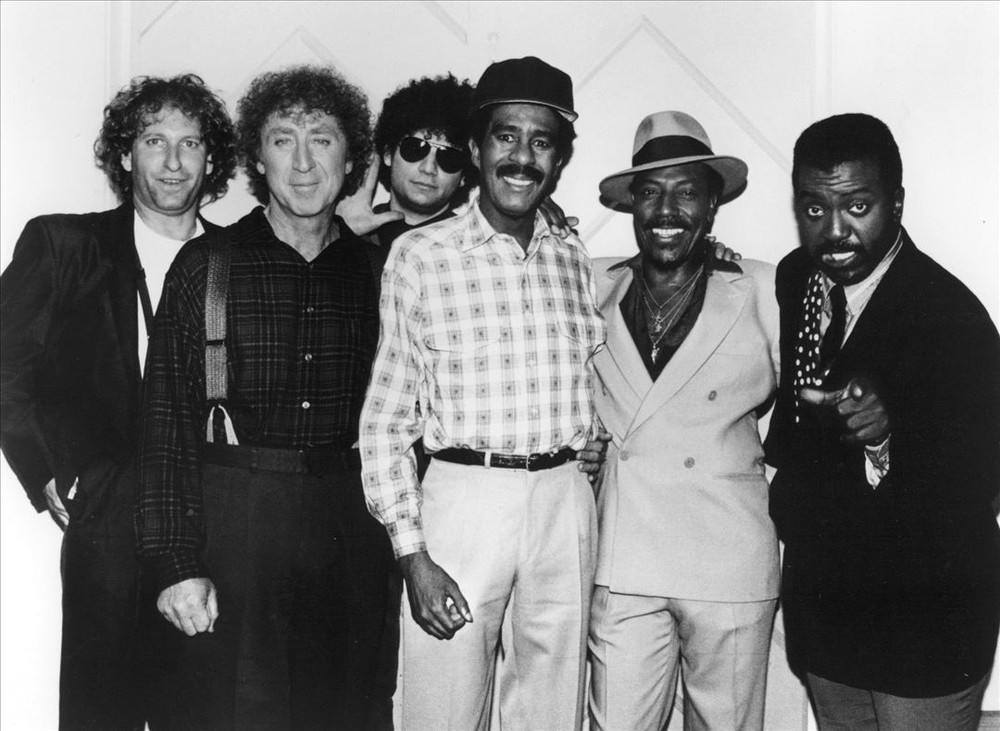
It would be hard to name a band more willfully strange that managed to score two Top 20 hits in the 1980s than Was (Not Was). Pairing bent but danceable funk/disco rhythms with surreal lyrics that found the humor in everything from accidentally strangling a friend to a quickie wedding in Las Vegas, the group also had a knack for lining up unusual collaborators; throughout their discography, one can find guest appearances from Leonard Cohen, Ozzy Osbourne, Doug Feiger, Mel Torme, Kris Kristofferson, Wayne Kramer, and Frank Sinatra, Jr., among many others.
Was (Not Was) was masterminded by Don Was (born Don Fagenson) and David Was (born David Weiss), longtime friends who grew up in the Detroit suburb of Oak Park, Michigan. Was (Was Not) used a constantly shifting cast of musicians on their recordings, though vocalists Sweet Pea Atkinson and Sir Harry Bowens were in many ways the public face of the group, giving a personality and continuity to their body of work. The group earned a rabid cult following and great reviews with the off-kilter dance tracks of their self-titled 1981 debut, and their second LP, 1983’s Born to Laugh at Tornadoes, gave them the opportunity to work out their ideas and ambitions on a major-label budget. But it was 1988’s What Up, Dog? that briefly made them stars with the singles “Walk the Dinosaur” and “Spy in the House of Love,” whose grooves finally caught the ears of the radio audience.
–Mark Deming, AllMusic
Was (Not Was) continued on and off for years after What Up, Dog?. The record industry didn’t know exactly what to do with them. Don Was has gone on to be a producer for major artists.
Videos for their two biggest hits are below. Also is a video from 1992, Shake Your Head (Let’s Go to Bed), notable for the singing of Ozzy Osbourne and the presence of Kim Basinger. Once you’ve seen these, seek out more Was (Not Was), starting with the albums What Up, Dog? and Are You Okay? Talented musical misfits are perfect for those who love a groove or a sweet melody and have smart and misfit ears.
It seems that the official start of each season used to be a bigger deal. There wasn’t even a Google Doodle for it today.
Maybe we just have so much going on and so much on our minds that this thin divider is too insignificant, compared to all the “important” stuff. Is it really that remarkable that in the Northern Hemisphere, days have been getting shorter and nights have been getting longer for three months, and that on this day the earth has more or less equalized its orientation to the sun. (In the Southern Hemisphere, it’s all reversed, this is the start of Spring (Vernal Equinox), and we wonder 1) how can Christmas arrive in Summer? and 2) why don’t all those people down there just “fall” off the earth? Oh yeah, gravity.)
The first thing listened to this morning was Vivaldi’s Autumn from The Four Seasons. Thank goodness at least Vivaldi paid attention.
Joyously it also included a great surprise, Avinu Malkeinu from the album Compassion (2014) by Lior and Nigel Westlake, with the Sydney Symphony Orchestra. Lior is an Israeli-born singer/songwriter whose family emigrated to Australia when he was young.
The notes to this song cycle explain the rich mixture of Hebrew and Arabic songs, including an essential High Holiday hymn like Avinu Malkeinu, all centered on the title concept–and the Yom Kippur concept–of compassion.
Compassion: IV: Inna Rifqa (The Beauty Within) is taken from a Muslim hadith:
“Compassion does not enter into anything without beautifying it, and is not removed from anything without making it ugly.”
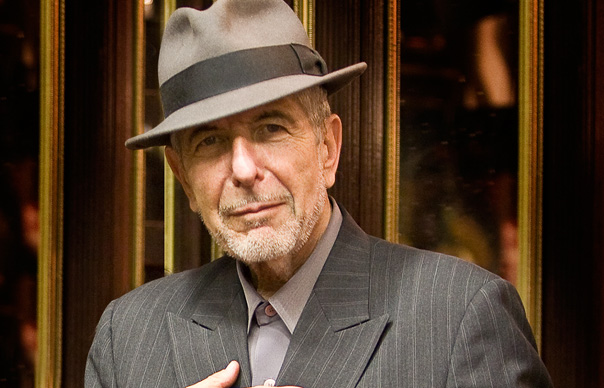
It is obvious to point to Leonard Cohen’s Who By Fire for Yom Kippur, as it is his take on the liturgical poem Unetanah Tokef, recited during the holiday services. The poem says:
On Rosh Hashanah it is inscribed, And on Yom Kippur it is sealed. How many shall pass away and how many shall be born, Who shall live and who shall die, Who shall reach the end of his days and who shall not, Who shall perish by water and who by fire, Who by sword and who by wild beast, Who by famine and who by thirst, Who by earthquake and who by plague, Who by strangulation and who by stoning, Who shall have rest and who shall wander, Who shall be at peace and who shall be pursued, Who shall be at rest and who shall be tormented, Who shall be exalted and who shall be brought low, Who shall become rich and who shall be impoverished. But repentance, prayer and righteousness avert the severe decree.
Here it is featured as one of three songs that cover kindred territory and decades of his creative and spiritual life: Who By Fire (1974), Everybody Knows (1988), You Want It Darker (2016).
Appropriate for Yom Kippur, you will read and hear the evolution that artists model for us as they—and we—face our world, our lives and each other. Cohen as a man in his thirties, in his fifties, in his eighties.
You Want It Darker, written as he approached death, is punctuated by an exclamation suitable for facing your god, your life, yourself: Hineni. Here I am.
Who By Fire
And who by fire, who by water Who in the sunshine, who in the night time Who by high ordeal, who by common trial Who in your merry merry month of may Who by very slow decay And who shall I say is calling?
And who in her lonely slip, who by barbiturate Who in these realms of love, who by something blunt Who by avalanche, who by powder Who for his greed, who for his hunger And who shall I say is calling?
And who by brave assent, who by accident Who in solitude, who in this mirror Who by his lady’s command, who by his own hand Who in mortal chains, who in power And who shall I say is calling?
Everybody Knows
Everybody knows that the dice are loaded Everybody rolls with their fingers crossed Everybody knows the war is over Everybody knows the good guys lost Everybody knows the fight was fixed The poor stay poor, the rich get rich That’s how it goes Everybody knows
Everybody knows that the boat is leaking Everybody knows that the captain lied Everybody got this broken feeling Like their father or their dog just died Everybody talking to their pockets Everybody wants a box of chocolates And a long-stem rose Everybody knows
Everybody knows that you love me baby Everybody knows that you really do Everybody knows that you’ve been faithful Oh, give or take a night or two Everybody knows you’ve been discreet But there were so many people you just had to meet Without your clothes Everybody knows
Everybody knows, everybody knows That’s how it goes Everybody knows Everybody knows, everybody knows That’s how it goes Everybody knows
And everybody knows that it’s now or never Everybody knows that it’s me or you And everybody knows that you live forever When you’ve done a line or two Everybody knows the deal is rotten Old Black Joe’s still picking cotton For your ribbons and bows And everybody knows
And everybody knows that the Plague is coming Everybody knows that it’s moving fast Everybody knows that the naked man and woman Are just a shining artifact of the past Everybody knows the scene is dead But there’s gonna be a meter on your bed That will disclose What everybody knows
And everybody knows that you’re in trouble Everybody knows what you’ve been through From the bloody cross on top of Calvary To the beach of Malibu Everybody knows it’s coming apart Take one last look at this Sacred Heart Before it blows Everybody knows
You Want It Darker
If you are the dealer, I’m out of the game If you are the healer, it means I’m broken and lame If thine is the glory, then mine must be the shame You want it darker We kill the flame
Magnified, sanctified Be the holy name Vilified, crucified In the human frame A million candles burning For the help that never came You want it darker
Hineni, hineni I’m ready, my Lord
There’s a lover in the story But the story’s still the same There’s a lullaby for suffering And a paradox to blame But it’s written in the scriptures And it’s not some idol claim You want it darker We kill the flame
They’re lining up to prisoners And the guards are taking aim I struggle with some demons They were middle class and tame I didn’t know I had permission To murder and to maim You want it darker
Hineni, hineni I’m ready, my Lord
Magnified, sanctified Be the holy name Vilified, crucified In the human frame A million candles burning For the love that never came You want it darker We kill the flame
If you are the dealer, let me out of the game If you are the healer, I’m broken and lame If thine is the glory, mine must be the shame You want it darker
Twenty months into his second term, Mr. Trump has remade the presidency and changed what Americans will tolerate from their government and from one another. Yet that transformation, sweeping as it is, may prove less important than what Mr. Trump and his allies could not do. They failed at the most ambitious project that they brought to his second term: using the state to remake American society. That failure is a central fact of the past 20 months, and it is why the country is in a less dangerous place than it was a year ago. –Jonathan Rauch and Peter Wehner
There are millions, billions of articles and opinion pieces written about Trump’s second term so far. (I’m using Trump’s hyperbolic numbering system.)
An opinion piece in the New York Times today by Jonathan Rauch and Peter Wehner is one of the best and most clear-eyed summaries I’ve read. For those without access to the Times, I’ve included it in its entirety below.
Trump Has Finally Lost the Plot Sept. 19, 2026 By Jonathan Rauch and Peter Wehner
Mr. Rauch is a senior fellow at the Brookings Institution. Mr. Wehner, a senior fellow at the Trinity Forum, is a contributing Opinion writer.
The frantic pace of the Trump presidency makes days seem like weeks and weeks like months — if not years. Finding rhyme or reason amid President Trump’s erratic conduct is impossible. Even so, while 2026 has not brought calm, it has brought more clarity.
Twenty months into his second term, Mr. Trump has remade the presidency and changed what Americans will tolerate from their government and from one another. Yet that transformation, sweeping as it is, may prove less important than what Mr. Trump and his allies could not do. They failed at the most ambitious project that they brought to his second term: using the state to remake American society. That failure is a central fact of the past 20 months, and it is why the country is in a less dangerous place than it was a year ago.
When Mr. Trump took office for the second time, he arrived with several overlapping but distinct agendas. The one he cared most about would convert the executive branch to a form of government that scholars call patrimonialism, in which the state is run as the leader’s personal property and family concern. In a patrimonialist system, expert bureaucracies and neutral rules are replaced by — or subordinated to — the head of state’s will. Where they can, patrimonialists personalize and weaponize law enforcement, pardons, programs and grants, appointments, promotions and all the other aspects of state power.
Patrimonialism is manifest in Mr. Trump’s enrichment of himself and his family, reportedly by several billion dollars — and in his effort to extract almost $1.8 billion from taxpayers by means of a sham legal settlement. It is manifest, too, in his systematic repurposing of the executive branch to serve his personal and political interests.
He uses his Justice Department to wage personal vendettas and his pardons to indemnify his cronies. He has staffed the department’s senior ranks with his own criminal defense attorneys, and the F.B.I. with a fierce political loyalist whose chief qualification was a career spent attacking the investigators who had scrutinized Mr. Trump. And he has purged the government’s internal checks on corruption, including by firing inspectors general, career prosecutors and F.B.I. agents whose offense was to follow the rules.
Mr. Trump uses faits accomplis, such as the demolition of the United States Agency for International Development, to elbow aside Congress and impose his will without regard for constitutional boundaries. With some help from the Supreme Court, he has concentrated federal power in the office of the presidency; and with his patrimonialist agenda, he has remade that office to serve not the Constitution but himself and his desires.
The re-norming of political standards is another area in which Mr. Trump has made a lasting imprint. By “re-norming,” we mean the deliberate degradation of what is considered acceptable in American public life.
Examples are far too many to enumerate, but recall just a few: Mr. Trump described his political opponents as “vermin” and said immigrants were “poisoning the blood of our country.” When Robert Mueller died in March, Mr. Trump posted that he was “glad he’s dead.” When Rob Reiner and his wife were murdered in their home, he blamed the killings on Mr. Reiner’s criticism of him. He courted and excused political violence — winking at threats against officials who crossed him, joking about the near-fatal attack on Nancy Pelosi’s husband, and praising and then pardoning Jan. 6 rioters. He revels in bullying, cruelty and hate as no president ever has. Beneath it all is the normalization of lying on an industrial scale: tens of thousands of documented false claims as president, including false accusations against Americans and false representations to courts.
Many Americans are sick of wading through the sludge and understandably want to look away. That is what Mr. Trump is counting on. He wins not by persuading us that the conduct is acceptable, but by wearing us out until we no longer object. Each violation makes the next easier; each unpunished transgression resets the baseline. What is being broken is not this standard or that one; it’s the idea that standards apply. Thanks largely to Mr. Trump and his allies, the country today accepts political speech and behavior that only a few years ago would have been disqualifying, if not unthinkable. It is no longer clear what a president could say — about a dead man, about a murdered family, about women he has abused, about incitements to violence — that would cost him anything.
So why, despite all that, does the second year of Mr. Trump’s second term seem less menacing than the first year? Because the patrimonialism and the re-norming, damaging as they are, were only part of what he and his followers set out to do. The largest of their ambitions was something else: the remaking of American society itself.
The Trump administration’s cultural reset was ambitious. While it had the president’s support, it was devised and pursued mostly by people around him. They included top officials such as Stephen Miller, Russell Vought, and JD Vance on the inside of the administration, plus Elon Musk for the four months he worked in it; outside activists such as Christopher Rufo of the Manhattan Institute, Kevin Roberts of the Heritage Foundation, and Steve Bannon of the “ War Room” podcast; intellectuals such as Patrick Deneen, Michael Anton and Charles Kesler; and institutions such as the Heritage Foundation, the Claremont Institute, and the America First Policy Institute.
This group saw Mr. Trump’s second term as their best chance to block and reverse the left’s takeover and makeover of the country’s culture and institutions. By deploying government power against the commanding heights of the culture, they sought to supplant liberal hegemony not just in Washington but throughout society.
In his 2023 book “Regime Change: Toward a Postliberal Future,” Dr. Deneen, a political scientist at Notre Dame, made clear that the regime that had to be changed included not just government offices, but elite positions throughout society. The goal was to achieve “the peaceful but vigorous overthrow of a corrupt and corrupting liberal ruling class,” he wrote. “Where necessary, those who currently occupy positions of economic, cultural and political power must be constrained and disciplined by the assertion of popular power. However, merely limiting the power elite is insufficient. Instead, the creation of a new elite is essential.”
In keeping with their revolutionary ambitions, Mr. Trump’s cultural warriors spoke in revolutionary terms. Mr. Bannon, in 2017, announced the “deconstruction of the administrative state.” Mr. Vought, an architect of Project 2025, said the goal was for career civil servants to be viewed as “villains.” Mr. Rufo, widely credited with designing the administration’s campaign against universities, described the MAGA movement as a “revolution against revolution” that “has to use what many see as radical techniques” to put universities “in an existential terror” and “set them back a generation or two.”
Their project, in other words, was to use government power and the unmatched influence of the presidency to dominate and rewire civil society. They sought to strike at “wokeness” wherever they saw it, an all-of-society project. The campaign proceeded domain by domain.
Universities: Mr. Vance, in 2021, endorsed President Richard Nixon’s claim that “professors are the enemy,” and Mr. Trump, in 2023, promised to “choke off the money to schools that aid the Marxist assault on our American heritage.” True to their word, they froze billions in federal research funds at Harvard, Columbia, Penn and others as leverage over admissions, hiring, and governance — brazenly violating the universities’ due-process rights in order to exert unprecedented sway over core academic matters. Had courts not intervened, Mr. Trump might have effectively commandeered America’s private universities.
Law firms: Mr. Trump signed executive orders aimed at punishing or crippling major law firms by stripping their security clearances and federal access. That was partly because some firms had challenged Mr. Trump or represented his adversaries. But more broadly, the administration sought to intimidate the legal profession and drive it away from liberal causes and clients. (Several of the firms settled on the Trump administration’s terms; those that fought the orders in court won.)
Media: Among the president’s early second-term actions was an attempt to force The Associated Press and other news organizations to rename the Gulf of Mexico. While bizarre, that effort heralded persistent efforts to bully and reshape the media. The president sought to marginalize legacy news outlets by displacing them from the White House and Pentagon. His personal lawsuits against ABC, CBS and other news organizations extracted multimillion-dollar settlements, while his Federal Communications Commission chairman publicly threatened broadcasters’ licenses — pressure under which Jimmy Kimmel was pulled off the air (temporarily, it turned out).
Culture: Also among his first actions, Mr. Trump installed himself as chairman of the Kennedy Center — the country’s congressionally chartered cultural showcase — and renamed it to include himself. He defunded public broadcasting, canceled funding for humanities councils in 56 states and jurisdictions, and effectively shut down the Corporation for Public Broadcasting. He ordered a review of Smithsonian exhibits and programming for ideological content. He pressured national parks to remove references to slavery. He and his defense secretary remade the military as a culture-war showcase — restyling the Defense Department as the “Department of War,” restoring Confederate base names, scrubbing web pages honoring the Tuskegee Airmen and Navajo Code Talkers (later restored), and pulling nearly 400 books from the Naval Academy library.
Sports: Executive orders created White House task forces for the 2026 World Cup and the 2028 Los Angeles Olympics, with Mr. Trump installing himself as chairman of both. He demanded that Washington’s N.F.L. team, the Commanders, and baseball’s Cleveland Guardians revert to their former names. He attacked athletes with the goal of intensifying cultural divisions. He personally called the international soccer federation’s president and got an American striker’s red-card suspension lifted in the middle of the World Cup. He spent $60 million or more to stage a U.F.C. cage match on the White House lawn for his 80th birthday.
The Streets: Probably most important, the administration used displays of force in an attempt to teach Americans docility. It deployed National Guard troops in the nation’s capital and in other cities, ostensibly to reduce crime but actually to own the streets. It deployed masked, unidentified, paramilitary-style agents against American cities and instructed them to use ostentatiously forceful tactics. In “Operation Metro Surge,” thousands of agents poured into Minneapolis–St. Paul, with parallel deployments and shows of force in Chicago, Portland, Los Angeles, and beyond. Journalists were arrested covering the operations.
Those operations were not law enforcement as it is ordinarily understood; they were the state’s effort to instill fear in its citizens. In the CECOT affair, hundreds of migrants were flown to El Salvador’s mega-prison without hearings — and the secretary of homeland security made a well-publicized visit there to gloat about their harsh treatment. As federal agencies posted triumphant videos of raids and arrests, and Mr. Trump suggested that American citizens should be next, the message was: Be afraid.
Every administration tries to shape the culture. What sets this one apart is not the ambition, but the means and the scale — not persuasion but coercion, and not on one front but everywhere all at once, in ways that were unprecedented and found by courts to be unlawful. Mr. Trump and his administration sought to bully and commandeer private institutions, to redirect the culture, and to remake society from above by force and fear.
In a few ways, the Trumpian social revolution succeeded: by slowing, and even reversing, the momentum of so-called D.E.I. (diversity, equity and inclusion) in elite institutions and of what conservatives called “gender ideology” — though both of those changes were already underway before Mr. Trump took office. On the whole, though, the administration’s effort to remake the culture in its image has failed.
History may one day judge that the tide turned in Minneapolis. In January of this year, Operation Metro Surge made mass arrests, invaded homes, fired pepper balls and shot dead two American citizens, Renee Good and Alex Pretti, without plausible cause — and then, after their deaths, defamed them.
The architect of the operation, Stephen Miller, one of the most powerful presidential aides in modern history, was explicit about the method. He ran Operation Metro Surge through daily calls with the leadership of the Department of Homeland Security, wielding the authority of the president — reportedly directing agents to “force confrontations” with protesters to win the “P.R. battle” and saying that if Minnesotans came to believe “their protesting is successful,” the administration’s interior operations would fail nationwide. Protesters, he reportedly said, “need to be vanquished by any force necessary.”
The people of Minneapolis answered with disciplined, peaceful resistance: tens of thousands marching in Arctic cold, luminaria spelling “ICE Out 4 Good,” a statewide “economic blackout,” a state lawsuit in federal court, citizen networks that tracked ICE and documented its activities, and a population that refused every provocation.
The administration backed down; within days, its border czar announced a “drawdown plan.” Key figures in the effort to break the city’s will were subsequently removed: Greg Bovino, the operation’s enforcement commander, was pulled out of the city and sent back to California. Kristi Noem was fired. Noticeably less was heard from Mr. Miller.
By demonstrating that they could face the spectacle of force and win, Minnesotans shook off their despair and found that they were not powerless. The moment became a catalyst far beyond the Twin Cities. The mass public saw what was being done in their name and many were repulsed by it. What they glimpsed was that a country can, in fact, be lost, and that theirs had come nearer the edge than they had believed.
The president and his forces lost other key cultural battles, too. From outside his home country, but speaking pointedly to it, the first American pope not only defied Mr. Trump but transcended him, demonstrating a moral authority against which the president had no power. Within the United States, No Kings marches staged some of the largest single-day protests in American history, deploying anger and humor without fear. Lawsuits on behalf of Harvard, U.C.L.A. and law firms fought and won key rulings. Federal judges, including some of Mr. Trump’s appointees, blocked action after action. Mr. Musk’s demolition crew disbanded in failure and disrepute.
At the same time, and equally important, the president’s approval rating collapsed. Voters wanted an orderly border and criminal immigrants removed, not a culture war waged brutally in the streets. Mr. Trump’s unpopularity — abetted by his twin fresh failures on Iran and high prices — reached near-record lows for a second-term president.
Had Mr. Trump’s ratings been in the 50s instead of the 30s, he might well have had the confidence to foment a true constitutional crisis by defying the Supreme Court or invoking the Insurrection Act — and he probably would have gotten away with it. Instead, when the Supreme Court invalidated his signature tariffs in February, he felt compelled to comply. (He rebuilt some of them under a different statute.) His efforts to bully the culture have not stopped; he is still menacing universities and attacking free speech. No one should be relaxed about that. But his preoccupations have shifted away from intimidating and dominating civil society and toward building monuments to himself.
Revolutions can fail but still scar the landscape. And Mr. Trump, with just under two-and-a-half years left in his second term, might emotionally and psychologically blow apart. But things are different than they were. The 80-year-old president is losing his grip on power and even his own base. The MAGA movement is fracturing. And the president no longer inspires the fear he once did. We know something today that wasn’t altogether clear a year ago: America’s civil society is harder to intimidate and rewire than MAGA’s cultural revolutionaries hoped.
Conservatives have every right to influence and change the culture, as progressives assuredly have done. But they should do it Ronald Reagan’s way: by moral inspiration and persuasion, not force majeure. Progressives have something to learn, too. Mr. Trump and his culture warriors lost by moving too far out of the moral mainstream; Democrats should claim and occupy that mainstream, not lurch well out to the left, as they seem tempted to do.
Those who played a role in Mr. Trump’s rise to power have acted not just unwisely, but culpably. Even so, it is now apparent that many Americans — probably enough Americans — are determined to live within the truth rather than the lie, to fight for their civic and political self-respect, to return a sense of humanity to a nation that has grown too cold, too callous and too cruel.
“Everyone has a light burning for him in the world above, and everyone’s light is unique. When two friends meet, their lights above are united, and out of that union of two lights an angel is born. That angel has the strength to survive for only one year, unless its life is renewed when the friends meet again. But if they are separated for more than a year, the angel begins to languish and eventually wastes away.
“That is why a blessing over the dead is made upon meeting a friend who has not been seen for more than a year, to revive the angel. According to the Talmud two friends who have not seen each other for a year say the blessing: ‘Blessed is He who revives the dead.’”
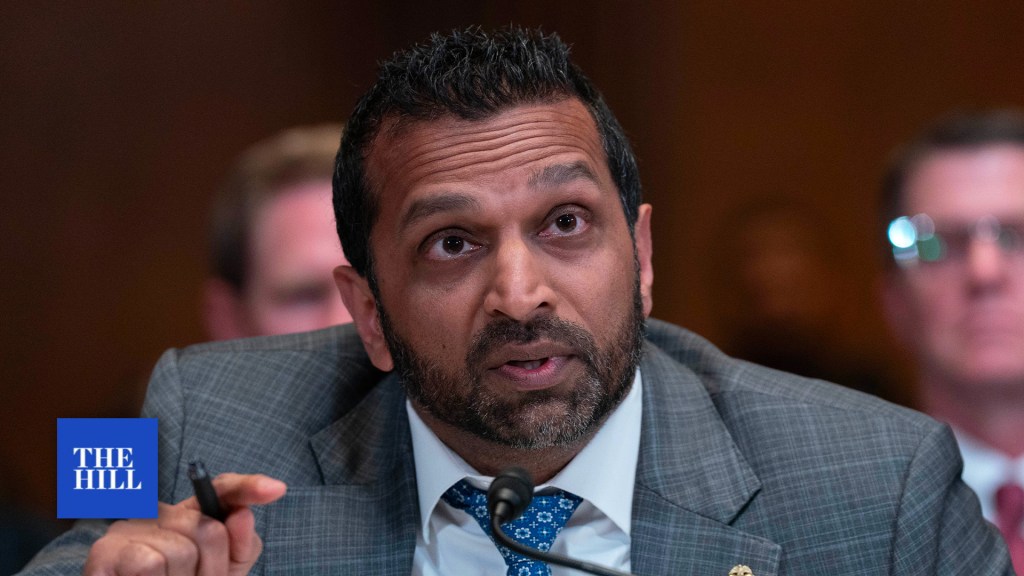
Senator John Kennedy questioned FBI Director Kash Patel about new FBI hiring policies.
Nothing short of the entire article from The Hill will do justice to the absurdity we now face as American citizens. Or as human beings.
GOP senator presses Patel on FBI policy change: ‘Why would you get into bestiality?’ by Rebecca Beitsch – 09/15/26
It’s not a topic often discussed in the halls of Congress, but Sen. John Kennedy (R-La.) grilled FBI Director Kash Patel as he said he was just “trying to understand” a recent change in policy regarding bestiality.
The line of questioning on Tuesday was sparked by a shift in FBI hiring practices which lifted longtime bans on selecting new trainees if they have engaged in prostitution or bestiality.
The FBI has argued the changes were needed in order to not automatically disqualify a prospective agent who may have been forced into such scenarios through human trafficking.
But Kennedy said he was confused by the matter, asking on “what planet” this was suggested.
“We’re having a tough time attracting agents, good quality agents that we all can trust, because so many people, fairly or unfairly, think that in order to be an FBI agent now, your political point of view matters. Why would you even get into bestiality?” he asked.
“We are not into bestiality,” Patel responded with a slight smile.
Kennedy is known for adopting an unassuming posture during questioning that can be both effective and humorous.
“When you saw bestiality — I say this with respect to the person who recommended it — why didn’t you just say, ‘What planet did you parachute in from? Why do I want to lead with my chin and get into bestiality?’” Kennedy asked.
Patel acknowledged he had some reservations.
“That was my initial response, senator. But they then explained to me and showed me cases in which people were forced into it and had applied to the FBI, and so I thought they should be considered. It’s not an automatic disqualification. That’s all,” the director said.
Sen. Dick Durbin (D-Ill.) earlier this week flagged concerns over the policy change, noting that the shift included not just animal cruelty, calling both “extreme conduct.”
“These are not minor technical adjustments. They represent a considered decision to open the Bureau’s ranks to individuals who engaged in conduct that the FBI previously treated as disqualifying,” he wrote, noting that the shift in allowing those who had hired prostitutes comes from an agency designated to battle human trafficking.
Kennedy throughout the exchange had queries on the specifics.
“So… it’s not if you frequented a prostitute. It’s if you were a prostitute. If you were forced into it,” he said, before seeming skeptical about the same scenario applying to bestiality.
“Obviously, we are never going to hire the criminal,” Patel said, later joking “We have great canines.”
“So you disqualified the animal?” Kennedy asked, later adding “How do you involuntarily do [bestiality]?”
Patel said trafficking can involve all kinds of disturbing practices.
“In a lot of these cases, when human traffickers, who are some of the worst individuals on planet Earth, they don’t just traffic you for prostitution; they traffic you for degrading acts of all kinds, and they force you into that type of conduct,” he said at one point during the exchange.
“But you’re not telling us today that if a human being had sex with an animal, that they can still be an FBI agent,” Kennedy asked towards the end of his line of questioning.