Positions on capital punishment tell us something. A lot.
by Bob Schwartz
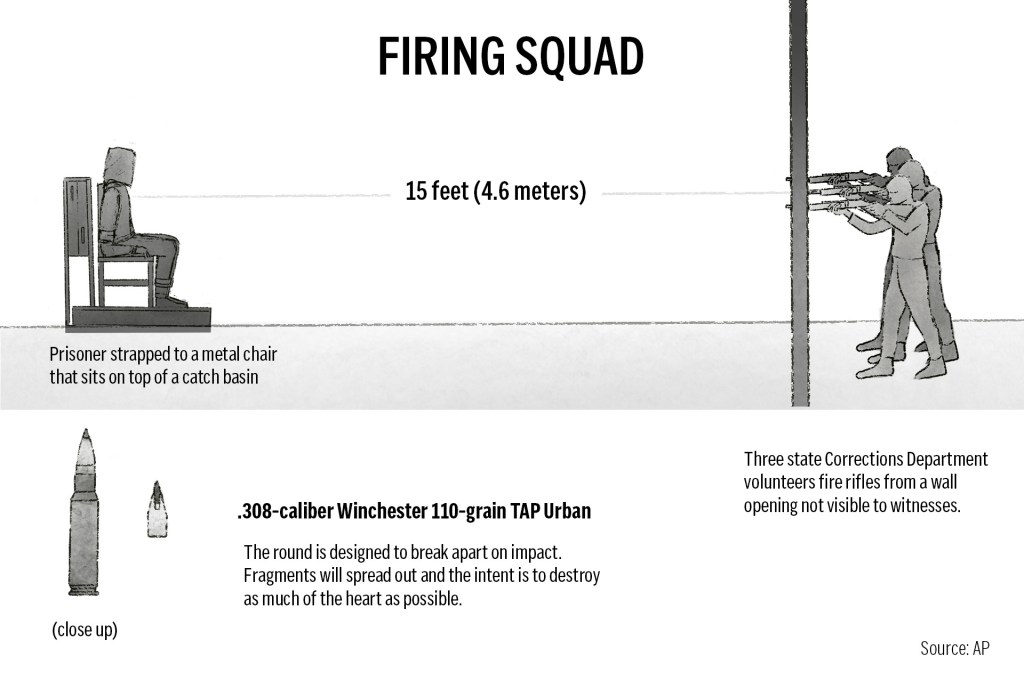
The story of prisoner Crista Pike in Tennessee, left in a coma by a failed lethal injection, has raised the issue of capital punishment, again. The issue rises and falls, depending on high-profile events, such as reinstating firing squads in some states and in the military, and now Christa Pike.
About half of Americans support the death penalty, half oppose it. About 145 nations have abolished the death penalty. America has not.
Some religious people turn to the Bible for guidance: “The punishment must match the injury: a life for a life, an eye for an eye, a tooth for a tooth, a hand for a hand, a foot for a foot, a burn for a burn, a wound for a wound, a bruise for a bruise. (Exodus 21: 23-25). (Some interpreters find this a limit on punishment, so that it does not exceed the wrongdoing.) On the other hand, the Catholic Church declares the death penalty “inadmissible in all cases.”
Whenever I hear that issues with a moral component are “more complicated” than a simply drawn line (tell that to the Catholic Church and 145 nations), I suspect that people, not surprisingly, are challenged by working through difficult philosophical questions.
Here is the bright line. The death penalty is about mercy. In our lived lives we consider mercy to be conditional, situational and subject to degrees. But the wisest and most enlightened view, promoted by the religious traditions so many of us claim to follow, is that we are at our best, or on our way to being our best, when we put no conditions on mercy. Otherwise, what is our mercy at all?

