Bob Schwartz

Category: Uncategorized

Pope Francis: Amassing Wealth While Children Die Is ‘Idolatry That Kills’
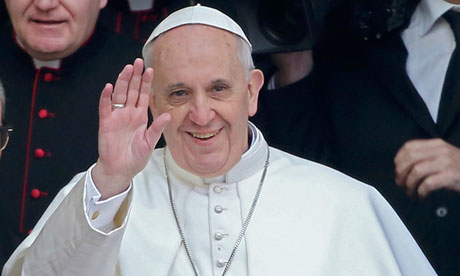
I am not a Catholic or a Christian, but no major world leader—religious or political—gives me more hope for the possibility of humanity than Pope Francis.

Today’s story as reported by Crux:

Pope says amassing wealth while children die is ‘idolatry that kills’

In his homily at morning Mass on Monday, Pope Francis returned to a familiar theme — how amassing wealth, both money and land, while children suffer and die, is a morally unacceptable form of idolatry. There’s an “idolatry that kills,” that makes “human sacrifices” Francis said, by those who are hungry of money, land and wealth, who have “a lot” in front of “hungry children who have no medicine, no education, who are abandoned.”

ROME – During his daily morning Mass on Monday, Pope Francis said there are those in the world who have too much wealth, and their hoarding of money and land in the face of hungry children with no access to medicine or education is the equivalent of making “human sacrifices.”

In times when the media reports “so many calamities, so many injustices,” especially concerning children, Francis sent a “strong” prayer to God, asking him to convert the hearts of men so that they don’t worship “the God of money.”

Francis’s homily, partially reported by Vatican Radio, turned on the Gospel of the day, a passage from the Book of Luke that tells the parable of the rich man for whom, according to the pope, money was his god. The passage, the pontiff said, leads to a reflection of how useless it is to rely on earthly property, emphasizing how much the true treasure is instead one’s relationship with God.

Despite the abundance of his harvest, the man in the parable wanted to expand his storehouses to have even more, in his “fantasy” of “stretching life out,” collecting more goods “to the point of nausea,” not knowing when it’s enough, in an “exasperated consumerism.”

This, Francis said, is the “reality of today,” when many people who live to worship money and make it their god, lead a senseless life.

There’s an “idolatry that kills,” that makes “human sacrifices” Francis said, by those who are hungry of money, land and wealth, who have “a lot” in front of “hungry children who have no medicine, no education, who are abandoned.

“This idolatry causes so many people to starve. We only think of one case: 200,000 Rohingya children in refugee camps,” the pope said, referring to the refugee crisis in Myanmar and Bangladesh. “There are 800,000 people there, 200,000 of whom are children.”

“Our prayer must be strong: Lord, please touch the hearts of these people who worship God, the god of money,” he said. “And also touch my heart, so I don’t fall into this too, so that I can see.”


Tolerance in America Grew. Now Racism is on the Rise. The Churches Have Responsibility.

I won’t repeat the news story this morning from a Richmond, Virginia middle school. You can find it. It is enough to say that it is one more story about white American kids and racial intolerance in 2017.

It’s easy to see the advances we’ve made. Many parents look at their children and see genuine color-blindness. Whether this is our doing (maybe a little) or just the social environment, it is heartening to see.

But these days have made clear that racism in America is not gone, at any level, at any age, and may be on the ascendance. Which brings me to institutional religion, the churches and the synagogues.

Institutional religion is by its nature conservative, not politically but philosophically and practically. Holding on is continuity and coherence, moving on can be a kind of letting go.

As the 1950s slid into the civil rights era of the 1960s, churches struggled to keep a balance between the drama of the most idealistic beliefs and the pragmatics of congregational support. It was, in some ways, a repeat of what had happened a century earlier in the fight against slavery. As it was back then, the response for many churches was a bland silence.

But that was not enough for some in the 1960s, as Christian and Jewish leaders took to the pulpits and the streets and almost shamed their congregants into standing up for right. In the long run, it worked, and we can see the progress that has been made.

Yet nothing is forever, especially in the social tides. Every day serves up another story, some very clear, some more subtle, all of them pointing to racists among us, even in Congress, even in middle schools.

Those politicians, those bureaucratic executives, those middle schoolers, many of them claim religious affiliation, many of them attending church or synagogue. Leaders and pastors are not to blame when messages and exhortations of tolerance don’t get through to hard-headed, hard-hearted faithful listeners. But when they don’t speak up at all—pointedly, regularly and loudly—then they are shirking their mission and responsibility. If they see something, they must say something.

Why We Teach The Boy Who Cried ‘Wolf’ Story to the Very Young

Children sometimes lie, and some of us lied as children. It happens. That’s why we teach The Boy Who Cried ‘Wolf’ story early. The simple and useful lesson: There will come a time when it is very important to be believed—to avoid getting eaten by a wolf—and no one will believe you.

Here is the story, as found in Aesop’s Fables, translated by Laura Gibbs:

The Boy Who Cried ‘Wolf’

There was a boy tending the sheep who would continually go up to the embankment and shout, ‘Help, there’s a wolf!’ The farmers would all come running only to find out that what the boy said was not true. Then one day there really was a wolf, but when the boy shouted they didn’t believe him and no one came to his aid. The whole flock was eaten by the wolf. The story shows that this is how liars are rewarded: even if they tell the truth, no one believes them.

Some never learn that lesson, because they always get away with (or think they get away with) lying all the time. Manchild Trump is one of those.

Maybe, just maybe, he is growing to regret no one believing him. In the middle of a distasteful controversy about his failure to deal with the families of fallen soldiers, it is reported that he just told one widow, “He knew what he signed up for.” Trump denies saying this. Most Americans don’t believe him.

It’s not clear that this controversy is “the thing” that politically wounds Trump among his docile and subservient Republican colleagues. But if it is, Trump may finally learn the lesson of the story. Unless, of course, he always thought the story was only about the wolf.

I read the news today, oh boy

I get the news I need from the weather report.
Paul Simon, The Only Living Boy in New York.

When my dearest wakes up, she sometimes asks, “Has he broken the world yet?”

Most mornings, I can’t answer. Because most mornings, I avoid the news as long as possible. Not just because it is likely to include some outrageous, if not globally existential, story. Because it is not an improvement on the new day that has begun, with possibilities admittedly ranging from the excellent to the challenging. Sunny, cloudy, stormy.

Sometime after the preliminaries, the news will creep in or barge in. Some of it will matter, some of it will be an invitation to silly diversion or to demonstrate shallow or deep cleverness, including schemes to make things better.

Boker or. Morning of light. Again.

Mysteries of Las Vegas

So many questions. Who is this man? Why did he do it? Who are the victims? Why them? Who are the loved ones who suffer? Who are the heroes who made things better and kept it from being worse? How can we lessen the chance of this happening again?

These and related questions are part of the media coverage and part of our own thinking about this tragedy.

But even if we answer every one of the questions to our satisfaction—which is unlikely—there will still be an ineffable mystery that goes beyond not having an answer. There is something about this for which we don’t have and can’t form a question.

In a time when so many are willing to tell you the answers, and when some of the more insightful are willing to first ask better questions, there are still some things that have neither questions nor answers. And in that standing mute and mindless in the face of mystery is a rare moment.

The Day After Yom Kippur

So the day of self-reflection and modest (or dramatic) aspiration on Yom Kippur is over. The break-the-fast meal has been gladly eaten. You go to sleep and wake up.

Who are you today, the day after?

It is like an amplified New Year. On the civil and secular calendar, the New Year arrives, a big or small celebration, and some people make resolutions. Yom Kippur is the culmination of ten days of New Year, more if you add the preparatory contemplation of Selichot, and instead of a party is a deep dive. Not a cruise ship with entertainment floating on the surface of the ocean, but an exploration—maybe reluctant exploration—below into the dark places.

Having thought about better and worse, will you be better? Is it possible, is it bearable, is it advisable, for every day to be Yom Kippur?

Presidential Deficit: Is Trump the Most Deficient Leader in Modern History (and Not Just Presidents)?

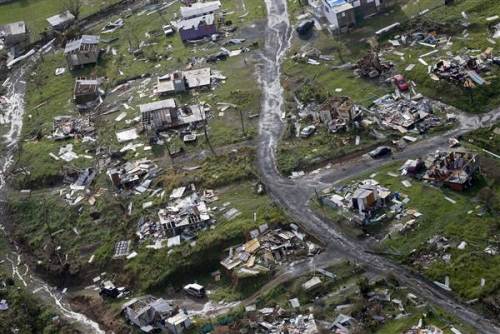
Trump’s tweets criticizing the Mayor of Puerto Rico and criticizing Puerto Rico for not “helping itself” are more evidence: Trump may be deficient in any of the qualities we expect in a leader. This isn’t just one sector: character, intelligence, empathy, competence, morality, ethics, etc. This is the possibility that he does not possess a single one of the qualities that we see in leaders.

It isn’t that leaders have all of these qualities. Some of our most brilliant leaders have also been immoral and evil. Just as some of our most moral and empathic leaders have been incompetent.

But Trump defies this. He has nothing. (No, the ability to get elected is not a leadership skill; it is a getting-elected skill, and maybe not even that if you run against relatively weak politicians).

Is it time for more people—especially Republicans—to point out that the emperor has no clothes at all? Maybe, except that the idea of seeing this emperor without his clothes may be too much for many of them.

The Cynical Un-Americanism of the Latest Graham-Cassidy Moves in the Senate

The latest attempt to get enough votes to pass the Graham-Cassidy health care bill in the U.S. Senate is a move to give Alaska and Maine more money—two states whose Senators are likely No votes.

This bill was already un-American, in the sense that tens of millions of Americans will lose coverage, or lose current protection from being priced-out because of preexisting conditions, or will pay higher premiums of double or more. All done without the benefit of hearings, which John McCain, who will vote against it, characterizes as a lack of “good order” (or what might be called lack of any public deliberation).

The primary motive behind all these moves is to fulfill a Republican political promise to “repeal and replace” Obamacare, which promise has now devolved to “do something, anything!”

Currently that “anything” is to offer some more money to benefit some people in two states, leaving the people in the other 48 to get whatever they can and fend for themselves. Americans in the other 48 states.

The U.S. Senate may again earn its informal designation as “the world’s greatest deliberative body.” For the moment that seems way out of reach, and instead we might ask: Is there a bottom to American politics in general, or to the Republican-led once-esteemed Senate in particular, or is there still farther to fall?

Trump Island

Trump continues to alienate those once close to him, those who seemed to share a natural affinity. The CEOs on his various advisory boards abandoned him. Now NFL owners, some of them friends, some of them fellow billionaires, are also (for the moment) choosing the other side.

Trump is like one of the James Bond villains who live and operate on an island. He and they may be increasingly isolated, but they don’t lack the company of those they can coopt or threaten. Because they have the power—including in some cases nuclear weapons. So if you are expecting that Trump Island will follow the conventional rules or give up, think again.

Where is James Bond when you need him?

United Nations: Translating Idiot

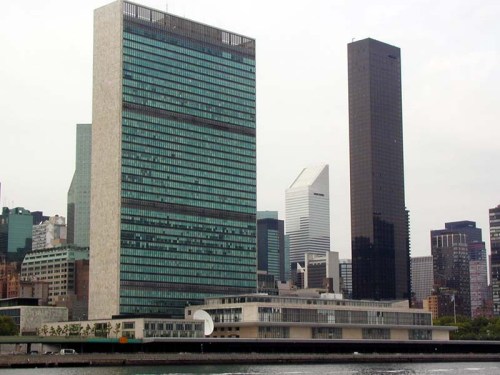
United Nations and Trump World Tower

In honor of the United Nations and the meeting of its General Assembly, following are different ways of saying “idiot” in many world languages. (Note: It is surprising how many languages use the word “idiot” unchanged. It appears to be a globally recognized phenomenon.)

Albanian idiot

Basque idiota

Belarusian ідыёт

Bosnian idiot

Bulgarian идиот

Catalan idiota

Croatian idiot

Czech idiot

Danish idiot

Dutch idioot

Estonian idioot

Finnish idiootti

French idiot

Galician idiota

German Dummkopf

Greek βλάκας (vlákas)

Hungarian idióta

Icelandic Hálfviti

Irish leathcheann

Italian idiota

Latvian idiots

Lithuanian idiotas

Macedonian идиот

Maltese idjota

Norwegian idiot

Polish idiota

Portuguese idiota

Romanian idiot

Russian идиот (idiot)

Serbian идиотски (idiotski)

Slovak idiot

Slovenian idiot

Spanish idiota

Swedish idiot

Ukrainian ідіот

Welsh idiot

Yiddish ידיאָט

Armenian ապուշ

Azerbaijani idiot

Bengali নির্বোধ

Chinese Simplified 白痴

Chinese Traditional 白痴

Georgian idiot

Gujarati ઈડિયટ્સ

Hindi बेवकूफ

Hmong ruam

Japanese 馬鹿

Kannada ಈಡಿಯಟ್

Kazakh есуас

Khmer របុសផ្លើ

Korean 백치

Lao idiot

Malayalam വിഢ്ഢി

Marathi मूर्ख

Mongolian эргүү тэнэг

Myanmar (Burmese) လူထုံ

Nepali मुर्ख

Sinhala මෝඩයෙක්

Tajik нощисулащл

Tamil முட்டாள்

Telugu ఇడియట్

Thai คนบ้า

Urdu مورھ

Uzbek tentak

Vietnamese kẻ ngốc

Arabic الأبله (al’abalah)

Hebrew אִידיוֹט

Persian ادم سفیه و احمق

Turkish salak

Afrikaans idioot

Chichewa chitsiru

Hausa wawa

Igbo onye iberibe

Sesotho sephoqo

Somali doqon

Swahili idiot

Yoruba ode

Zulu silima

Cebuano buangbuang

Filipino tanga

Indonesian Idiot

Javanese bodho

Malagasy adala

Malay bodoh

Maori pōrangi

Esperanto idioto

Haitian Creole moun sòt

Latin stultus