Bob Schwartz

Category: Religion

Be Stupid!

Bankei

You may think of yourself as clever. Or half-clever. Other people may think so too.

Be stupid!

That’s the advice from Bankei (1622-1693), a Zen master I’ve written about before.

Thousands of people came from all over Japan to hear Bankei speak. Ordinary people who came to hear really extraordinary messages from a very wise man. Such as: Be stupid!

“I tell my students and those of you coming regularly here to the temple: ‘Be stupid!’ Because you’ve got the dynamic function of the marvelously illuminating Buddha Mind, even if you get rid of discriminative understanding, you won’t be foolish. So, all of you, from here on, be stupid! Even if you’re stupid, when you’re hungry, you’ll ask for something to eat, when you’re thirsty, you’ll ask for some tea; when it gets warm, you’ll put on thin, light clothes, and when it’s cold, you’ll put on more clothes. As far as your activities of today are concerned, you’re not lacking a thing!

“With people who are clever, there are sure to be a great many shortcomings. To have transcended those clever people whom all the world holds in great esteem is what’s meant by ‘stupidity.’ There’s really nothing wrong with being a blockhead!

“When people say that someone is a clever fellow, I ask to meet him, and when I do and we have a chance to talk, it looks to me as if people in the world are praising an awful lot of foolishness. The fact is that those clever people acclaimed by the world are, from the start, deluded by their own cleverness. . .The true man’s ideal is to show kindness to those who are foolish and help those who are evil. To be recognized as a good man by the people of the world is precisely what makes being born a human being worthwhile. How can it be any good to earn yourself the reputation of a wicked person?

“So when you go back to your homes and meet your old acquaintances, you should have them wondering about you all: ‘How did Bankei teach them Buddhism, anyway? Why, they’ve come back even more stupid than before they left!’

“What I’m talking about isn’t the stupidity of stupidity and understanding. That which transcends stupidity and understanding is what I mean by stupidity!

From Bankei Zen: Translations from the Record of Bankei, Peter Haskel

Also:

Unborn: The Life and Teachings of Zen Master Bankei, Norman Waddell

Matzo: Dealing with Eating the Bread of Affliction

Organic Spelt Matzo

Matzo is referred to as “the bread of affliction,” symbolizing the exodus of the Jews from Egypt, who didn’t have time to allow the bread to rise as they fled through the wilderness. Talk about flatbread, this is the ultimate.

If you are observing the Passover and avoiding bread for the next week, or even if you’re not, some thoughts about eating matzo.

  1. Put away the toaster. Save the counter space. You won’t need it for bread. And you can’t toast matzo. Even if you could, it would slip through the slot.
  1. Make matzo brei for breakfast. Matzo brei is kind of a cross between pancakes and French toast, made by soaking matzo in water, mixing it with eggs, and cooking it in a frying pan. Delicious all year round. You don’t have to Jewish and it doesn’t have to be Passover.
  1. Try all the varieties of matzo, or at least the ones that don’t seem a little extreme (Organic Spelt, I’m looking at you). Once upon a time there was only plain matzo, just like there used to be plain white bread. Now everything is mixed in: Egg, Yolk-Free, Egg and Onion, Spelt, Mediterranean, Whole Wheat, Garlic and Rosemary, and Everything (which actually doesn’t have everything, just garlic, onion and poppy seeds. Go figure.)
  1. Don’t try to make sandwiches. At the seder, the tradition is to eat a tiny sandwich of horseradish and haroset (a sweet paste representing the mortar of the building the Jews slaved on) between two pieces of matzo. The great sage Hillel supposedly created this sandwich, and his name is attached to it. Even this tiny sandwich throws matzo crumbs all over the place. A full-size matzo sandwich is not a good idea. No matter how wise Hillel was.

Happy Passover.

Mystic Maps

Maps

Mystic Maps

Before the journey
The maps were few,
Colorful, promising.
Destination uncertain
Roads to travel
Randomly real.
More maps
Until there was no room
To hold them
No time
To study them.
The map makers,
Had they seen these roads
Visited these towns
Or are these conjectures
Visions, fantasies
Conjured up?
Map makers or magicians
Directions or tricks,
Now I see where they took me
Where I stop and sit.
Time and joy
For the maps
And the trip.

A Heschel Haggadah


Heschel Stamp

Each Passover is an opportunity to craft a special theme and text for the seder meal and celebration. The haggadah is the guide to the seder. It always incorporates the traditional order and elements that have been a part of the seder for centuries—most especially the retelling of the exodus story. Beyond that, one can follow the same exact text year after year, or can get creative. In recent years, creativity has been a hallmark of Passover and the haggadah.

It is a happy struggle for me to determine which haggadah to use for seder. Happy because it is a way to deeply consider Passover, the seder, and the group of guests joining us at the table. Our library has haggadot from years past, both those in published book form and those made up of pages printed and compiled ourselves. (I am a little partial to the one that includes scenes from The Ten Commandments movie.)

After weeks of study, and with a previous suggestion about using FDR’s Four Freedoms as a possible theme, I’ve decided to make this a seder featuring the words of Abraham Joshua Heschel. I’ve mentioned Heschel a few times in this blog (and mentioned his daughter, Professor Susannah Heschel, too). I’ve run out of superlatives to recommend his work. So as I’ve said before, he is the great Jewish thinker and writer of the 20th century, and that is only the start. He is also a model of enlightened religious thought in action. He marched with Dr. King in Selma—as can be seen in the famous photo, Heschel looking every bit the bearded biblical figure. And it was to Heschel’s seder that Dr. King planned to go in April 1968, when he was gunned down in Memphis.

In that same vein, here is a message that Heschel sent to President Kennedy in 1963:

To President John F. Kennedy, The White House, June 16, 1963

I look forward to privilege of being present at meeting tomorrow at 4 p.m. Likelihood exists that Negro problem will be like the weather. Everybody talks about it but nobody does anything about it. Please demand of religious leaders personal involvement not just solemn declaration. We forfeit the right to worship God as long as we continue to humiliate Negroes. Church synagogues have failed. They must repent. Ask of religious leaders to call for national repentance and personal sacrifice. Let religious leaders donate one month’s salary toward fund for Negro housing and education. I propose that you Mr. President declare state of moral emergency. A Marshall Plan for aid to Negroes is becoming a necessity. The hour calls for high moral grandeur and spiritual audacity.

Now begins my review of Heschel’s volumes, looking for small excerpts that will convey the essence of Heschel and the holiday, but won’t make the seder too long. For me, if we just took part in the seder, ate a great meal, and read Heschel aloud all night, it would be fine. Let’s see how that goes.

For an introduction to the words and works of Abraham Joshua Heschel:

The Wisdom of Heschel

Abraham Joshua Heschel: Essential Writings

I Asked For Wonder: A Spiritual Anthology

“Never once in my life did I ask God for success or wisdom or power or fame. I asked for wonder, and he gave it to me.”

Four Freedoms Passover

Four Freedoms - Norman Rockwell

Passover is coming. The first seder meal will be held on the evening of Friday, April 22. Even for non-observant Jews, this holiday is frequently a time for participation. One estimate says that 80% of Jews attend some sort of seder.

This year I suggest we go way back for a Passover theme. Back to FDR’s Four Freedoms from 1941.

The overall order of the seder (“seder” actually means order) has been standardized for centuries—the blessings, the rituals, the symbolic food and drink, the songs, and most of all, the recitation of the events of the exodus from Egypt. But the text and the form and the meaning have been subject to remixing, some of it pretty adventurous.

In the modern era, the freedom embedded in Passover has been extended to all sorts of concerns. During the time of the civil rights movement, the obvious connection was made between ancient and modern oppression, and the struggle to end that oppression.

In 1969 Rabbi Arthur Waskow created a Freedom Seder, making this connection more direct. He explains:

One of my earliest and warmest memories is that of my father reciting the Dayenu, the chant of rebellion, liberation, travail, and the creation of a new law that is the story of Passover. One of my latest and warmest memories is that of working with my wife and children to make of our own Passover Seder something that would speak to our deep concerns about our selves and our world.

Our efforts became sharper and more urgent in 1968, when the Passover came one bare week after the murder of Martin Luther King, the April uprising of black Washington against the blank-eyed pyramid-builders of our own time, and the military occupation of our city. Who in
those days could forget that the prophet King had remembered Moses?– had spoken of how he had been to the mountain-top, had seen the promised land, but might never enter. … And then we realized that in 1969, the third night of Passover, April 4, would be the first anniversary of King’s death.

Since then, Passover has become the platform for seders centered around all kinds of affliction, oppression, aspiration and freedom. Women. LGBT. Poverty. Peace. The Earth. And so on.

One example of this concerns a new tradition that is widely practiced. The seder plate contains a number of foods symbolizing the story of the Egyptian captivity and the fight for freedom. Susannah Heschel conceived of one more thing to add:

So how was it that the orange found its place on the seder plate as a Passover symbol of feminism and women’s rights?

Susannah Heschel, daughter of Abraham Joshua Heschel and a scholar in her own right, says that at the height of the Jewish feminist movement of the 1980s, she was inspired by the abundant new customs expressing women’s viewpoints and experiences and started placing an orange on the seder plate.

At an early point in the seder, she asked each person to take a segment of the orange, make the blessing over fruit and eat the segment in recognition of gay and lesbian Jews and of widows, orphans, Jews who are adopted and all others who sometimes feel marginalized in the Jewish community. She encouraged each guest to spit out the seeds in their orange segment to reject homophobia and hatred. The orange suggests the fruitfulness for all Jews when everyone in our community is a contributing and active member of Jewish life. (From The Wandering Is Over Haggadah, JewishBoston.com)

On January 6, 1941 President Franklin D. Roosevelt delivered an historic State of the Union Address. The world was increasingly gripped by brutal tyranny. On top of that, America was still recovering from the effects of the Great Depression. And it seemed almost impossible for the U.S. to stay out of the global fight for freedom.

In the address, FDR summarized what freedom meant—and why we would fight for it, here and abroad. That statement became known as the Four Freedoms–Freedom of Speech, Freedom of Worship, Freedom from Want, Freedom from Fear:

In the future days, which we seek to make secure, we look forward to a world founded upon four essential human freedoms.

The first is freedom of speech and expression—everywhere in the world.

The second is freedom of every person to worship God in his own way—everywhere in the world.

The third is freedom from want—which, translated into world terms, means economic understandings which will secure to every nation a healthy peacetime life for its inhabitants—everywhere in the world.

The fourth is freedom from fear—which, translated into world terms, means a world-wide reduction of armaments to such a point and in such a thorough fashion that no nation will be in a position to commit an act of physical aggression against any neighbor—anywhere in the world.

That is no vision of a distant millennium. It is a definite basis for a kind of world attainable in our own time and generation. That kind of world is the very antithesis of the so-called new order of tyranny which the dictators seek to create with the crash of a bomb.

Some will point out the hypocrisies and ironies of the statement. At that point in American history, millions were not free and were under attack because of their race, religion, and economic circumstances. Maybe the biggest irony of all is that the final call for disarmament and the final phrase “crash of a bomb” ultimately faced the reality of a horrific war and an unthinkable bomb to end it.

But as a goal and aspiration, the Four Freedoms still ring out. Maybe we can ring them this Passover.

The posters above are by Norman Rockwell. Maybe more famous than FDR’s speech are the propaganda posters that Rockwell painted based on the Four Freedoms. As with the speech, some complain that Rockwell’s America was over-idealized and far too white. Probably so, and the images themselves may look quaint and, from today’s perspective, backward looking.

To counter that, following are a couple of works from Ben Shahn, an illustrator who was contemporary with Rockwell, artistically his equal, culturally his opposite:

Ben Shahn was born in Kovno, Russia on September 12, 1898 to Joshua Hessel and Gittel (Lieberman) Shahn and died on March 14, 1969. A Jewish-born artist, muralist, social activist, photographer and teacher, he is best known for his works of Social realism…From May to June of 1933, Shahn served as an assistant to Diego Rivera while the artist executed the infamous Rockefeller Center mural. By circulating a petition among the workers to keep the mural on display, Shahn played an important role in fanning the controversy.

Among his many famous works, in 1930 Shahn created a series of watercolor drawings for a Passover Haggadah. In 1965 these drawings were incorporated into a complete haggadah. Here, in an illustration called The Bread of Affliction, the hand of God leads the people out Egypt:

Bread of Affliction 2 - Ben Shahn

And here is a bit of Shahn’s later work, part of a series of union posters urging people to register and vote:

M25958-1 001
Happy Passover! Let freedom ring!

Two Thoughts on the Passion: The Buddha and Bob Dylan


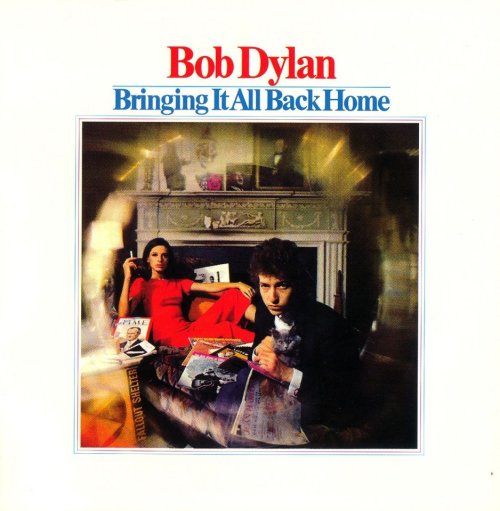
Bringing It All Back Home

“He not busy being born is busy dying.”

For anyone, Christian or not, the story of Easter is remarkable. Story, that is, not necessarily treated either as a story told or as a history chronicled.

Two of a thousand thoughts.

1.

The Buddhist conception of rebirth is complicated, beyond my simple and simplest understanding. So consider this just a summary and a thought about something of nearly infinite scope.

The realization that we are bound to grow old and die breaks the spell of infatuation cast over us by sensual pleasures, wealth, and power. It dispels the mist of confusion and motivates us to take fresh stock of our purposes in life. We may not be ready to give up family and possessions for a life of homeless wandering and solitary meditation, but this is not an option the Buddha generally expects of his householder disciples. Rather, as we saw above, the first lesson he draws from the fact that our lives end in old age and death is an ethical one interwoven with the twin principles of kamma and rebirth. The law of kamma stipulates that our unwholesome and wholesome actions have consequences extending far beyond this present life: unwholesome actions lead to rebirth in states of misery and bring future pain and suffering; wholesome actions lead to a pleasant rebirth and bring future well-being and happiness. Since we have to grow old and die, we should be constantly aware that any present prosperity we might enjoy is merely temporary. We can enjoy it only as long as we are young and healthy; and when we die, our newly acquired kamma will gain the opportunity to ripen and bring forth its own results. We must then reap the due fruits of our deeds. With an eye to our long-term future welfare, we should scrupulously avoid evil deeds that result in suffering and diligently engage in wholesome deeds that generate happiness here and in future lives.

In the Buddha’s Words: An Anthology of Discourses from the Pali Canon

My own take is that these rebirths are not a succession of lives, in the sense of multiple spans, but within this one life, this span of decades. We are constantly offered the opportunity to be new, based on who we have been but also on who we will be—who we will ourselves through thoughts and actions to be. If this sounds somewhat like the premise of Christian rebirth—of being born again—it might be.

(Note: To add yet another layer, Zen Master Bankei   talked about the unborn, that is, the unborn Buddha mind. When we realize that there is a reality that is there even before birth, we are marvelously illuminated. Not being born, we are not even subject to rebirth. But that’s another story.)

2.

Thinking about the story of the death and resurrection of Jesus, a soundtrack came to mind: Bob Dylan’s song It’s Alright, Ma (I’m Only Bleeding), from the album Bringing It All Back Home (1965).

I looked to see whether Dylan had ever talked about a connection between the song and the Bible story. At first glance, it looks like not.

Maybe I’m just reaching, the way exegetes sometimes do, but it seems clear to me. If you’re not familiar with the song, please read the lyrics (below) and listen to the track. As a poem, it is up there with the classics of modern beat poetry, such as Allen Ginsberg’s Howl. It is that good.

The song begins with a son singing to his mother about a darkness at noon. He obviously is, or considers himself, some kind of prophet, railing against the status quo and the powers that be. He acknowledges that this is dangerous. He finishes by imagining his execution: “And if my thought-dreams could be seen/They’d probably put my head in a guillotine.”

All along, he assures the mother that everything is alright:

It’s alright, Ma, I’m only bleeding…
It’s alright, Ma, I’m only sighing…
And it’s alright, Ma, I can make it…
I got nothing, Ma, to live up to…
But it’s alright, Ma, if I can’t please him…
But it’s alright, Ma, it’s life, and life only


It’s Alright, Ma (I’m Only Bleeding)
Written by Bob Dylan

Darkness at the break of noon
Shadows even the silver spoon
The handmade blade, the child’s balloon
Eclipses both the sun and moon
To understand you know too soon
There is no sense in trying

Pointed threats, they bluff with scorn
Suicide remarks are torn
From the fool’s gold mouthpiece the hollow horn
Plays wasted words, proves to warn
That he not busy being born is busy dying

Temptation’s page flies out the door
You follow, find yourself at war
Watch waterfalls of pity roar
You feel to moan but unlike before
You discover that you’d just be one more
Person crying

So don’t fear if you hear
A foreign sound to your ear
It’s alright, Ma, I’m only sighing

As some warn victory, some downfall
Private reasons great or small
Can be seen in the eyes of those that call
To make all that should be killed to crawl
While others say don’t hate nothing at all
Except hatred

Disillusioned words like bullets bark
As human gods aim for their mark
Make everything from toy guns that spark
To flesh-colored Christs that glow in the dark
It’s easy to see without looking too far
That not much is really sacred

While preachers preach of evil fates
Teachers teach that knowledge waits
Can lead to hundred-dollar plates
Goodness hides behind its gates
But even the president of the United States
Sometimes must have to stand naked

An’ though the rules of the road have been lodged
It’s only people’s games that you got to dodge
And it’s alright, Ma, I can make it

Advertising signs they con
You into thinking you’re the one
That can do what’s never been done
That can win what’s never been won
Meantime life outside goes on
All around you

You lose yourself, you reappear
You suddenly find you got nothing to fear
Alone you stand with nobody near
When a trembling distant voice, unclear
Startles your sleeping ears to hear
That somebody thinks they really found you

A question in your nerves is lit
Yet you know there is no answer fit
To satisfy, insure you not to quit
To keep it in your mind and not forget
That it is not he or she or them or it
That you belong to

Although the masters make the rules
For the wise men and the fools
I got nothing, Ma, to live up to

For them that must obey authority
That they do not respect in any degree
Who despise their jobs, their destinies
Speak jealously of them that are free
Cultivate their flowers to be
Nothing more than something they invest in

While some on principles baptized
To strict party platform ties
Social clubs in drag disguise
Outsiders they can freely criticize
Tell nothing except who to idolize
And then say God bless him

While one who sings with his tongue on fire
Gargles in the rat race choir
Bent out of shape from society’s pliers
Cares not to come up any higher
But rather get you down in the hole
That he’s in

But I mean no harm nor put fault
On anyone that lives in a vault
But it’s alright, Ma, if I can’t please him

Old lady judges watch people in pairs
Limited in sex, they dare
To push fake morals, insult and stare
While money doesn’t talk, it swears
Obscenity, who really cares
Propaganda, all is phony

While them that defend what they cannot see
With a killer’s pride, security
It blows the minds most bitterly
For them that think death’s honesty
Won’t fall upon them naturally
Life sometimes must get lonely

My eyes collide head-on with stuffed
Graveyards, false gods, I scuff
At pettiness which plays so rough
Walk upside-down inside handcuffs
Kick my legs to crash it off
Say okay, I have had enough, what else can you show me?

And if my thought-dreams could be seen
They’d probably put my head in a guillotine
But it’s alright, Ma, it’s life, and life only
Dim Dusty Mirror

For now we see in a mirror, dimly, but then we will see face to face. Now I know only in part; then I will know fully, even as I have been fully known.
1 Corinthians 13:12 (New Revised Standard Version)

Can you keep your crescent soul from wandering
can you make your breath as soft as a baby’s
can you wipe your dark mirror free of dust
can you serve and govern without effort
can you be the female at Heaven’s Gate
can you light the world without knowledge
can you give birth and nurture
but give birth without possessing
raise without controlling
this is Dark Virtue
Verse 10, Lao-tzu’s Taoteching
Translated by Red Pine

“Our spirit dwells in our eyes. When the eyes see something, the spirit chases it. When we close our eyes and look within, everything is dark. But within the dark, we still see something. There is still dust. Only by putting an end to delusions can we get rid of the dust.”
Commentary on Verse 10 by Wu Ch’eng (1249–1333)

Why We Should Teach and Learn Ancient History First

Children in America who attend some sort of religious school, even before going to secular school, may learn some limited sort of ancient history. Ancient in that it concerns purported people and events from millennia ago. Limited in that some number of those people and events, however instructional and enlightening, may be of some historical question.

There is other ancient history worth teaching our kids early, and catching up with ourselves, just in case we missed it in our own education. There are continuous civilizations all around the world that have been ongoing, in the same place, also for millennia.

China, for example. Or India. Or the native populations in the Americas. This is where education should start, before we start talking about admittedly important people arriving on these North American shores and establishing an admittedly important nation just a few centuries ago.

Why? Because it would give us a sense of perspective on what we have, or have not, achieved so far. And because it would give us a missing sense of the scope of history, in that everything comes and goes. Which you could learn from the history of China. Or you could learn from reading the I Ching, the book about things changing, written in China millennia ago. Or if you prefer something more Western and familiar, from reading the Bible itself. A time for every purpose, it says. And so it goes.

Give to the Emperor

Render Unto Caesar

Resolutions to stay away from politics, when it’s pretty or ugly or pretty ugly, can be hard to keep. But politics, no matter how significant it may seem, can be like psychic, emotional, moral quicksand, which as it reaches your shoulders, leaves you wondering if this trip was really necessary.

So let’s see what Jesus said about all this.

The famous “Question about Paying Taxes” is one of the most discussed and interpreted passages in the Gospels. Here it is, from the Gospel of Luke in the NRSV translation:

So they watched him and sent spies who pretended to be honest, in order to trap him by what he said, so as to hand him over to the jurisdiction and authority of the governor. So they asked him, “Teacher, we know that you are right in what you say and teach, and you show deference to no one, but teach the way of God in accordance with truth. Is it lawful for us to pay taxes to the emperor, or not?” But he perceived their craftiness and said to them, “Show me a denarius. Whose head and whose title does it bear?” They said, “The emperor’s.” He said to them, “Then give to the emperor the things that are the emperor’s, and to God the things that are God’s.” And they were not able in the presence of the people to trap him by what he said; and being amazed by his answer, they became silent. (Luke 20:20-26)

Some view this as a story about the separation of state and church. Some view it as about obedience to civil or religious authority. Some view it very particularly as a directive on withholding tax payment from ungodly government. And so on.

I take this as a spiritual message, grounded in practical experience. Political speech and action can be very important, even essential, to the accomplishment of positive and beneficial goals. And very seductive. But those activities can also set you in the midst of circumstances and environments that can seriously put you at a distance from more enlightening aspirations and possibilities. Sometimes really far from them.

You can’t run away from politics and its consequences. Those coins and emperors are always going to be there. So if you get caught up in it, just remember that there are other higher callings that have nothing to do with policies and positions and politicians.

Vatican Newspaper Essays Say Women Should Preach at Mass

Calvi Alessandro, detto il Sordino, Caterina esorta Gregorio XI a tornare a Roma, sec. XVIII.jpg

When the news seems to suggest we may be moving backwards, the news seems to suggest we may be moving forward.

Vatican newspaper essays say women should preach at Mass
By David Gibson, Religion News Service:

A series of essays in the semiofficial Vatican newspaper is urging the Catholic Church to allow women to preach from the pulpit at Mass, a role that has been reserved almost exclusively to the all-male priesthood for nearly 800 years.

“This topic is a delicate one, but I believe it is urgent that we address it,” Enzo Bianchi, leader of an ecumenical religious community in northern Italy and a popular Catholic commentator, wrote in his article in L’Osservatore Romano.

“Certainly for faithful lay people in general, but above all for women, this would constitute a fundamental change in their participation in church life,” said Bianchi, who called such a move a “decisive path” for responding to widespread calls — including by Pope Francis — to find ways to give women a greater role in the church….

So what will Pope Francis do?

The pontiff has repeatedly called for women to have a greater role in the church, but he has also reiterated the ban against ordaining women as priests and has warned against “clericalizing” women by trying to make them cardinals or to focus on promoting them to higher church offices.

Then again, that the Vatican’s own newspaper would dedicate so much space to the issue of women preachers is intriguing, said Massimo Faggioli, a church historian at the University of St. Thomas in Minnesota.

“I think it is a big signal,” he said.