Bob Schwartz

Category: Philosophy

Lao-tzu’s Taoteching

Taoteching

“The world is a spiritual thing.”

Taoteching, Chapter 29

Trying to govern the world with force
I see this not succeeding
the world is a spiritual thing
it can’t be forced
to force it is to harm it
to control it is to lose it
sometimes things lead
sometimes they follow
sometimes they blow hot
sometimes they blow cold
sometimes they expand
sometimes they collapse
sages therefore avoid extremes
avoid extravagance
avoid excess

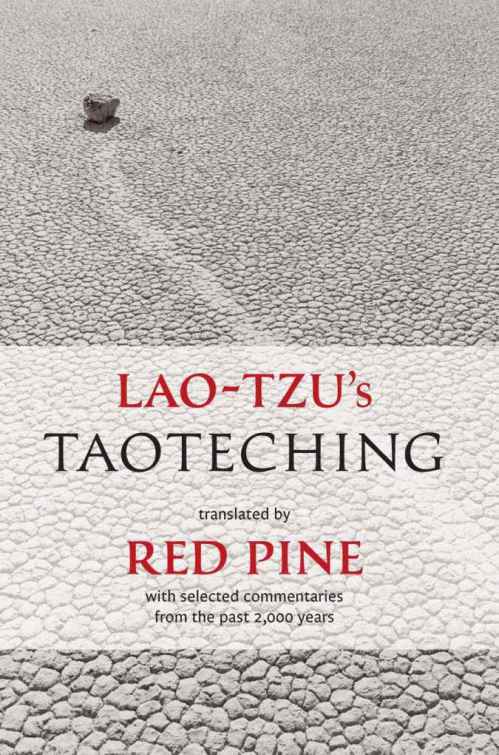
Reading and studying the little (81 tiny chapters) and infinite pool of Lao-tzu’s Tao Te Ching is as valuable as knowing any text from any tradition. Of the dozens of translations into English, all different and many worthy, the one by Red Pine—the translator and scholar Bill Porter—is the place to visit and rest awake. Along with his translation, he includes excerpts from 2,000 years of commentaries.

Aesop’s Fables: Defending a Demagogue

Aesop's Fables

I just began reading Laura Gibb’s excellent and highly recommended Aesop’s Fables. With almost 600 fables, beautifully translated, that’s less than a penny a fable. Please read it for fun, education and enlightenment.

You may or may not have grown up on these tiny tales from this famous real or apocryphal Greek storyteller, but they have been streaming through civilization for millennia. You certainly know some of them from our common culture: the tortoise and the hare, the ant and the grasshopper. Each includes a moral (e.g., slow but steady wins the race), which is how they came to be seen as lessons for children, but they were originally for adults, and you might look to their value as teaching stories for everyone. Also, if you are a writer or other creative, they can provide instant inspirational spark.

When I read this fable of the fox and the hedgehog (Fable 29 in the Gibbs numbering), I couldn’t help thinking of current events:

Aesop was defending a demagogue at Samos who was on trial for his life, when he told this story: ‘A fox was crossing a river but she got swept by the current into a gully. A long time passed and she couldn’t get out. Meanwhile, there were ticks swarming all over the fox’s body, making her quite miserable. A hedgehog wandered by and happened to see the fox. He took pity on her and asked if he should remove the ticks, but the fox refused. The hedgehog asked the reason why, and the fox replied, “These ticks have taken their fill of me and are barely sucking my blood at this point, but if you take these ticks away, others will come and those hungry new ticks will drink up all the blood I have left!” And the same is true for you, people of Samos: this man will do you no harm since he is already wealthy, but if you condemn him to death, others will come who do not have any money, and they will rob you blind!’

The Whole Wheat of Spirit and the Millstone of Reason

Encyclopedia of Jewish Myth

Going beyond pure reason is a trip too far for many, to a place where the possible and the impossible seem to coexist on equal terms.

But why not go beyond, at least for a visit or vacation? You never know what you will find or learn there.

Mama always told me not to look into the sights of the sun
Oh but mama that’s where the fun is
Bruce Springsteen, Blinded by the Light

To the pious man God is as real as life, and as nobody would be satisfied with mere knowing or reading about life, so he is not content to suppose or to prove logically that there is a God; he wants to feel and to give himself to Him; not only to obey but to approach Him. His desire is to taste the whole wheat of spirit before it is ground by the millstone of reason. He would rather be overwhelmed by the symbols of the inconceivable than wield the definitions of the superficial.
Abraham Joshua Heschel, Man Is Not Alone

Recommended:

The Encyclopedia of Jewish Myth, Magic and Mysticism: Second Edition, Geoffrey W. Dennis

The new edition of a thoroughly readable and accessible compendium of information and insights. Fun for the casually curious, valuable for the interested reader and researcher.

From the Introduction:

Judaism is one of the oldest living esoteric traditions in the world. Virtually every form of Western mysticism and spiritualism known today draws upon Jewish mythic and occult teachings—magic, prayer, angelology, alchemy, numerology, astral projection, dream interpretation, astrology, amulets, divination, altered states of consciousness, alternative, and rituals of power—all have roots in the Jewish occult….

Modern Jews like to imagine that magic has been swept into the dustbin of history by the long, inexorable progress of rationalism. More than that, Jews have been taught from our youth that Judaism has always possessed an essentially naturalistic worldview and that magic, merely a marginal Jewish preoccupation at most, was just an anomaly resulting from our being situated (and corrupted) by the superstitions of our neighbors. But that’s not entirely accurate. It is only in the last two centuries that Jews have fully embraced science, but we have always been looking for ways to change the world for the better, whether it be through science, medicine, or “practical Kabbalah.”

Even today, rationalism has not completely displaced our sense that there is a mystical potential at work in the world; Occam’s razor has never been able to fully overpower the Sixteen-Sided Sword of the Almighty. Millions of people, both Jews and gentiles, continue to believe that the stars influence our lives. Most Americans believe in the reality of angels. Jewish techniques of dream interpretation and for combating the evil eye are still widely practiced today. When you read the entries of this book on topics such as these, you will realize that magical thinking and enchanting deeds have always had a place in Judaism and, however much some might want to dismiss Judaism’s miraculous and wondrous traditions, the presence of Jewish magic in Jewish life has merely been eclipsed, never uprooted; it still has the potential to empower us.

Political Expediency and Conscience

Marcellus and Butch - Pulp Fiction

Now the night of the election, you may fell a slight sting, that’s conscience messin’ wit ya. Screw conscience! Conscience only hurts, it never helps.
Loosely adapted from Pulp Fiction

Political pragmatism is a messy business, especially when it looks like pure expediency. That goes for candidates who are not trusted or liked, and for supporters and enablers who overlook obvious shortcomings and transgressions for the sake of some higher goal. (For Democrats and Republicans who think this is only about the other, think again.)

The best movie moment about expediency comes from Pulp Fiction. Those who know this great movie may know the scene. Those who haven’t seen it should, for entertainment and for Tarantino’s willingness to take on interesting moral and ethical questions. Be advised that the movie is rough, as is the language in this scene.

Boss Marsellus Wallace (Ving Rhames) is bribing aging boxer Butch Coolidge (Bruce Willis) to take a dive:

MARSELLUS WALLACE:

I think you’re gonna find ­ when all this shit is over and done ­ I think you’re gonna find yourself one smilin’ motherfucker. Thing is Butch, right now you got ability. But painful as it may be, ability don’t last. Now that’s a hard motherfuckin’ fact of life, but it’s a fact of life your ass is gonna hafta git realistic about. This business is filled to the brim with unrealistic motherfuckers who thought their ass aged like wine. Besides, even if you went all the way, what would you be? Feather-weight champion of the world. Who gives a shit? I doubt you can even get a credit card based on that.

Now the night of the fight, you may fell a slight sting, that’s pride fuckin’ wit ya. Fuck pride! Pride only hurts, it never helps. Fight through that shit. ‘Cause a year from now, when you’re kickin’ it in the Caribbean you’re gonna say, “Marsellus Wallace was right.”

A Heschel Haggadah


Heschel Stamp

Each Passover is an opportunity to craft a special theme and text for the seder meal and celebration. The haggadah is the guide to the seder. It always incorporates the traditional order and elements that have been a part of the seder for centuries—most especially the retelling of the exodus story. Beyond that, one can follow the same exact text year after year, or can get creative. In recent years, creativity has been a hallmark of Passover and the haggadah.

It is a happy struggle for me to determine which haggadah to use for seder. Happy because it is a way to deeply consider Passover, the seder, and the group of guests joining us at the table. Our library has haggadot from years past, both those in published book form and those made up of pages printed and compiled ourselves. (I am a little partial to the one that includes scenes from The Ten Commandments movie.)

After weeks of study, and with a previous suggestion about using FDR’s Four Freedoms as a possible theme, I’ve decided to make this a seder featuring the words of Abraham Joshua Heschel. I’ve mentioned Heschel a few times in this blog (and mentioned his daughter, Professor Susannah Heschel, too). I’ve run out of superlatives to recommend his work. So as I’ve said before, he is the great Jewish thinker and writer of the 20th century, and that is only the start. He is also a model of enlightened religious thought in action. He marched with Dr. King in Selma—as can be seen in the famous photo, Heschel looking every bit the bearded biblical figure. And it was to Heschel’s seder that Dr. King planned to go in April 1968, when he was gunned down in Memphis.

In that same vein, here is a message that Heschel sent to President Kennedy in 1963:

To President John F. Kennedy, The White House, June 16, 1963

I look forward to privilege of being present at meeting tomorrow at 4 p.m. Likelihood exists that Negro problem will be like the weather. Everybody talks about it but nobody does anything about it. Please demand of religious leaders personal involvement not just solemn declaration. We forfeit the right to worship God as long as we continue to humiliate Negroes. Church synagogues have failed. They must repent. Ask of religious leaders to call for national repentance and personal sacrifice. Let religious leaders donate one month’s salary toward fund for Negro housing and education. I propose that you Mr. President declare state of moral emergency. A Marshall Plan for aid to Negroes is becoming a necessity. The hour calls for high moral grandeur and spiritual audacity.

Now begins my review of Heschel’s volumes, looking for small excerpts that will convey the essence of Heschel and the holiday, but won’t make the seder too long. For me, if we just took part in the seder, ate a great meal, and read Heschel aloud all night, it would be fine. Let’s see how that goes.

For an introduction to the words and works of Abraham Joshua Heschel:

The Wisdom of Heschel

Abraham Joshua Heschel: Essential Writings

I Asked For Wonder: A Spiritual Anthology

“Never once in my life did I ask God for success or wisdom or power or fame. I asked for wonder, and he gave it to me.”

My Cheap Blank Tablet, My Tabula Rasa

I’ve started keeping a tiny blank black chalkboard on my desk, next to a stick of white chalk.

It is also known as a tablet. But I am not confused between it and the three other devices on my desk that have the same name, though it is just about the same size. This one cost about two dollars at Walmart and stays fully charged and useful forever. As long as I don’t run out of chalk. The others were substantially more expensive and need constant electrification.

There are the expressions “clean slate” or “blank slate.” Clean slate indicates that all is forgotten or forgiven, that one is starting over. Blank slate indicates thought that starts without prior or preconceived ideas.

In Latin it is tabula rasa, a clean, erased, or literally scraped tablet, based on wax writing tablets used by the Romans. Aristotle used this as a philosophical concept, as did John Locke.

I draw circles on it. I draw lines on it. It doesn’t have room for many words, just one or two, so I don’t do much writing on it. I do that on the other fancier tablets. Whatever I do chalk there, I always erase. Blank, for the next time.

The I Ching of Paris

Hexagrams 44 and 29

Question for the I Ching (using the coin method of consultation): How do we deal with the events in Paris?

The I Ching replies:

Hexagram 44 – Gou (Encountering, Coming to Meet)
Heaven above, Wind below.
Changing lines in the third, fourth and top place.

Changes to:

Hexagram 29 – Kan (Water, Darkness, The Abysmal)
Water above, Water below.

Excerpts from two leading translations:

The Complete I Ching
Alfred Huang

Hexagram 44 – Gou

The structure of the gua [hexagram] is Heaven above, Wind below. The wind blows everywhere under Heaven, encountering every being. It should be an auspicious gua. However, there is only one yielding line beneath five solid lines, symbolizing that the yin element is advancing and approaching the yang elements. When King Wen saw this happening, he heightened his vigilance. He realized that an unworthy person was worming his way into favor at the court. The growing negative influences would displace good people one after another. Darkness and difficulties had been eliminated, but their negative influences had not totally faded. These influences were permeating different areas. One must beware of this tendency and take prompt precautions against possible misfortune. Thus King Wen’s Decision and the Duke of Zhou’s Yao Text are full of warnings. But Confucius’s commentaries still shed light on the positive side.

This gua discusses the principle of encountering. In Chinese, meeting a person (or anything) unexpectedly is defined as encountering. When people encounter each other, either they are attracted, making adjustment for a harmonious relationship, or they reject each other, creating conflict between them. In human life sometimes one cannot refrain from misunderstanding and conflict. But one should not indulge in it and think that conflict is unavoidable and cannot be resolved. The ancient sages advocated adopting a conciliatory attitude. Here one yin element approaches five yang elements. She dares to come forward because her strength grows stronger. In this situation, one should not overlook taking preventive measures.

King Wen’s strategy of eliminating evil forces was to show no animosity but to act without tolerance. His administration constrained evil elements like tying up rams. But evil elements still wormed themselves into the favor of the court. King Wen realized that the evil forces had been eliminated, yet their influence had not totally faded. His analogy was that the maiden was too strong; it was not good to marry such a woman. The Duke of Zhou describes the evil forces as waiting to move forward like a lean pig. They should be stopped as if fastened with a metal brake. It is wise to restrain their influence by not letting them influence other people, but it was wiser to influence people with positive virtue.

[Changes to:]

Hexagram 29 – Kan

The central theme of this gua is: falling but not drowned; in danger but not lost. Maintain your confidence: soothe your mind. With assurance and faith, caution and trust, you can pass through any difficult situation. Both Abysmal and Abyss carry the sense of being bottomless. Kan is a pit, but it is not bottomless. There is hope.

Darkness represents not only a pit but also a situation of difficulty or danger. The structure of this gua is a doubling of the primary gua, Water. The image of Water is a yang line plunging between two yin lines, like running water flowing along and between the banks of a river. In ancient times, crossing a river represented a great danger. Thus, the attribute of Water was designated a situation of difficulty or danger. Here, Water is doubled, suggesting that one is plunging into a situation fraught with difficulties or danger. However, the ancient Chinese believed that no matter how dangerous or dark a situation was, if one was able to follow the way of Heaven, one could pass through it as safely as water passes through a ravine.

Water flows on twice over,
Darkness is doubled.
In correspondence with this,
The superior person cultivates and practices virtue constantly
And responds through teaching.


The I Ching
Wilhelm/Baynes

Hexagram 44 – Kou

This hexagram indicates a situation in which the principle of darkness, after having been eliminated, furtively and unexpectedly obtrudes again from within and below. Of its own accord the female principle comes to meet the male. It is an unfavorable and dangerous situation, and we must understand and promptly prevent the possible consequences.

The inferior man rises only because the superior man does not regard him as dangerous and so lends him power. If he were resisted from the first, he could never gain influence.
The time of COMING TO MEET is important in still another way. Although as a general rule the weak should not come to meet the strong, there are times when this has great significance. When heaven and earth come to meet each other, all creatures prosper; when a prince and his official come to meet each other, the world is put in order. It is necessary for elements predestined to be joined and mutually dependent to come to meet one another halfway. But the coming together must be free of dishonest ulterior motives, otherwise harm will result.

[Changes to:]

Hexagram 29 – K’an

In man’s world K’an represents the heart, the soul locked up within the body, the principle of light inclosed in the dark—that is, reason. The name of the hexagram, because the trigram is doubled, has the additional meaning, “repetition of danger.” Thus the hexagram is intended to designate an objective situation to which one must become accustomed, not a subjective attitude. For danger due to a subjective attitude means either foolhardiness or guile. Hence too a ravine is used to symbolize danger; it is a situation in which a man is in the same pass as the water in a ravine, and, like the water, he can escape if he behaves correctly.

Through repetition of danger we grow accustomed to it. Water sets the example for the right conduct under such circumstances. It flows on and on, and merely fills up all the places through which it flows; it does not shrink from any dangerous spot nor from any plunge, and nothing can make it lose its own essential nature. It remains true to itself under all conditions. Thus likewise, if one is sincere when confronted with difficulties, the heart can penetrate the meaning of the situation. And once we have gained inner mastery of a problem, it will come about naturally that the action we take will succeed. In danger all that counts is really carrying out all that has to be done—thoroughness—and going forward, in order not to perish through tarrying in the danger.

Properly used, danger can have an important meaning as a protective measure. Thus heaven has its perilous height protecting it against every attempt at invasion, and earth has its mountains and bodies of water, separating countries by their dangers. Thus also rulers make use of danger to protect themselves against attacks from without and against turmoil within.
New Beginnings: The Torah and the I Ching

Bet

In Jewish congregations, the annual Torah reading cycle begins again this week with the first chapters of the Bible. In Hebrew it begins with the word b’reishit, and in its best-known translation, the first verse goes like this:

In the beginning, God created the heavens and the earth.

And with that comes a puzzle.

If B’reishit is the beginning of a very big and consequential story, and if the creators of the Torah were sensitive to the mystical meanings of the Hebrew alphabet and language, why does the Torah begin with the second letter bet (B) rather than the first letter alef (A)?

Looking at a bigger picture, this connects to a related puzzle and an unlikely source: the I Ching.

The I Ching is a classic of Chinese literature and philosophy, a text as ancient as the Torah and just as influential.

Richard J. Smith writes in The I Ching: A Biography:

The Changes first took shape about three thousand years ago as a divination manual, consisting of sixty-four six-line symbols known as hexagrams. Each hexagram was uniquely constructed, distinguished from all the others by its combination of solid (——) and/or broken (— —) lines. The first two hexagrams in the conventional order are Qian and Kun; the remaining sixty-two hexagrams represent permutations of these two paradigmatic symbols….

The operating assumption of the Changes, as it developed over time, was that these hexagrams represented the basic circumstances of change in the universe, and that by selecting a particular hexagram or hexagrams and correctly interpreting the various symbolic elements of each, a person could gain insight into the patterns of cosmic change and devise a strategy for dealing with problems or uncertainties concerning the present and the future.

The first intriguing note is that the I Ching (pronounced Yi Jing) begins with those hexagrams Qian and Kun—known generally in English as Heaven and Earth. The cosmos of change and the I Ching begin then with Heaven and Earth.

It is at the close of the 64 hexagrams that the conundrum appears. Hexagram 63, the penultimate one, is Ji Ji—After Completion. This should be the end of the story. But it isn’t. The final hexagram, Hexagram 64, is Wei Jei—Before Completion. In the end, it doesn’t stop. It begins again. The Book of Changes emphasizes that the changes never end.

This is an explanation of why the Torah does not begin with the beginning of the alphabet. If it starts with A, that presumes a Z, A to Z, or in Hebrew, alef to tav. Creation would thus be represented as a finite element of a finite cosmos. In the text it starts instead, as the Latin phrase goes, in media res—in the middle of things. Just as the Torah will end in the middle of things, after completion of a journey, but with Moses never allowed to experience what is yet to happen, before the next completion. On and on, always beginning, never done. Just like the I Ching. Just like the Torah itself.

Underwear and Ideas

Boxer Briefs

The life of underwear is interesting. It begins with elastic that is comfortable and useful. But over time, the elastic relaxes. The underwear still works pretty well, still looks pretty good, and you are reluctant to replace it. Why bother?

Then you finally do replace it, and the new one is an improvement. It really does feel better. Works better too. What took you so long?

It may be worthwhile to consider replacing old ideas and old ways with new ones. You might be surprised how easy it might be, and how much better it works and feels.

What Are Donald Trump’s Moral Obligations?

Donald Trump has indirectly raised an interesting question: What exactly are his moral obligations?

Trump’s failure to correct a supporter’s mistaken and vituperative views about President Obama have been at the center of a controversy.

After a few attempts to answer criticism, Trump tried again today:

Washington (CNN) Donald Trump on Saturday said it is not his job to correct supporters’ claims about the President, defending his decision not to take issue with a man who disparaged Muslims and said President Barack Obama is not an American.

Trump did not dispute the man’s allegations made at a town hall event this week, and added that if someone criticized him to Obama, there would be “no chance” the President would come to his defense.

“Am I morally obligated to defend the president every time somebody says something bad or controversial about him? I don’t think so!” he tweeted Saturday morning.

Am I morally obligated to defend the president every time somebody says something bad or controversial about him? I don’t think so!
— Donald J. Trump (@realDonaldTrump) September 19, 2015

Now that we know one of the things that is not Trump’s moral obligation, it begs the question: What does he consider his moral obligations to be?

I wish and hope that somebody—maybe a member of the press—would ask him.