Is Zero A Number?

O zero
You fool me all the time
Pretending to be something
When you’re nothing

O zero
You fool me all the time
Pretending to be something
When you’re nothing

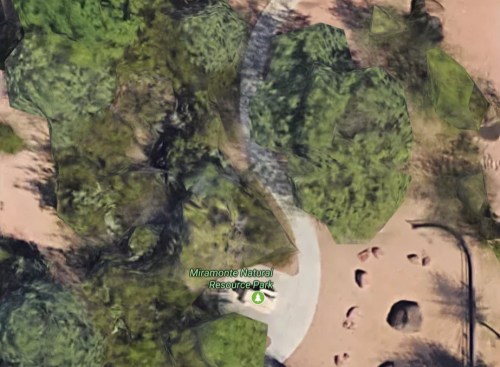
Inscribed on the winding sidewalk of the park:
The true test of civilization is not the census, nor the size of cities, nor the crops, but the kind of man that the country turns out.
—Ralph Waldo Emerson, Society and Solitude, 1870
Between the rational and the irrational is the place that so many traditions point us to, though not all who follow want to go. It is not in the middle, in the sense of being halfway in between, or to applying each one half the time. It is the entire space, with the wholly rational and irrational merely on the outside borders, a thin outline.
This does not sit well with many, who want to have it one way or another. Extreme rationalists frequently work hard to make ordered sense from evidence, rejecting the rest, and particularly vexed by those apparently too lazy or heedless to see how essential the rational way is. Extreme irrationalists may be driven by visions that may be delusions, or by personal preferences, and may indeed avoid the rational because it is hard work or because it may not suit their needs.
This plays out on a bigger social scale. With increasing frequency, the irreligious base their perspective on a loosely rationalist view, not only because there is no evidence of and for the religious, but because the religious seem to discard or ignore the rational in a disordered and possibly self serving way.
No one is right or wrong here, in the sense of winning an ultimately unwinnable argument. Instead consider the field where all things grow, neither rational nor irrational. The place, if we listen to the best of the traditions, where we are born and where we die.

Ex Nihilo
When once was nothing
Was something?
Where once was nothing
Was nowhere?
Know everything
Believe in what you know
And nothing else?
Believe everything
And know nothing?
Aleph to tav
Alpha to omega
Awwal to akkir.
Is this the emet
The truth?
© Bob Schwartz 2017

It may not be my favorite E. E. Cummings poem, but i sing of Olaf glad and big is a special one. It is about someone who suffers for his moral beliefs (in this case, about war and mindless patriotism), and who is punished by a range of Americans, from fellow soldiers to the president. Someone, writes Cummings, who is “more brave than me:more blond than you.” It contains the one line of poetry I probably recite the most in non-poetry contexts, to epitomize those who take a stand.
i sing of Olaf glad and big
whose warmest heart recoiled at war:
a conscientious object-or
his wellbelovéd colonel(trig
westpointer most succinctly bred)
took erring Olaf soon in hand;
but–though an host of overjoyed
noncoms(first knocking on the head
him)do through icy waters roll
that helplessness which others stroke
with brushes recently employed
anent this muddy toiletbowl,
while kindred intellects evoke
allegiance per blunt instruments–
Olaf(being to all intents
a corpse and wanting any rag
upon what God unto him gave)
responds,without getting annoyed
“I will not kiss your fucking flag”
straightway the silver bird looked grave
(departing hurriedly to shave)
but–though all kinds of officers
(a yearning nation’s blueeyed pride)
their passive prey did kick and curse
until for wear their clarion
voices and boots were much the worse,
and egged the firstclassprivates on
his rectum wickedly to tease
by means of skilfully applied
bayonets roasted hot with heat–
Olaf(upon what were once knees)
does almost ceaselessly repeat
“there is some shit I will not eat”
our president,being of which
assertions duly notified
threw the yellowsonofabitch
into a dungeon,where he died
Christ(of His mercy infinite)
i pray to see;and Olaf,too
preponderatingly because
unless statistics lie he was
more brave than me:more blond than you.

Age of Enlightenment: an intellectual and scientific movement of 18th century Europe which was characterized by a rational and scientific approach to religious, social, political, and economic issues.
It was great while it lasted. At times difficult, but fun too. The Age of Enlightenment gave us, for example, the American Revolution. Helpful.
If more evidence is needed that the “rational and scientific approach” is going or gone, here is the new EPA Administrator Scott Pruitt on the role of carbon dioxide in global warming:
“There’s tremendous disagreement about the degree of impact…So, no, I would not agree that carbon dioxide is a primary contributor to the global warming that we see.”
The United Nations Intergovernmental Panel on Climate Change disagrees with him. Almost all scientists disagree with him. The current EPA website disagrees with him (though that will be fixed). Many junior high school students disagree with him (though our new Secretary of Education should be able to fix that too).
The Age of Enlightenment doesn’t have a special holiday, because it is already embedded in so much we do (see, for example, the Fourth of July). But maybe we should at least recognize its passing. We’ll miss it, more than we know.

Please read a little Henry David Thoreau if you have the chance. Maybe no American writer has made a plainer case for living a life of truth, a life of principle, a life that matters.
You may know of his most famous works.
There is Walden, about his choosing to live for a time in the woods, within nature and by himself (“I went to the woods because I wished to live deliberately, to front only the essential facts of life, and see if I could not learn what it had to teach, and not, when I came to die, discover that I had not lived.”) There is Civil Disobedience, about determining how, when and why defying the powers that be is a conscientious imperative.
There is much more Thoreau beyond these (see Walden and Other Writings). Following are some brief excerpts from Life Without Principle, published posthumously in the Atlantic Monthly in 1863.
In proportion as our inward life fails, we go more constantly and desperately to the post-office. You may depend on it, that the poor fellow who walks away with the greatest number of letters proud of his extensive correspondence has not heard from himself this long while…. [Note: If you substitute “greatest number of followers” for “greatest number of letters”, you will see just how timely and relevant this is today.]
I am astonished to observe how willing men are to lumber their minds with such rubbish,—to permit idle rumors and incidents of the most insignificant kind to intrude on ground which should be sacred to thought. Shall the mind be a public arena, where the affairs of the street and the gossip of the tea-table chiefly are discussed? Or shall it be a quarter of heaven itself….
Just so hollow and ineffectual, for the most part, is our ordinary conversation. Surface meets surface. When our life ceases to be inward and private, conversation degenerates into mere gossip. We rarely meet a man who can tell us any news which he has not read in a newspaper, or been told by his neighbor; and, for the most part, the only difference between us and our fellow is that he has seen the newspaper, or been out to tea, and we have not….
We may well be ashamed to tell what things we have read or heard in our day. I do not know why my news should be so trivial,—considering what one’s dreams and expectations are, why the developments should be so paltry. The news we hear, for the most part, is not news to our genius. It is the stalest repetition….
Really to see the sun rise or go down every day, so to relate ourselves to a universal fact, would preserve us sane forever. Nations! What are nations? Tartars, and Huns, and Chinamen! Like insects, they swarm. The historian strives in vain to make them memorable. It is for want of a man that there are so many men. It is individuals that populate the world….
It requires more than a day’s devotion to know and to possess the wealth of a day.
Feelings are magnified about the election right now. They will remain strong for a while, and may get more pronounced as the actuality sets in.
These strong feelings can be a motivator in trying to move things in a direction you view as better. You will think about what that direction is, and you will think about what actions can contribute. This can be all good.
But strong feelings and well-meaning thought and action can be ineffective, counterproductive, and even harmful, if we don’t seek guidance. However bad you feel, however smart you are, you need to look outside yourself for that guidance.
The kind and source of guidance depends on which voices and principles have served you in the past. And if you haven’t spent much time with such voices and principles, you might take this opportunity to try it.
This doesn’t at all mean just religious, spiritual or philosophical voices to listen to. In a political situation, you will find plenty of great political thinkers, some ancient, some contemporary, who offer sound and principled advice.
The point is not to listen just to yourself, and not just to individuals in your circle of like-minded people, who may be just as passionately unsettled as you. You may have good ideas and approaches, they may have good ideas and approaches. But hard as it is to believe right now, there is nothing new under the sun, even in politics and governing, and people have been refining their thinking about this not just for decades or centuries, but for thousands of years.
When it seems dark, politically or personally, we may think we can find a path solely by our own lights. Almost always, we are wrong.

You don’t want to hear this, but things may get crazier after the election.
If Hillary Clinton wins, she will be the least liked, least trusted President to ever take office. All the assumptions and suppositions about how the Clintons’ good intentions have been mixed with and compromised by expedient centrism, ambition, greed, secrecy and overall ugliness have been confirmed.
Progressives who tried an insurgency within the Democratic Party will learn that if they have a place at the table, it will be set with modest meals, if not mere crumbs.
Republicans will be gleeful at the prospect of obstructing everything and unwinding anything, without much of a plan of their own. Their glee is misplaced, since there is no Republican Party left, not one recognizable as such. Instead, it is merely the shaky platform for another set of would-be Presidents to start jockeying for position as the candidate in 2020.
And then of course there’s Donald Trump, whose hat should have first read Make The GOP Crazy, then Make The Election Crazy, and finally Make America Crazy Again. He is good at each of these. There is no doubt, whatever form his public pathology takes, he will help make 2017 a year we will not forget, just as 2016 is an election we will not forget, no matter how we try.
And so, some suggestions for getting on with our lives, not just surviving, but thriving, after the election.