Bob Schwartz

Category: Music

Terry Riley Is Cool

Terry Riley
You probably think you’re cool. You might be right. You can list a bunch of qualifications. They might be good enough.

But if you’ve never listened to Terry Riley’s magical music, there’s a cute trick in store for you. When you listen, you will simultaneously learn that you were not as cool as you thought and instantly become cooler than you ever were. Now that’s magic.

Terry Riley is one of the earliest American minimalist musicians. Some consider him one of the fathers of trance and ambient music, which immediately turns some people off from even considering listening. Don’t be put off. Trance and related genres have gotten a bad rap and rep from too many players who were adept at the technology but neither artful nor soulful.

At age 77, Terry Riley still has enough art and soul for any thousand composers and players. He has a long list of compositions and performances, but everyone should start with In C (1964) and A Rainbow in Curved Air (1969). In C is composed of 53 separate patterns based on the C note, played  over the course of 42 minutes. That may sound boring, but sex sounds boring when you describe it clinically too. A Rainbow in Curved Air is differently kinetic, brightly climbing and wiggling way up and down and all around the aural universe.

For a view of Terry Riley’s place in music history, listen to this show from the WFMT San Francisco series 13 Days When Music Changed Forever. The day is November 4, 1964: The Premiere of Terry Riley’s In C (as a bonus, the series is hosted by Suzanne Vega).

You can find Terry Riley on Spotify and other music outlets. Try the original recordings, which have been remastered, first. If you like, go on to newer performances of these and later compositions. You have nothing to lose but your last vestige of uncool. Of course, you’re never going to be as cool as Terry Riley. But who is?

Corcovado Christmas

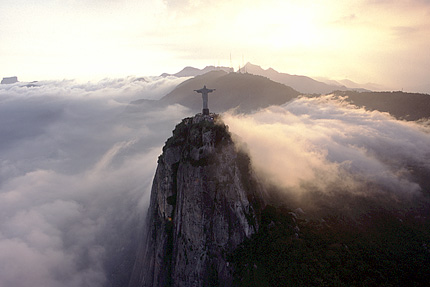
Corcovado
It is mid-holiday in the northern tier of North America, caught between Christmas and the New Year.

There is no longer a calendar for Christmas music. Around the world there are radio stations that play Christmas yearlong (hear Radio Santa from Finland), and just as shopping has moved back to Halloween, Jingle Bells seems to have moved with it. Right now, it still sounds like a holiday.

It feels like a holiday too. In the Northern hemisphere, winter has begun, and depending on where you are, it may be cool, cold, or frigid.

In the Southern hemisphere, Christmas comes at the start of summer. To capture that, step away from Christmas music, and walk in the snow and listen to Astrud Gilberto singing Corcovado.

Corcovado is a mountain in Rio, the city’s most famous attraction. A 125-foot statue of Jesus sits atop it, which makes it more than appropriate for this holiday.

Brazil is also famous for Bossa Nova, one of the world’s most seductive and transfixing beats and styles. As glorious as ever, Bossa Nova is not quite as celebrated as it was in the 1960s, when it was a certifiable musical craze. Craziest of all was Astrud Gilberto singing and Stan Getz playing The Girl from Ipanema, a song about a famous beach.

The father of Bossa Nova, and the composer of both Ipanema and Corcovado, was Antonio Carlos (Tom) Jobim (1927-1994). One of the great songwriters of his era, Jobim’s songs were covered by all the great singers. Corcovado was one of those songs, known by its English title, Quiet Nights of Quiet Stars.

Astrud Gilberto was one of his greatest interpreters, though she may not have had the voice of Frank Sinatra. Her voice, more than a whisper, less than force, captures a simple warm ease that is irresistible, the very same power that Jobim put in the music, the same promise of a Brazilian vision of Christmas. The Portuguese makes it that much lovelier and warmer. What cold? What snow?

Quiet nights of quiet stars,
Quiet chords from my guitar,
Floating on the silence that surrounds us.
Quiet thoughts and quiet dreams,
Quiet walks by quiet streams,
And window looking so to Corcovado,
Oh how lovely.

121212 Concert: The Music of Dorian Gray

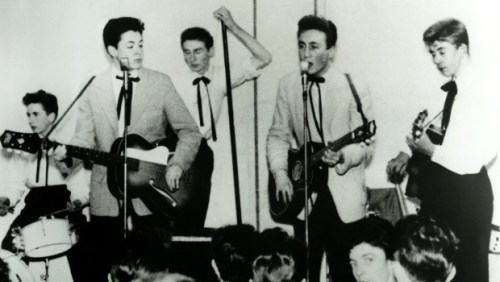
The QuarrymenThat’s a photo of a very young McCartney and Lennon, not yet the most important musicians in modern history. It’s a picture of promise, holding out the happy hope that from small things, big things one day come.

The 121212 Concert marathon was remarkable in ways related and peripheral to the core cause of Sandy relief. None of these collateral issues—not Kanye West’s leather skirt, not out of control ticket scalpers finding insane concertgoers—compares to the epiphany that rock is not, as it turns out, forever. At least not on stage.

Jethro Tull, at one time Grammy award winners for “Best Heavy Metal Album” (you can look it up), sang: “When you’re too old to rock and roll, but you’re too young to die.”

Chris Martin of Coldplay performed a sweet acoustic set, including a rare appearance by R.E.M.’s Michael Stipe. But Martin’s most interesting non-musical moments were his remarks about the age of performers. First he joked about his being their instead of One Direction because the late hour was past their bedtime. But then he turned to the other end of the life cycle, suggesting that viewers donate in the amount of the age of the performers, which would raise billions.

Rock has always been about three things: how you perform musically, how you perform non-musically (dancing, stage presence), and how you look. Here, with unreserved love for the recorded music and live performances of those mentioned, are some observations about the ”veteran” rockers.

The Rolling Stones are on their 50th anniversary tour. The music sounds pretty good. Charlie Watts, the most stoic drummer ever—maybe the most stoic rock musician ever—just sits there, an older version of his younger self. Keith Richards no longer looks like junkie and instead looks like a grandmother. Mick…is scary. His singing is not what it was, but it isn’t frightening either. But he is skeletal, his face drawn, his hair of questionable ownership, and his moves jerkily frenetic enough to raise fears of his falling down. Listening is still enjoyable, but you may seriously consider closing your eyes.

The Who were better musically than the Stones. They are on tour performing the entire Quadrophenia album live, and their set included instrumentally near-perfect renditions of those songs. Pete Townsend’s guitar windmills were a little slower and less emphatic than they used to be, but we know he can still play. It has been decades, and still no one will ever replace Keith Moon (tied with John Bonham as the all-time greatest drummer). The Who did what Queen and others have done with deceased essential bandmates: showed a video performance integrated into the live show. There was the video of Moon doing his distinctive vocals from Bell Boy, microphone in one hand, sticks working in the other, and at the end, Roger Daltry saluting him from the stage. Roger Daltrey. He can’t get all the notes, but it’s still an inimitable voice. The singing, it turned out, was not the problem. For reasons still (or never) to be fathomed, Daltrey believed that billions in the audience wanted to see his chest—including the stitch-scars from heart surgery—and so he obliged by keeping his shirt open for a couple of hours. It was actually just a few songs, but it seemed much longer.

Billy Joel redeemed the old guys. He has always written great songs suited to his vocal strengths and limitations, and both his playing and singing were so enjoyable and so not embarrassing.

Which brings us back to where we began, with the cute half of Liverpool’s very young Quarrymen. Paul McCartney has had a good number of big public performances in the past months. He dropped in on Bruce Springsteen in Hyde Park. He closed the Olympics. Some of what we heard was just okay, but unlike everybody else in the 121212 Concert, just okay would have been forgiven and enough because…it’s Paul. As it turns out, no apologies are needed. His own set was fun and memorable. But his fronting the one-time-only reunited Nirvana was a big moment. Kurt Cobain was a Beatles fan, and there is no doubt his unique introduction of hooky, clever melody into hard and dark rock and punk was done under their influence. At the end of the one song, Nirvana’s locomotive Dave Grohl looked down from his drum kit at McCartney, beaming, maybe amazed to be there, maybe thinking how much Cobain would have loved this.

Happy Hanukkah from Matisyahu

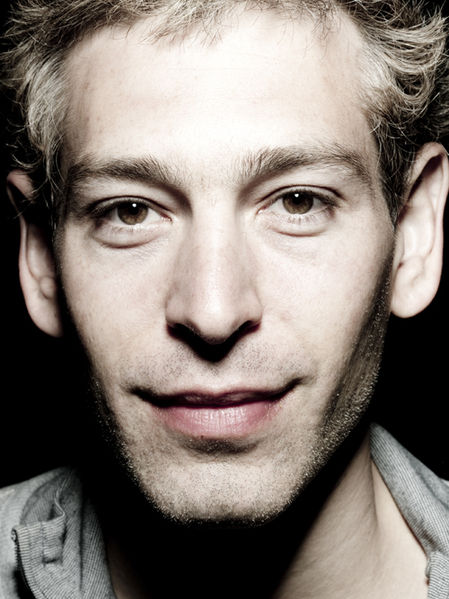
Matisyahu
Matisyahu is a Hanukkah miracle.

Not because suburban native Matthew Miller named himself after Mattathias, head of the family that took back the Temple in Jerusalem from the Assyrians, giving us the holiday. Not because he became a Chassidic reggae superstar. Not because last Hanukkah he shaved his beard and announced: “No more Chassidic reggae superstar.” Not because this Hanukkah his latest album Spark Seeker is Number 1 on the Billboard Reggae chart, a position it has held for weeks. Not even because his single Happy Hanukkah  is a joyous and irresistible rap reggae celebration about all that is good about the holiday, from which all proceeds go to Hurricane Sandy relief:

Happy Hanukkah
I wanna give a gift to you
Light up the night, my love shine through
From Mount Zion, this is what we do
Bring love to you

Matisyahu is a miracle because he did and is doing what we are supposed to do. Follow your light where it takes you, wherever it takes you. Wherever that is, when you get there, if you get there, shine a light of your own. It is a chance to make yourself happy and to make other people happy. And even if you are not sure you are there, or even sure where you are, celebrate anyway. It’s Hanukkah.

Dave Brubeck

Dave Brubeck - Time OutJazz legend Dave Brubeck is dead at the age of 91.

There is going to be a lot written, but with musicians, the best way to remember or learn is to listen. There’s plenty of Brubeck on YouTube and elsewhere. Here’s Take Five, from the Time Out album.

Right now, the VEVO Hot This Week includes a Justin Bieber song (100,701,925 views), P!nk (27,490,445) and Lana Del Rey (14,931,653). These are talented musicians, and even with the added attention that comes with passing, Brubeck is unlikely to hit numbers like that.

Take Five, one of the most recognizable jazz recordings ever, was written by Dave Brubeck Quartet saxophonist Paul Desmond and recorded in 1959. It’s still hypnotically appealing and head-noddlingly cool today. Time will tell which of the Bieber, P!nk or Del Rey records are listened to, let alone remembered, in 53 years.

In the meantime…

Dadadadada dada da da, dada da da…

Election Poem: The Revolution Will Not Be Televised


A poem for Election Day seems in order.

Maybe surprising, maybe not, there are a bundle of poems about elections. Walt Whitman’s Election Day, November 1884 from Leaves of Grass, for example. That seems too literal and expected. Going in an entirely different direction, Allen Ginsberg’s Howl, a milestone in modern culture, was in the running. (And if this election is about anythings, modernity is one of them.)

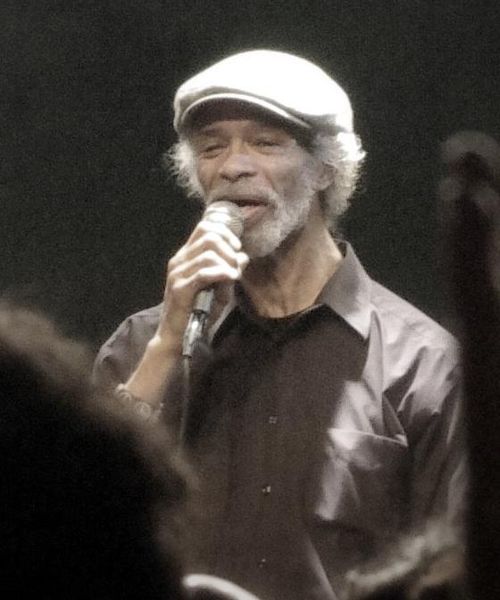
Somewhere in the middle—well, not exactly in the middle—is Gil Scott-Heron’s poem and song The Revolution Will Not Be Televised. Gil Scott-Heron (1949-2011) was a celebrated cutting-edge poet and musician. Even if you don’t know him, you’ve heard his work, as his version of an old R&B song, I’ll Take Care of You, was the foundation of the Drake hit song Take Care.

First recorded in 1970, The Revolution Will Not Be Televised may seem an offbeat choice for an election poem. But it does contain the lines

NBC will not be able predict the winner at 8:32
or report from 29 districts.
The revolution will not be televised.

More than that, it is about brighter days not being found in a media mediated version of reality

You will not be able to stay home, brother.
You will not be able to plug in, turn on and cop out.

Forty years and more, and it’s still visionary.

The Revolution Will Not Be Televised

You will not be able to stay home, brother.
You will not be able to plug in, turn on and cop out.
You will not be able to lose yourself on skag and skip,
Skip out for beer during commercials,
Because the revolution will not be televised.

The revolution will not be televised.
The revolution will not be brought to you by Xerox
In 4 parts without commercial interruptions.
The revolution will not show you pictures of Nixon
blowing a bugle and leading a charge by John
Mitchell, General Abrams and Spiro Agnew to eat
hog maws confiscated from a Harlem sanctuary.
The revolution will not be televised.

The revolution will not be brought to you by the
Schaefer Award Theatre and will not star Natalie
Woods and Steve McQueen or Bullwinkle and Julia.
The revolution will not give your mouth sex appeal.
The revolution will not get rid of the nubs.
The revolution will not make you look five pounds
thinner, because the revolution will not be televised, Brother.

There will be no pictures of you and Willie May
pushing that shopping cart down the block on the dead run,
or trying to slide that color television into a stolen ambulance.
NBC will not be able predict the winner at 8:32
or report from 29 districts.
The revolution will not be televised.

There will be no pictures of pigs shooting down
brothers in the instant replay.
There will be no pictures of pigs shooting down
brothers in the instant replay.
There will be no pictures of Whitney Young being
run out of Harlem on a rail with a brand new process.
There will be no slow motion or still life of Roy
Wilkens strolling through Watts in a Red, Black and
Green liberation jumpsuit that he had been saving
For just the proper occasion.

Green Acres, The Beverly Hillbillies, and Hooterville
Junction will no longer be so damned relevant, and
women will not care if Dick finally gets down with
Jane on Search for Tomorrow because Black people
will be in the street looking for a brighter day.
The revolution will not be televised.

There will be no highlights on the eleven o’clock
news and no pictures of hairy armed women
liberationists and Jackie Onassis blowing her nose.
The theme song will not be written by Jim Webb,
Francis Scott Key, nor sung by Glen Campbell, Tom
Jones, Johnny Cash, Englebert Humperdink, or the Rare Earth.
The revolution will not be televised.

The revolution will not be right back after a message
about a white tornado, white lightning, or white people.
You will not have to worry about a dove in your
bedroom, a tiger in your tank, or the giant in your toilet bowl.
The revolution will not go better with Coke.
The revolution will not fight the germs that may cause bad breath.
The revolution will put you in the driver’s seat.

The revolution will not be televised, will not be televised,
will not be televised, will not be televised.
The revolution will be no re-run brothers;
The revolution will be live.

Alabama GOP To Hold Victory Party At Shooting Range

The Alabama Republican Party

will be holding its Victory Party tomorrow night at Hoover Tactical Firearms

Entertainment by Act of Congress

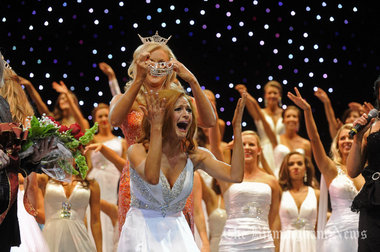
Special Guests Anna Laura Bryan, Miss Alabama 2012

Amie Beth Shaver, Miss Alabama 1994

4th of July, Asbury Park (Sandy)

Who’s the boss?

The challenge of being a pop culture maven is that songs, movies and TV shows are regularly running around in your head, just waiting for a hook in the other real world. Then something happens and the connections light up, seemingly by themselves.

As soon as it was certain that the storm would hit the Jersey shore, Bruce Springsteen’s 4th of July, Asbury Park (Sandy) became the involuntary soundtrack. It is from his career-making second album, The Wild, The Innocent & The E Street Shuffle.

It is a sweet and melancholy song, more folk than rock. It seems to be about leaving a girl behind, but as Springsteen has explained, it is about leaving Asbury Park behind:

And me, I just got tired of hangin’ in them dusty arcades, bangin’ them pleasure machines
Chasin’ the factory girls underneath the boardwalk where they all promise to unsnap their jeans
And you know that tilt-a-whirl down on the south beach drag
I got on it last night and my shirt got caught
And they kept me spinning, babe, didn’t think I’d ever get off…

Did you hear the cops finally busted Madame Marie for tellin’ fortunes better than they do
For me this boardwalk life is through, babe
You ought to quit this scene too

All this (Sandy the storm, Sandy the girlfriend, the Jersey shore, Bruce Springsteen) prompted the question: Between events and people, who’s the boss?

The reflexive answer in the face of natural disasters like this is that events are in charge. As true as that may be, the parallel truth is that when people claim dominion, by building boardwalks and impossibly complex cities, people are in charge too.

Stewart Brand’s Whole Earth Catalog was one of the big inspirations in Steve Jobs’ life and career. In the 1969 issue of the Catalog, Brand stated the premise for his project to help people understand whole systems and master the tools to build and maintain them in an enlightened way. As we rebuild and reflect after Sandy, this is worth keeping in the mix:

We are as gods and might as well get good at it.

Too Much of Nothing


The last post was called a political break, with the prospect of returning immediately to earnest observations about the current campaign. For those who didn’t read it, that post included a Marx Brothers movie and a Weekly World News exclusive about Mitt Romney and Bat Boy. Now that’s a break.

If it’s possible for political junkies to overdose, this may be it. There are already a bunch of posts drafted and ready, political and otherwise (this is a blog about everything, not just politics). But just for a moment, the will to post seems to have gotten a little lost.

So the political break continues. In the same spirit of free association that gave rise to the guest appearance of Bat Boy, here is some commentary from Bob Dylan. “But when there’s too much of nothing, nobody should look.”:

Now, too much of nothing
Can make a man feel ill at ease
One man’s temper might rise
While another man’s temper might freeze
In the day of confession
We cannot mock a soul
Oh, when there’s too much of nothing
No one has control

Too much of nothing
Can make a man abuse a king
He can walk the streets and boast like most
But he wouldn’t know a thing
Now, it’s all been done before
It’s all been written in the book
But when there’s too much of nothing
Nobody should look

Too much of nothing
Can turn a man into a liar
It can cause one man to sleep on nails
And another man to eat fire
Ev’rybody’s doin’ somethin’
I heard it in a dream
But when there’s too much of nothing
It just makes a fella mean

The One The Only The Real Hank Williams


Sometimes something good can come from something bad.

Somebody wearing the ill-fitting name Hank Williams has been going around saying nasty things about President Obama (he’s a Muslim, he hates America). Despite that name being a few sizes too big for him, it appears he has somehow managed to have some success as a musician and as the son of a more famous father. But as with the name, the shoes are also way too big to fill.

Hank Williams (1923-1953) was one of the great musical artists and folk poets in America. He died too young at the age of 29, but had already produced songs that entertained millions and inspire musicians fifty years after his death. His songs have been covered by scores of artists as diverse as Al Green, Beck, Bob Dylan, Bruce Springsteen, George Thorogood, Keb’ Mo’, Keith Richards, Red Hot Chili Peppers and Tom Petty.

If you haven’t heard of Hank Williams, you are missing something. If you haven’t heard him, because you “don’t like country music”, you are missing something. Don’t believe it? Believe the Pulitzer Prize Board, which in 2010 awarded him a Special Citation for “his craftsmanship as a songwriter who expressed universal feelings with poignant simplicity and played a pivotal role in transforming country music into a major musical and cultural force in American life.”

So if someone named Hank Williams, Jr. is going around badmouthing the President, what good can come of that?

Just this: In the midst of looking around for things to say about Hank Williams, a brand new independent film came to light. The Last Ride is the story of a fateful trip. Hank Williams was heading out for a series of concerts to end in Canton, Ohio on New Year’s Day 1953. Bad weather prevented flying, so a college student was hired to drive him from Nashville to the concerts. Before reaching Ohio, on January 1, Williams died in West Virginia. Last Ride is the story of that trip. The film has already been screened in New York and Los Angeles, and later this week can be seen in Nashville, Dallas, Seattle and Bakersfield.

There’s plenty of Hank Williams music around. Give it a listen. Because if the only Hank Williams you know about is the Junior who seems so out of touch with reality, there’s someone to discover. Hank Williams—the one the only—was nothing but real.

Hear the lonesome whippoorwill
He sounds too blue to fly
The midnight train is whining low
I’m so lonesome I could cry

I’ve never seen a night so long
When time goes crawling by
The moon just went behind a cloud
To hide its face and cry

Did you ever see a robin weep
When leaves begin to die
That means he’s lost the will to live
I’m so lonesome I could cry

The silence of a falling star
Lights up a purple sky
And as I wonder where you are
I’m so lonesome I could cry