Bob Schwartz

Tag: Pope Leo

Just war and the Catholic Church

“Pope Leo, his papal predecessors and his contemporary brethren are calling for returning to Christian roots, with one simple concept: War is fundamentally antithetical to the Gospel of Jesus Christ.”

More than two years ago, I posted a Gaza War reading list , which began with Michael Walzer’s Just and Unjust Wars: A Moral Argument with Historical Illustrations, Fifth Edition, the classic contemporary work on the subject.

I am adding a short opinion piece in the New York Times, It’s Time to Put This Catholic Teaching to Rest, by James Grimaldi, former executive editor of The National Catholic Reporter. The teaching referred to is just war theory. Excerpt follows:


It isn’t every day that a pope calls for an overhaul of a more than 1,000-year-old teaching of the Catholic Church, but that’s exactly what Pope Leo XIV did last month. In his inaugural encyclical, “Magnifica Humanitas,” which was mainly an exploration of how to protect human dignity in the age of artificial intelligence, Leo devoted a brief but critical passage to just war theory.

In a break with a foundational principle of Catholic thought on conflict, Leo called the theory “outdated” and made it clear that the teaching has been twisted to justify wars for decades, most recently the war in Iran. It is about time for the change.

Just war theory holds that wars must meet strict conditions: They should be in self-defense, and only if alternatives have been exhausted; the use of force should be proportional; there should be a likelihood of success and the threat should be imminent. Since World War II at least, several popes have criticized world leaders for using the theory as a fig leaf.

While Leo did not cite any specific war in the encyclical, he clearly had President Trump’s war on Iran in mind. On June 6, in remarks en route to Madrid for a visit, he was asked if a “just war” was being waged in Iran. The pontiff replied: “I believe this has already been made very clear: In Iran, the criteria for a just war are not present.” Leo wasn’t done. “The theory of the just war dates back to centuries when it was impossible to imagine the weapons and the destructive capacity available to humanity today,” he added….

In casting doubt on the usefulness of just war teaching in the modern era, Leo’s encyclical preserved “the right to self-defense in the strictest sense.” Instead of suggesting a new framework for justifying war, Leo all but rules out war’s legitimacy. “Humanity possesses far more effective and capable tools for promoting human life and resolving conflicts, such as dialogue, diplomacy and forgiveness,” Leo wrote. “The use of force, violence and weapons reflects a relational poverty that always has disastrous consequences for civilian populations.”

Overhauling just war teaching will be among the top issues to be discussed on Friday and Saturday at a consistory, or meeting of the pope’s cardinals, at the Vatican, according to Vatican News, the Holy See’s official outlet. The cardinals should not pull their punches. The moment urgently calls for new guidance, not just discussion. In reformulating the church’s view of war, the stakes for Catholicism, the United States and the world are high, and the Vatican needs to get this right. The universal church, with millenniums of moral reasoning and clergy on the ground in virtually every conflict zone, is uniquely situated to articulate a new intellectual framework on just war theory — especially as A.I. increasingly automates decisions on the battlefield.

The answer is deceptively simple. Leo, his papal predecessors and his contemporary brethren are calling for returning to Christian roots, with one simple concept: War is fundamentally antithetical to the Gospel of Jesus Christ.

James Grimaldi, It’s Time to Put This Catholic Teaching to Rest, New York Times, June 26, 2026
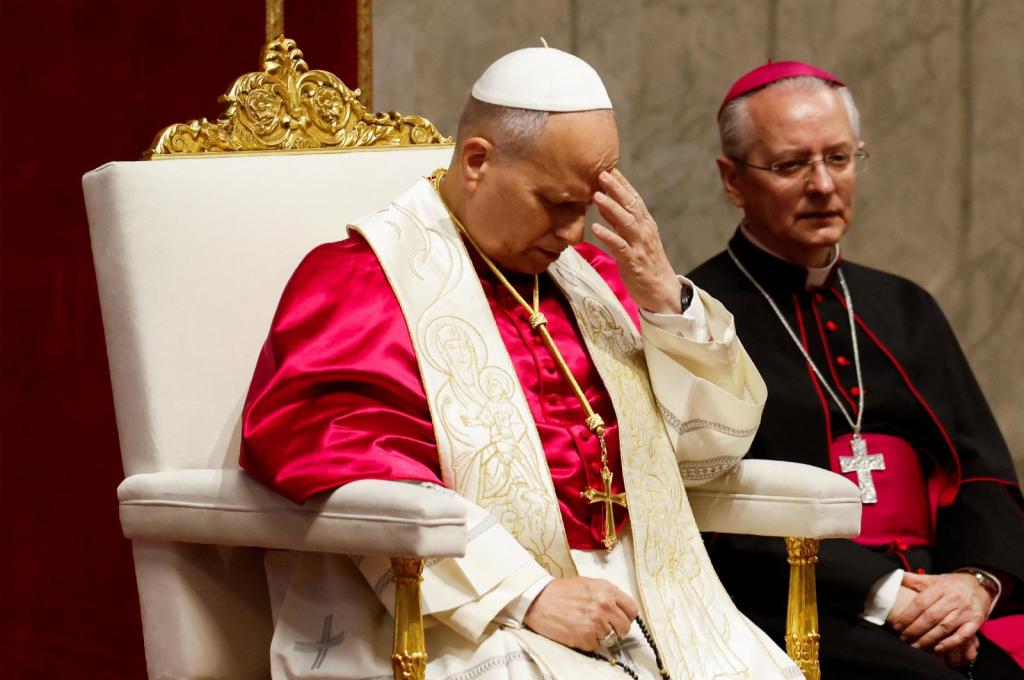

Pope Leo: “We are surrounded by a delusion of omnipotence that is becoming increasingly unpredictable and aggressive. Even the holy name of God, the God of life, is being dragged into discourses of death.”

Pope Leo XIV, Prayer Vigil for Peace, April 11, 2026

Transcript & Videos


Dear brothers and sisters, your prayer is an expression of that faith which, according to the words of Jesus, moves mountains. Thank you for accepting this invitation to gather here at the tomb of St. Peter and in so many other places around the world to pray for peace.

War divides; hope unites. Arrogance trembles upon others; love lifts up. Idolatry blinds us; the living God enlightens.

My dearest friends, all it takes is a little faith — a mere crumb of faith — in order to face this dramatic hour in history together as humanity and alongside humanity. Prayer is not a refuge in which to hide from our responsibilities, nor an anesthetic to numb the pain provoked by so much injustice. Rather, it is the most selfless, universal, and transformative response to death. We are a people who are already risen. Within each of us, within every human being, the interior teacher teaches peace, urges us towards encounter, and inspires us to make supplication.

Let us rise from the rubble. Nothing can confine us to a predetermined fate — not even in this world where there never seem to be enough graves, for people continue to crucify one another and eliminate life with no regard to justice and mercy.

In the context of the 2003 Iraq war crisis, St. John Paul II, a tireless advocate for peace, said with deep emotion: “I belong to that generation that lived through World War II and, thanks be to God, survived it. I have the duty to say to all young people, to those who are younger than I, who have not had this experience: no more war.” As Paul VI said during his first visit to the United Nations: “We must do everything possible. We know well that peace is not possible at any price, but we all know how great is this responsibility.” I make his appeal my own this evening, relevant as it is today.

Prayer teaches us how to act. In prayer, our limited human possibilities are joined to the infinite possibilities of God. Thoughts, words, and deeds then break the demonic cycle of evil and are placed at the service of the kingdom of God — a kingdom in which there is no sword, no drone, no vengeance, no trivialization of evil, no unjust profit, but only dignity, understanding, and forgiveness.

We are surrounded by a delusion of omnipotence that is becoming increasingly unpredictable and aggressive. The balance within the human family has been severely destabilized. Even the holy name of God, the God of life, is being dragged into discourses of death. A world of brothers and sisters with a heavenly father vanishes as in a nightmare, giving way to a reality populated by enemies. We are met by threats rather than the invitation to listen and to come together.

Brothers and sisters, those who pray are aware of their own limitations. They do not kill or threaten with death. Instead, death enslaves those who have turned their backs on the living God, turning themselves and their own power into a mute, blind, and deaf idol — to which they sacrifice every value, demanding that the whole world bend its knee. Enough of the idolatry of self and money! Enough of the display of power! Enough of war! True strength is shown in serving life.”

With evangelical simplicity, St. John XXIII once wrote: “The benefit of peace will be felt everywhere — by individuals, by families, by nations, by the whole human race.” And echoing the incisive words of Pius XII, he added: “Nothing is lost by peace; everything may be lost by war.”

Let us therefore unite the moral and spiritual strength of the millions and billions of men and women, young and old, who today choose to believe in peace — caring for the wounds and repairing the damage left behind by the madness of war.

I receive countless letters from children in areas of conflict. In reading them, one perceives, through the lens of innocence, all the horror and inhumanity — actions that some adults boast of with pride. Let us listen to the voices of children.

Dear brothers and sisters, there are certainly binding responsibilities that fall to the leaders of nations. To them we cry out: stop! It is time for peace! Sit at the table of dialogue and mediation — not at the table where rearmament is planned and deadly actions are decided.

Yet there is no less significant responsibility that falls to all of us — men and women from all over the world. We are an immense multitude that rejects war, not only in word but also in deed. Faith calls us to leave behind whatever violence remains in our hearts and minds — and to turn to a kingdom of peace that is built up day by day in our homes, schools, neighborhoods, and civil and religious communities. A kingdom that counters polemics and resignation through friendship and a culture of encounter.

Let us believe once again in love, moderation, and good politics. We must form ourselves and get personally involved, each following our calling. Everyone has a place in the mosaic of peace.

The Rosary, like other ancient forms of prayer, has united us this evening in its steady rhythm built on repetition. Peace gains ground in the same way — word by word, deed by deed — just as a rock is hollowed out drop by drop, or fabric woven stitch by stitch. These are the slow rhythms of life, a sign of God’s patience.

We must not allow ourselves to be overwhelmed by the pace of a world that does not know what it is chasing. Rather, we must return to serving the rhythm of life — the harmony of creation and healing its wounds.

As Pope Francis taught us, there is also a need for peacemakers — men and women prepared to work boldly and creatively to initiate processes of healing and renewed encounter. There is indeed an architecture of peace to which different institutions of society contribute, each according to its own area of expertise. But there is also an art of peace that involves us all.

Dear brothers and sisters, let us return home having made a commitment to pray without ceasing and without growing weary — a commitment to a profound conversion of peace. The Church is a great people at the service of reconciliation and peace. She advances without hesitation. Even when rejecting the logic of war may lead to misunderstanding and scorn, she proclaims the gospel of peace and instills obedience to God rather than any human authority — especially when the inherent dignity of other human beings is threatened by continuous violations of international law.

Throughout the world, it is to be hoped that every community become a house of peace — where one learns how to diffuse hostility through dialogue, where justice is practiced and forgiveness is cherished.

Now more than ever, we must show that peace is not a utopia.

Brothers and sisters of every language, people, and nation: we are one family that weeps, hopes, and rises again. No more war — a journey with no return. No more war — a vicious cycle of grief and violence.

Pope Leo XIV, Prayer Vigil for Peace, April 11, 2026


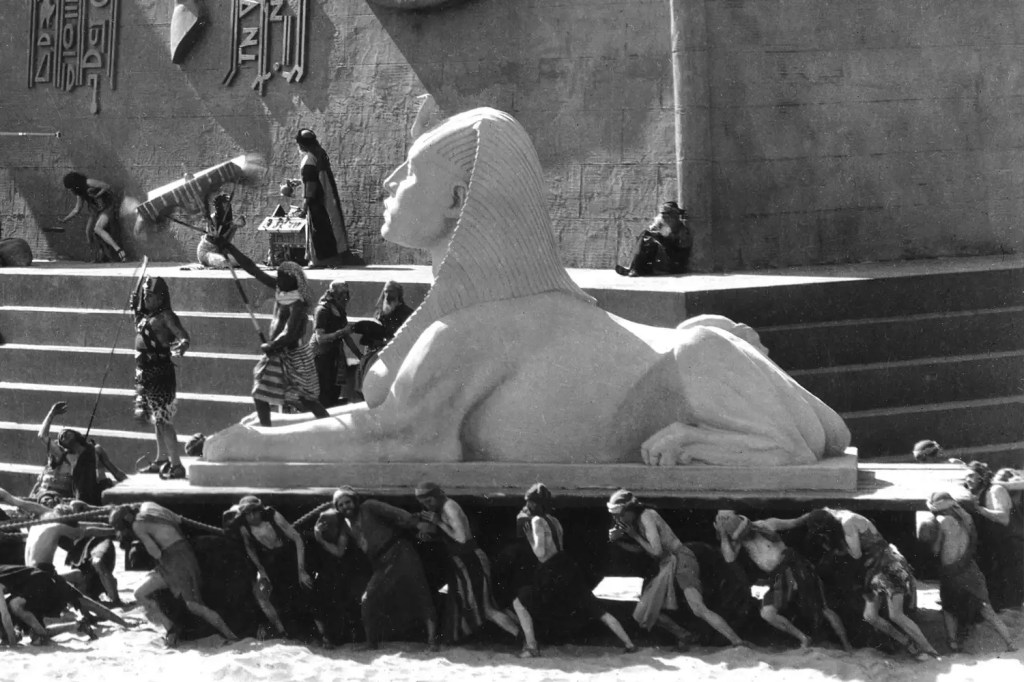
“No stranger shall you oppress, for you know the stranger’s heart, having yourselves been strangers in the land of Egypt.”

גֵ֖ר לֹ֣א תִלְחָ֑ץ וְאַתֶּ֗ם יְדַעְתֶּם֙ אֶת־נֶ֣פֶשׁ הַגֵּ֔ר כִּֽי־גֵרִ֥ים הֱיִיתֶ֖ם בְּאֶ֥רֶץ מִצְרָֽיִם׃
Exodus 23:9


Speaker of the House Mike Johnson is taking on Pope Leo regarding a matter of biblical interpretation. Johnson says that government oppressing strangers is the biblical thing to do. Pope Leo disagrees.

One line from the Book of Exodus crystallizes the issue.

As with all biblical Hebrew, the translation is challenging and varied.

Exodus 23:9:
You shall not oppress a stranger, for you know the feelings of the stranger, having yourselves been strangers in the land of Egypt. (NJPS)
You shall not oppress a resident alien; you know the heart of an alien, for you were aliens in the land of Egypt. (NRSV)
No sojourner shall you oppress, for you know the sojourner’s heart, since you were sojourners in the land of Egypt. (Robert Alter)

Robert Alter addresses one of the translation challenges, the Hebrew word nefesh/נֶ֣פֶשׁ:
“The Hebrew is nefesh, “heart”, “life,” “inner nature,” “essential being,” “breath.””

Another word needing expansion is the Hebrew ger/גֵּ֔ר. Scholars Mark Allen Powell and Dennis R. Bratcher explain in the HarperCollins Bible Dictionary:


alien (ger): In the Bible, one who is not a member of a particular social group. Accordingly, Abraham was an alien (NRSV: “stranger”) among the Hittites at Hebron (Gen. 23:4), as were Moses in Midian (Exod. 2:22) and the Israelites in Egypt (Deut. 23:7; cf. Ruth 1:1). The Hebrew word is ger, and it has often been translated “sojourner” in English Bibles. The NRSV is inconsistent, translating it “alien” in some instances and “stranger” in others. After the settlement in Canaan, the term not only designated a temporary guest but also acquired the more specialized meaning of “resident alien,” one who lived permanently within Israel (Exod. 22:21; 23:9). No doubt because the Israelites were keenly aware of their own heritage as aliens without rights in a foreign land, they developed specific laws governing the treatment of aliens. Strangers or aliens were to be treated with kindness and generosity (Lev. 19:10, 33–34; 23:22; Deut. 14:29). The basic principle was, “You shall also love the stranger, for you were strangers in the land of Egypt” (Deut. 10:19). And, again, “You shall love the alien as yourself, for you were aliens in the land of Egypt” (Lev. 19:34)….

“Alien” or “stranger” also appears in a figurative sense, usually in appealing to the generosity and mercy of God in dealing with undeserving people (Pss. 39:12; 119:19; 1 Chron. 29:15). The idea of dwelling in a land owned by someone else is also applied theologically to the relationship of the Israelites to the land; it belonged to God and they were the strangers in it (Lev. 25:23). (emphasis added)


Pope Leo has given lots of thought to the nefesh—heart, life, inner nature, essential being, breath—of the ger—stranger, sojourner, resident alien.

Has Mike Johnson given much thought to the nefesh of the ger? Have we?

Along with the Book of Exodus, we can sing along with Randy Newman in his song have You Seen My Baby?:

I say, “Please don’t talk to strangers, baby”
But she always do
She say, “I’ll talk to strangers if I want to
‘Cause I’m a stranger, too”