The Economist on Israel: Winning the Battle, Losing the War
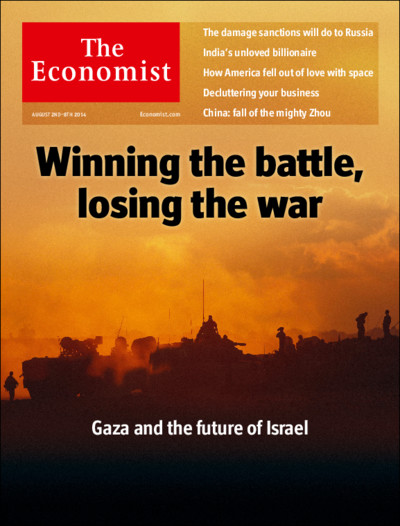
If you read the biblical chronicles instead of the newspapers, you know that the Jewish homelands have lived forever from crisis to crisis. In the history of modern Israel, none of that has changed.
When you live in constant crisis, the historical topography can be indistinct—it can be hard to tell which one is bigger than another. But in Israel’s history, Independence in 1948 and the Six Day War in 1967 are epochal. The current Israel-Gaza conflict is still ongoing, but the current crisis of 2014 may join that cohort.
Among the thousands of pieces and millions of words generated over the past few weeks, the new cover story from The Economist, Winning the battle, losing the war is one of best and most even-handed evaluations published about the aftermath of all this.
“Even-handed” and “fair-minded” are hard to find in such a brutal and polarized controversy, and some would say they don’t exist at all. The Economist, for those who don’t know, is one of the most astute and level-headed journals of public affairs in the world. This piece, like others about contested matters, is not without embedded value judgments or opinions. It is just a sharp, worthwhile, and informed point of view that should be heard—even if it is shouted down as somehow biased and mistaken:
For all the blood and misery in Gaza, Mr Netanyahu will soon have a chance to show he has heard the critics. Having won his battle, he could return to the negotiating table, this time with a genuine offer of peace. Every true friend of Israel should press him to do so.


