Bob Schwartz

Tag: Buddhism

Believing and acting “as if”

Our religious traditions often ask us to act on faith, believing that which can’t be absolutely demonstrated or proven to our satisfaction. For theistic religions, God is at the top of that list, with many other beliefs following.

In Buddhism there is a belief in rebirth:


rebirth. The belief that one is reborn after death. Belief in rebirth is a corollary of the doctrine of karma, which holds that a person experiences the good or bad fruits of moral action at a later date. Rebirth is one of the ‘givens’ of Buddhist thought and since its truth is universally assumed it is rarely asserted or defended as a dogma. Some contemporary Buddhists have suggested that belief in rebirth is not an essential part of Buddhist teachings, but the notion is deeply ingrained in the tradition and the ancient texts.


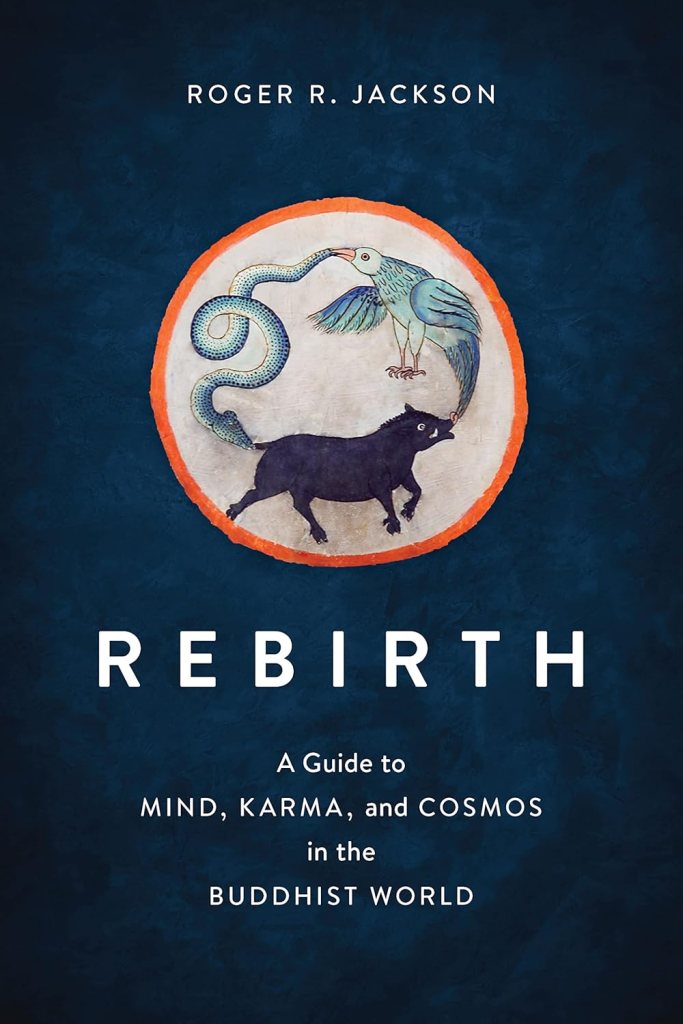
Roger Jackson in his masterful study Rebirth: A Guide to Mind, Karma, and Cosmos in the Buddhist World (2022) points to modern Buddhist masters and followers who suggest that rebirth is theory, not fact. Nevertheless, it remains a core belief.

In closing, Jackson points to a familiar Western resolution. The argument of 17th-century mathematician Blaise Pascal—sometimes called Pascal’s wager—is that by believing in God you risk nothing significant but could gain everything.

This leads Jackson to this:


I myself would argue without ambivalence for what I call “As-If Agnosticism.” My stance is agnostic because, like Hayes and Batchelor (and many others), I do not find traditional descriptions of karma and rebirth literally credible, nor am I fully persuaded by arguments in their favor, whether rational, empirical, or faith-based; on the other hand, I cannot rule out the possibility that such descriptions (or something akin to them) may in fact be true. The universe, after all, is surpassingly strange. In the spirit of Wallace Stevens’s famous statement that “we believe without belief, beyond belief,” I propose that we live as if such descriptions were true. I am not suggesting we simply take up wishful thinking: if only there were past and future lives, if only karma works the ways tradition says it does, if only glorious and perfect buddhahood awaited us all at the end of the rainbow. Maybe they do, maybe they don’t. But as Buddhists have argued for millennia, Western humanists have claimed for centuries, and scientists have recently begun to recognize, the world is actually built far more on our ideas, aspirations, and speculations—the As-If—than we suppose, and the solid foundations we presume to lie beneath us—the “As-Is”—are much more difficult to find than we assume. It’s not, therefore, that by living as if certain doctrines were true we really are in flight from some bedrock, objective reality, because that reality—though it certainly imposes limitations on us, most notably at the time of death—turns out to be far more a matter of convention and far less “just the way things are” than we had thought. Freed from the illusion of perfect objectivity, therefore, why not think and live as if Buddhism were true? In doing so, we empower ourselves to enter, as fully as is possible in a skeptical age, into the ongoing, ever-changing life of the Dharma, adopting Buddhist ideals, telling Buddhist stories, articulating Buddhist doctrines, performing Buddhist rituals, and embodying Buddhist ethics in ways that make meaning for ourselves, provide a measure of comfort to others, and perhaps contribute in some small way to the betterment of the imperfect and imperiled world in which we all live.

Let the final word belong not to me, however, but to the Buddha, who in the Rohitassa Sutta (Discourse about Rohitassa) recounts a previous life as a seer named Rohatissa, “possessing magical potency, able to travel through the sky…[with] speed like that of a light arrow easily shot by a firm-bowed archer.” Conceiving the wish to find the ends of the earth, he traveled for a hundred years as fast as the wind, yet “died along the way without having reached the end of the world.” There is no “end” to the geographic world, explains the Buddha, but that is not, in any case, the end-of-the-world we should be seeking. Rather, we must seek the place “where one is not born, does not grow old and die, does not pass away and get reborn.” And where is the end of the world in this deeper sense—nirvāṇa—to be found? “It is,” he says, “in this fathom-long body endowed with perception and mind that I proclaim (1) the world, (2) the origin of the world, (3) the cessation of the world, and (4) the way leading to the cessation of the world.” As a result, “…the wise one, the world-knower, who has reached the world’s end and lived the spiritual life, having known the world’s end, at peace, does not desire this world or another.”


“As if” is powerful. There is also a powerful caveat. If you believe “as if” something is true, though you may still doubt it, it is essential that the belief do good for others—not just for yoursel. While Pascal says believing in the unprovable you “could gain everything”, it is others who should ultimately gain everything from your belief, not just you. If the belief brings other harm, better to not believe and act “as if.”

The Day the Buddha Woke Up

Buddha Comic Bodhi

December 8 is Bodhi Day, the day on which the Buddha’s enlightenment is traditionally celebrated.

The English word “enlightenment” is so packed with meaning that it might be better to just go back to what the Buddha is reported to have said: I am awake.

This is useful because it leads to the two questions: woke up from what and woke up to what?

The Buddha, sitting there under the Bodhi tree, woke up from a journey. Born a royal son, he had fled a life of accidental privilege to answer ultimate questions about suffering and death—the very same questions that consume religious lives of all kinds. He believed that if he tried a, b, and c (such as extreme asceticism), he would discover some secret x, y, and z. There was some kind of magic formula, and all he had to do was learn it. That sort of magic is still at the heart of much of our religion.

He woke up to discover that there was no magic, not in such an instrumental sense. Nothing was different. Suffering and death would not go away, no matter what efforts we make. The best and worst aspects of life would go on, with and without us. Great fortunes would be made and lost. Great structures would be built and then destroyed, by cataclysms natural and human. Love would be here and gone.

But this: He could see something in all of that that made sense of all of that. There is no big plan in which we are players, active or passive, though we could and do make and execute our own little plans. There are just things, relationships between those things, and change, and of all those of a singular piece. We can and do overlay that with all of our very complicated details and distinctions, which is after all a definition of the life we live. But if we discover that underlying existence, we just might choose to live differently. And in that living differently, make change and wake others up. And on and on.

None of that eliminated suffering and death for the Buddha, as it won’t for anyone. He grew old and tired and, legend has it, died from being given spoiled food. He had told his followers what he had discovered, none of which involved magic. It was all about the infinite depth of the ordinary. For him, there was no more a kingdom in the clouds than the kingdom he had left behind when he started his journey. There was just what is. Strive on with diligence, he told those followers at the last.

© 2025 Bob Schwartz

Not caring about receiving gifts or not receiving gifts

Buddhism identifies eight paired worldly and mundane concerns:

Receiving gifts—Not receiving gifts
Fame—Disrepute
Praise—Criticism
Pleasure—Pain

It is advised that attachment to any of these will result in suffering, for yourself and others. You don’t have to be involved in any tradition, just as a human being, to know that is true.

Concern about receiving or not receiving gifts has other facets. Concern about receiving the “wrong” gift, or concern about whether to give a gift or about giving the “wrong” gift.

This is the season for receiving and giving gifts. This message is not about receiving or not receiving or giving or not giving gifts.

You may receive gifts and give gifts. You may be famous or disreputable. You may win praise or be subject to criticism. You may feel pleasure or pain. This is life. The holidays are on their way.

This season, clinging to concerns about what you receive will not make you and others happy. The empty box, or even no box at all, is okay.

Interesting photo. But did I take it or did AI make it? What is reality, man?

I took the above photo of a nearby mountain at sunrise.

(Digression: “Take” is a curious word for the act of photography. I asked my trusty fake intelligence companion Claude—no offense Claude—why we say “take” for photos. A concise answer:


The phrase “take a photo” likely comes from the early days of photography when the process literally involved “taking” something from the scene.

In early photography, you captured and fixed a unique image from reality onto a physical plate or film. The light from the scene was chemically recorded—you were essentially taking an impression or imprint of that moment. This was a one-time extraction: that specific exposure on that piece of film couldn’t be repeated.

The metaphor stuck even as photography evolved. We continue to say “take” despite now making digital copies rather than capturing something unique, because the sense of actively capturing or seizing a moment from time remains.

Other languages have similar expressions—French uses “prendre” (to take), Spanish “tomar” (to take), though some languages like German use “machen” (to make), reflecting a different metaphor.


This is a fascinating quick explanation, and I’m sure if I asked for extended analysis, I would get much more.

It is interesting that Romance languages go with take, but Germans go with “make”. Extended AI analysis would likely explain this at greater length. But this digression has gone on long enough.)

Anyone might wonder whether my taking the photo and the circumstances I described are true. I haven’t, but if I provided enough detail, an AI photo could be generated that would look something like this. Not exact, but something much like this.

Except the sun is real, the sun was really rising, the mountain is real, the sun was really casting light and dark on the mountain, I am real, and I really took the photo. I should also mention that AI is real too.

Or. A subtle Buddhist concept is to learn to treat everything as an illusion, a dream. Not that all of that, all of this, is not real, just as if it is an illusion, a dream. Which it is.

Believe me, don’t believe me, when I say that I really took the above photo of a nearby mountain at sunrise. It doesn’t matter to the mountain, or the sun, or me.

What is reality, man?

Meditation: More than just stress relief and anxiety reduction

Meditation can do more than just relieve stress, reduce anxiety and sharpen focus, although it may do all that.

To explain what that more might be, here are a couple of paragraphs from one of the best introductions to Buddhism available, by Traleg Kyabgon Rinpoche (1955-2012):


In the West, what meditation means and the reasons for practicing it are understood in many different ways. Meditation has become quite popular. Many people, particularly in the health professions, now recognize its benefits. Some people think that meditation will help them live longer, prolong their youth, lose weight, stop smoking, and so on. Meditation may do all those things, but in the Eastern traditions, such as Buddhism and Hinduism, it has a more profound meaning. Meditation is not practiced for a specific reason such as reducing stress, increasing concentration while playing sports, or dealing with anxiety. It has to be put in the overall context of how we view our lives and how we perceive the world; this can only be provided by a certain kind of philosophical or religious perspective.

Many people are frightened by the notion of religion and say, “I want to learn how to practice meditation, but please spare me the Eastern mumbo-jumbo. I am quite willing to do the breathing exercises or whatever else you tell me to do.” In the Eastern tradition, the practice of meditation relates to transforming ourselves in a fundamental way, not simply changing one aspect of our self. By transforming ourselves we are able to deal with whatever happens in our lives in an appropriate and a meaningful way.

The Essence of Buddhism: An Introduction to Its Philosophy and Practice by Traleg Kyabgon


Everyone and everything matters


so much depends
upon

a red wheel
barrow

glazed with rain
water

beside the white chickens

William Carlos Williams, The Red Wheelbarrow


To see a World in a Grain of Sand
And a Heaven in a Wild Flower
Hold Infinity in the palm of your hand
And Eternity in an hour

William Blake, Auguries of Innocence


It is a cliché. Someone intoxicated by marijuana or other psychedelics is fixated on the tiniest item, maybe followed by “oh, wow!” or laughter. Cliched because it can be true. Maybe you’ve had personal experience.

Getting high is far from the only path there. Buddhism describes and recommends perceiving tathata, thusness, suchness, things as they are, or in the words of Suzuki Rosh, things as it is.

The follow-up beat is that no matter how much you perceive the thusness of any particular thing, you can know that everyone and everything is thus. Everyone and everything is deeply itself and also the same, interdependent and equally important. Everyone and everything matters.

Williams’ red wheelbarrow and Blake’s grain of sand are things. And everything.

“Whatever you want, others all want as much; so act accordingly!”

Patrul Rinpoche

“Whatever you want, others all want as much; so act accordingly!”
Patrul Rinpoche (1808–1887)


The Kadampa teachings say that if we use our activities to open ourselves to the world with loving-kindness, patience, and understanding, we’ll bring the lojong spirit into everything we do. While our practices may be diverse, if our bodhichitta* attitude is natural and self-correcting, we’ll be doing everything with one intention. Patrul Rinpoche relates the following story to illustrate this:

When Trungpa Sinachen asked him for a complete instruction in a single sentence, Phadampa Sangye replied, “Whatever you want, others all want as much; so act accordingly!”
(Patrul Rinpoche, Words of My Perfect Teacher)

Traleg Kyagbon, The Practice of Lojong

*Bodhichitta. There are two aspects to enlightened heart: an ultimate and a relative one. Ultimate enlightened heart refers to the nature of the mind and relative enlightened heart refers to the cultivation and generation of compassion.


This sounds familiar, like a version of the Golden Rule, which instructs us not to do to others what we would not have done to us. A difference is that this goes beyond what we and they do. It is about what is in our and their mind, what you and they want. Which, surprisingly or not, is elementally the same. What we do or don’t do follows from what we think. So this might be considered the precursor or foundation of the Golden Rule.

Meditation is floating but not swimming

Floating can be joyful and necessary.

Swimming is more.

Learning how to swim you first learn how to float.

Floating peacefully in a pool, lake or ocean, floating can be enough. Drifting down a river, floating can be enough. Dropped in deep and distressed water, floating can be enough, more than enough, as it keeps you from sinking.

But floating is not swimming. Swimming can take you places that floating won’t.

Learn to float. Train to swim.

We are passersby (says Jesus) and tourists (says the Dalai Lama)

Whenever we can connect the Dalai Lama and Jesus, we know we are in the right place.

The Gospel of Thomas, sometimes called the Fifth Gospel, is a collection of sayings of Jesus that parallel and supplement the canonical gospels.

It contains this short and simple direction:

  1. Be passersby

This enigmatic saying for me has the depth of any words in scripture.

Today I came across related wisdom from the Dalai Lama, who makes the same point. Just as Jesus is not offering a limited Christian perspective, the Dalai Lama is not offering a limited Buddhist perspective. It is a fact of human life.

Here the Dalai Lama comments on verses from Shantideva’s The Way of the Bodhisattva.


We are all here on this planet, as it were, as tourists. None of us can live here forever. The longest we might live is a hundred years. So while we are here we should try to have a good heart and to make something positive and useful of our lives. Whether we live just a few years or a whole century, it would be truly regrettable and sad if we were to spend that time aggravating the problems that afflict other people, animals, and the environment. The most important thing is to be a good human being.

Dalai Lama, For the Benefit of All Beings: A Commentary on The Way of the Bodhisattva


Passersby. Tourists. Together.

Note: By coincidence—or is it?—this was created spontaneously today on the 90th birthday of the Dalai Lama.

Why compassion?

There is a notable lack of compassion in some of the public initiatives in America and in other nations. These are nations that officially or unofficially identify as Judaeo-Christian.

For some time I’ve focused on that lack of compassion and considered how it might be improved.

But here I move to a predicate question. Why do those traditions or society value and promote compassion at all?

The question particularly arises for students of Buddhism. It may be an overbroad characterization, but it is not imprecise to say that compassion is at the center of Buddhism.

Which leads to the question of whether and how much compassion is at the center of other traditions.

So why compassion at all?

Here a few of the possible answers.

It is the right thing to do.

God wants it and expects it.

The Golden Rule advises it, because we will be treated as we treat others.

It will get us into heaven or keep us out of hell.

It makes us feel good.

Unlike those and other explanations, Buddhism reaches compassion not as an assigned transactional value but as an unavoidable conclusion. To simplify in my own substandard understanding, if there is absolute equality among us, there can be nothing but compassion. If we don’t recognize that absolute equality—and we so often don’t, instead putting ourselves in an unequal position—how can we be genuinely compassionate?

With that, back to the events of the day, and the open question of how, once we have advanced our own compassion, we can find ways to advance it in our traditions and in our nations.