Bob Schwartz

Comic Book Plus: Digital Superheroes

Comic Book Plus
If it isn’t apparent from previous posts, the premier pop cultural medium of these times (meaning the last century) may not be movies or music or television or any of the usual suspects. It is comic books, and while explaining that in detail will have to wait for another post, just ask the entertainment enterprises that have built billion-dollar franchises on that foundation. Hint: Don’t just look at the movies; look at video games, which are sometimes expressly, sometimes implicitly interactive comic books at heart.

Digital has provided new ways to enjoy the old and the new. Comixology, for example, offers an excellent cross-device platform for digital comics. But if you love comic books as essential cultural artifacts, the digital pickings have been slim and erratic. Of course comic book connoisseurs and scholars have been scanning and distributing them for as long as there has been an internet, but organization, information and, above all, copyright integrity has been missing.

The developers of the Comic Book Plus are digital and cultural superheroes. “Free and Legal” they trumpet, and nowhere in the universe can you both read and download such a collection representing decades of this historical basis of American—of world—culture. Free and legal. (Note: The downloads are in special comic book file formats that require some sort of reader. One way to deal with this is with Calibre, the world’s most popular free ebook manager and converter. Calibre will convert the comics to any format you choose, e.g., epub or pdf, to be read on your existing readers.)

If you love comic books and graphic novels, no more needs to be said. If you love pop culture and its origins, immerse yourself in the sequential art of these digital waters. Just make sure you have some time to spare because you won’t want to come out. And for those in the know, just tell them Will Eisner sent you.

TV: Love Note to Tessanne Chin

Tessanne Chin
Last night were the semifinal performances on The Voice. There are three worthy contenders left, including Cole Vosbury and James Wolpert. Then there is Tessanne Chin from Jamaica.

Tessanne sang Bridge Over Troubled Water and owned the night. Talent competitions are not meritocracies, so she may not win, and it won’t matter.

1. She is beautiful, inside and out, delightfully open-hearted, loving and modest. You can tell this by watching and listening to her and by the testimony of her coach, Adam Levine. Adam obviously has a crush on her and he isn’t alone.

2. Even with the normal lyricism of a Jamaican accent, hers is especially enrapturing. Randy Jackson, former judge on the soon-to-be-former American Idol, constantly complimented contestants by saying they could sing the phone book. Tessanne could read the phone book and people would pay for it.

3. Her performance last night was one of the great performances on a singing competition ever. There are dozens of recorded covers of the original, most famously by Aretha Franklin. Listening to some of them, there may be a few that are technically more pristine, but not a one that seems to have skipped the singer’s vocal cords and lungs and sprung directly from a beating heart. This may explain in part why her coach was tearing up, as were undoubtedly many others.

All that is why it doesn’t matter whether Tessanne wins or not. If you don’t watch The Voice, see her first performance of Pink’s Try. And consider that performances are gifts, no matter what the circumstances, and Tessanne is a very talented and generous giver.

All Politicians Are Progressives

Horse Carriage - Lincoln
Either you embrace innovation or you don’t. And so all politicians who use an iPhone or love the NFL are progressives.

Innovation has two faces. One is the innovation that solves problems. The other is innovation that just does stuff—even if you didn’t ask for it, even if you never knew you wanted it or needed it. Moving from horse transport to self-contained mechanical carriages solved a basic problem, but over time added features some of which are useful and practical for the central function, others of which are just enjoyment that becomes essential. Because times change, as do human expectations and aspirations. Innovation feeds that.

So unless you are a politician who doesn’t have a smartphone, or who doesn’t use a phone or computer at all, or doesn’t drive a tricked-out luxury car (it counts even if you have a driver), you are the beneficiary and tacit endorser of innovation. Which is why when some politicians hearken back to the comprehensive goodness of 18th century America—or 19th or 20th, depending on the issue—it is dangerously silly. This economic Drecession requires an embrace of 360 degree innovation, not just untaxing and unburdening ourselves to prosperity. Not just churning out a generation of STEMers to magically bring us back to former glory. And not just putting digital devices in the hands of every school child either.

This is not the exclusive purview of any political party. There is a tendency, even among the most well-meaning, to take pages from a beloved playbook that are no longer viable. When the legendary coach Sid Gillman changed pro football forever in the 1950s by making the forward pass the centerpiece of the game, it was scoffed at—until he started winning championships and opponents had to permanently rethink the defensive game.

If politicians want to ride around in fancy horse-drawn carriages and send their messages by horse-carried post (if they haven’t made the Post Office disappear), that’s okay. But chances are they’ve embraced innovation in practically every minute of their lives (they love their Twitter!) because, well, it is 2013. It is 2013, everywhere, in every facet, and pretending otherwise is just horse-and-buggy policy. Or maybe just a convenient way to get elected.

The 300th Post: Another Step on a Really Random Walk

Phenom 300
This is the 300th post on this blog. More enduring and regular than some blogs, less than so many others.

This blog has been a random walk through a whole lot of thoughts and words. It’s true that more focus on any one of the dozens of topics might attract more readers, but it would be much less fun and satisfying and liberating. My past and future blogs have had and will have more discrete subjects. For now, though, and for this 300th post, a fine mess will have to do.

Thank you for reading and listening, however long you’ve been here. I hope that on any given day one of you gets a little something out of it. If you like it, as some say you do, please tell others to visit.

For the occasion, here is a brief list of Essentials, People Edition. It is a short selection of those whose life or work has spoken to me in some lasting way. Like the blog, it is a random walk. Like the blog, it is light years from comprehensive. Like the blog, faithful readers will find a pretty good sketch of me in the list.

If there are names you don’t know but find intriguing, check them out. All have something enriching, exciting or entertaining to offer, and some offer all three. If ever my mind is compromised, maybe to the point that loved ones are sadly strangers to me, I hope they might bring me to the list and say: these are some of the people who helped make you and your world. And in the names I would revel again for the first time and find a little of myself there.

Abraham Joshua Heschel
Ahmet Ertegun
Albert Hofmann
Armistad Maupin
Barbara Jordan
Buckminster Fuller
Dogen Zenji
Douglas Sirk
Erik Satie
Hermann Hesse
Ian Ballantine
Isaac Bashevis Singer
Joan Didion
Joe Shuster & Jerry Siegel
John Coltrane
Joni Mitchell
Kodo Sawaki Roshi
Kurt Vonnegut
Lenny Bruce
Marshall McLuhan
Phil Spector
Phyllis Tickle
Preston Sturges
Rabindranath Tagore
Ram Dass
Ramana Maharshi
Robert Funk
Robert Kennedy
Robert Lewis Shayon
Rosko
Shunryu Suzuki Roshi
Stewart Brand
The Beatles
Thomas Merton
Tom Stoppard
William Copley
Willie Mays

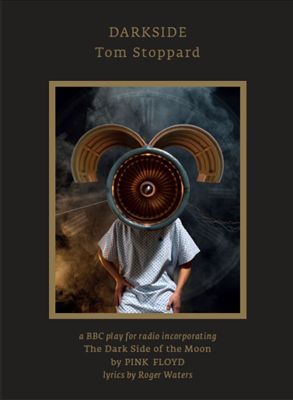
Darkside: When Philosophy Drama Pink Floyd and Madness Collide

Darkside
Last week, the most unusual pop album ever was released. That’s an incredible overstatement, literally unbelievable, because who has listened to all those truly out-there albums and how could you possibly contrast and compare them anyway?

Okay, last week, the most philosophical unusual pop album ever was released.

Tom Stoppard, maybe the greatest of all living English-language playwrights, is a longtime Pink Floyd fan, with a special place in his heart for Syd Barrett, the disturbed creator who sparked the group, even after his untimely but unavoidable departure. You may know Stoppard most popularly for his Oscar-winning work as co-writer of Shakespeare in Love. Before and after that, his total embrace of language, philosophy, literature and the overall beautiful strangeness of people led to masterful theatre and, often, radio plays.

When the BBC wanted to mark the 40th anniversary of Dark Side of the Moon, they asked Stoppard to create one of his radio concoctions. The result is Darkside, which integrates dramatic scenes into the music of the album.

Description is futile. Stoppard has always believed that philosophy is a form of play, that you can play philosophy the way you do language and music and entertain with it. Listeners and viewers might also learn something. Here we have clever demonstrations of moral philosophy and discussion of the nature of thought itself; that is, as he keeps pointing out, what he is doing is a thought experiment—as is all creativity. He then asks us and them about the juggler on the radio: there is a juggler on the radio, but not hearing him, how do we know? Do we believe in the juggler?

What is most clear listening to Darkside is not just that Stoppard knows how to play with words and mind, but that Pink Floyd was just as agile doing the same, with the addition of some of the most memorable and popular music of all time. Dark Side of the Moon was on the Billboard 200 chart for 14 years after it was released in 1973, and still hovers near there, 40 million copies later. Thousands still buy it every week and somewhere right now someone is listening and discovering something. Stoppard has devised a valuable appreciation of the weird wonder that is Dark Side, making it just a bit more wonderful. The lunatic is still on the grass and in your head.

All that you touch
And all that you see
All that you taste
All you feel
And all that you love
And all that you hate
All you distrust
All you save
And all that you give
And all that you deal
And all that you buy
Beg, borrow or steal
And all you create
And all you destroy
And all that you do
And all that you say
And all that you eat
And everyone you meet
And all that you slight
And everyone you fight
And all that is now
And all that is gone
And all that’s to come
And everything under the sun is in tune
But the sun is eclipsed by the moon
Eclipse, Dark Side of the Moon

Thanksgiving and Hanukkah in America: A History

Hanukkah in America
Hanukkah is getting lots more attention this year than it usually does, because it starts on Thanksgiving, rather than on or about Christmas.

This is nearly unprecedented. Of course there’s lots of controversy about just how rare it is, partly because Thanksgiving has officially moved from the last Thursday in November to the fourth Thursday, partly because the Jewish calendar is a lunar calendar, partly because of some esoterica of interest to extreme calendar freaks. Some say it won’t happen again for 70,000 years, others say it will never, ever happen again. If you happen to be around when it does, if it does, please e-mail, post, tweet, or whatever sort of advanced messaging will be used then to communicate with the curious but departed.

Thanksgivingukkah, or whatever other ridiculous and ear-hurting names people are coming up with, is second only to Black Friday as a cultural meme this week. We will be seeing lots of turkeys with Hanukkah candles stuck in them—actual ones, not just Photoshopped ones, at actual Thanksgiving tables, with plenty of videos to prove it. Might even see some turkey selfies. On the food front, we will have combined cuisines, where things not usually seen on the Thanksgiving table make an appearance, such as latkes and sour cream. (Note: I am promoting latke stuffing as the best of all possible hybrids.)

There’s a lot to talk about when Hanukkah and Christmas collide and coincide, theologically, historically and socially. Both involve charismatic Jewish religious leaders taking on tyranny—though one battles on the military and political front, while the other wields an entirely different set of weapons. As a central theme, both at some point take on the profaning of the Temple, in one case made unholy by soldiers, in the other made unholy by turning sacred space into a commercial enterprise. Both involve miracles and miraculous lights challenging the darkness. Not to mention that at the time of Jesus, Jews knew and marked the events of the Maccabee revolution, which had taken place less than two hundred years earlier.

Whether you are Jewish, or just newly fascinated by Hanukkah because it is for once not getting lost in the Christmas mishegas (“craziness” in Yiddish), have I got a book for you. Hanukkah in America: A History by Dianne Ashton is more than just a review of how American Jews regarded and celebrated this once-minor holiday. It is the definitive and delightful book about how Hanukkah evolved to become a laboratory for what it means to be a Jew in America, and for that matter what it means to be Americans of any kind.

Here’s something Ashton writes about Thanksgiving and the “deluxe Hanukkah turkey dinner”:

Many Jews combined food products available in America with recipes they deemed appropriate for Hanukkah meals. Even with a simple meal at home, immigrants could imagine a different Hanukkah past than the one in Eastern Europe. They could envision a personal bond with Judah Maccabee by selecting Carmel wine, which claimed to be “what the Maccabees drank.” Local food shops such as Goldman’s Tea and Coffee Store held special sales in honor of Sabbath Hanukkah. Jewish restaurateurs sometimes targeted immigrants’ desires for American foods at special occasions. Perhaps no food is so identified with America as the turkey, an animal native to North America and the featured dish of the Thanksgiving dinners that take place across the country only a few weeks before Hanukkah. When Gorfein’s, a kosher restaurant, advertised a deluxe Hanukkah turkey dinner in the Forverts, it apologized in print the next day to “hundreds [who had to be] turned away” because the restaurant “had no space or food left for them.” Gorfein’s offered the same dinner a second night.

My usual Hanukkah post, sometime around Christmas, ends with a mention of a wonderful Comedy Central special, A Colbert Christmas: The Greatest Gift of All. Our comic saviors Jon Stewart and Stephen Colbert perform the song Can I Interest You In Hanukkah? with Stewart making the case for the Jewish holiday:

Jon: Can I interest you in Hanukkah? Maybe something in a Festival of Lights. It’s a sensible alternative to Christmas. And it lasts for seven – for you – eight nights.
Stephen: Hanukkah huh? I’ve never really thought about it.
Jon: Well, you could do worse.
Stephen: Is it merry?
Jon: It’s kind of merry.
Stephen: Is it cheery?
Jon: It’s got some cheer.
Stephen: Is it jolly?
Jon: Look, I wouldn’t know from jolly. But it’s not my least unfavorite time of year.
Stephen: When’s it start?
Jon: The 25th.
Stephen: Of December?
Jon: Kislev.
Stephen: Which is when exactly?
Jon: I will check
Stephen: Are there presents?
Jon: Yes, indeed eight days of presents. Which means one nice one, then a week of dreck.
Stephen: Does Hanukkah commemorate events profound and holy? A king who came to save the world?
Jon: No, oil that burned quite slowly.
Stephen: Well, it sounds fantastic!
Jon: There’s more. We have latkes.
Stephen: What are they?
Jon: Potato pancakes. We have dreidels.
Stephen: What are they?
Jon: Wooden tops. We have candles.
Stephen: What are they?
Jon: THEY ARE CANDLES! And when we light them, oh the fun it never stops. What do you say, Stephen, do you want to give Hanukkah a try?
Stephen: I’m trying see me as a Jew. I’m trying even harder. But I believe in Jesus Christ
So it’s a real non-starter.
Jon: I can’t interest you in Hanukkah? Just a little bit?
Stephen: No thanks I’ll pass. I’ll keep Jesus, you keep your potato pancakes. But I hope that you enjoy ‘em on behalf of all of the goyim.
Jon: Be sure to tell the Pontiff, my people say “good yontif”.
Stephen: That’s exactly what I’ll do.
Both: Happy holidays, you
Jon: too!
Stephen: Jew!
Jon: Too?

That’s it for this holiday mashup. Read the book; it’s great. Celebrate religious freedom by eating too much food. Spin the turkey. Light the candles. But whatever you do, don’t smoke the turkey, because it is impossible to keep that thing lit.

Happy holidays. Be safe.

Online Gambling and Real Life Guns: It’s About The Children

sheldon-adelson-615cs013012
A team of highly-paid ex-politico lobbyists are out there arguing against proposed bills in Congress to allow Internet gambling. Under one of these bills, a 12% tax would be shared between the federal and state governments, 4% and 8% respectively. That would be a lot of revenue in these hard times.

Gambling is an American and ancient tradition. Lotteries helped fund the American Revolution, which makes them practically sacred. In this case, the main opponents of digital gaming for money are the wealthy owners of real-world casinos and establishments, most visibly billionaire Sheldon Adelson, who helped bankroll Mitt Romney’s quest for the Presidency. No surprise there. The practice of online gaming, which already goes on with offshore sites, would expand dramatically, leaving bricks, mortar and showgirl spots with a severely reduced market.

Some of the arguments against the bills are, on their own terms, not entirely unpersuasive. Gambling does support hospitality and tourism, and if the already declining dollars drop further, there are going to be folks who lose their jobs in this challenged economy. It’s not clear that the entrepreneurs getting rich off this have the will and creativity to come up with substitute businesses that would replace those jobs. Gambling is also already a social problem, damaging lives and families, and what is bad gets worse with increased volume. The final big argument is, naturally, about “the children.” No matter what we try to do, the online environment is notoriously freewheeling, and there is no question that underage players would find a way to play, just as they get cigarettes and alcohol.

On the tourism question, cultural and social trends have always left some forms of entertainment and diversion behind while other new or more appealing ones prospered. Either you believe overall in the free market or not. People who say that government shouldn’t be picking winners and losers shouldn’t be telling the government to pick winners and losers.

Out of control gambling can be pernicious, no doubt about it. But the argument, one actually made, that the poorest in society would be unfairly burdened by the attraction of online gambling is under current realities absurd. First, because it is not clear that all the opponents of online gambling care so very much for the lower tiers of American society. Second, because government already endorses, promotes and profits from easy-access gambling that does weigh on the most vulnerable—the lotteries. With all the strains on government budgets, it is unimaginable what state some states would be in without those gaming dollars.

Then there is the ultimate trump card: the children. That score is easy to answer. On the scale of things kids shouldn’t be allowed to do, alcohol is number 2, tobacco is a close number 3, and then comes gambling. Number 1 is easy. Children should not have guns, should not live in an environment where guns are widely available and acceptable, and where guns are regularly used to shoot, injure and kill innocent people—including children.

So if you happen to see or hear any of those lobbyists shilling for Sheldon Adelson and his ilk, talking about how it is about “the children” and how we must protect them from the evils of playing online poker or placing a digital bet on an NFL game, ask them if guns aren’t a tad more dangerous, and ask them what they’ve done to seriously reduce the ubiquity of those guns and to eliminate the personal and social costs that those guns have inflicted on all of us.

There likely won’t be a good answer, at least not one that isn’t laced with equivocation, hypocrisy and protests of irrelevancy. It is relevant. Ask them to put the two side by side, the harm to children from online gambling and from guns, and tell them that the billionaires are free to make billions more on their casinos—just as soon as the guns get put away.

Oxford English Dictionary Names Selfie Word of the Year

Arbus Mapplethorpe Selfie
The Oxford English Dictionary has named “selfie” the Word of the Year. At least one journalist covering this issue spoke in praise of the selfie, offering a few rationales:

Selfies are in the centuries-old tradition of artists making self-portraits.

This is an age of memoirs and selfies are part of this phenomenon.

So for all those who do take cover in these explanations, be aware:

Above are self-portraits by two modern masters of photography, Diane Arbus and Robert Mapplethorpe. Photography is blessedly democratic, easy and fun. But when looking at any of the millions of selfies, consider whether artistry applies.

As for modern memoirism, chronicling every moment, whether overshared or not, we might be looking at the range of those chronicles, from deeply examined reviews to diaries to nothing more than barely annotated calendars. Here are some questions:

Would you rather have your good, great and remarkable moments go unnoted and unrecorded?

Or would you rather have your ordinary, unremarkable moments go public and get attention?

Or is the point of modern sharing to elevate ordinary life to a special place where it has always belonged?

Smile.

Annals of Journalism: The Best Lead Paragraph Ever (Hint: It Involves Miley Cyrus)

Miley Cyrus Joint Dwarf

The Associated Press has issued the following lead paragraph for a story about Miley Cyrus’ most recent antics. It is the best lead paragraph ever.

AMSTERDAM (AP) — In an unabashed — and likely successful — bid for attention, singer Miley Cyrus smoked a joint on stage and twerked with a dwarf during the MTV Europe Music Awards.

Journalism students and logicians, please don’t focus on the joint smoking and the dwarf twerking, and for God’s sake, avert your eyes from the videos and photos (okay, you peeked; it’s irresistible, isn’t it?).

Instead, pay attention to this phrase: “unabashed — and likely successful — bid for attention.” What makes that phrase so delightful, the cherry on the Miley Cyrus-joint-dwarf news sundae, is that one of the largest news organizations in the world is covering the story, moving the success of her bid for attention from “likely” to certain and actual. As sure as the sun rises, Miley Cyrus will do something outrageous (the dwarf is an interesting touch, though it’s hard to say whether it’s trite or hip old school), and even the most respectable media outlets will cover it. So Associated Press, you just made your journalistic prediction come true. Oh the humanity! What would H.L. Mencken say?


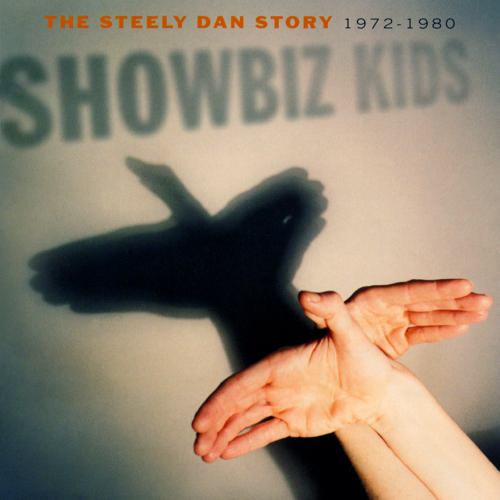
Rock and Roll Prophecy: Show Biz Kids

Show Biz Kids
Show biz kids making movies
Of themselves you know they
Don’t give a fuck about anybody else
Show Biz Kids, Steely Dan

Pop music self-reflection has been around for decades. The wonderful Lorde does a take on it with Royals, looking at superstar excess from the perspective of a regular teenager. Jethro Tull sang “When you’re too old to rock and roll but too young to die” in 1976—without a time machine to watch 70-year-old Mick Jagger prance around the stage almost forty years later.

But when it comes to visionary, nothing beats Steely Dan’s 1973 Showbiz Kids from the Countdown to Ecstasy album. Walter Becker and Donald Fagen always cast a little bit of jaundiced eye on society, show business and fame, which along with their musical sophistication and eclecticism made them a lock to get into the Rock and Roll Hall of Fame in 2001.

Their lyrics are often poetic, obscure and ambiguous, but Show Biz Kids is just plain straightforward. Show business, including pop, has had its share of bratty, self-absorbed behavior from star children of all ages. So it’s nothing new, and it may not be more over the top than ever—even if it seems that way sometimes. The poor people are still sleepin’ with the shade on the light while the stars come out at night. Once in a while these days, it appears, as Steely Dan sang, the show biz kids don’t care what they do or how it looks.

While the poor people sleepin’
With the shade on the light
While the poor people sleepin’
All the stars come out at night

After closing time
At the Guernsey Fair
I detect the El Supremo
From the room at the top of the stairs
Well I’ve been around the world
And I’ve been in the Washington Zoo
And in all my travels
As the facts unravel
I’ve found this to be true

They got the house on the corner
With the rug inside
They got the booze they need
All that money can buy
They got the shapely bods
They got the Steely Dan T-shirt
And for the coup-de-gras
They’re outrageous

Show biz kids making movies
Of themselves you know they
Don’t give a fuck about anybody else