Bob Schwartz

Who Killed the Assault Weapons Ban?

Hoover Tactical Firearms
A ban on assault weapons is dead, at least for this session of Congress. Senate Majority Leader Harry Reid announced that the Democratic gun bill moving forward will not include it.

The political math is that 60 votes are needed to pass a bill in this new and not improved super-majority Senate voting, and there weren’t enough Democrats, let alone Republicans, to make passage possible. The political reality is fear. There are Democratic Senators who believe that a vote for anything that looks like a gun ban, however reasonable and popular, would cause them grief or worse back home and in the voting booth.

We had a ban on assault weapons for ten years, signed by Bill Clinton, allowed to expire under George W. Bush in 2004, and never revived. It was far from perfect or comprehensive, but at least it represented recognition that as a modern civilization, there are things we try not to do or allow to be done. This isn’t heaven, but we can make it a little less hell.

An earlier post mentioned that we have not seen, and as a matter of decency (we are civilized people, aren’t we?) will not see, the photos of the dead children at Sandy Hook School in Newtown. Since then, though, the Senate Judiciary Committee held a hearing at which a vivid word image was painted by a first responder. Maybe not a thousand words, but we got the picture.

Harry Reid could tell us, name by name, which Democratic Senators did not want to have a vote on this so they wouldn’t have to be accountable. They wanted to avoid the double-edged sword, cut once politically by supporters and voters who believe that any banned weapon is one too many, then cut again by those who can’t understand why military weapons are needed by the hunter or the psychopath next door. By Adam Lanza’s mother and, in the end, by Adam Lanza.

Maybe we are asking the wrong questions of our politicians. Maybe we shouldn’t be asking whether they believe in a ban on assault weapons, or in the possibility that such a ban might reduce the number of gun deaths by even a little, and might reduce the brutality of an already brutal world.

Maybe we should be asking our politicians whether they believe in ghosts. The kind of ghosts who visit all of us, in the moments before sleep, in sleep itself. Ghosts of things done or not done. For Senators, ghosts of bills passed, unpassed, and too many times, never voted on at all. Ghosts that aren’t abstract, but that take stark, all too real form. Ghosts that look like mangled, barely recognizable angels, just wanting somebody to speak—and vote—for them.

The Tin Anniversary of the Iraq War

Tin CupTin is the traditional gift to mark a 10th wedding anniversary, just as it is silver for the 25th and gold for the 50th. There is no tradition about the anniversaries of wars, so tin will have to do.

All wars are controversial, whatever the split in support (80/20, 20/80, 50/50, rarely true 100% support), whatever the rationale, whatever the price. Every American war has had its naysayers, contemporary with combat and in the rear view mirror of history. World War II came close to consensus, although even there questions are still raised about whether we were late getting in and whether the unprecedented brutal way we got out was necessary.

This paragraph was going to include a bunch of numbers about the Iraq War. But you are going to find those numbers everywhere: how many of our personnel served, how many were killed and wounded, how many civilians were killed and wounded, how much it cost in dollars. Those numbers are meant to demonstrate the price paid, in, as they say, blood and treasure. Here it is in brief: the price was staggeringly high.

And next is something surprisingly good to say about the Vietnam War. If we learned nothing else from that nation-dividing conflict, we learned this: whatever we believe about a war, we can never, ever, ever take anything away from the service of those who fight.

Some people miss an important point when they argue that we have to justify a war after the fact so that those who suffered won’t have suffered “in vain”. It is the exact opposite. When a war turns out in hindsight to present real questions about why, those who fought are maybe more our most loyal heroes, especially in a volunteer army. They didn’t answer a call to defeat some cosmic embodiment of evil (e.g., Hitler); they just loyally answered a call to serve. They deserve all we can give them (which, by the way, includes world-class medical care).

In August 2002 I sent an e-mail to some U.S. Senators, including Bob Graham of Florida and Robert Byrd of West Virginia. Both of them were skeptical about the rush to war, and both—particularly Byrd—believed that the role of Congress was being ignored.

This is an excerpt from that e-mail It is not here to reveal some astute analysis or prescience. Lots of people knew or suspected that something was wrong. It is just here as an artifact of a moment that led us to the anniversary today.

Sent August 29, 2002

Congress has the constitutional power to make war, which includes careful deliberation and action if necessary.

In the case of Iraq, you and Congress should assert that power immediately and clearly. Congress has previously allowed that power to erode in the face of political pressure, and now faces an administration that is using an atmosphere of fear (that it has intentionally or inadvertently helped create) to dare Congress to defy its claimed authority.

When you do exercise that power, as I hope you will, it should be more than a rubber stamp. The President seems to have a simplistic and maybe, with all due respect, a simple-minded view of world affairs. The role he is carving out for the U.S. as the world’s sheriff may be right in a moral sense, but is possibly disastrous in the world of the 21st century. Which evildoer is next on the list; which town is he planning to clean up?

This isn’t High Noon or The Magnificent Seven. We have been lucky in Afghanistan, though I expect things will fall apart there within the next year or so. The destabilization of Iraq, especially in the face of global disdain for our actions, could be much more costly.

Finally, I believe that the President’s strange game of hide-the-ball regarding his plans for Iraq (in the guise of not telegraphing our strategy) is wreaking havoc with our economic confidence. Anybody with any economic insight knows that things are much worse than anyone is willing to talk about, restraining such talk in the hope that consumers and businesses will regain lost faith in the future. There is no way that an attack on Iraq can help that situation, and a thousand ways it can and will hurt.

For the record, when the Iraq War Resolution did pass Congress in October 2002, Byrd, Graham and a total of 23 Senators (21 Democrats, 1 Republican, 1 Independent) voted against it. Of those, only a handful are still in the Senate: Barbara Boxer, Dick Durbin, Carl Levin, Barbara Mikulski, Patty Murray, Jack Reed, Debbie Stabenow and Ron Wyden. It has been more than ten years, so choice and death have taken the rest of them. One who did vote for it who is no longer in the Senate is John Kerry, who became Secretary of State after the “official” end of the Iraq War, and who, between the vote for the war and the end of it, ran for President.

It’s a funny old world.

Actor Is Typecast As Satan

Satan
The media is all atwitter over the observation that the actor who plays Satan in a new Bible series looks a lot or something like President Obama.

The Associated Press got a response from the producers:

Mark Burnett and Roma Burnett said Monday the Moroccan actor who played Satan in the History channel series has played Satanic characters in other Biblical programs long before Obama was elected president.

First, separate from any questions about motives or about whether Mohamen Mehdi Ouazanni does look like Obama, let’s quickly get past a gap in this reply. If an actor looks like the President, and you have some creative notion that this helps make it a good casting choice (for artistic, political or publicity reasons), his having played Satan before just might be a bonus. Or if his experience as Satan is the driving reason, then the look-alike feature might be a bonus. The earlier Satan experience doesn’t fully dismiss any possibilities.

Beneath all this is a commentary on the craft and business of acting. From the producers’ comments, it appears that Mohamen Mehdi Ouazanni is, or is on his way to, being typecast as Satan. He played the part before, he is playing it now (and getting lots of attention for it), and may then be asked to play it again. If Charlton Heston had done a few more Moses movies after The Ten Commandments, what would his later career have looked like? Would he have been waiting around for the next Moses movie, instead of giving us Ben Hur, Planet of the Apes, Soylent Green, etc.? No major actor has ever reprised the role of Jesus, either, because besides the fact that there is no sequel to the story, it is the kind of part that is hard to shake.

There is a silver lining, though. Whether or not there are other Satan parts in this actor’s future, there is no doubt that in years to come, we will be seeing all kinds of films about Barack Obama. Some will even cast Obama as a metaphorical devil—a part he already plays in lots of political punditry. When those films are finally made, there will be a call for actors, and maybe having played Satan will be a real qualification.

Another Reason We Need Assault Weapons

Attack of the 50 Foot Woman
The 1950s were the reel golden age of science fiction movies. Consider the shots above from Attack of the 50 Foot Woman (1958). It is the story of a rich socialite turned into a giant woman by a giant alien. She seeks revenge on her cheating husband, something made easier by the fact that she is…50 feet tall. (She is also pretty sexy, wrapped in what looks like a few very big sheets, needed because her designer socialite clothes did not grow.)

The sheriff discovers that a pistol is no match for the giant alien, and as you can see, her husband learns that his pistol is useless against her. (She is ultimately stopped when the sheriff shoots an electric transmission tower she is standing next to.) This is an old story and a lesson we should have learned by now: pistols are not effective against aliens, monsters, people turned into monsters, etc.

Assault rifles may do no better, but at least they might give you a fighting chance and a little extra time to escape. The NRA, for some reason, has failed to make this argument. But it is both appealing and rational. The chances of the government turning against all its citizens may be small, but it could happen, and the NRA believes it and promotes the possibility. The chances of alien invasion, experiments gone rogue, the sudden appearance of strange new enemies may be small, but it could happen too.

In that case, would you rather be carrying a pistol, rifle, or shotgun, or do you want some serious firepower? You know the answer.

The Ides of March

Julius Caesar - Mercury Theater
Today is the Ides of March, which is the 15th of March in the Roman calendar. (The Ides are a monthly mid-point, between the Nones early in the month and the Kalends on the first day.)

It is the day of Julius Caesar’s assassination in 44 BCE, made forever famous by Shakespeare’s play Julius Caesar, where the Soothsayer warns him (twice) to “beware the ides of March”. It did turn out to be a bad day.

Above is a scene from the Mercury Theater’s legendary 1937 presentation of the play in modern dress and sensibility, set by director Orson Welles in Fascist Italy. The theater company was organized by Welles and John Houseman, and this was their first play. In the photo above, Marc Antony (George Coulouris) kneels over the lifeless body of Julius Caesar (Joseph Holland).

Welles was only 22 at the time, but already a rising star. The Mercury Theater, intended as an independent answer to the restrictions placed on Welles by the Federal Theater Project, was really the launch pad for his fame and infamy as a world class artistic iconoclast.

For an entertaining look at this Mercury Theater production and company, at Orson Welles, and at the promises and disappointments of being young, in love, and working for an impossibly wonderful/horrible genius, see Richard Linklater’s Me and Orson Welles (2008).

The movie is underrated and did very poorly at the box office (as did most Welles films). It is a fully-realized and charming fictionalization of a real cultural milestone, with  recreated scenes from the Julius Caesar production and great ensemble acting. The star turn, appropriately, is from Christian McKay as Welles. There have been other attempts to play this part, which is a double challenge, since the Welles persona is so huge and Welles himself did such a good job of playing Orson Welles. McKay is near perfect, for the part and the story; maybe not “Daniel Day Lewis is Abraham Lincoln” (which he was), but still impressive from such a young actor. McKay is currently listed in five movies in production, which he deserves to be.

Christian McKay - Me and Osrson Welles

There is no special Roman designation for the 16th of March, so enjoy the ides while you can.

The Saints Francis

St. Francis of Assisi
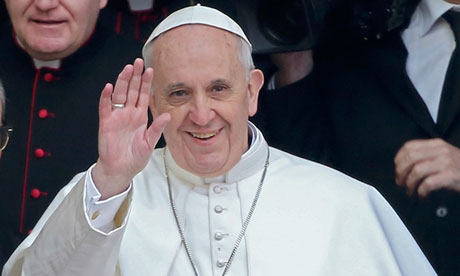
Right now, there are millions of words being written and spoken about who Pope Francis is and what kind of Pope he will be. Read and listen with care and a bit of skepticism, knowing that some (but not all) have an agenda or a bit of rosy vision, and knowing that almost all of the “experts” got this papal selection wrong. The fact is that predictions are all we have at the moment, but they will fade in the shadow of what the Pope actually does or doesn’t do and accomplish.

Instead or in addition, spend some time with the saints, particularly the various Saints Francis. Even for us non-Catholics and non-Christians, the saints are an enormously interesting, educational and in some cases enlightening phenomenon. If you don’t have some appreciation for the saints, whether or not you believe the intrinsic or underlying theology, you cannot understand the Catholic Church. Besides that, in the world of religion, not just Catholicism, the lives of the saints are just plain entertaining and their teachings often edifying and inspiring.

Here is the list of Saint Francis variations, taken from the SPQN site, a go-to location for summary saint information and references:

Francis Gil de Frederich
Francis Isidore Gagelin
Francis Jaccard
Francis Jerome
Francis Johnson
Francis Man
Francis Mary Paul Libermann
Francis Page
Francis Palau y Quer
Francis Patrizzi
Francis Pontillo
Francis Possenti
Francis Regis Clet
Francis Rogaczewski
Francis Seelos
Francis Solano
Francis Solanus
Francis Trung Von Tran
Francis Webb
Francis Xavier
Francis Xavier Bianchi
Francis Xavier Can Nguyen
Francis Xavier Mau
Francis Xavier Seelos
Francis de Capillas
Francis de Geronimo
Francis de Hieronymo
Francis de Montmorency Laval
Francis de Sales
Francis di Girolamo
Francis of Assisi
Francis of Girolamo
Francis of Nagasaki
Francis of Paola
Francis of Saint Michael
Francis of Sales
Francis, Caius
Francis, Gaius
Francisca Aviat
Francisca de Ambrosia
Francisca Salesia
Francisca Salesia Aviat
Francisco Castells Brenuy
Francisco Ferro, Ambrosio
Francisco José López-Caamaño García-Pérez
Francisco Marto
Francisco of the Child Jesus
Francisco Palau y Quer
Francisco Pascual Sánchez
Francisco Shoyemon
Franciscus de Hieronymo

The most-discussed and obvious of the lives behind Cardinal Bergoglio’s groundbreaking choice of name (he is the first Pope Francis) is Francis of Assisi. His turning from a worldly life to a mission of simplicity, service, peace and, of course, living with nature led to his founding of one of the Church’s most significant orders (the Franciscans) and indirectly to the founding of another by his star student (the Poor Clares). He is also a patron saint of dozens of occupations, causes and places, including

against dying alone
against fire
animal welfare societies
animals
birds
ecologists
ecology
environment
environmentalism
environmentalists
families
lace makers
lace workers
merchants
needle workers
peace
tapestry workers
zoos
Italy
Colorado
Ahuacatlán, Mexico
Assisi, Italy
Freising, Germany
Massa, Italy
Nambe Indian Pueblo
Quibdo, Choco, Colombia
San Pawl il-Bahar, Malta
Sante Fe, New Mexico
Sorbo, Italy
Denver, Colorado, archdiocese of
Kottapuram, India, diocese of
Lancaster, England, diocese of
Metuchen, New Jersey, diocese of
Salina, Kansas, diocese of
San Francisco, California, archdiocese of
Sante Fe, New Mexico, archdiocese of
Viana, Angola, diocese of

But he is not the only Saint Francis with a substantial presence in the Church. Saint Francis de Sales, for example, is the namesake of schools worldwide, founder of his own order (the Salesians), and in 1923 was named patron saint of writers and journalists (and presumably bloggers) by Pope Pius XI.

However you are celebrating the upcoming St. Patrick’s Day—if you are—you might start your study of the saints with him.  But don’t stop there. Take this opportunity of a new Pope to learn about the Saints Francis, from the big names to the lesser known but still worthy ones. You’ll find it a special experience, no matter what your spiritual perspective, and maybe much more fun and useful than listening to the earnest babble of certain media talking heads.

MLB.com At Bat App

MLB-At-Bat-Splashscreen
About the game of baseball, you cannot say enough great things. No matter how many players in other sports wear John 3:16 eye black or bend a celebratory knee in devotion, baseball is the sport God invented and intended for great athletes to play—proven, among other evidence, by the 60 feet from home to first that is the perfect balance between the speed of a running batter and the speed of a ball thrown from shortstop. Proven also by that fact that very few stars in those other sports have succeeded at baseball, including the greatest of all basketball players, Michael Jordan. If baseball is God’s game, the curve ball is God’s wicked joke.

About the business of baseball, it is more equivocal. As with all sports, teams face daunting changes as the financial stakes have grown exponentially. Some teams have handled the challenge with professionalism, skill and finesse, and with respect for the game, for players, and most of all for fans. With other teams, the terms self-interested and heedless of baseball’s best interests may apply. Right now, a number of Florida fans consider Miami Marlins owner Jeff Loria the poster person for that.

About Major League Baseball, the enterprise overlord that oversees all this, there is even more equivocation. Most of that is centered on the Commissioner. Just as historians talk about the evolution of the Imperial Presidency, the Imperial Commisionership grew out the infamous Black Sox Scandal in 1919, when players on the White Sox were accused of throwing the World Series. The next year, federal judge Kenesaw Mountain Landis was appointed Commissioner to take control, and ever since, the Commissioner has served an increasingly central role in the fortunes (metaphorically and literally) of the game.

The best modern Commissioner, who combined the myth and poetry of baseball with its down and dirty aspects, was Bart Giamatti, whose tenure was truncated by his untimely death. Giamatti knew how to manage huge and venerable institutions as president of Yale, but also understood the soul of the sport as a writer and a passionate lover of baseball. The current long-time Commissioner, Bud Selig, is more controversial, and a bit less generally beloved or respected in some quarters. Selig is no poet, nor was meant to be, but some knowledgeable fans also believe that as the game both succeeded and suffered over the past decades, he was a catalyst for both.

Whether or not you are a fan of the Commissioner, or of the direction MLB is taking, or of the direction your particular team is taking, it is time to give credit where it’s due.

Baseball fans are as fanatic as any—some might say more than any—in delving into the details, past and present. Once upon a time, that might have meant reading the Sporting News, especially as spring training for a new season began. Then magazines began popping up, and then fantasy leagues, and then more magazines to inform the fantasy leagues.

But nothing beats the comprehension and immediacy of digital for any special interest, and baseball is no different. The very thought of having a mobile app to feed your baseball addiction is almost too much to bear. The sad news, though, is that with one grand exception, baseball is not yet successfully mobile. Typical for the mobile realm, there’s a bunch of junk and some almost-decent efforts.

The exception: love, hate or question MLB, you have to admit that the free MLB.com At Bat mobile app is a model of how to serve a universe of fanatics. (As an extension of their online offerings, there are paid premium versions that include live games.) Scoreboard, standings, players, teams, rosters, news—it is all there, in an admirably usable and appealing form. They keep working at it too, with a major overhaul just as spring training began. It is not perfect, but it will do until something better comes along.

If you are a real baseball fan, married to the game, you have reasons to complain and moan about MLB even as you are ecstatically thankful for your bliss. Set aside whatever those complaints are and here, as another season begins,  consider downloading the MLB.com At Bat mobile app today.

Permissions and Privacy: Medium

As with all mobile apps, please read carefully the Permissions requested by the developer. Users should be diligent in weighing potential privacy issues against the utility and value of an app.

Terry Riley Is Cool

Terry Riley
You probably think you’re cool. You might be right. You can list a bunch of qualifications. They might be good enough.

But if you’ve never listened to Terry Riley’s magical music, there’s a cute trick in store for you. When you listen, you will simultaneously learn that you were not as cool as you thought and instantly become cooler than you ever were. Now that’s magic.

Terry Riley is one of the earliest American minimalist musicians. Some consider him one of the fathers of trance and ambient music, which immediately turns some people off from even considering listening. Don’t be put off. Trance and related genres have gotten a bad rap and rep from too many players who were adept at the technology but neither artful nor soulful.

At age 77, Terry Riley still has enough art and soul for any thousand composers and players. He has a long list of compositions and performances, but everyone should start with In C (1964) and A Rainbow in Curved Air (1969). In C is composed of 53 separate patterns based on the C note, played  over the course of 42 minutes. That may sound boring, but sex sounds boring when you describe it clinically too. A Rainbow in Curved Air is differently kinetic, brightly climbing and wiggling way up and down and all around the aural universe.

For a view of Terry Riley’s place in music history, listen to this show from the WFMT San Francisco series 13 Days When Music Changed Forever. The day is November 4, 1964: The Premiere of Terry Riley’s In C (as a bonus, the series is hosted by Suzanne Vega).

You can find Terry Riley on Spotify and other music outlets. Try the original recordings, which have been remastered, first. If you like, go on to newer performances of these and later compositions. You have nothing to lose but your last vestige of uncool. Of course, you’re never going to be as cool as Terry Riley. But who is?

The Postal Service Loves Modern Art

Postal Service - Modern Art
We are becoming inconstant cultural historians. History, cultural and otherwise, requires more than knowing what happened when, or even knowing its significance. Real history is about an overwhelming sense of appreciation for just how major something was, both in its time and as a precursor of today.

This trajectory is unwelcome but not surprising. We have never lived in a time when the trip from new to newer to newest is as breathtakingly fast, which means that the past exists as a distant dot, visited on a need to know, need to show basis.

One hundred years ago, an art exhibition was held in New York that changed America. The International Exhibition of Modern Art, better known as the Armory Show, took place in February and March of 1913. It is the most important art exhibition in American history and an inspirational watershed for culture of all types.

Armory Show

The exhibition was organized to showcase the state of the art—the contemporary work that was being done by European and American artists, work that was well ahead of what most American audiences were familiar with and had yet seen. It would be years before a major American museum took up the mission: the Museum of Modern Art in New York did not open until 1929.

This is from the New York Sun newspaper in 1912, announcing the upcoming event:

Show of Advance Art Promises a Sensation

Futurists and Cubists Will Be Featured Here in February

Whole Room of Cezannes

Founder of Post Impressionism Is Hardly Known in New York

Cezanne is virtually unknown in America except by his name, and there will be great curiosity…

Matisse has been seen and shuddered at in the little New York gallery of Photo-Seresston…

Every art museum and art program should be giving at least a nod to this, if not a full-blown celebration. Some are, some aren’t.

Here comes the U.S. Postal Service to the cultural rescue. Ironic, because the Postal Service itself is in dire need of rescuing. But when it comes to celebrating modern art, and this particular moment, there it is.

On March 7, the Postal Service will issue a set of stamps called Modern Art in America 1913-1931. They explain, “In celebration of the triumph of modern art in America, the U.S. Postal Service commemorates 12 important modern artists and their works, 100 years after the groundbreaking Armory Show opened in New York in 1913.”  On the full sheet of stamps is a quote from Marcel Duchamp, one of the more than 300 artists who exhibited at the Armory Show: “American is the country of the art of the future.”

The set includes stunning reproductions of works by Stuart Davis (House and Street),  Charles Demuth (I Saw the Figure 5 in Gold), Aaron Douglas (The Prodigal Son), Arthur Dove (Fog Horns), Marcel Duchamp (Nude Descending a Staircase, No. 2), Marsden Hartley (Painting, Number 5), John Marin (Sunset, Maine Coast), Gerald Murphy (Razor), Georgia O’Keeffe (Black Mesa Landscape, New Mexico / Out Back of Marie’s II), Man Ray (Noire et Blanche), Charles Sheeler (American Landscape), Joseph Stella (Brooklyn Bridge).

Through its stamps, the Postal Service has served for decades as a chronicler of culture, well-known and less-known. This year alone we have muscle cars, Johnny Cash, Rosa Parks, Grand Central Terminal and Lydia Mendoza (one of the greatest stars of Tejano music). And, of course, the Armory Show.


Marchel Duchamp - Nude Descending A Staircase

Celebrate the Armory Show this month. Revel in art, its past and its present. Visit galleries. Buy some art. Visit an art museum. Join an art museum. And then go to the post office (yes, there are still post offices). Buy a couple of sheets of the Modern Art in America stamps ($5.20). Keep one, and maybe frame it and hang it on a wall. Use the other stamps on letters or even bill payments. It’s an easy way to make the world more beautiful and interesting, and to show that art still and always matters.

NASCAR Follows NRA Off the Roof

NRA 300
The National Rifle Association jumped off the public relations roof in the wake of Newtown and the legislative attempts to curb gun violence.

Which is fine. The First Amendment guarantees the right of individuals or groups to jump off any rhetorical roof, so long as no one is harmed (except maybe for the jumper). There is money to be made and power to be gained by taking extreme or contrarian positions, sometimes the louder and more insistent the better.

But as your parents advised you—though you may have willfully ignored the advice—just because Johnny jumps off the roof doesn’t mean you should do the same.

As recently as last September, the NRA sponsored a NASCAR race, the NRA American Warrior 300 in Atlanta.

Today it was announced that the NRA will be sponsoring a NASCAR Sprint Cup race at Texas Motor Speedway this April, to be called the NRA 500.

Something happened between September and April: Newtown, Sandy Hook, twenty children slaughtered.

The NRA believes that if anything happened, it only makes it more important than ever to pretend that nothing happened, or to pretend that whatever happened can’t be prevented by any proposed measures, or to pretend that what happened is being unfairly used to threaten their existence and the Second Amendment. The NRA believes it has the support of millions, and that its obstruction is massively appreciated, all national polls to the contrary. It believes that even if it is jumping off some roof, there is a safety net to catch it.

NASCAR may believe that it will be caught by that same safety net, since many NASCAR fans are also gun owners, if not NRA members. NASCAR may feel it is caught between a rock and a hard place: damned if they continue to work with the NRA, damned if they don’t. Of course, even many NRA members are skeptical, some embarrassed, by the NRA’s current extremism and obstruction. On top of that, the NRA PR safety net, even if it does still exist, is probably big enough for just one.

Maybe an NRA race this April won’t be such a big deal for NASCAR. But maybe it will be. If it is, NASCAR shouldn’t expect that there will be a net to catch it. We will know in the days to come whether this is a brilliant move, just business as usual, or a thud.