Bob Schwartz

We Are at War with ISIL but Not at War with ISIS

We are at war with ISIL, the White House has just announced. But only yesterday, Secretary of State John Kerry said we are not at war with ISIS.

As mentioned previously there seems to be some confusion about what to call this entity: ISIS, ISIL, or Islamic State.

And that explains it. President Obama is talking about one enemy. John Kerry is talking about another. That is, we are at war with one but not the other.

Seriously, not being able to decide on what to call an enemy is not unimportant. But it pales beside not being clear, within the administration, about whether this is war. And then trying to reconcile it by saying that whether you call it war or not is splitting semantic and legal hairs.

The White House would have been better off pleading confusion about which names the President and the Secretary of State were using.

There is something deeper in this talk about war. The explanation by the White House is that it is just like the “war” against al-Qaeda. There is no mention of the War on Terror, the War on Drugs, or other quasi-metaphorical wars. It isn’t that we haven’t had military conflicts with non-state actors. And Obama was clear in his big speech about the maybe-war: “ISIL is certainly not a state.” It’s just that whenever we do have stateless enemies, things get very confused and confusing.

If you don’t believe me, read our history. Or just watch and wait.

Obama Speech: Is It ISIS, ISIL or IS, and What is a True Religion?

Obama ISIS Speech

This is not a comprehensive review of last night’s speech by President Obama about ISIS/ISIL/IS. But if you asked me to join the millions of reviewers, descriptors that come to mind are lukewarm, vague, uninspiring, insufficiently informative, tactical (the speech, not the plan), and blah-blah-blah.

Here is one paragraph that stuck out, because it reflects two issues that may not get enough attention:

And one of those groups is ISIL — which calls itself the “Islamic State.”

Now let’s make two things clear: ISIL is not “Islamic.” No religion condones the killing of innocents. And the vast majority of ISIL’s victims have been Muslim. And ISIL is certainly not a state. It was formerly al Qaeda’s affiliate in Iraq, and has taken advantage of sectarian strife and Syria’s civil war to gain territory on both sides of the Iraq-Syrian border. It is recognized by no government, nor by the people it subjugates. ISIL is a terrorist organization, pure and simple. And it has no vision other than the slaughter of all who stand in its way.

What Is the Name of This Enterprise That We Are at War Against?

Is it ISIS, ISIL, or Islamic State? This is much more significant than whether the English transliteration of the name of the Egyptian President was Morsy, Morsi, or Mursi or the Libyan dictator was Gadhafi, Qaddafi, Kadafi, Gaddafi, or Gadafy. This is our new mortal enemy, and besides, all these IS names are in English.

Different nations and different news media have different approaches to this. The BBC, for example, has settled on Islamic State, apparently opting for whatever the organization chooses to call itself. What is totally strange about the “official” U.S. nomenclature is that at the highest levels, there is no consistency. The President prefers ISIL, while those in his cabinet regularly use ISIS.

One small matter about ISIL does deserve note. The full name is the Islamic State in Syria and the Levant. I challenge many in the administration, and many in Congress, and many in the media, to explain—without Google or cheat sheet—what the Levant is. For five hundred years or so it has described the land of the eastern Mediterranean, now roughly comprising Syria, Lebanon, Israel, and contiguous countries. The word comes from the French word for “rising”, as in the east where the sun rises. It isn’t much in use any more, outside of scholarly circles and, of course, in our latest war.

So please, President Obama, if you are gathering the support of dozens of nations and hundreds of millions of Americans, let’s all decide on what to call this organization that, in the words of Vice President Joe Biden, we will pursue to the Gates of Hell.

What is a True Religion?

“No religion condones the killing of innocents,” the President said. Without going into historic and contemporary detail, this is patently false. I believe the President knows better, but he didn’t want to get into a deep discussion, and instead just wanted to make a rhetorical flourish. If he doesn’t know, there are thousands of histories he can read and scholars he can consult, or even easier, news reports from the past few weeks, months, and years he can read.

If, however, he really did mean it, he has disqualified the majority of world religions from being classified as such. Which, by the way, plenty of critics of religion would applaud.

The President doesn’t have to be the Teacher in Chief, the Scholar in Chief, the Explainer in Chief, etc. Being Communicator in Chief is enough of a job, but if he just wants to say stuff for effect, without regard to its making sense or being true, we’ve already had plenty of that in years past, from those less smart or thoughtful than you. We get enough nonsense from many in Congress. Speak as if some of us are actually thinking about what you say. Because some of us are.

The Abstract Perpetual War Is Real

Rome

Consider this: If you have a child or grandchild age 12 or younger, they have lived their lives with America at war.

And this: In six years that child will be old enough for military service, but will not necessarily have to serve because we have no mandatory universal service. So even if we are still at war, that child is probably not at risk.

And this: Why don’t we have mandatory universal service, especially if we are in perpetual war? Do we have perpetual war because we don’t have mandatory universal service?

Michael Auslin, a Resident Scholar at the American Enterprise Institute, has a fascinating piece in Politico about the prospect of a perpetual war footing, Don’t Do As the Romans Did… His politics may not be yours, but his analysis is compelling and worth reading in its entirety:

For Washington, which has already spent at least $2 trillion on relatively limited wars in Iraq and Afghanistan, the prospect of decades more competition, deterrence and fighting at an unknown cost represents the greatest security challenge since the Cold War, and perhaps since World War II. It is just as much a domestic political issue, and will figure as prominently in the debates over the future direction of the country, as do the battles over Obamacare, the regulatory burden or the transformation of the economy. Yet so far, it does not seem that either the country’s political elites or ordinary citizens have fully appreciated both the scope and, more importantly, the nature of America’s new two-front conflict. They soon will, as the country’s economic health and domestic political stability will be directly affected by rising global risk. To quote Leon Trotsky, “You may not be interested in war, but war is interested in you.”

Americans must accept the fact that, while their country may not be engaged in daily fighting, neither will it know peace for the foreseeable future. The world will become far more insecure and unstable over the next decades, and the amorphous yet crucial idea of global “order” will be strained, perhaps to the breaking point.

America’s greatest strength is also its greatest weakness. The spirit of can-do, roll up your sleeves, and in the words of Larry the Cable Guy, “get ‘er done” is a model for the world. But a related failure to think things through, apply broad and deep vision, and act deliberately and more slowly, can neutralize or outweigh the benefits of that spirit.

Living in the moment, in the now, is a great way for people to not be mired in the mistakes of the past and not be intimidated by the hypothetical misfortunes of the future. That is, unfortunately, not a luxury that nations, particularly super powerful ones, have. When you can spend trillions of dollars of your citizens’ money, send thousands of citizens to their deaths, and have the potential to blow up cities and the whole world, we expect you to think twice or more before you roll up those sleeves and get ‘er done.

The iBrain and gBrain Devices

My Favorite Martian

With the release of the iWatch, both Apple and Google realize a challenge they face. There has been a bit of pushback to Google Glass, and there will no doubt be a similar issue for the iWatch. Even the most avant garde people may have second thoughts about just how cool they don’t look wearing and using those devices.

Which is why Apple and Google are working on devices that are innovatively powerful but completely inconspicuous. These are brain implants that will function as smartphones—and more. Working names for these devices might be iBrain and gBrain. No one will know you are wearing them. No more pulling your smartphone out of your pocket, or putting on a pair of glasses, or bringing your wrist up to your face.

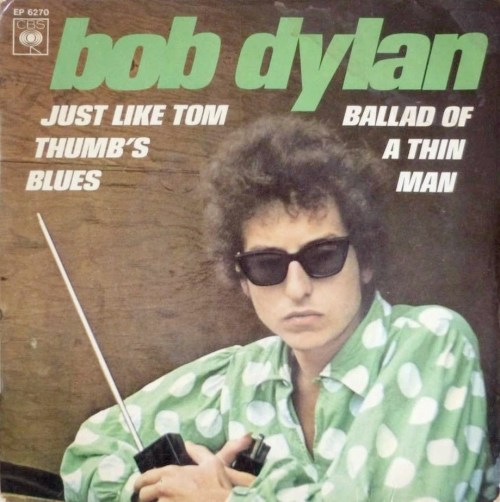
Ironically, the problem that Apple and Google have is precisely that: nobody will know you are using it. That is, there is no badge. Which is why, on a parallel track, marketers are working on an actual badge that tells the world that you are wearing an iBrain or gBrain. Another thought that marketers have is to encourage jewelry or tattoos that bring attention to the implant site. One product manager has even suggested a non-working antenna that could attach to the implant, giving the user the look of an old-fashioned Martian. Futuristic glasses and watches might not be cool, but that sure would be.

The NFL and Ferguson

Roger Goodell NFL

NFL player Ray Rice beat his then-fiancée/now-wife unconscious inside an elevator in Atlantic City. Police officer Darren Wilson shot dead an unarmed teenager in the middle of a street in Ferguson, Missouri.

(To Rice’s credit, he had the courtesy to drag her body out of the elevator, while the Ferguson police left Michael Brown’s body on that street for hours.)

These two incidents are so much the same and so different. They tell us things we don’t want to hear, know, or think about. They also tell us one surprisingly good thing. The establishment interests can be just as committed to privileging a black American as killing him ruthlessly, under the right circumstances. Especially if there’s big money at stake. So we learn that ignominy is race neutral at last.

Until yesterday there was no publicly available video of the beating, though it was apparently available and seen by various authorities. The only public video until then was from the outside of the elevator, merely showing Rice dragging the body, not beating it. As one journalist now explains his defense of Rice’s mere two-game NFL suspension and not being charged with a felony:

The inside-the-elevator video shows Rice, a running back for the Baltimore Ravens, provoking, brutally assaulting and then casually and callously standing over his knocked-out fiancée (who is now his wife). His actions are sickening in their depravity and confirm a worst-case-scenario narrative I was reluctant to believe after seeing only the previously released, outside-the-elevator video.

I thought the full video would explain why: Why police originally charged Ray and Janay with simple assault. Why the prosecutor allowed Ray to enter a diversion program. Why Janay apologized for her role. Why Janay chose to marry Ray. Why the Ravens enthusiastically supported Rice and used their facilities in helping him rehabilitate his image. Why Goodell suspended Rice for only two games.

I wrongly and naively thought that she was the aggressor in the attack, that Rice reflexively shoved her to fend her off and she slipped, fell and hit her head [emphasis added]. I did not think a man could sucker-punch a woman on tape and have the police, a prosecutor, the victim and the image-conscious NFL all work to treat the assaulter in a sympathetic fashion.

Fell and hit her head. That reminds us of nothing so much as the stories reported by battered children (and wives and girlfriends) who “run into doors.” Except this is a journalist using his best investigative and inferential skills to draw an “obvious” circumstantial conclusion. He could be forgiven for drawing the same ridiculous conclusion as law enforcement, the NFL, and the Baltimore Ravens. Except that some or all of them had the inside the elevator video or at least more detail, and still came to the same conclusion, at least publicly.

There is no video of exactly what happened to Michael Brown in Ferguson, though there are witnesses to pieces of it, an audio recording, and more than one autopsy. There the instinct on the part of vested interests and the establishment was to wait and see, but really to stonewall, cover up, and put the best light on the situation. That turned out to be a disastrous approach, but at least it got people talking about former unmentionables. Small consolation.

How is this any different than what is going on with Ray Rice? The vested interests tried to put the best light on his situation, and despite outrage, almost got away with it. How are the people who up until yesterday circled the wagons around Ray Rice, giving him the benefit of the doubt and a slap on the wrist, any different than those who have been circling the wagons around Darren Wilson, giving him the benefit of the doubt?

One difference is that Ferguson is a small predominantly black town with a small almost entirely white police force that appears to have some race issues, while the NFL is a huge enterprise predominantly owned and run by white people with a pro game substantially played by black men that appears to have some race issues. It’s those issues, along with other social, legal and moral ones, that have us all talking. About policing. About the NFL. About race.

The victims were both black, one a kid possibly involved in petty crime (there’s a video of that), the other a woman engaged to a professional warrior who could have easily killed her, rather than just beating her senseless after she “provoked” him (there’s now video of that).

Maybe from the first, Ray Rice should have taken the approach that will certainly be at the center of Darren Wilson’s defense, assuming he is charged: I was in fear for my life. Up until yesterday, lots of people would apparently have been willing to accept a story like that, if it served their interests. Thankfully, they now all have to stop pretending, and we can start asking what it all means.

Jack Cristil: The Voice of God is Gone

Jack Cristil Biography

There are two ways you might know Jack Cristil, who died this weekend at the age of 88. But maybe not.

If you’re from Mississippi, or an SEC sports fan, you know him as the The Voice of Mississippi State football and basketball for almost sixty years, until his retirement in 2011.

If you are a member of the Tupelo Jewish community, where Jack was an essential part of Temple B’nai Israel for almost that long, you know him, more or less, as The Voice of God. In addition to his leadership roles in the congregation, Jack frequently led services. Most of us have heard clergy and lay people at the pulpit with some memorable voices and presences. Jack stood above them all. That perfectly modulated baritone, driven by his deep and unshakable faith, gave us all the play-by-play for a different sort of game, season after season.

That extraordinary voice would mean nothing without the man behind it—just a trick of vocal cords and breath. But Jack’s mind and heart were even bigger than that voice. Which is why when he spoke on the radio or at services, or in the more intimate setting of a meeting or conversation, you listened. Some people get our attention by the way they say things, and Jack could get anybody’s attention. But others keep our attention because of what they say, and even more, who they are.

In case you still think that Jack was not so well-known or important, see the above book cover from a biography of him. You may not have heard of Jack or of the author, veteran Mississippi journalist Sid Salter. But the man who wrote the Foreword to Jack’s biography is a little more familiar—a Memphis-based writer named John Grisham.

And if that’s not famous enough, here’s a photo of Jack interviewing Elvis:

Jack Cristil and Elvis

Jack is gone, but anyone who has heard that voice, even once, will hear it forever. One of Jack’s favorite bits in services was to ask the congregation to turn to a particular page in the prayer book and to indicate having done so by being seated. Today, we indicate our love and respect by standing up. We hear you, Jack.

MUJI to Sleep: Minimalist Essential Wonderful Free App

MUJI Waterfall

Japanese retailer MUJI has a free gift for you. A tiny gift that will delight you and transform your phone or tablet into an instrument of wonder. MUJI for Sleep.

MUJI sells minimalist furniture, home goods, apparel, and other personal products—online and in a small number of stores in New York and California.

On their U.S. website, MUJI explains its philosophy:

MUJI is not a brand whose value rests in the frills and “extras” it adds to its products.
MUJI is simplicity – but a simplicity achieved through a complexity of thought and design.
MUJI’s streamlining is the result of the careful elimination and subtraction of gratuitous features and design unrelated to function.
MUJI, the brand, is rational, and free of agenda, doctrine, and “isms.” The MUJI concept derives from us continuously asking, “What is best from an individual’s point of view?”
MUJI aspires to modesty and plainness, the better to adapt and shape itself to the styles, preferences, and practices of as wide a group of people as possible. This is the single most important reason people embrace MUJI.

MUJI sells a successful line of sleep products for travel. Which explains the MUJI to Sleep campaign, featuring their Neck Pillow and the MUJI to Sleep app to go with it.

Simplicity and minimalism hardly describe the app. It has five screens to swipe through, each a different color, each with a brushstroke sketch of a scene, each scene with a flow of continuous sound: a river, a bird, a waterfall, a fire, a forest. There is a timer to keep it running for 30, 60, or 90 minutes. Touch on, touch pause. That’s it. As simple as a flashlight app. And more valuable.

You can fall asleep to MUJI of course, which is what it intends. Or you can play it as background for your activities or non-activities, a sort of aural incense. It will contribute to your life in ways unexpected and wonderful.

The MUJI to Sleep app currently has less than 100,000 downloads on Google Play. It should have millions.

When you have true practice, then valley sounds and colors, mountain colors and sounds, all reveal the eighty-four thousand verses. When you are free from fame, profit, body, and mind, the valleys and mountains are also free. Through the night the valley sounds and mountain colors do and do not actualize the eighty-four thousand verses. When your capacity to talk about valleys and mountains as valleys and mountains is not yet mature, who can see and hear you as valley sounds and mountain colors?

Zen Master Dogen
Treasury of the True Dharma Eye
Valley Sounds, Mountain Colors (1240)

Do Something/Anything about ISIS? Would You Rather Have No Strategy or Bad Strategy?

Just Do It

President Obama candidly admitted that we have no strategy for dealing with ISIS, but that we are developing one.

Maybe too candid for the moment and his leadership position, but still a necessary truth. Necessary because no one on earth has a good strategy for dealing with that or the complex of situations around the world right now. For the religiously inclined, consider that Moses, Jesus, and Mohammed convening in the Situation Room would have a tough time figuring out what to do next, short of calling in the Big Gun and wiping the slate clean and starting again.

This hasn’t stopped Congress from urging a simple solution to this puzzle: do something/anything. This is an all-time irony, given that Congress is currently infamous for doing absolutely nothing, ever, no matter how important the problem and no matter how relatively simple the solution. If a number of the members had a sense of irony, we could all wryly laugh at this, except that their sense of irony is absent, along with a sense of duty, democracy, and Americanism (the real kind, not the fake). Some of these same members do seem to have a sense of justice, John Wayne frontier justice, which is unfortunately out of place in the liquid world of 2014 global politics and insurgency.

A few years ago, some thought that democracy would spread around the oppressed nations like an epidemic, like Arab Spring fever. But chaos is also an opportunistic contagion, and as those on one insurgent or imperialist front look at the other fronts multiplying, they see opportunity and seize it. It doesn’t help that the geography is claustrophobic. If you don’t know it, connect the dots from Iraq to Syria to Israel to Gaza to Egypt, Sudan, and Libya. And that’s just one pole of the current dynamic.

We have been tragically mistaken on strategy in the last three major American wars. One was an abject defeat, the other two—Iraq and Afghanistan—have sort of ended, with an indeterminate outcome, and withdrawal that may or may not last. Let’s pull back from partisan finger-pointing, and just admit that some situations—whether you choose to demur or however you choose to engage—may have outcomes, but may not have solutions.

You can be smart or stupid, fearless or timid, right or wrong, and you can still be overwhelmed by circumstances. That is, there is no “perfect” strategy, especially not with the way things are aligning. So no, you can’t wait for that perfect strategy. But you also shouldn’t rush in with the next idea that comes into your head, especially if that idea comes from some outdated playbook that has already proven itself ineffective in current realities.

“Just do it” sounds great, as long as you spend sufficient time really considering what “it” is and what the consequences and outcomes might be. Oh, and also, you might try being candid, as Obama has been, rather than making stuff up. Like about WMDs. Like about wars that will last weeks and cost nothing. Let’s leave that sort of unhelpful lying to fairy tale tellers like Vladimir Putin, who is not invading Ukraine, and to Putin’s admirers and portrait painters.

We Need a Doctor: Who Hasn’t Seen Jennifer Lawrence’s Breasts or Why We Need Social Therapy

Bohemian Paris of Today

One of the biggest stories of the weekend was the posting of nude photos of Jennifer Lawrence and other female celebs, apparently stolen from their cloud storage accounts. The search activity for these photos almost brought the Internet down.

So in the immediate aftermath, with more to be revealed, what might we learn, besides how these beautiful strangers look without their clothes?

We are no closer than ever to figuring out what we think about privacy, or even what privacy means, especially now.

Digital didn’t create the issue, just heightened it exponentially. Inquiring minds have always wanted to know, and see. Celebrities, some though not all, have used degrees of exposure for publicity—or in some cases to put curious fans off the trail of the truth. Now we have an entire industry of programs about the “real” lives of unknowns, used-to-be-knowns, just-a-little-knowns, and soon-to-be-knowns because they are on a reality show.

Then there is the willingness of many people to chronicle everything. Twitter long ago dropped its signature question, but the most important phrase of the century so far may be “What are you doing?”, which was supposed to be answered in 100 characters or less. It turns out that people are more than willing to talk about what they are doing, what they are thinking, how they are looking, and anything else.

This doesn’t mean people don’t deserve privacy, morally and legally. It’s that line-drawing is now so hard for so many, and that goes along with a certain amount of confusion or even hypocrisy. The same people who searched for these photos or others like it in the past would be fuming if anyone stole their private shots and published them. They might try to rationalize the distinction, but it would be pretty feeble. Yet, not to forgive their double-standard, it is not surprising under the circumstances.

When we are confused about anything, and have difficulty drawing a line, sex makes it worse, clouding our judgment and our actions. Private parts are signifiers of sex, and if the private parts of loved ones or of strangers are arousing, the private parts of the quasi-strangers who are celebrities are positively crazy-making. So it is understandable, if not acceptable. People are only human, or so we say. But that doesn’t mean a little help and discussion—about privacy, about the cloud, about celebrity—might not be valuable. Maybe a little social therapy is in order.

We need a doctor, call us a doctor
We need a doctor, doctor to bring us back to life

(apologies to Dr. Dre, Eminem, and Skylar Gray)

A World Worth Saving

Xul Solar - Puerto Azul

People are justifiably angry, frustrated, and confused when those with all the “advantages” of Western Europe and the United States join violent apocalyptic movements in Iraq, Syria, and elsewhere. But maybe we can learn a little by asking some related questions: Do these fighters believe the world is worth saving? Do your fellow citizens, friends, and neighbors believe it? Do you?

Almost by definition, those who are convinced to join movements aimed at turning the world upside down believe that the world as it is is beyond repair, and that the world as it is is not worth saving.

What might surprise you, if you think about it, is how many of the people around you, people you know, believe exactly the same thing. They don’t go halfway around the world to kill mercilessly to hasten the end of the status quo. But they do believe that this world is irreparably broken, that many other people (maybe even you) are complicit in maintaining and encouraging that disrepair—in feeding the beast—and that nothing short of the quickest possible end to this world will bring them to the rightness of that world.

We don’t talk much about whether this world is worth saving. There are those true believers just mentioned who think there is nothing to talk about, that it is dogmatic and axiomatic that this world is as good as gone. For others, it can be a bunch of words, about how we will make the ultimate sacrifice to preserve “the American way of life” or “freedom,” as if those were so self-evident that discussion would be at best useless and at worst seditious.

We have to talk about it, not just assume or demand the automatic answer “of course it’s worth saving.” One of the reasons we don’t talk about it is that we would have to think about it, and that is not easy or comfortable. We would, among other discomforts, have to admit shortcomings, some very serious.

When we don’t talk, we end up with some people easily persuaded that maybe this world is so broken that we should start creating a different one, even apocalyptically. That’s the bad news, ripped from today’s headlines.

The good news is that if we did talk about whether the world is worth saving, honestly, without dogma, with no “wrong” answers, we would almost certainly conclude that—with some minor and major adjustments—it is. It’s just getting to that conclusion that can be so difficult.