Bob Schwartz

Laura Nyro: Time and Love

Don’t let the devil fool you
Here comes a dove
Nothing cures like time and love

Sometime you’re going to want to catch up to the music of Laura Nyro, who, by the time she created her first three perfect albums between 1967 and 1969, was only 22. She created much more music, but died untimely in 1997, at 49.

There is a special place in my ears and heart for a number of women who write and sing, but in the special place in that place, in the holy of holies, is Laura. This morning, unsure of what would lift the unlifted and straighten the crooked, I played Time and Love, from the New York Tendaberry album.

So winter froze the river
And winter birds don’t sing
So winter makes you shiver
So time is gonna bring you spring

So he swears he’ll never marry
Says that cuddles are a curse
Just tell him plain
You’re on the next train
If love don’t get there first

Time and love
Everybody
Time and love
Nothing cures like
Time and love
Don’t let the devil fool you
Here comes a dove
Nothing cures like time and love

You been runnin’, you been ramblin’,
And you don’t know what to do
A holy golden wager says
That love will see you through

So Jesus was an angel
And mankind broke his wing
But Jesus gave his lifeline
So sacred bells could sing

Now a woman is a fighter
Gathered white or African
A woman
Is a woman is a woman inside
Has miracles for her man

Time and love
Everybody
Time and love
Nothing cures like
Time and love
Don’t let the devil fool you
Here comes a dove
Nothing cures like time and love


Is Trump Experiencing a Break With Reality?

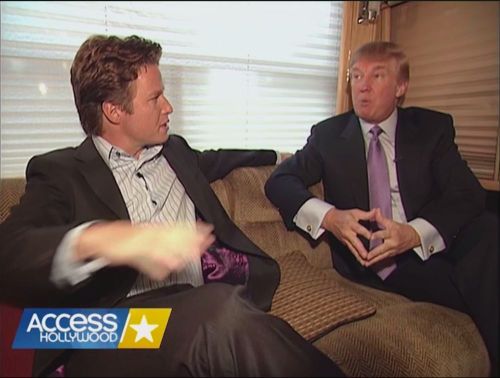
“Trump suggested to a senator earlier this year that [the “Access Hollywood” tape] was not authentic, and repeated that claim to an adviser more recently.”

The New York Times reports:

But something deeper has been consuming Mr. Trump. He sees the calls for Mr. Moore to step aside as a version of the response to the now-famous “Access Hollywood” tape, in which he boasted about grabbing women’s genitalia, and the flood of groping accusations against him that followed soon after. He suggested to a senator earlier this year that it was not authentic, and repeated that claim to an adviser more recently. (In the hours after it was revealed in October 2016, Mr. Trump acknowledged that the voice was his, and he apologized.)

The least controversial interpretation is that Trump is doing what he frequently does: saying something untrue in the face of incontrovertible evidence to the contrary to escape an inconvenient situation. Or, as even Republicans admit, he lies.

But sometimes you wonder, as when candidate Trump said he saw people cheering the attacks on 9/11:

Republican presidential candidate Donald Trump says he saw people cheering the Sept. 11 attacks across the river in New Jersey — a claim officials strongly deny.

Trump first told the story Saturday at a rally in Birmingham, Alabama, as he pressed the need for greater surveillance, including monitoring certain mosques, in the wake of the Paris attacks.

“I watched when the World Trade Center came tumbling down. And I watched in Jersey City, New Jersey, where thousands and thousands of people were cheering as that building was coming down. Thousands of people were cheering,” Trump said Saturday at a rally in Birmingham, Alabama.

Trump repeated the assertion Sunday in an interview with George Stephanopoulos on ABC’s “This Week,” as Stephanopoulos explained to Trump that police had refuted any such rumors at the time.

“It did happen. I saw it,” said Trump. “It was on television. I saw it.”

It was simple to dismiss this as political prevarication. But the sincerity with which he said it might indicate he really did see it, or thought he did. In the current revision of history, he says he no longer believes that he spoke the words that appear to be coming out of his mouth—even though he previously acknowledged it.

So maybe Trump really does now believe he never said the words he is shown saying and admits saying. If that is the case, it is evidence that somehow he is experiencing a break with reality. There is no clinical definition of the term “mental breakdown”, but the clinical conditions related to this sort of break can be exacerbated or triggered by extreme stress. However Trump got himself into his current situation, and whether or not he was predisposed to mental problems before he took office, he is now in a situation that offers little opportunity for a clean escape. It would not be surprising if anyone under that kind of pressure might no longer know the difference between the real and unreal, the true and untrue. If the person is president, the stakes are immeasurably high.

Fake News and Enlightenment

An apple is also a banana.

Maybe all things Trump are good for us.

As with all indignities and suffering, we may want our difficulties to have meaning, meaning that is constructive and helpful. That can be hard and even impossible. Considering some current events as a blessing smacks of shaky rationalization.

In the Trump context, we know what fake news means. It means that reports from reliable sources are not to be believed, no matter how well investigated and substantiated. This can be maddening to intelligent and discerning people. It led to the current CNN campaign, showing that you can call an apple anything you want, including a banana, but it is still an apple. The apple is not fake news.

The Buddhist tradition doesn’t say it is not an apple. Of course it is. But beyond that, what we know is the thought of an apple, as is anything and everything the thought of anything and everything.

To put it another way, the apple is real news. And fake news. A conversation about how the apple is a banana sounds like a conversation you might find in a collection of Zen koans.

All is real news and fake news. Having the concept of fake news in our face can be a reminder of that. Even Trump is real news and fake news. Of course he is president and all that comes with it, some of it actually or potentially dire. But he and all that comes with it, including the dire, are thoughts. That doesn’t make the situation less real, but it may help moves us towards an enlightened perspective on things. Including all things Trump.

Thanksgiving: How to Respond to Grateful and Ungrateful People

We have arrived at a holiday about gratitude, an element of so many traditions. Gratitude helps put us in our place—not so much a place below or beholden to others as a place connected to others.

The historic Huayan school of Buddhism is based on a very long (1200 pages in English translation) and very extravagant text known as the Flower Ornament Sutra. The text and its insights have contributed to the development of many current Buddhist streams.

Taigen Dan Leighton writes:

Among the Huayan tools for bringing the universal into our everyday experience are gathas, or verses, which include many practice instructions to be used as enlightening reminders in all kinds of everyday situations. Specifically, the eleventh chapter of the Flower Ornament Sutra, titled “Purifying Practice,” includes 140 distinct verses to encourage mindfulness in particular circumstances. Some of the following situations are cited: awakening from sleep; before, during, and after eating; seeing a large tree, flowing water, flowers blooming, a lake, or a bridge; entering a house; giving or receiving a gift; meeting teachers, or various other kinds of people; and proceeding on straight, winding, or hilly roads.

All the verses use the situations mentioned to encourage mindfulness and as reminders of the fundamental intention to help ourselves and others more fully express compassion and wisdom.

Among the verses are these two involving grateful and ungrateful people:

Seeing grateful people
They [enlightened beings] should wish that all beings
Be able to know the blessings
Of the Buddhas and enlightening beings.

Seeing ungrateful people
They should wish that all beings
Not increase the punishment
Of those who are bad.

The Flower Ornament Scripture: A Translation of the Avatamsaka Sutra by Thomas Cleary

The first of these verses is straightforward and positive: You see grateful people (you will see many of them at Thanksgiving) and you are reminded to wish that all people know the ways of enlightenment. Everybody feels good, and it all begins with witnessing gratitude.

The second situation might appear to be less positive. You see ungrateful people (you will not see many of them at Thanksgiving, at least not at your table), which may not make you feel good or feel good about them. But instead of feeling bad, you are advised to remember compassion and mercy—“wish that all beings not increase the punishment of those who are bad.”

Hard as it seems, along with giving and getting thanks, you might set aside those “punishments” you have in mind for “those who are bad.” That isn’t exactly gratitude, but it’s a close companion quality. On any Thanksgiving, and maybe on this one in particular.

The Care and Feeding of Cut Flowers

The Care and Feeding of Cut Flowers

No matter how careful
This beauty
Was already dead

©

Do Justice. Love Kindness. Walk Humbly.

Whether you are faithful, less so, or not so at all, you probably recognize the value of a compass.

The Roy Moore situation seems one of the many these days where some people, for various reasons, seem to have lost their compass or even thrown it away.

For people of any faith or none, the words of Micah 6:8 can be one such compass. Nowhere in the Bible is there a more compact directional message. The Jewish Study Bible says, “This didactic saying is one of the most influential and often quoted sayings in prophetic literature. It was considered as a possible compendium of all the mitzvot.”

So for Roy Moore, the people of Alabama, the people of America, here it is:

He has told you, O mortal, what is good;
and what does the LORD require of you
but to do justice, and to love kindness,
and to walk humbly with your God?
Micah 6:8 (NRSV)

Attack of the 50 Foot Woman

We Welcome You to Munchkin Land (aka The Treasury)

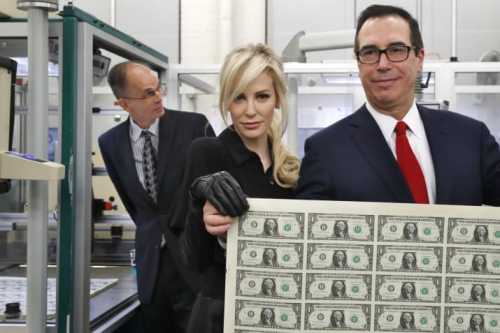
Above, Treasury Secretary Steve Munchkin and his wife proudly inspecting the first newly printed money carrying his signature.

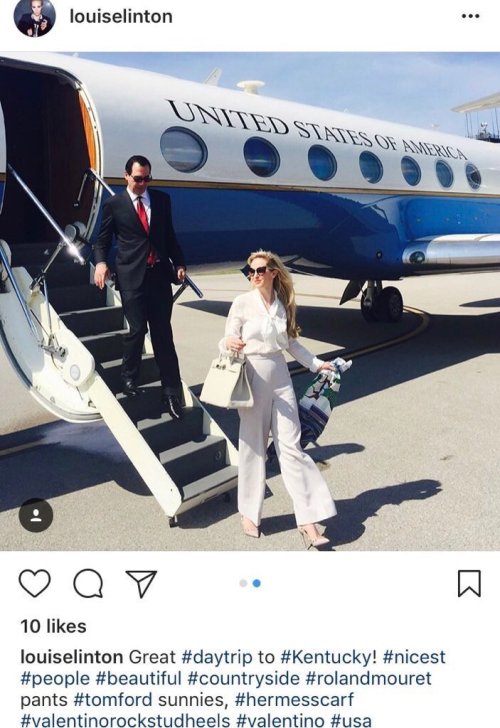
From this past summer, here is the same deliriously happy couple returning from Fort Knox, with fashion annotations by Mrs. Munchkin.

Tra la la la la la la la la.

Is Zero A Number?

O zero
You fool me all the time
Pretending to be something
When you’re nothing

David and Donald: The Men Who Would Be King

For those who think that Donald Trump is on his way to becoming an authoritarian strongman, this is far from the first time in history that some citizens have begged for such a leader—against the best advice. We can go way back, biblically back, to the story of how Israel got a king, first Saul then David—against the biggest advice of all.

Here is a passage from Chapter 8 of 1 Samuel, translated by Robert Alter:

And it happened when Samuel grew old that he set his sons up as judges for Israel. And the name of his firstborn son was Joel and the name of his Secondborn was Abijah—judges in Beersheba. But his sons did not go in his ways and they were bent on gain and took bribes and twisted justice.

And all the elders of Israel assembled and came to Samuel at Ramah. And they said to him, “Look, you yourself have grown old and your sons have not gone in your ways. So now, set over us a king to rule us, like all the nations.” And the thing was evil in Samuel’s eyes when they said, “Give us a king to rule us.” And Samuel prayed to the LORD.

And the LORD said to Samuel, “Heed the voice of the people in all that they say to you, for it is not you they have cast aside but Me they have cast aside from reigning over them. Like all the deeds they have done from the day I brought them up from Egypt to this day, forsaking Me and serving other gods, even so they do as well to you. So now, heed their voice, though you must solemnly warn them and tell them the practice of the king that will reign over them.” And Samuel said all the words of the LORD to the people who were asking of him a king. And he said, “This will be the practice of the king who will reign over you: Your sons he will take and set for himself in his chariots and in his cavalry, and some will run before his chariots. He will set for himself captains of thousands and captains of fifties, to plow his ground and reap his harvest and to make his implements of war and the implements of his chariots. And your daughters he will take as confectioners and cooks and bakers. And your best fields and your vineyards and your olive trees he will take and give to his servants. And your seed crops and your vineyards he will tithe and give to his courtiers and to his servants. And your best male and female slaves and your cattle and your donkeys he will take and use for his tasks. Your flocks he will tithe, and as for you, you will become his slaves. And you will cry out on that day before your king whom you chose for yourselves and he will not answer you on that day.” And the people refused to heed Samuel’s voice and they said, “No! A king there will be over us! And we, too, shall be like all the nations and our king will rule us and go out before us and fight our battles.” And Samuel listened to all the words of the people and he spoke them in the LORD’S hearing.

And the LORD said to Samuel, “Heed their voice and make them a king.”

According to the elders of Israel, divine political direction is how they ended up in the swamp. The sons of Samuel were judges who “did not go in his [Samuel’s] ways and they were bent on gain and took bribes and twisted justice.”

Their proposed solution: drain the swamp by doing what other nations did—appointing and anointing a king.

God disagrees. First, because it reflects a lack of faith. Second, because kings are a bad idea, as listed in his parade of horribles:

This will be the practice of the king who will reign over you: Your sons he will take and set for himself in his chariots and in his cavalry, and some will run before his chariots. He will set for himself captains of thousands and captains of fifties, to plow his ground and reap his harvest and to make his implements of war and the implements of his chariots. And your daughters he will take as confectioners and cooks and bakers. And your best fields and your vineyards and your olive trees he will take and give to his servants. And your seed crops and your vineyards he will tithe and give to his courtiers and to his servants. And your best male and female slaves and your cattle and your donkeys he will take and use for his tasks. Your flocks he will tithe, and as for you, you will become his slaves. And you will cry out on that day before your king whom you chose for yourselves and he will not answer you on that day.

As is typical in Bible stories, God advises and then shrugs when nobody listens. You’re going to do what you want to do anyway, he says, just don’t blame me when it all goes wrong. And wrong it went, as the history of the monarchy demonstrates.

The take-way, which preceded the emergence of modern democracy, is that it may seem that kingship is a good idea, so long as you select the right kind of king rather than the wrong kind. But in the end, that is never the case. You have that on the highest authority.