Bob Schwartz

For a While

For a While

After the desert heat the dusk
with low growl whisper of thunder then
the roar and the cracked sky
emptying the rain.
Every night it will be this way
for a while.
Wall shaking and roof patter
call me out to see what the
matter it is.
Sound light and blessed water
and when I stand skin to air feel
a trickle of cool breeze streaming my way
for a while.

©

Border

Border

The border of melancholy and joy
is the color of washed out orange gray
late sunset in lingering heat.
The playlist alternates
requited longing to despair
with no choice.

©

Reviving the Angel of Friendship

“Everyone has a light burning for him in the world above, and everyone’s light is unique. When two friends meet, their lights above are united, and out of that union of two lights an angel is born. That angel has the strength to survive for only one year, unless its life is renewed when the friends meet again. But if they are separated for more than a year, the angel begins to languish and eventually wastes away.

“That is why a blessing over the dead is made upon meeting a friend who has not been seen for more than a year, to revive the angel. According to the Talmud two friends who have not seen each other for a year say the blessing: ‘Blessed is He who revives the dead.’”

Tree of Souls: The Mythology of Judaism

Moses, Elijah and Jesus (Plus Four) Meet on a Mountain: The Feast of the Transfiguration

The Feast of the Transfiguration is celebrated today in many Christian communities. It marks one of the most fascinating stories reported in the Gospels. From the Gospel of Matthew:

Six days later, Jesus took with him Peter and James and his brother John and led them up a high mountain, by themselves. And he was transfigured before them, and his face shone like the sun, and his clothes became dazzling white. Suddenly there appeared to them Moses and Elijah, talking with him. Then Peter said to Jesus, “Lord, it is good for us to be here; if you wish, I will make three dwellings here, one for you, one for Moses, and one for Elijah.” While he was still speaking, suddenly a bright cloud overshadowed them, and from the cloud a voice said, “This is my Son, the Beloved; with him I am well pleased; listen to him!” When the disciples heard this, they fell to the ground and were overcome by fear. But Jesus came and touched them, saying, “Get up and do not be afraid.” And when they looked up, they saw no one except Jesus himself alone. (Matthew 17:1-8, NRSV)

Among those Christian communities, the transfiguration has been subject to different interpretations:

The Transfiguration refers to the appearance of Jesus to his disciples in glorified form. The three synoptic Gospels record the episode: Matthew 17:1–9; Mark 9:2–10; Luke 9:28–36. Jesus took Peter, James, and John with him onto a mountain. (Tradition locates it on Mount Tabor, but many scholars prefer Mount Hermon.) He appeared there before them in a luminous form with Moses and Elijah at his side. Peter proposed that they build three tabernacles, or tents. A heavenly voice declared Jesus to be the “beloved son” and enjoined the disciples to heed him. Jesus then appeared in his usual form and commanded his disciples to keep silence.

There are various interpretations of the episode. Some view it as a misplaced account of a resurrection appearance. Others view it as a mystical experience that Jesus’ disciples had in his presence. Others as a symbolic account devised by Matthew or the tradition on which his Gospel relied. Whatever its origin, the episode of the Transfiguration serves at the very least as a literary device to place Jesus on the same level as the Law (represented by Moses) and the Prophets (represented by Elijah) and as a foreshadowing of his future glory. He is the authentic source of divine truth for those who would listen to him.

The feast of the Transfiguration originated in the East and became widely celebrated there before the end of the first Christian millennium. The feast was not celebrated in the West until a much later date. Pope Callistus III ordered its celebration in 1457 in thanksgiving for the victory over the Turks at Belgrade on July 22, 1456, news of which reached Rome on August 6. The feast is on the General Roman Calendar and is also celebrated by the Russian and Greek Orthodox Churches, the Church of England, and the Episcopal Church in the USA. (Lives of The Saints: From Mary and St. Francis of Assisi to John XXIII and Mother Teresa by Richard P. McBrien)

However you view this story as a matter of fact, faith or theology, it is a big meeting of some heavy hitters. It begins with Jesus plus three apostles, which is not by itself particularly unusual. Then Moses and Elijah arrive. This meeting now qualifies as a big deal, one of the highest-level conclaves in the Bible. But of course there’s more. God shows up—and speaks. (Note that Moses and Elijah both had experience with this: we aren’t sure what kind of voice Moses heard, but Elijah reportedly heard something still and small.)

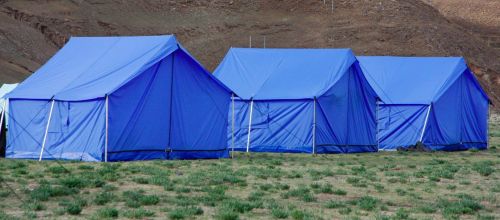
Maybe the most fascinating detail of the story is the offer by the apostles to build three separate tents for Jesus, Moses and Elijah. Some think this is a reference to the Feast of Tabernacles, the Jewish pilgrimage festival at which tents/booths are built. But it seems more a gesture of welcome: You guys have traveled a long way to get here for this meeting; the least we can do is give you someplace to rest and refresh. Would they have gone ahead and built those tents for Moses and Elijah if God had not interrupted? It’s a thought.

More About Compassion Toward Things

These are the creatures and objects that are spoken of as the possessions of this individual: his animals and his walls, his garden and his meadow, his tools and his food. In so far as he cultivates and enjoys them in holiness, he frees their souls. “For this reason a man must always be compassionate toward his tools and all his possessions.”
Martin Buber, The Legend of the Baal Shem Tov

I earlier wrote about the concept of compassion toward your things. Here is a bit more.

What does it mean to be compassionate toward your things, to be “feeling with” them? This is easier to conceive if the thing is something alive like a pet, or something once growing but now picked like some of the food on your plate. But a chair is just a chair; does it really need your compassion to set its soul free?

Could it be that by stretching to find compassion for those things—for all those other things, no matter how insignificant they seem—we are exercising our practice and ability to be compassionate toward everything and everyone all the time? Could it be that by stretching to find the reality of those things, we are exercising our practice and ability to understand everything and everyone all the time?

The Buddhist concept of the trichiliocosm (also known as trisāhasramahāsāhasralokadhātu) “posits that any given thought-moment perfectly encompasses the entirety of reality both spatially and temporally…. the microcosm contains the macrocosm and temporality encompasses spatiality. Thus, whenever a single thought arises, there also arise the myriad dharmas; these two events occur simultaneously, not sequentially.” (Princeton Dictionary of Buddhism):

Trisāhasramahāsāhasralokadhātu. In Sanskrit, literally “three-thousandfold great-thousandfold world system,” but typically translated as “trichiliocosm”; the largest possible universe, composed of (according to some interpretations of the figure) one billion world systems, each of which have a similar geography, including a central axis at Mount Sumeru, four surrounding continents, etc.

In his translation of The Diamond Sutra, Red Pine reflects on a related point:

Chapter 1: One day before noon, the Bhagavan put on his patched robe and picked up his bowl and entered the capital of Shravasti for offerings. After begging for food in the city and eating his meal of rice, he returned from his daily round in the afternoon, put his robe and bowl away, washed his feet, and sat down on the appointed seat. After crossing his legs and adjusting his body, he turned his awareness to what was before him.

In ancient India, the main staple was glutinous rice, which was eaten with the hands by forming it into balls. The term pinda occurs again at the end of the sutra in Chapter Thirty, where it includes the biggest of all lumps: a universe of a billion worlds. This is not accidental, for the practice of charity and the concept of an entity, either compounded of smaller entities or compounding a greater entity, run throughout this sutra. In the chapters that follow, the Buddha takes us through a series of synonyms for the entities of reality and compares the results of offering such things as a ball of rice, a universe of jewels, numberless existences, or a four-line poem.

The Buddha said, “Subhuti, what do you think? Are all the specks of dust in the billion-world-system of a universe many?”

The Buddha turns from this teaching to the sanctuary where this teaching was being taught, namely, the vihara outside Shravasti where both he and Subhuti were sitting. If the teaching of prajna is no teaching, what about the world in which it is taught? The Buddha begins with the smallest perceivable constituents of matter and the largest conceivable entity that they comprise.

Chapter Thirty: “Furthermore, Subhuti, if a noble son or daughter took as many worlds as there are specks of dust in a billion-world universe and by an expenditure of limitless energy ground them into a multitude of atoms, Subhuti, what do you think, would there be a great multitude of atoms?…The Buddha said, “Subhuti, attachment to an entity is inexplainable and inexpressible. For it is neither a dharma nor no dharma. Foolish people, though, are attached.”

All things big and small are locked in an endless sleight of hand in which each negates the reality of the other. And yet we all look for something to grab. Sometimes, we grab the biggest thing we can find. Sometimes, we grab the smallest. The people of Shravasti offered the Buddha balls of rice. Were the balls of rice real, or the grains of rice? The Buddha ate what he found in his bowl. So, too, do Zen masters swallow the world and all its mountains and rivers. And the reason they can do this is because mountains and rivers do not themselves exist but are simply names we give to momentary combinations of causes and conditions that are themselves momentary combinations of causes and conditions: universes made of specks of dust made of specks of dust made of specks of dust that form universes that form universes that form universes. Zen masters swallow names and concepts, while the entities they represent change. Mountains and rivers and the ten-thousand things all change. If they did not, we would be in trouble. We would have no hope of liberation. But because nothing exists as an independent, permanent entity, there are no obstructions on the path to enlightenment. Foolish people, though, refuse to walk this path. They see nothing but obstructions. Buddhas see offerings and turn these offerings into dharmas.

Would the Buddha Trim the Bodhi Tree?

Back in December on Bodhi Day (the celebration of the Buddha’s enlightenment), I gave myself a present:

This Bodhi Day, I gifted myself a bodhi tree, just like the one that the Buddha was sitting under when he was enlightened. Almost just like it. This bonsai ficus religiosa is about 8 inches high, so I will not be sitting under it.

I’ve taken good care of this very hardy bonsai and it has grown well. That leaves me with a conundrum. The aesthetics of bonsai includes appropriate trimming to maintain a certain balance. But each time I consider taking scissors to growth, I stop. If it grows lush and green, let it grow.

Then I thought of the Buddha’s own Bodhi tree. There are no tales of his considering trimming that tree. That doesn’t mean he didn’t think about it—or not think about it.

So, as I continue to water this beautiful little tree, a new koan appears: Would the Buddha trim the Bodhi tree?

Trump Tweets to the Soccer Ball When He Misses Putin

The mystery of the soccer ball that Putin gave to Trump has been solved. The ball does contain a transmitter, but only for nearby phones.

It is now so clear. Trump can access secret videos from Putin broadcast from the ball. And when Trump really misses Putin but can’t get him on the phone, Trump can tweet to the ball as if Putin were right there with him.

Isn’t love grand!

Bloomberg:

Russian President Vladimir Putin’s gift of a soccer ball to U.S. President Donald Trump last week set off a chorus of warnings — some of them only half in jest — that the World Cup souvenir could be bugged. Republican Senator Lindsey Graham even tweeted, “I’d check the soccer ball for listening devices and never allow it in the White House.”

It turns out they weren’t entirely wrong. Markings on the ball indicate that it contained a chip with a tiny antenna that transmits to nearby phones.

But rather than a spy device, the chip is an advertised feature of the Adidas AG ball. Photographs from the news conference in Helsinki, where Putin handed the ball to Trump, show it bore a logo for a near-field communication tag. During manufacturing, the NFC chip is placed inside the ball under that logo, which resembles the icon for a WiFi signal, according to the Adidas website.

The chip allows fans to access player videos, competitions and other content by bringing their mobile devices close to the ball.

Trump Turns to a Depression-era Solution to Help the Farmers He Is Hurting

Library of Congress, Farm Foreclosure Sale in Iowa, ca. 1930-1940

Washington Post:

White House readies plan for $12 billion in emergency aid to farmers caught in Trump’s escalating trade war

The U.S. Agriculture Department on Tuesday plans to announce a $12 billion package of emergency aid for farmers caught in the midst of President Trump’s escalating trade war, two people briefed on the plan said, the latest sign that growing tensions between the United States and other countries will not end soon….

The money would be extended just as voters in some of the most heavily impacted states are preparing to cast votes in the midterm elections. There are several key Senate races in farm dependent states like Missouri, North Dakota, and Indiana this November, and the outcome of those races could determine who controls the chamber next year.

The White House has searched for months for a way to provide emergency assistance to farmers without backing down on Trump’s trade agenda, and the new program will extend roughly $12 billion through three mechanisms run by the Department of Agriculture.

The funds will come through direct assistance, a food purchase and distribution program, and a trade promotion program. It will rely in part on a Depression-era program called the Commodity Credit Corporation, a division of the Agriculture Department created in 1933 to offer a financial backstop for farmers.

So the damage Trump is doing to farmers with his unnecessary and universally condemned trade war is potentially so great that he is turning to a solution from the Depression. Whether you call that telling, ironic or simply surreal, it is just one more milestone on a road to American parts strange and unknown—or more likely a road to nowhere.

To faithful Trump supporters: God doesn’t hate you but Satan loves you

The Trump administration said yesterday that 463 parents separated from their children at the southern border were no longer in the United States, having likely already been deported.

This is part of an announced plan to use border separations as a way to discourage migrants from coming to America. It is a sort of terrorism. What could be more terrorizing to a parent than the threat of being separated from your child forever?

Theology seems to play a major role in support for Trump among a number of faithful Americans. We frequently hear, for example, that Trump’s election was part of God’s plan. So that whatever Trump’s shortcomings relative to Christian morality, God still approves, and so should we.

Looking at the tragic border policy that Trump is pursuing and can’t (and doesn’t want to) fix, and the fact that hundreds of children will unnecessarily never see their parents again, it is worth thinking about theology.

What if God doesn’t really care about our elections? Frankly, God might beneficially stay as far away as possible from that nonsense and focus on more important human situations.

But Satan, that’s another story. Sowing chaos and tragedy is his stock in trade. How better to crush true faith than to disguise every evil impulse and inclination as the embodiment of good? In this scheme, separating loving parents from children appears not just as a good idea but as a divine directive. Trump couldn’t do better if he was working for Satan himself.

Trump: “The good news is that your favorite President did nothing wrong!”

Inconceivable that the government would break into a lawyer’s office (early in the morning) – almost unheard of. Even more inconceivable that a lawyer would tape a client – totally unheard of & perhaps illegal. The good news is that your favorite President did nothing wrong!
— Donald J. Trump (@realDonaldTrump) July 21, 2018

Trump is not even my 45th favorite President. My favorite Presidents (out of 45):

46. Donald Trump

Also:

The government didn’t “break into” Michael Cohen’s office, home and hotel room. It was properly executing a difficult-to-obtain search warrant.

New York is a one-party recording state, that is, the permission of only one of two parties is needed to legally record a conversation.

The New York City Bar Association advises that a lawyer may tape a conversation without disclosing to the other party “if the lawyer has a reasonable basis for believing that disclosure of the taping would impair pursuit of a generally accepted societal good.”

We know that Trump does not understand or respect the proper administration of justice or “generally accepted societal good.” Which is just one more reason he is my 46th favorite President.