Bob Schwartz

Ray of Light: Trump’s Pardoning May Be Like a Slot Machine

The likelihood of any individual being pardoned by Trump will be affected by Trump’s craziness, unreliability and lack of loyalty. It will be like a slot machine. And that may be a good thing for justice and the rule of law.

Even though I have long accepted that Trump would try to pardon almost everyone who is charged or convicted in the course of the investigation, Paul Manafort’s plea agreement to cooperate raises an encouraging insight:

If you were one of the dozens of people who are getting caught in this net, facing possible years in prison, and Trump told you to your face—not just through an intermediary, not just through hints on Twitter—that you could expect a pardon, would you believe him and depend on him to keep his word?

Of course you wouldn’t believe him and depend on him to keep his word. Which means, just like Manafort, you have to hedge your bets. It is possible that if you agree to cooperate, Trump might still pardon you. On the other hand, if you agree to cooperate, Trump might go crazy and refuse to pardon you. And in the worst case, you might stonewall and take your punishment, but because of some crazy voices in Trump’s head, he might still refuse to pardon you. Who knows? With Trump it’s a roll of the dice, a spin of the slots. As a defendant, are you willing to bet ten or twenty years of your life on a Looney Tunes character? I bet not.

 

Key

Key

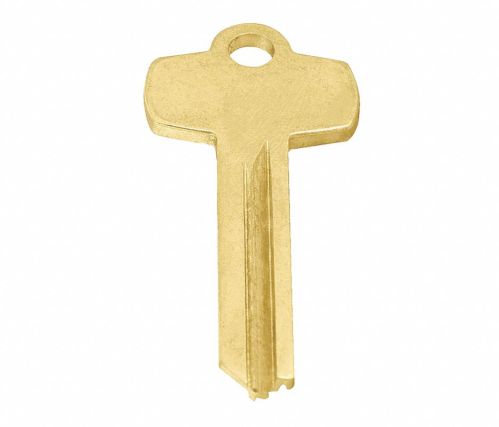
When you leave take the key
even for a few steps out the front door
out the back.
What if the door locks behind you?
Even if there’s someone inside
to hear you knocking pounding
ringing calling.
What if she locks it
not knowing where you are?
What if she needs help
and you are locked out helpless?
What if she knows and decides
that this trip to the trash
should be your last?
Only a few possibilities
there are more
prevented by that key in pocket.
One man’s prudence
built on irrefutable logic
is an observer’s key to personality.
What of it?
Analysis is theory
being locked out an inconvenient fact.
Take the key.

“Afghanistan’s Charlie Chaplin says he aims to make people smile, forget grief”

“His live performances provide respite in a city that routinely gets attacked by Taliban insurgents and suicide bombers, mainly claiming allegiance to Islamic State.”

For those who think that they have troubles in their lives and in their nation, or that laughing doesn’t help, or that one person can’t make a difference, even if just a small and temporary one, for your consideration:

Reuters:

Afghanistan’s Charlie Chaplin says he aims to make people smile, forget grief

KABUL (Reuters) – Afghanistan’s Charlie Chaplin says he has witnessed suicide attacks, explosions and threats from hardline Islamic militant groups, but is determined to waddle and bumble to fulfill the primary goal of his life.

“It is very simple, I want to give Afghans a reason to smile,” said Karim Asir, a stand-up comedian who performs across the capital Kabul in Chaplin’s trademark oversized shoes, baggy pants, cane and black bowler hat.

Asir, 25, said Chaplin impersonators are found all over the world helping people ignore grief and making them laugh, and he does the same.

Asir’s early years were in Iran, where his family fled after the hardline Taliban took control of Afghanistan in 1996. There he saw performances of Chaplin on Iranian TV.

After the family returned home, Asir started wearing make-up and recreating Chaplin’s characters in his performances, despite his parent’s apprehensions.

His live performances provide respite in a city that routinely gets attacked by Taliban insurgents and suicide bombers, mainly claiming allegiance to Islamic State.

Asir says he has been threatened by militants who say his performances are un-Islamic. But despite the threats, he performs in public parks, orphanages, private parties and at charity events organized by international aid agencies.

“I want to give my people a chance to forget their problems such as war, conflicts and insecurity in Afghanistan,” he said.

In Kabul, when Asir’s fans surround him to take selfies, he smiles but is constantly worried about attacks.

“I am afraid of getting attacked by a suicide bomber or an explosion but these issues cannot stop me from being Charlie Chaplin,” he said.

Rosh Hashanah 5779 – Abraham Joshua Heschel on Repentance

In the realm of spirit, there is no difference between a second and a century, between an hour and an age. Rabbi Judah the Patriarch cried: “There are those who gain eternity in a lifetime, others who gain it in one brief hour.” One good hour may be worth a lifetime; an instant of returning to God may restore what has been lost in years of escaping from Him. “Better is one hour of repentance and good deeds in this world than the whole life in the world to come.” (Avot 4:22)
Abraham Joshua Heschel, The Sabbath

Ben Franklin: My University of Pennsylvania Should Revoke Trump’s Diploma

“By the way this idiot Woodward who wrote this book which is all fiction said that I said something like that, but he put it in a crude manner…The concept is true, but the way it was said was very…hey, I went, like, to the best college.”
Trump at a North Dakota rally

Trump self-importantly crows about his degree from Wharton (like all the time), the business school of the University of Pennsylvania in Philadelphia. Trump’s point is that he must be, like, a genius with that Penn degree. Penn, is, like, a very good school that continues to provide its students with an excellent education. Though in some small number of high-profile cases, it appears to be casting pearls before swine.

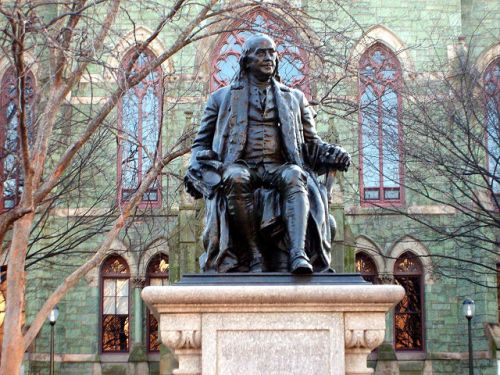
The bigger point is Ben Franklin, credited as founder of the university. Above is a photo of the Ben Franklin statue at the center of campus, in front of College Hall.

Penn has tried to walk a fine line in its relationship with Trump, and with other members of his family who have attended Penn. Just as the sins of the father should not be visited on children, the sins of the alumnus should not be visited on a college. Penn did the best it could, given what it had to work with.

Ben Franklin is having none of it. Among our American founders, he is the most famous for not suffering fools. That’s why he is asking the University of Pennsylvania—his University of Pennsylvania—to revoke Trump’s diploma. That won’t stop Trump from continuing to say he went, like, to the best college, but it will give the best college a way to say: thanks for the compliment and PR, but no thanks. And it will give Ben Franklin a way to stop spinning in his grave, just a few blocks from Independence Hall. Because this is not what he envisioned for the first-ever Penn grad in the White House. Not, like, at all.

The History Test: If the Bob Woodward book doesn’t convince Republicans to remove the president, history will brand them accomplices to disaster

The new Bob Woodward book Fear: Trump in the White House was expected to be explosive. It turns out to be much more than that.

The official book release date isn’t until next week, but the media have it today. Just from the first reports and the mind-boggling quotes from his senior staff and advisers, it is a startling picture—painted by those working closest to him—of presidential incompetence, ignorance, incivility and instability. It is not just a dangerous leadership morass unprecedented in American history; it is unprecedented in the history of world powers. (Which is to say, even the most vile dictators have been clever and knowledgeable, if not downright brilliant.)

Over the coming days, there will be a flood of quotes and reports from the book, followed next week by its public availability. Those who already know the president’s disabilities will still be astonished and even more dismayed. Those partisans who refuse to acknowledge those disabilities will try pointlessly to discredit Woodward—even though he is the dean of American investigative journalists, even though he has recordings of all his many interviews. As for the president, this may be the one that triggers the inevitable total meltdown, which is tempting to consider as a neon billboard to Republicans, but which none of us can wish for as long as he is in the Oval Office.

What now, what next?

As previously noted, even if some Republicans miraculously admit that the president should leave office, and even if Democrats take over one or both houses of Congress in January, the options for preventing damage or disaster are limited. Removal from office by impeachment requires a simple majority of the House but two-thirds majority of the Senate. Removal from office by the 25th Amendment is even more daunting, involving the agreement of the Vice President and the cabinet. And all of that takes time, allowing the incompetent, ignorant, uncivil and unstable president to stay in the White House.

But at least there’s this: When the president asks, “Who are you going to believe, me or your lying eyes?”, we can just throw the book at him.

Colin Kaepernick in new Nike ad campaign: “Believe in something. Even if it means sacrificing everything.”

Colin Kaepernick for Nike

ESPN:

Colin Kaepernick is back — at least as far as Madison Avenue is concerned.

The former NFL quarterback, who is suing NFL owners for colluding to keep him out of the league, is one of the faces of a new Nike campaign meant to commemorate the 30th anniversary of the brand’s iconic “Just Do It” motto.

The new ad, which Kaepernick shared on social media Monday afternoon, features the message: “Believe in something. Even if it means sacrificing everything.”

Nike signed Kaepernick in 2011 and kept him on its endorsement roster over the years. The company had not used him in the past two years.

“We believe Colin is one of the most inspirational athletes of this generation, who has leveraged the power of sport to help move the world forward,” Gino Fisanotti, Nike’s vice president of brand for North America, told ESPN.

Other athletes in the “Just Do It” campaign include Odell Beckham Jr., Shaquem Griffin, Lacey Baker, Serena Williams and LeBron James.

“We wanted to energize its meaning and introduce ‘Just Do It’ to a new generation of athletes,” Fisanotti said.

Fisanotti said the new version of the campaign is meant to specifically speak to 15- to 17-year olds.

Kaepernick’s protests of racial injustice — which began in August 2016 with sitting and later kneeling during the national anthem — launched a movement across the NFL. No team signed him as a free agent in 2017.

Sure Nike has mixed motives in running this campaign. One of them is to sell shoes. But they are paying their money to communicate an important American message and story. Kaepernick stood up by kneeling, and paid a price, but set a movement in motion. Nike may pay a price for standing up too.

So consider buying a pair of Nikes, even if you don’t want new shoes or their shoes. Consider investing in Nike (NKE), even if you don’t buy stock or want their stock. We need more Americans like Colin Kaepernick and more American companies like Nike to stand up in the face of some ugly and oppressive winds. “Believe in something. Even if it means sacrificing everything.” That’s an American message to be repeated and lived. Just do it.

Wordsworth: The World Is Too Much With Us

The World Is Too Much With Us
by William Wordsworth

The world is too much with us; late and soon,
Getting and spending, we lay waste our powers;—
Little we see in Nature that is ours;
We have given our hearts away, a sordid boon!
This Sea that bares her bosom to the moon;
The winds that will be howling at all hours,
And are up-gathered now like sleeping flowers;
For this, for everything, we are out of tune;
It moves us not. Great God! I’d rather be
A Pagan suckled in a creed outworn;
So might I, standing on this pleasant lea,
Have glimpses that would make me less forlorn;
Have sight of Proteus rising from the sea;
Or hear old Triton blow his wreathèd horn.

Note:

We are the people of more or all.

We have never before been able to have so many different things and to tell so many different people about so many different things. We have never been able to want so many different things and to hear from so many people about so many different things. Things include not only material, but events, experiences and ideas.

We may try to have, want, say, hear it all, or as much as possible. We may believe that we are the fortunate beneficiaries of living in this unprecedented situation, and that even the occasional imbalance is outweighed by finally being the people of more or all. Anyway, we are just taking advantage of inevitable progress, are we not? Why shouldn’t just a hint about the next iPhone be a milestone in our lives, making it a major global news story?

Writing more than two hundred years ago, William Wordsworth was in a long line of those who have suggested—begged—that we get our priorities in order and look for relief from a condition we don’t even know we are suffering from. His prescription was Nature, which stands in more broadly for consciousness of the deep essence of existence. We can have more or all, already may have more or all, if we look in the right places.

Big and Small People

Thinking this morning about the disgraceful way Trump is treating John McCain at the time of his death—no different than the disgraceful way Trump treated him in the final days of his fatal illness—this came to mind: Trump is a small, small person.

That’s appropriate, but what exactly does “small person” mean?

I think it means small of spirit. Our traditions urge us to be bigger of spirit. Not just better, though that might be nice, but bigger. As big as whatever we conceive the biggest to be.

There is a small, hard and dark place inside of us. Small, but we can live there, once in a while, for a little while, or in the case of some people, most or all of the time.

The traditions want to get us into a bigger space with unlimited dimensions. So big that it encompasses everybody and everything. That doesn’t mean that we care about everybody and everything or act in ways consistent with such universal care. Nor does it mean that the small, hard and dark place inside dissolves and disappears. It just means that some of the time, more and more of the time if possible, you live in the space of the bigger spirit. That’s all.

The small, small person is the one trapped in that small, hard and dark place. You may be disturbed that you have to hear about such people, but you should be hopeful and joyful that it is not you.

Dean Chamberlain: Light Paintings of Elder Psychedelic Pioneers

Timothy Leary © Dean Chamberlain

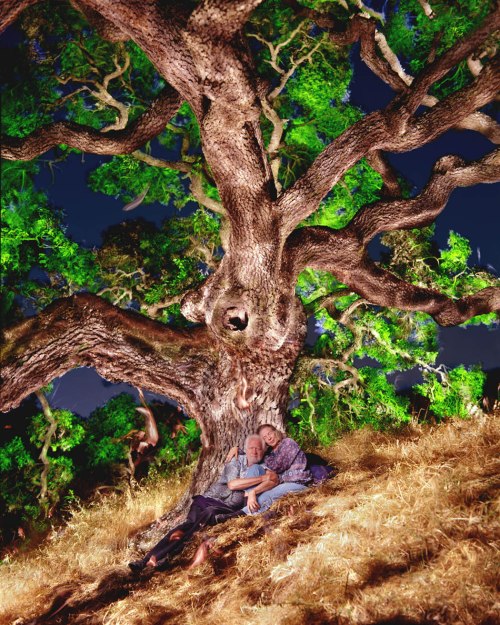
Dean Chamberlain is an extraordinary photographic artist. He works in a technique known as light painting, using hand-held lights to illuminate and color a scene photographed in long exposure. While versions of the technique have been known and used since the early days of photography, Dean was the first artist to work exclusively in the medium.

From Light Painting Photography:

Dean Chamberlain is the father of light painting photography and has been capturing photographs since 1967. It was his passion for photography that led him to the Rochester Institute of Technology in 1974 to pursue a fine art degree. During Dean’s time at Rochester in 1977 he discovered light painting photography. Dean was the first person to coin the term “Light Painting” for his open shutter long exposure photographic technique. He has worked with his unique art form ever since in his various works. Dean has created stunning portraits of well-known individuals such as David Bowie and Paul McCartney. He has also directed numerous music videos. Chamberlain’s work has appeared in publications such as Esquire, Vanity Fair and the Washington Post. He has received an MTV breakthrough award for directing music videos for Arcadia (Missing), Paul McCartney (This One) and Duran Duran (All She Wants Is).

Along with light painting rock stars, landscapes and other subjects, Dean created a unique series called Elder Psychedelic Pioneers. This includes Timothy Leary, Albert Hofmann, Alexander Shulgin, and others—many of whom have now passed on.

Albert Hofmann © Dean Chamberlain


Alexander and Ann Shulgin © Dean Chamberlain


Laura Huxley © Dean Chamberlain