Bob Schwartz

The Far Mosque

The Far Mosque

The place that Solomon made to worship in,
called the Far Mosque, is not built of earth
and water and stone, but of intention and wisdom
and mystical conversation and compassionate action.

Every part of it is intelligent and responsive
to every other. The carpet bows to the broom.
The door knocker and the door swing together
like musicians. This heart sanctuary
does exist, though it cannot be described.

Solomon goes there every morning
and gives guidance with words,
with musical harmonies, and in actions,
which are the deepest teaching.
A prince is just a conceit,
until he does something with his generosity.

Rumi
translated by Coleman Barks

Four Reliances: How to Discern the Real Thing

When it comes to teachings and texts, when it comes to our own thoughts and conclusions, how can we tell the authentic from the inauthentic, the worthy from the unworthy?

The Buddha spoke and taught, and many of those discourses were recorded or remembered by those close to him. But over the centuries, as those discourses were passed along, changes were inevitably made. Later others spoke in the Buddha’s name, and still others spoke on their own, with the Buddha as guide and inspiration. The same can be said within other traditions.

How are we determine what is the real thing—not just in Buddhism, not just in religion, but in all facets of our lives?

Buddhism developed the universally useful Four Reliances to help in this quest and questioning. Whether you are reading a scripture from different traditions, or texts of any kind on any subject, or are hearing the news of current events, these are valuable guidelines.

Here is the succinct formulation from Red Pine, found in his translation and commentary on the Heart Sutra.

Rely on the teaching and not the author
Rely on the meaning and not the letter
Rely on the truth and not the convention
Rely on the knowledge and not the information

“Donald Trump is laying the groundwork to de-legitimize the 2020 election.”

There are two kinds of daily bad news about Trump:

Things he says or does.

Reasonable speculation, based on what he says or does, about what he might do in the future.

This speculation by Chris Cilliza is in that second category. It is both chilling and plausible:

Donald Trump is laying the groundwork to de-legitimize the 2020 election
Chris Cillizza, CNN Editor-at-large

Even as the 2020 race begins in earnest, President Donald Trump is already suggesting that Democrats cannot beat him fairly — raising the specter that if he loses next November, he will suggest that the election was not legitimate.

“The Democrats in Congress yesterday were vicious and totally showed their cards for everyone to see,” Trump tweeted Tuesday, referring to House Democrats’ launching of a broad-scale investigation into him. “When the Republicans had the Majority they never acted with such hatred and scorn! The Dems are trying to win an election in 2020 that they know they cannot legitimately win!”

Trump 2020 campaign press secretary Kayleigh McEnany echoed that sentiment in a statement on the Democratic investigations. “These desperate Democrats know they cannot beat President Trump in 2020, so instead they have embarked on a disgraceful witch hunt with one singular aim: topple the will of the American people and seize the power that they have zero chance at winning legitimately,” she said….

This is straight from the Trump blueprint — and not just in politics, either. In his past life as a businessman, Trump would regularly declare victory on a deal loudly and publicly — even when the facts didn’t bear out his bluster….

In the business world, that approach was mostly harmless. Trump could say whatever he wanted but, at the end of the day, it was pretty clear who won and who lost a deal. Money, usually, changed hands. And while lots of people Trump dealt with rolled their eyes about his massive exaggerations, they usually just ignored them.

In politics, Trump’s inability to accept that he could lose fair and square is far, far more dangerous.

Michael Cohen, Trump’s former longtime fixer, said as much during his congressional testimony in front of the House Oversight Committee last month. “Given my experience working for Mr. Trump, I fear that if he loses the election in 2020, that there will never be a peaceful transition of power,” said Cohen.

Sit with that for a minute. And realize what it would mean if the sitting incumbent President of the United States simply refuses to concede he has lost in 2020.

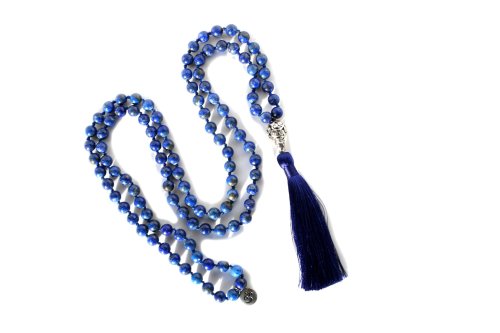
Around the Worlds in 108 Beads (mala)

Around the Worlds in 108 Beads (mala)

Each bead a smooth and perfect sphere
Lustrous blue with floating continents of gray
My finger lingers then travels on
To a different world the same
I circumnavigate the strand of 108
Ten thousand splendid worlds within
Ten thousand splendid worlds
I have been to all and none
Beads in mind beads in hand

©

Note: A mala is a strand of 108 beads used in Buddhism and other traditions for chanting, contemplation and meditation. The mala can be carried, or can be worn as a necklace or bracelet. The beads are made from a variety of materials, including gemstones, wood and bone.

Malas are beautiful and powerful. I carry a short mala of 54 tiger’s eye beads in my pocket, the same pocket in which I carry my phone. When I reach for my phone, I am reminded that however wondrous that digital marvel appears to be, it is no match for a strand of beads.

MeruBeads is a premier maker of malas. The lapis lazuli mala pictured above is just one of the many they craft and sell. Please visit.

Dance

Dance

Soon the thin window glass
Will try to keep out the desert heat
Now it stands between the morning chill
Either way the birds sing through
Lay down the mat and cushion
Sit not waiting for enlightenment
When the gong rings
It’s time to dance

©

Chuang Tzu: Helping the Big Thief steal our baggage and government

Chuang Tzu/Zhuangzi (c. 369-286 BCE) is identified as author of one of the great texts of Taoism. While scholars believe that Lao Tzu, reputed author of the Tao Te Ching, never actually existed, Chuang Tzu was likely an historical figure, though he certainly did not write all of the chapters attributed to him. No matter. His always entertaining and insightful creativity has been vastly influential, not only on Taoism but on much of eastern and more recently western thought.

Chapter 10, variously entitled in English Broken Suitcases or Baggage Gets Stolen, makes a point relevant to current events: the more you devise complex technologies or complex governments, the more possible it will be for the Big Thief to steal them and use them against us. Just as the Big Thief, faced with fancy locks on a suitcase, will simply haul the locked suitcase away. Or steal the government. Pertinent insight for someone writing over 2,000 years ago, not to mention in China. (As an aside, any educational curriculum that in 2019 does not include study of Chuang Tzu, Tao Te Ching and I Ching is less than half baked.)


From The Book of Chuang Tzu, translated by Martin Palmer:

CHAPTER 10

Broken Suitcases

To guard yourself against thieves who slash open suitcases, rifle through bags and smash open boxes, one should strap the bags and lock them. The world at large knows that this shows wisdom. However, when a master thief comes, he simply picks up the suitcase, lifts the bag, carries off the box and runs away with them, his only concern being whether the straps and locks will hold! In such an instance, what seemed like wisdom on the part of the owner surely turns out to have been of use only to the master thief!…

Long ago in the state of Chi, all the little towns could see each other and the cockerels and dogs called to each other. Nets were cast and the land ploughed over an area of two thousand square miles. Within its four borders, ancestral temples were built and maintained and shrines to the land and the crops were built. Its villages and towns were well governed and everything was under the guidance of the sage. However, one morning Lord Tien Cheng killed the ruler and took his country. But was it just his country he took? He also took the wisdom of the laws of the state, created by the sages. So Lord Tien Cheng earned the title of thief and robber, but he was able to live out his days as secure as Yao or Shun had done. The smaller states dared not criticize him and the larger states did not dare attack. So for twelve generations his family ruled the state of Chi. Is this not an example of someone stealing the state of Chi and also taking the laws arising from the wisdom of the sages and using them to protect himself, although he was both robber and thief?

If those in authority search for knowledge, but without the Tao, everything under Heaven will be in terrible confusion. How do I know about all this? A great deal of knowledge is needed to make bows, crossbows, nets, arrows and so forth, but the result is that the birds fly higher in distress. A great deal of knowledge is needed to make fishing lines, traps, baits and hooks, but the result is that the fish disperse in distress in the water. A great deal of knowledge is needed to make traps, snares and nets, but the result is that the animals are disturbed and seek refuge in marshy lands. In the same way, the versatility needed to produce rhetoric, to plot and scheme, spread rumors and debate pointlessly, to dust off arguments and seek apparent agreement, is also considerable, but the result is that the people are confused. So everything under Heaven is in a state of distress, all because of the pursuit of knowledge.

Everything in the world knows how to seek for knowledge that they do not have, but do not know how to find what they already know. Everything in the world knows how to condemn what they dislike, but do not know how to condemn what they have which is wrong. This is what causes such immense confusion. It is as if the brightness of the sun and moon had been eclipsed above, while down below the hills and streams have lost their power, as though the natural flow of the four seasons had been broken. There is no humble insect, not even any plant, that has not lost its innate nature. This is the consequence for the world of seeking after knowledge. From the Three Dynasties down to the present day it has been like this. The good and honest people are ignored, while spineless flatterers are advanced. The quiet and calm of actionless action is cast aside and pleasure is taken in argument. It is this nonsense which has caused such confusion for everything under Heaven.

(emphasis added)

The Buddha Endorses Poetry

Gatha: A metrical unit of Indian verse that can be anywhere from two to six lines in length. It is sometimes used as a stand-alone poem and sometimes to restate preceding sections of prose.

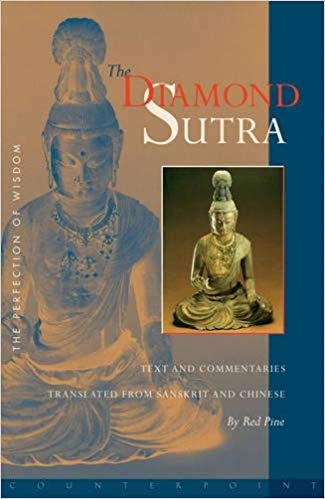
From The Diamond Sutra, Chapter Thirty-two, translation and commentaries by Red Pine:

The Buddha speaks:

”Furthermore, Subhuti, if a fearless bodhisattva filled measureless, infinite worlds with the seven jewels and gave them as an offering to the tathagatas, the arhans, the fully-enlightened ones, and a noble son or daughter grasped but a single four-line gatha of this teaching of the perfection of wisdom and memorized, discussed, recited, mastered, and explained it in detail to others, the body of merit produced as a result would be immeasurably, infinitely greater.”

Red Pine writes:

The Buddha returns to the comparison he has made throughout this sutra, whereby an offering of the most valuable objects in the world is compared to an offering of a single poem that expresses the truth. As the extent and value of material offerings have steadily increased, the fearless bodhisattva has been presented as the most likely member of the Buddha’s audience to understand the greater value of a good poem. How ironic that at the end of this sutra, the merit of a fearless bodhisattva fails to compare to that of an ordinary person. For even a fearless bodhisattva can become attached to the net of jewels of an illusory world. But the message the Buddha wants to leave with his audience is that the body of merit synonymous with the Buddha’s own diamond body is accessible to anyone, that such a body is a four-line gatha away.

A Week Without News

I get the news I need on the weather report.
Paul Simon, The Only Living Boy in New York

I spent a week mostly without news. Some days I saw a brief topline summary, some days none. I didn’t read headlines, I didn’t click on headlines. I didn’t listen to talking heads telling me what happened, I didn’t listen to talking heads analyzing what the other talking heads said.

I lived to tell. And I feel good.

News that affects your life or the lives of those within your circle of care (which for some people encompasses the world) is worth knowing about. Much of the rest of the information may be interesting and stimulating, may be fodder for thought or conversation or tweets, but questions remain: How does it affect your life? How much, if anything, can you do to affect the things you hear about? Is simply seeking and hearing this news somehow making you or your life worse? Is there something—anything—else you could be doing, hearing, thinking that would be better than paying attention to the news?

The news is with us always. You don’t have to hide from it, you don’t have to seek it. Just try to keep it in its place.

Without Labels

Labels harm us as much as they help us. They may destroy us. Social, cultural, political, religious, intellectual labels. Even as we use labels as shorthand that helps us identify our friends and our kind and our foes and our others, we are mistaken. They keep us from reality, keep us from the rewarding but hard work of knowing more and deeply, keep us apart. Labels are as much weapons and disabilities as they are conveniences.

Can we live without labels? In some circumstances they appear to us essential. Don’t we want to know, and want others to know, what party or cause or religious denomination or ethnicity or gender we associate with? We may want that, and we may find benefit in it, but as with most benefits, they may be illusory and they have a cost.

Dogen was the 13th century founder of the Soto Zen school of Buddhism. It is one of the many schools and sects that were developing during Dogen’s time and that have developed during the centuries since.

He fiercely opposed the naming of schools of Buddhism, Zen or otherwise:

In this way, know that the buddha way that has been transmitted from past buddhas is not called Zen meditation, so how could there be the name “Zen School”? Clearly understand that it is an extreme mistake to use the name “Zen School.” Those who are ignorant assume that there is an “existence school” and an “emptiness school.” They feel bad not having a special name as a school, as if there is nothing to study. But the buddha way is not like that. It should be determined that in the past there was no such name as “Zen School.”
The Buddha Way, from Treasury of the True Dharma Eye

The first verse of the Tao Te Ching addresses the way that naming may keep us from the reality of things:

A name that can be named
is not The Name
tr. Jonathan Star

The name you can say
isn’t the real name.
tr. Ursula Le Guin

Names that can be Named
Are not True Names.
tr. John Minford

the name that becomes a name
is not the Immortal Name
tr. Red Pine (Bill Porter)

Red Pine continues: “During Lao-tzu’s day, philosophers were concerned with the correspondence, or lack of it, between name and reality. The things we distinguish as real change, while their names do not. How then can reality be known through names?”

The only wall that matters to Trump is the almost-completed wall around his executive branch

When Trump took office, he assumed that everyone he appointed to an executive branch job was on his team—that they would support whatever he did and said, do whatever he wanted, no questions asked, no backtalk or criticism, public or private. If it ever came to a choice between Trump and “doing the right thing”, the team members would choose him, just as his staff had at the Trump Organization.

He quickly discovered it did not always work that way. And so among his other strategies, he saw that he would have to purge all those whose unconditional loyalty was beyond question, and replace them with those who, for whatever reasons (incompetence, ideology, need for job or job security, etc.), would toe the line.

These replacement players would be a compliant, sycophantic part of the wall—the wall Trump has almost completed around his executive branch. In the Justice Department, for example, Sessions and Comey are gone, as Rosenstein soon will be. The same has happened elsewhere, time and again.

This Trump wall, unlike the one at the southern border, will work, at least for a while. Built with the solid powers of the presidency, the wall won’t be easily gotten around or broken through. With all his glaring deficiencies, Trump knows one thing: how to protect himself. This wall around the executive branch will do just that.