Bob Schwartz

Emerson and Thoreau: Make America Transcendentalist Again

Ralph Waldo Emerson (1803–1882) and Henry David Thoreau (1817–1862) are the most famous members of the mid-nineteenth century intellectual movement known as American Transcendentalism. Few read Emerson or Thoreau these days, unless it is a class requirement, and even then it is doubtful that much attention is paid. (Maybe the hip-hop Hamilton treatment would help.)

We have a crying need to know these American thinkers. In their time, the promise of America was being compromised. Some Americans were tired of being preached at by overzealous, narrow-minded and hypocritical religionists. Some were not being sufficiently nourished by the current culture. Some seemed to be following each other or the latest trend like sheep. Times like these are times like those. So a look back and revival of Emerson and Thoreau might not be a bad idea.


Whoso would be a man, must be a nonconformist. He who would gather immortal palms must not be hindered by the name of goodness, but must explore if it be goodness. Nothing is at last sacred but the integrity of your own mind….

What I must do is all that concerns me, not what the people think. This rule, equally arduous in actual and in intellectual life, may serve for the whole distinction between greatness and meanness. It is the harder because you will always find those who think they know what is your duty better than you know it. It is easy in the world to live after the world’s opinion; it is easy in solitude to live after our own; but the great man is he who in the midst of the crowd keeps with perfect sweetness the independence of solitude.

Ralph Waldo Emerson, Self-Reliance


Colleges, in like manner, have their indispensable office—to teach elements. But they can only highly serve us when they aim not to drill, but to create; when they gather from far every ray of various genius to their hospitable halls, and by the concentrated fires, set the hearts of their youth on flame. Thought and knowledge are natures in which apparatus and pretension avail nothing. Gowns and pecuniary foundations, though of towns of gold, can never countervail the least sentence or syllable of wit. Forget this, and our American colleges will recede in their public importance, whilst they grow richer every year.

Ralph Waldo Emerson, The American Scholar


I observe that in our political elections, where this element, if it appears at all, can only occur in its coarsest form, we sufficiently understand its incomparable rate. The people know that they need in their representative much more than talent, namely the power to make his talent trusted. They cannot come at their ends by sending to Congress a learned, acute and fluent speaker, if he be not one who, before he was appointed by the people to represent them, was appointed by Almighty God to stand for a fact—invincibly persuaded of that fact in himself—so that the most confident and the most violent persons learn that here is resistance on which both impudence and terror are wasted, namely faith in a fact. The men who carry their points do not need to inquire of their constituents what they should say, but are themselves the country which they represent; nowhere are its emotions or opinions so instant and true as in them; nowhere so pure from a selfish infusion….

A healthy soul stands united with the Just and the True, as the magnet arranges itself with the pole; so that he stands to all beholders like a transparent object betwixt them and the sun, and whoso journeys towards the sun, journeys towards that person. He is thus the medium of the highest influence to all who are not on the same level. Thus men of character are the conscience of the society to which they belong.

Ralph Waldo Emerson, Character


Our life is frittered away by detail. An honest man has hardly need to count more than his ten fingers, or in extreme cases he may add his ten toes, and lump the rest. Simplicity, simplicity, simplicity! I say, let your affairs be as two or three, and not a hundred or a thousand; instead of a million count half a dozen, and keep your accounts on your thumb-nail. In the midst of this chopping sea of civilized life, such are the clouds and storms and quicksands and thousand-and-one items to be allowed for, that a man has to live, if he would not founder and go to the bottom and not make his port at all, by dead reckoning, and he must be a great calculator indeed who succeeds. Simplify, simplify….

The nation itself, with all its so-called internal improvements, which, by the way, are all external and superficial, is just such an unwieldy and overgrown establishment, cluttered with furniture and tripped up by its own traps, ruined by luxury and heedless expense, by want of calculation and a worthy aim, as the million households in the land; and the only cure for it, as for them, is in a rigid economy, a stern and more than Spartan simplicity of life and elevation of purpose. It lives too fast. Men think that it is essential that the Nation have commerce, and export ice, and talk through a telegraph, and ride thirty miles an hour, without a doubt, whether they do or not; but whether we should live like baboons or like men, is a little uncertain. If we do not get out sleepers, and forge rails, and devote days and nights to the work, but go to tinkering upon our lives to improve them, who will build railroads? And if railroads are not built, how shall we get to Heaven in season? But if we stay at home and mind our business, who will want railroads? We do not ride on the railroad; it rides upon us….

Hardly a man takes a half-hour’s nap after dinner, but when he wakes he holds up his head and asks, “What’s the news?” as if the rest of mankind had stood his sentinels. Some give directions to be waked every half-hour, doubtless for no other purpose; and then, to pay for it, they tell what they have dreamed. After a night’s sleep the news is as indispensable as the breakfast. “Pray tell me anything new that has happened to a man anywhere on this globe,”—and he reads it over his coffee and rolls, that a man has had his eyes gouged out this morning on the Wachito River; never dreaming the while that he lives in the dark unfathomed mammoth cave of this world, and has but the rudiment of an eye himself….

Shams and delusions are esteemed for soundest truths, while reality is fabulous. If men would steadily observe realities only, and not allow themselves to be deluded, life, to compare it with such things as we know, would be like a fairy tale and the Arabian Nights’ Entertainments. If we respected only what is inevitable and has a right to be, music and poetry would resound along the streets. When we are unhurried and wise, we perceive that only great and worthy things have any permanent and absolute existence, that petty fears and petty pleasures are but the shadow of the reality. This is always exhilarating and sublime. By closing the eyes and slumbering, and consenting to be deceived by shows, men establish and confirm their daily life of routine and habit everywhere, which still is built on purely illusory foundations.

Henry David Thoreau, Where I Lived and What I Lived For
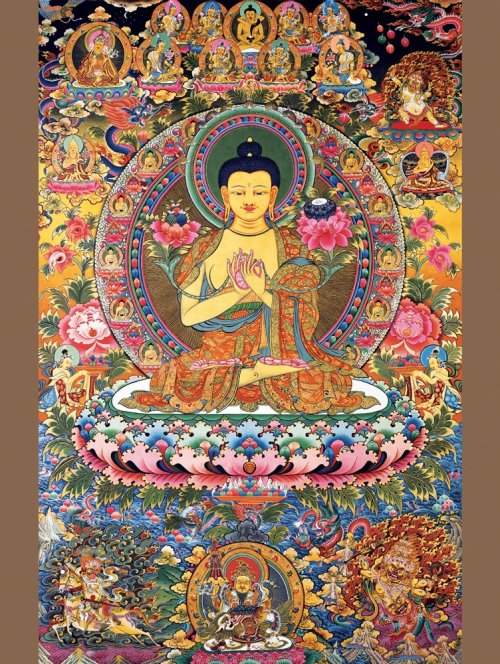
Bodhi Day

“Bodhi literally means ‘awakening’, but is commonly translated as ‘enlightenment’. It denotes the awakening to supreme knowledge, as experienced by the Buddha as he sat under the Bodhi Tree at the age of 35.”
Buddhist Translation Society

Today is Bodhi Day, marking the enlightenment of the Buddha. It is not merely a reminder of something that happened. It is an inspiration for what can happen. Difficult, not necessarily achievable, but possible. Or maybe not only achievable but actual.

Millions of words have been spoken by, attributed to or written about the Buddha.

Here are a few.


If the mad mind stops, its very stopping is bodhi.
Śūraṅgama Sutra, Buddhist Text Translation Society


It is said that soon after his enlightenment the Buddha passed a man on the road who was struck by the Buddha’s extraordinary radiance and peaceful presence. The man stopped and asked, “My friend, what are you? Are you a celestial being or a god?”

“No,” said the Buddha.

“Well, then, are you some kind of magician or wizard?” Again the Buddha answered, “No.”

“Are you a man?”

“No.”

“Well, my friend, then what are you?” The Buddha replied, “I am awake.”

Teachings of the Buddha, Jack Kornfeld


The morning of the Buddha’s enlightenment at the foot of the bodhi tree, he was so surprised. He had been meditating for the whole night. In the early morning, at the moment when he saw the morning star, he declared, “How strange! Everyone has the capacity to be awake, to understand, and to love. Yet they continue to drift and sink on the ocean of suffering, life after life.”
Sutra on the Middle Way, Thich Nhat Hanh


The back of your hand is affliction, and the palm of your hand is bodhi. Realizing bodhi is just like flipping your hand from back to palm. When you turn affliction around, it’s bodhi. Afflictions are the same as bodhi. Birth and death are the same as nirvana. If you understand, then afflictions are bodhi. If you don’t understand, then bodhi is affliction. Bodhi isn’t outside of afflictions, and there are no afflictions outside the scope of enlightenment. And so I very often cite the analogy of water and ice. If you pour a bowl of water over a person’s body, even if you use a lot of force, you still won’t hurt the person. However, if the bowl of water has turned into ice and you hit the person in the head with it, the person may very well die. Bodhi is like the water; afflictions are like the ice. If you melt ice, it becomes water; when you freeze water, it becomes ice.
Flower Adornment Sutra, Buddhist Text Translation Society

Peyote Pilgrims

“Imaginatione and historie are a fine paire.”
Made up old-fashioned quote

Some believe that the accounts of the first Thanksgiving feast in 1621 have been sanitized to leave out an extraordinary detail. Somehow, it is thought by some, the Native Americans at Plymouth had traded for peyote from Southwestern tribes and shared it with the colonists at that famous three-day meal.

First, here’s the version we have, from Edward Winslow in Mourt’s Relation, published in 1622:

Our harvest being gotten in, our governor sent four men on fowling, that so we might after a special manner rejoice together after we had gathered the fruits of our labor. They four in one day killed as much fowl as, with a little help beside, served the company almost a week. At which time, amongst other recreations, we exercised our arms, many of the Indians coming amongst us, and among the rest their greatest king Massasoit, with some ninety men, whom for three days we entertained and feasted, and they went out and killed five deer, which we brought to the plantation and bestowed on our governor, and upon the captain and others. And although it be not always so plentiful as it was at this time with us, yet by the goodness of God, we are so far from want that we often wish you partakers of our plenty.

The omitted mention of psychedelics explains much. For example, the outlandish hats and clothing we associate with the pilgrims in fact did not exist in that community. Instead, it is possible that those in the midst of an experience began sketching the ridiculous fashions they thought they saw. “Tall hats with buckles,” William Bradford said. “Oh wow, such hats reflect our reaching to heaven.” “Awesome!” the others who were still capable of speaking might have exclaimed.

Happy Thanksgiving (yes, we all still call the holiday that).

Dawn, again

Dawn, again

The first sip of light
can be so sweet
wonder waiting
untold possibility
once more
no promises
not even a seen sun
just a slip of blue gray
unnamed day

© Bob Schwartz

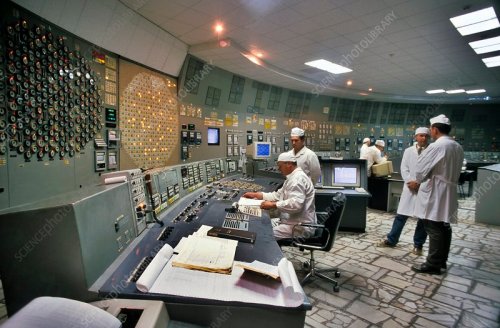
America is a nuclear plant in meltdown

Chernobyl control room

Nuclear plants are immeasurably powerful and potentially dangerous. To run properly and safely they require strict systems and conscientious people. When the systems or people fail, the power is set chaotically free. Disaster follows.

America is right at that point, though we are assured, and assure ourselves, that this is a ridiculously exaggerated metaphor, and concern should not proceed to panic. We have no historical precedent for the worst, at least not here. We believe that the Constitution, the laws, and the essential goodness and wisdom of people in power and citizens make a meltdown impossible.

What if our optimism is wrong? What if our confidence in systems and people is tragically misplaced? What, if anything, can and should we do?

The Second Coming at 100: “Things fall apart; the centre cannot hold”

It has been 100 years since William Butler Yeats wrote his poem The Second Coming, in the wake of World War I and in the early days of the Irish War of Independence. It is an unsurpassed observation of a descent into societal darkness, as order passes and chaos reigns.

It is no wonder that its phrases are some of the most borrowed by writers over the past century: “Things fall apart; the centre cannot hold”; “The best lack all conviction, while the worst/Are full of passionate intensity”; “what rough beast, its hour come round at last,/Slouches towards Bethlehem to be born?”. Once we have read the poem, the lines force themselves on us when our lesser attempts to describe the most dire circumstances fail.

The Second Coming

Turning and turning in the widening gyre
The falcon cannot hear the falconer;
Things fall apart; the centre cannot hold;
Mere anarchy is loosed upon the world,
The blood-dimmed tide is loosed, and everywhere
The ceremony of innocence is drowned;
The best lack all conviction, while the worst
Are full of passionate intensity.

Surely some revelation is at hand;
Surely the Second Coming is at hand.
The Second Coming! Hardly are those words out
When a vast image out of Spiritus Mundi
Troubles my sight: somewhere in sands of the desert
A shape with lion body and the head of a man,
A gaze blank and pitiless as the sun,
Is moving its slow thighs, while all about it
Reel shadows of the indignant desert birds.
The darkness drops again; but now I know
That twenty centuries of stony sleep
Were vexed to nightmare by a rocking cradle,
And what rough beast, its hour come round at last,
Slouches towards Bethlehem to be born?

William Butler Yeats (1919)

A Face in the Crowd: A Media Star Demagogue Takes Himself Down

“Those morons out there? Shucks, I could take chicken fertilizer and sell it to them as caviar. I could make them eat dog food and think it was steak.”

“This whole country’s just like my flock of sheep! They’re mine! I own ’em! They think like I do. Only they’re even more stupid than I am, so I gotta think for ’em.”

“Good night you stupid idiots. Good night, you miserable slobs. They’re a lot of trained seals. I toss them a dead fish and they’ll flap their flippers.”

A Face in the Crowd (1957) is a movie about an unlikely backwoods media star, a drifter named Lonesome Rhodes, who becomes a national populist icon. He believes he can sell his followers on anything, including who the next president should be.

The demagogic scheme falls apart when his real beliefs are broadcast on an open microphone.

***

ACTOR ON RHODES’ SHOW: You really sell that stiff [Senator Fuller] as a man among men?

LONESOME RHODES: Those morons out there? Shucks, I could take chicken fertilizer and sell it to them as caviar. I could make them eat dog food and think it was steak. Sure, I got ’em like this… You know what the public’s like? A cage of guinea pigs. Good night you stupid idiots. Good night, you miserable slobs. They’re a lot of trained seals. I toss them a dead fish and they’ll flap their flippers.

***

LONESOME RHODES: This whole country’s just like my flock of sheep!

MARCIA JEFFRIES: Sheep?

LONESOME RHODES: Rednecks, crackers, hillbillies, hausfraus, shut-ins, pea-pickers – everybody that’s got to jump when somebody else blows the whistle. They don’t know it yet, but they’re all gonna be ‘Fighters for Fuller’. They’re mine! I own ’em! They think like I do. Only they’re even more stupid than I am, so I gotta think for ’em.

***

Critical times are tough tests for lawyers. Some pass, some fail.

Lawyers are sworn officers of the courts of their respective states and federal jurisdictions. They take a solemn oath. They take that oath because as citizens we give them substantial power as officers of the court. As Spiderman (not a lawyer) reminds us, with great power comes great responsibility.

In normal times it is hard enough for lawyers to balance all the interests surrounding them—professional, personal, political. In abnormal and critical times—like these—lawyers may be pushed to pick a lane. The onerous professional demands, as embodied in the oath, may be in conflict with other interests, including ambition, success and ideology.

In previous posts, I’ve mentioned a few examples of times in which lawyers chose poorly. One is the case of attorneys involved in Watergate, almost two dozen of whom ended up being punished and sanctioned.  Another is Hans Frank, a brilliant attorney known as Hitler’s Lawyer.  There are many other infamous examples.

The number of lawyers involved in current events, as principals or as advocates, is growing exponentially. It will only expand as dark matters surrounding the president get deeper and more serious. Please keep this in mind as this drama unfolds.

Here is an example of an oath, one taken by attorneys in the State of Washington:


OATH OF ATTORNEY

I do solemnly declare:

I am fully subject to the laws of the State of Washington and the laws of the United States and will abide by the same.

I will support the constitution of the State of Washington and the constitution of the United States.

I will abide by the Rules of Professional Conduct approved by the Supreme Court of the State of Washington.

I will maintain the respect due to the courts of justice and judicial officers.

I will not counsel, or maintain any suit, or proceeding, which shall appear to me to be unjust, or any defense except as I believe to be honestly debatable under the law, unless it is in defense of a person charged with a public offense. I will employ for the purpose of maintaining the causes confided to me only those means consistent with truth and honor. I will never seek to mislead the judge or jury by any artifice or false statement.

I will maintain the confidence and preserve inviolate the secrets of my client, and will accept no compensation in connection with the business of my client unless this compensation is from or with the knowledge and approval of the client or with the approval of the court.

I will abstain from all offensive personalities, and advance no fact prejudicial to the honor or reputation of a party or witness unless required by the justice of the cause with which I am charged.

I will never reject, from any consideration personal to myself, the cause of the defenseless or oppressed, or delay unjustly the cause of any person.


The Torah Begins Again: A Big Nothing or A Big Something?

Whether or not you believe in religion, God, Judaism or the Torah, it is exciting that the annual cycle of Torah reading begins again with the first words of Genesis. A Big Nothing? A Big Something that becomes a different Big Something? Who knows? Who even knows what it says?

Here, a few different translations and comments from some brilliant scholars.


GENESIS 1:1-2

בְּרֵאשִׁ֖ית בָּרָ֣א אֱלֹהִ֑ים אֵ֥ת הַשָּׁמַ֖יִם וְאֵ֥ת הָאָֽרֶץ׃

הַמָּֽיִם׃ וְהָאָ֗רֶץ הָיְתָ֥ה תֹ֙הוּ֙ וָבֹ֔הוּ וְחֹ֖שֶׁךְ עַל־פְּנֵ֣י תְה֑וֹם וְר֣וּחַ אֱלֹהִ֔ים מְרַחֶ֖פֶת עַל־פְּנֵ֥י


When God began to create heaven and earth, and the earth then was welter and waste and darkness over the deep and God’s breath hovering over the waters

Note:

welter and waste. The Hebrew tohu wabohu occurs only here and in two later biblical texts that are clearly alluding to this one. The second word of the pair looks like a nonce term coined to rhyme with the first and to reinforce it, an effect I have tried to approximate in English by alliteration. Tohu by itself means “emptiness” or “futility,” and in some contexts is associated with the trackless vacancy of the desert.

hovering. The verb attached to God’s breath-wind-spirit (ruaḥ) elsewhere describes an eagle fluttering over its young and so might have a connotation of parturition or nurture as well as rapid back-and-forth movement.

Robert Alter, The Hebrew Bible: Translation with Commentary


When God began to create heaven and earth—the earth being unformed and void, with darkness over the surface of the deep and a wind from God sweeping over the water—

Note:

A tradition over two millennia old sees 1.1 as a complete sentence: “In the beginning God created the heavens and the earth.” In the 11th century, the great Jewish commentator Rashi made a case that the verse functions as a temporal clause. This is, in fact, how some ancient Near Eastern creation stories begin—including the one that starts at 2.4b. Hence the translation, When God began to create heaven and earth.

This clause describes things just before the process of creation began. To modern people, the opposite of the created order is “nothing,” that is, a vacuum. To the ancients, the opposite of the created order was something much worse than “nothing.” It was an active, malevolent force we can best term “chaos.” In this verse, chaos is envisioned as a dark, undifferentiated mass of water. In 1.9, God creates the dry land (and the seas, which can exist only when water is bounded by dry land). But in 1.1–2.3, water itself and darkness, too, are primordial (contrast Isa. 45.7). In the midrash, Bar Kappara upholds the troubling notion that the Torah shows that God created the world out of preexistent material. But other rabbis worry that acknowledging this would cause people to liken God to a king who had built his palace on a garbage dump, thus arrogantly impugning His majesty (Gen. Rab. 1.5). In the ancient Near East, however, to say that a deity had subdued chaos is to give him the highest praise.

The Jewish Study Bible (Second Edition)


In the beginning of God’s creating the skies and the earth —when the earth had been shapeless and formless, and darkness was on the face of the deep, and God’s spirit was hovering on the face of the water—

Note:

the earth had been: Here is a case in which a tiny point of grammar makes a difference for theology. In the Hebrew of this verse, the noun comes before the verb (in the perfect form). This is now known to be the way of conveying the past perfect in Biblical Hebrew. This point of grammar means that this verse does not mean “the earth was shapeless and formless”—referring to the condition of the earth starting the instant after it was created. This verse rather means that “the earth had been shapeless and formless”—that is, it had already existed in this shapeless condition prior to the creation. Creation of matter in the Torah is not out of nothing (creatio ex nihilo), as many have claimed. And the Torah is not claiming to be telling events from the beginning of time.

shapeless and formless: The two words in the Hebrew, th and bh, are understood to mean virtually the same thing. This is the first appearance in the Torah of a phenomenon in biblical language known as hendiadys, in which two connected words are used to signify one thing. (“Wine and beer” [Lev 10: 9] may be a hendiadys as well, or it may be a merism, a similar construction in which two words are used to signify a totality; so that “wine and beer” means all alcoholic beverages.) The hendiadys of “th and bh,”plus the references to the deep and the water, yields a picture of an undifferentiated, shapeless fluid that had existed prior to creation.

Richard Elliott Friedman, Commentary on the Torah


At the beginning of God’s creating of the heavens and the earth, when the earth was wild and waste, darkness over the face of Ocean,

Note:

At the beginning…: This phrase, which has long been the focus of debate among grammarians, is traditionally read “In the beginning God created the heavens and the earth.” B-R agrees. I have followed several medieval commentaries, and most moderns, in my rendition.

When the earth…: Gen. 1 describes God’s bringing order out of chaos, not creation from nothingness. Wild and waste: Heb. tohu va-wohu, indicating “emptiness.” Ocean: The primeval waters, a common (and usually divine) image in an ancient Near Eastern mythology.

Everett Fox, The Five Books of Moses


When God was about to create heaven and earth, the earth was a chaos, unformed, and on the chaotic waters’ face there was darkness.

Note:

When God was about to create (b’reishit bara elohim); other translations render this: “In the beginning God created.” Our translation follows Rashi, who said that the first word would have been written (ba-rishonah, at first) if its primary purpose had being to teach the order in which creation took place. Later scholars used the translation “In the beginning” as proof that God created out of nothing (Latin: ex nihilo), but it is not likely that the biblical author was concerned with the question of matter’s origin.

W. Gunther Plaut, The Torah: A Modern Commentary (Revised Edition)


In the beginning when God created the heavens and the earth, the earth was a formless void and darkness covered the face of the deep, while a wind from God swept over the face of the waters.

Note:

In the beginning when God created, or “When God began to create.” The grammar of this temporal clause was clarified by the medieval Jewish commentator Rashi, who noted that the Hebrew word for “beginning” (reshit) requires a dependent relation—it is the “beginning of” something—and can be followed by a verb. The traditional rendering, “In the beginning, God created,” dates to the Hellenistic period (as in the Septuagint), when these details of classical Hebrew grammar had been forgotten. The idea of creatio ex nihilo (Latin, “creation out of nothing”) is dependent on the later rendering. In the original grammar, creation is a process of ordering and separation that begins with preexisting chaotic matter.

This disjunctive clause portrays the primordial state as a dark, watery chaos, an image similar to the primordial state in Egyptian, Mesopotamian, and Greek traditions. Unlike these other traditions, the chaos here is not a god or gods, but mere matter. The wind from God is he only divine substance and seems to indicate the incipient ordering of this chaos (cf. the role of God’s wind in initiating the reversal of watery chaos in 8.1).

The HarperCollins Study Bible


In the beginning when God created the heavens and the earth, the earth was a formless void and darkness covered the face of the deep, while a wind from God swept over the face of the waters.

Note:

Scholars differ on whether this verse is to be translated as an independent sentence summarizing what follows (e.g., “In the beginning God created”) or as a temporal phrase describing what things were like when God started (e.g., “When God began to create . . . the earth was a formless void”; cf. 2.4–6). In either case, the text does not describe creation out of nothing (contrast 2 Macc 7.28). Instead, the story emphasizes how God creates order from a watery chaos.

New Oxford Annotated Bible

Thunder and Lightning, Fire and Ice

The wheel is turning and you can’t slow down
You can’t let go and you can’t hold on
You can’t go back and you can’t stand still
If the thunder don’t get you then the lightning will
Jerry Garcia, The Wheel

Some say the world will end in fire,
Some say in ice.
From what I’ve tasted of desire
I hold with those who favor fire.
But if it had to perish twice,
I think I know enough of hate
To say that for destruction ice
Is also great
And would suffice.
Robert Frost, Fire and Ice