Bob Schwartz

Category: Uncategorized

I Did Not Know That

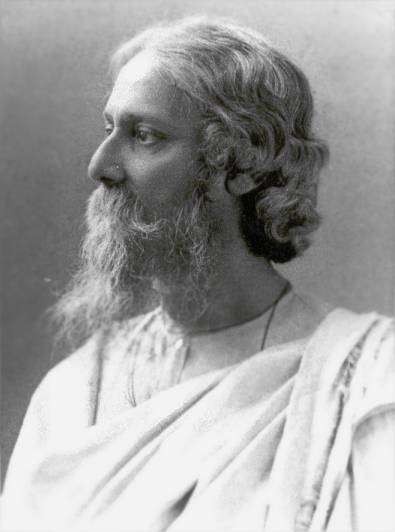
Rabindranath Tagore
The Nobel Prize-winning poet and playwright Rabindranath Tagore wrote, “If you shut the door to all errors, truth will be shut out.”

There is a corollary: If you think you know it all, truth will be shut out.

Smart people are busy people. They gather knowledge for a lot of reasons—to help complete projects they are working on, to help solve puzzles that perplex them, or sometimes, simply because they are curious and interested in people and the world. But busyness demands a sort of instant knowledge filtering, where information is quickly classified as something not helpful or, frequently, something already known.

That last one is a funny thing. It may seem that what you hear or read is knowledge you already have, and easy to dismiss. But maybe there’s a small spin, a tiny different take, a detail that sheds surprising light on something you thought you knew. No matter how smart you are—or think you are—it can happen.

That’s why, as far as practical, one of the more enlightening ways to go about is ignorant, assuming you know little or nothing. Of course you know things, some very complex things, and that helps you get through your days and your life. You want to build on your knowledge base, and with limited time, you can’t spend it hearing about what you already know.

And yet…that person or thought you are tuning out, because it is something you think you already know, something you can’t waste your valuable time hearing, might be just the thing to advance your work, to solve that puzzle. Think about it. All you had to believe and say is this: I did not know that.

No Lessons Today


MSNBC is running the NBC News broadcast of the events of September 11, 2001 in real clock-time. That is, when it was 9:59am on that date, it is 9:59am today.

Today we have an eleven-year knowledge advantage. Where there was ignorance and speculation about exactly what was going on, we know much more for certain.

We are so stunned still that we are struck silent, but not quite silent. We want to make sense of our tragedies public and private. We don’t just want explanations. We want lessons.

We have more than enough smart talking heads to make articulate, insightful statements. Not to mention those other smart people who have devised strategies to respond, some more popular and effective than others.

And then again there is silence. For a few hours on that day, professional journalists combined with first responders and horrified citizens to say everything that could be said in the moment, maybe all that needs to be said today.

It’s okay to stand dumb. Just for a day.

Father’s Day of Forgiveness


Among fathers who aren’t indifferent or hostile to the artifice, many seem happy to accept a day set aside for the appreciation they may or may not get the rest of the year.

But that premise is limited and distant from a certain reality. Being a father is very complicated, and looking back on the experience can be as troubling as it is sweet. You can survey the stacks of achievements and regrets, or you can just accept the reality that we did what we did, we were  who we were, in the face of forces for which guidance and history is of limited utility.

Among all that is a realization that whether or not there are things we did right or wrong, there are definitely things for which forgiveness might be sought. You may think that Father’s Day could be a time for imperfect children (all of them) to seek forgiveness of fathers. That is the completely wrong direction. It is a time for imperfect fathers (all of them) to get the appreciation they deserve—for better or worse. And when it is for worse, it follows that forgiveness will be sought—and hopefully granted. Father’s Day is a free pass. Father’s Day is a day of forgiveness.

Hallmark doesn’t have a card for this, but with the greeting card industry, who knows?: Please Forgive Me Son. Happy Father’s Day.

Labor, Loyalty and Law Day


It is May 1, and there is no Google search page gimmick for it. Probably because it is hard for Google to know exactly which May 1 to celebrate.

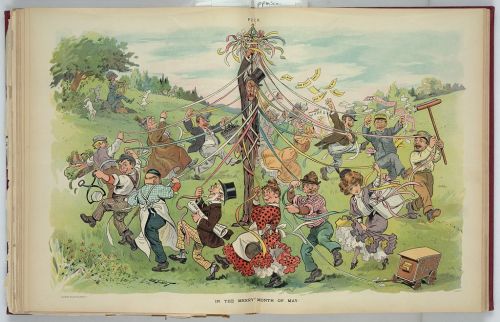
May Day has been for ages a universal celebration of spring, with sprightly traditions including dancing around the Maypole. Then it took a darker, more serious turn, becoming International Workers’ Day (Labor Day), a commemoration of the bloody death of workers at the Haymarket Riot in Chicago in 1886. To counter this populist/communistic direction, in 1921 it became Loyalty Day (originally Americanization Day), with Congress and President Eisenhower officially affirming this in 1959 at the height of the Cold War. Almost simultaneously, in 1958 the President also declared May 1 to be Law Day.

May Day remains all this and whatever else you choose to make of it. Consider these virtues: the importance of labor and economic justice, the value of deserved loyalty, the significance of the rule of law, and the joys of spring that make all of them worthwhile. If you miss May 1, May 2 or every other day will do for working on all these and for dancing, with or without a Maypole.

Mean-ing

For those who wonder whether meanness is a sin or vice, you can start with Summa Theologica by St. Thomas Aquinas, where Question 135 addresses the issue. Or you could ask your parents or your elementary school teachers or your spouse or your children: It’s not nice to be mean.

Which should make us think about why rampant meanness is not only acceptable, but encouraged, entertaining, and profitable. Cheaters may never prosper (though they often do), but meaners are doing very well these days.

Saying that all things virtuous seem to be dying and on life support is an overstatement that doesn’t get us far. Instead, four possible explanations of how what was once a private disturbance has become such a pandemic, a public poison:

Meanness by proxy: All art and performance is based on the ability and willingness of creators to express what we can’t or won’t. It would be nice to think that we only long to be the one who can move people to tears or laughter, inspire people to reach higher, and if we can’t be those creators, at least they are doing that for us. The same thing unfortunately applies to darker messaging, though. We may not be able to attack quite so sharply and eloquently, but we appreciate that someone can. “Yeah, what he said!”

Meanness as superiority: This is a subset of meanness by proxy. There’s perversity in enjoying the meanness of others, but at the same time taking pride in being one who would never say something like that because…we are better than that and would never be so mean. (Whatever the theological status of meanness, by the way, pride is definitely on all the lists of sins.)

Meanness as incompetent and faulty criticism: This is the explanation of meanness as sub-juvenile behavior. When little children aren’t sure why they hate somebody or something, or can’t articulate it, they revert to name-calling and indiscriminate meanness: “You’re a poo-poo head!” It’s a fantastic dream that one day, thanks to some spell, the most gratuitously mean would be magically forced to speak only such childish epithets.

Meanness unconditioned by a thought/speech barrier: The thought/speech barrier, the wall that should keep many thoughts from ever being spoken, is dissolving. Whether phenomena such as Twitter are causal, enabling, or merely symptomatic is beside the point. Thought moves from brain to mouth (or keyboard) at the speed of synapse. Mean heart becomes mean words in a literal instant.

There is a genuine critical function, which can be exercised with thoughtfulness, care, and respect. That simple sentence, a foundation of a free, enlightened society, is looking particularly quaint, and seems for many to have lost its meaning.

Otherism

At any moment in America, some portion of the population believes in and is engaged in otherism towards those not like themselves or whom they do not like. The proportion varies, the degree varies, the targeted others vary. It may be race, ethnicity, religion, geography, age, gender, sexual preference, class, wealth, anything. It has been that way, here and everywhere, and it will be that way.

What we can do, the best we can do, is try to shrink the proportion of the population acting on these tendencies, reduce the degree, lower the number of targets. At least we can change the mechanics built into the system, and allow others to do what anyone does, and to be free to be who anyone is. As for the hearts and minds of otherists, that is a farther reach, but ongoing awareness and open discussion is a start.

This is in the context of, a prelude to, a very brief comment on the Trayvon Martin case. There are only two certainties there: Trayvon Martin was shot dead by George Zimmerman and it is in some ways about race. Racism is the primary—though not sole—form of otherism in America. It is our curse, our karma, the legacy of a misguided enterprise that fed right into a tendency toward otherism. Progress is not so much a matter of two steps forward, one step back on a road. It is more like a chaotic, entropic society that wants to be better, if not good, but finds itself spinning around a dark past that throws orbits off kilter by its powerful gravity.

We constantly need to know where we are so we can make corrections, however slight. There was the election of a black President, and now there is this case. Let’s see how we do.