Bob Schwartz

Category: Uncategorized

Is America’s Past Better Than Anybody Else’s Future?

Millions of Americans believe that America’s past is better than anybody else’s future—including America’s own. That is inherent in an obsessive turning away from progress, from failing to adapt to twenty-first century (or even twentieth century) realities, and a strong longing for the comfortable but mythical past.

The irony is that civilizations with much more history than the U.S.—the youngest of all global powers—have had a much better time moving boldly and successfully into the future. This doesn’t mean that countries East and West have met all or most of the Herculean challenges they may face. And it doesn’t mean that there aren’t people there looking back to the “good old days.” But for the most part, these countries have avoided being distracted by the substantial complexities of who and what they were, and focused on balancing that with who and what they can and must become.

The substantial past of some of those countries may actually be the antidote to nostalgia that has allowed those nations to move forward. After so many centuries of arguments between the backward-lookers and the forward-lookers, the very practical argument wins: seeing where you are going is the best way to avoid crashes, falling off cliffs, or just standing still while everyone else advances around you.

Maybe what America needs is a few more centuries of arguments, where the reactionaries and regressives hold sway and drive the nation into a crash or off a cliff. Maybe then America will know what the older heads in the world already know—that evolution moves forward and not back (if you believe in any kind of evolution), that you have to keep your eyes open, that you have to adapt or die. Unfortunately, those of us alive today, standing by helpless, won’t be able to enjoy the fruits of that learning. We may only be here for the hard lessons.

Why O.J. Matters

National Enquirer - O.J.

The National Enquirer has dropped an O Bomb:

Shocking bombshell evidence that proves OJ committed double homicide and  where he may have hidden the murder weapon REVEALED!

O.J. SIMPSON is shaken to the core because bombshell evidence that proves he murdered his ex-wife and her friend is hidden in his $500,000 Florida home – and it’s all about to be discovered because the house is headed for the auction block on Oct. 29.

The home has been in foreclosure, and the disgraced football star, now impris­oned in Nevada, is terrified that the new owner will discover the items – the knife used in the gruesome murders and the de­signer shoes that left bloody tracks around his former wife’s lifeless body.

Should anyone care? The families of the murder victims Nicole Brown Simpson and Ron Goldman might. O.J.’s own family might.

Nobody else should, but that doesn’t mean that O.J. doesn’t matter. His sensational and ridiculous 1995 murder trial is as culturally significant as any event of the generation—including Watergate and 9/11. Saying that does not invest it with any substantive importance, the kind that those and other profound events have. The O.J. trial is the birthplace of the modern media era, and practically everything that rational people don’t like about the current environment owes its origins to that.

Half of America watched some part of the trial. The “shocking” acquittal was by the end beside the point. The fact is that tens of millions of Americans, an unforgettable cast of characters (most of whom are now forgotten) and a mammoth of media conspired to make something colossal out of something not nearly as big. (Not entirely forgotten characters though: In an irony-defining development, the late Robert Kardashian was integrally involved in the events and helped defend O.J. In the spirit of making something out of nothing, Kardashian is now best known as the father of Kourtney, Khloe and Kim.)

We have never recovered from the O.J. trial. It represented an unprecedented gap in scale between actuality and the intensity of the coverage received and interest engendered. It was part, maybe the greatest part, of proportion going out the window. And now, no detail is too small or relatively unimportant, no story adequately covered, that more isn’t offered. Much more. Much much more, most of the time to the point of diminishing returns and dying brain cells. Too much is never enough.

And to think it call began with one man’s certain heartless brutality, and a missing weapon and pair of shoes that may now see the light of day.

John Kerry’s Munich Moment: Is Political Reporting Too Polite?

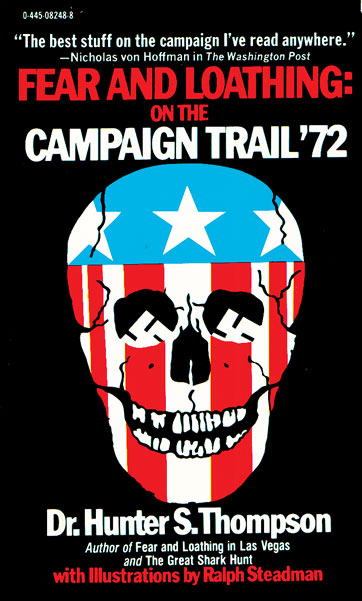
Fear and Loathing on the Campaign Trail
When the going gets weird, the weird turn pro.
Hunter S. Thompson

About a week ago, President Obama said that if Syria’s Bashar Assad was not stopped from using chemical weapons, we might find those same weapons used against America. When asked about this days later, a presidential spokesman ignored the question. This weekend Secretary of State John Kerry said that the decision to stop Assad’s use of the weapons was a “Munich moment.” Meaning: Just as the Munich Agreement of 1938 condoned Hitler’s occupation of Czech territory, emboldening and enabling his vision of global conquest, so would our failure to respond to Assad’s use of chemical weapons further his insidious master plan.

Experts who have bothered to talk about the prospect of these chemical weapons being used against America have dismissed it out of hand. As for the “Munich moment,” that requires a bit more nuance. Nobody claims, at least not yet, that Assad has any extra-territorial plans or delusions of regional grandeur. His plan seems to be simply to punish any Syrians who stand in the way of him and his family fiercely holding on to power. Garden variety despotry; Assad is no Hitler. If “Munich” means appeasing his inhumanity, that is also silly. The bulk of Assad’s inhumanity is also garden variety: guns, bombs, etc. Nothing that Obama has proposed is intended to take care of that.

The region really did have a Munich moment in 1990. Saddam Hussein invaded and annexed Kuwait. A thirty-four nation coalition, led by the U.S., pushed him back to his own borders. Both the history of the Gulf War and its aftermath—including the decision by Bush 1 to go no further and the decision by Bush 2 to finish the job—are beyond the scope of this note. This is just to say that if you want to know what a Munich moment looks like, that was it.

The authenticity and civility of our political life are always in question. We ask whether politicians and their supporters are speaking truth, saying what they mean, meaning what they say, and saying it all in a way that is reasonably respectful and polite. That’s a lot to ask of them, and our expectations are right now pretty low. It’s also a lot to ask of political pundits and commentators. Unconstrained by the limitations of office or election, some of them, left to right, go wherever their opinions take them. Fish gotta swim, birds gotta fly.

Then there are political journalists. This is where things get tricky. Calling a political statement a lie or stupid, or calling a politician a liar or stupid, is supposed to fail the professional standard on a few scores. It supposedly puts a journalist’s objectivity in question; that sort of discourse is best left to political minions and commentators. And if not carefully couched or softened, it can come off as inappropriately impolite and uncivil, another professional faux pas.

We should all miss Hunter S. Thompson right about now. His suicide in 2005 left a gap in political journalism that hasn’t been filled and probably never will be. He didn’t begin as a political reporter. He came up as a writer during the time of the so-called “new journalism” in the 1960s (Tom Wolfe, Gay Talese, et al), when the lines between the factual, the personal and the expressive broke down. By his own admission, Thompson was crazy, formally or informally; he was also a stunningly talented observer and writer. When he hit the political beat, it was right place, right time, right writer. If politics was an exercise in duplicity, venality and near-insanity, it needed a professional journalist just as insane. The collection of his Rolling Stone coverage of the 1972 presidential election, Fear and Loathing on the Campaign Trail, is not just on another planet from the classic campaign coverage up to then; it is in another solar system.

Thompson had a special relationship with Richard Nixon. He ended up respecting and applauding Nixon’s brilliant mind as an expert football strategist, but otherwise Thompson despised him. He wrote a 1994 obituary of Nixon.  In it he continues the case for that untempered loathing, but in this excerpt also explains why it is an appropriate attitude for a journalist:

Kissinger was only one of the many historians who suddenly came to see Nixon as more than the sum of his many squalid parts. He seemed to be saying that History will not have to absolve Nixon, because he has already done it himself in a massive act of will and crazed arrogance that already ranks him supreme, along with other Nietzschean supermen like Hitler, Jesus, Bismarck and the Emperor Hirohito. These revisionists have catapulted Nixon to the status of an American Caesar, claiming that when the definitive history of the 20th century is written, no other president will come close to Nixon in stature. “He will dwarf FDR and Truman,” according to one scholar from Duke University.

It was all gibberish, of course. Nixon was no more a Saint than he was a Great President. He was more like Sammy Glick than Winston Churchill. He was a cheap crook and a merciless war criminal who bombed more people to death in Laos and Cambodia than the U.S. Army lost in all of World War II, and he denied it to the day of his death. When students at Kent State University, in Ohio, protested the bombing, he connived to have them attacked and slain by troops from the National Guard.

Some people will say that words like scum and rotten are wrong for Objective Journalism — which is true, but they miss the point. It was the built-in blind spots of the Objective rules and dogma that allowed Nixon to slither into the White House in the first place. He looked so good on paper that you could almost vote for him sight unseen. He seemed so all-American, so much like Horatio Alger, that he was able to slip through the cracks of Objective Journalism. You had to get Subjective to see Nixon clearly, and the shock of recognition was often painful.

It’s not that we don’t have good and great political journalists working today; we may have more than ever. And it’s not that there aren’t plenty of partisans pointing out gaps in someone else’s facts and reasoning.

It’s just that an amazing amount of stuff gets said and seems to get by far too unchallenged or challenged too narrowly or politely. It wasn’t so long ago that the Republican party produced a nominating spectacle that is widely characterized as a circus or a clown car. But at the time, journalists were unwilling to even hint at how ridiculous some of it was, as the party of Lincoln earnestly considered nominating Herman Cain or Donald Trump as their standard bearer.

Sure we need objectivity, maybe now more than ever in a social media enriched/poisoned environment. What we shouldn’t do is confuse objectivity with comity and politeness. If Hunter Thompson was shockingly blunt—and so much fun to read—it was to wake people up from the soporific effect of treating truth and lies, intelligence and stupidity, as rhetorical equivalents, in the name of objectivity, politeness and respect. In the name of keeping the peace. That would be the media Munich moment.

Update: Rereading this post, I have to add that the closest we come to Hunter S. Thompson’s “gonzo” political journalism is The Daily Show on Comedy Central. This revelation came watching the first few days of Jon Stewart’s return after his summer away, coming back to a grim and arguably ridiculous political crisis. The Daily Show’s trick is to protest (too much) that it is a “fake” news show, which gives it total license to completely get its facts straight while speaking truth to absurdity. And when, as this week, vicious jokes aren’t quite enough, Stewart vents his frustration directly and straight, no humor. Oh, to see what The Daily Show would have made of the Nixon Years.

Lee and Nancy: Summer Wine and Some Velvet Morning

Phedre - Alexandre Cabanel
When Lee Hazlewood and Nancy Sinatra got together in the 1960s to create pop music (he to write and produce, she to perform and record), who could know that this very day, music fan, you would discover one of those tracks and go “pretty cool”, while the other would elicit “what the heck is that?”

Nancy Sinatra was firstly famous as Frank Sinatra’s daughter, and then as the singer of a string of big hits, most notably These Boots Are Made for Walking. She was never a great singer, but her voice did have an appealing quality (genes count for something), and the material and production were often irresistible.

Lee Hazlewood was the source of many of those hit songs. And then he began performing and recording some of his songs as duets with Nancy Sinatra. If you think that Boots or Sugar Town are all there is to Nancy Sinatra, a couple of these duets just have to be heard.

Summer Wine – Hazlewood’s songs leaned toward country pop, and Summer Wine was a duet in the vein of Jackson from Johnny Cash and June Carter, and scores of other such duets. His pop sensibilities make this work, as does the contrast between his gruff baritone and Sinatra’s sweet not quite innocence. How good is the song? Good enough for it to be well covered even now, including a 2010 collaboration between Andrea Coors and Bono.

Some Velvet Morning – If Summer Wine is cool pop, Some Velvet Morning is something else. Hazlewood is sometimes identified as Cowboy Psychedelic, and the accent here is on psychedelic—in the best possible way. To this day, people argue about whether the song means something or nothing. As usual, reading lyrics don’t do songs justice. But if you want to think about it and listen, consider this:

Lee:
Some velvet morning when I’m straight
I’m gonna open up your gate
And maybe tell you ’bout Phaedra
and how she gave me life
and how she made it in
Some velvet morning when I’m straight

Nancy:
Flowers growing on the hill
Dragonflies and daffodils
Learn from us very much
Look at us but do not touch
Phaedra is my name

Lee:
Some velvet morning when I’m straight
I’m gonna open up your gate
And maybe tell you ’bout Phaedra
and how she gave me life
and how she made it in
Some velvet morning when I’m straight

Nancy:
Flowers are the things we knew
Secrets are the things we grew
Learn from us very much
Look at us but do not touch
Phaedra is my name

Lee:
Some velvet morning when I’m straight
Nancy:
Flowers growing on the hill
Lee:
I’m gonna open up your gate
Nancy:
Dragonflies and daffodils
Lee:
And maybe tell you ’bout Phaedra
Nancy:
Learn from us very much
Lee:
And how she gave me life
Nancy:
Look at us but do not touch
Lee:
and how she made it in

(Phaedra, by the way, is a tragic figure of Greek mythology, in love with her husband’s son—which probably has nothing to do with the song. Or does it? Who can tell with a highly educated psychedelic cowboy?)

In 2003 The Telegraph named this the best pop duet ever:

1. Lee Hazlewood and Nancy Sinatra
Some Velvet Morning, 1968

Most pop music is quickly forgotten. All too rare are the songs that endure, whose sheer otherness takes your breath away, even 30-odd years after they were conceived. Some Velvet Morning belongs in that company. Around the time that Frank Sinatra sang Somethin’ Stupid with his daughter Nancy, she was making other duets which brought a hipper, bolder edge to the format, and which would influence countless subsequent pairings. Nancy conducted these with Lee Hazlewood, a laconic Oklahoman who had masterminded her kitsch anthem of women’s liberation, These Boots Are Made for Walkin’.

In 1967, he recorded songs with her for possible inclusion in her first TV Special, Movin’ With Nancy. One, incredibly, was Some Velvet Morning – one of the strangest, druggiest, most darkly sexual songs ever written. Somehow, perhaps as a sop to the new demographic opening up during the Summer of Love, it made it on to the show. There are “flowers” and “daffodils”, but it’s hardly Sonny and Cher. Hazlewood’s sonorous, old-manly tones tell of “Phaedra, and how she gave me life, and how she made it end”, the reverberating bass sounds surrounding his echoey voice like storm clouds.

The music changes to a skipping, childish rhythm, and Nancy chimes in as Phaedra, innocent but ever more menacing as the verses are intercut more regularly. It’s a song whose mysteries have occasioned numerous covers, most recently by Primal Scream, with Kate Moss “doing” Nancy. None, though, can rival the macabre atmosphere of the original – ambitious, beautiful and unforgettable.

As always, those are just words. The music is in the tracks. Please listen.

Diana’s Grandson

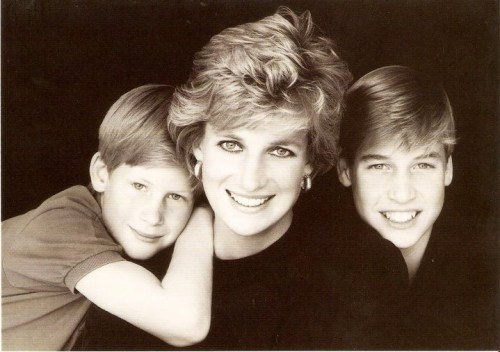
Diana, William & Harry

An ecstatic caller to the BBC said that Diana would be so proud to see the birth of William and Kate’s son.

No one in the royal family, and few elsewhere, can be far from thinking about William’s mother, the most influential British royalty in recent history. She changed the culture of modern monarchy, making the most of her position even as she navigated the waters between outrageous global fame and real life. She also raised two decent young men under impossible circumstances, one of whom became a father today.

Diana would be a grandmother today. And she would be proud.

Getting and Giving a Break


Everyone is someone else’s pain, or at least pain in the ass. We don’t always know this or acknowledge it about ourselves, thinking how we are put upon or suffering at the hands of others, yet unwilling to see how others are overlooking our own silliness or meanness.

We are constantly getting breaks from family, friends and particularly from those in loving relationships. Since we can’t actually count the number of breaks we get—most are silently and even unconsciously given—the best path to balance is to give breaks to others as infinitely as possible. This can seem painful, because we are convinced it is our duty to make the world or someone we know and love “better.” Except that more than we realize, others are making the world better by allowing us to be who we are without comment or critique. Compassionate criticism has its place, but so does giving breaks, more often than we do.

Spring Love Thing: Slinky Spinwheels

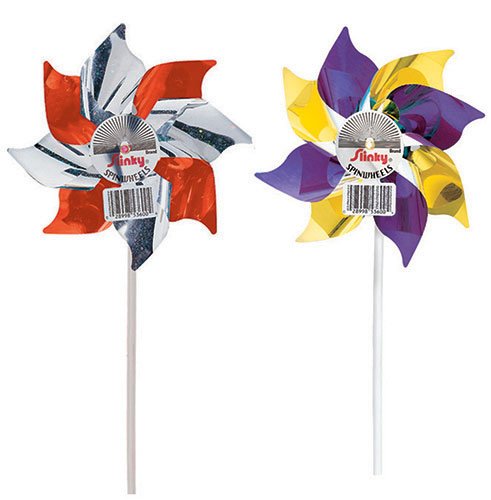
Slinky Spinwheels
If you’re lucky enough to love somebody, and even luckier to have that somebody love you back, you’re always thinking of little things that say I love you.

The candy, the cards, the flowers, the stuffed animals are always appropriate. But if you’ve been together a while, been there, given that. Today, one of the first truly gorgeous days of an inconstant spring so far, the aisles of the local Walgreens offered the just-have-to-get-this-for-her item: the Slinky Spinwheel.

Okay, it’s just a happy-colored mylar pinwheel. But consider this. The candy gets eaten, the card gets put in a drawer, the cut flowers wilt, the live flowers need water and when they don’t get it die, the stuffed animals cutely live on a closet shelf.

The spinwheel lives. It spins prettily and magically in the spring breeze. Or in the summer, fall or even cold winter breeze. Just like the one you love and who, if you’re lucky, loves you back.

(Note: For the cynical among you who may think that this sounds like advertising for Walgreens or Slinky Spinwheels, please be assured it isn’t. There are lots of stores that have lots of pinwheels. If it is an advertisement for anything, it is for love and spring. There is never enough promotion of those.)

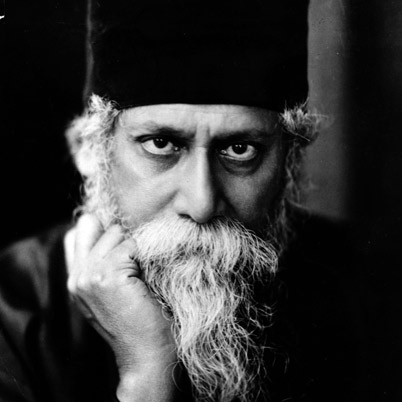
Rabindranath Tagore

Rabindranath Tagore
Take a break with Rabindranath Tagore (1861-1941).

He was a Bengali poet, essayist, dramatist, composer and philosopher, and is the most esteemed creative artist of modern India. He was the first non-European to win the Nobel Prize in Literature in 1913.

A brief introduction is Stray Birds (1916), which consists of 326 very short verses—each one usually one or two sentences. Below is a selection of them. Among the many online items by and about Tagore there is a 1961 documentary about Tagore by Satyajit Ray, India’s most celebrated film director. Here is a PDF of Stray Birds as originally published, with a translation from Bengali to English by Tagore himself.

These literary stray birds may seem at first glance to be mere poetic aphorisms. Taken together, though, this is a worldview of inspired simplicity.

From Stray Birds by Rabindranath Tagore

1
Stray birds of summer come to my window to sing and fly away.
And yellow leaves of autumn, which have no songs, flutter and fall there with a sigh.

2
O troupe of little vagrants of the world, leave your footprints in my words.

6
If you shed tears when you miss the sun, you also miss the stars.

28
O Beauty, find thyself in love, not in the flattery of thy mirror.

35
The bird wishes it were a cloud. The cloud wishes it were a bird.

36
The waterfall sings, “I find my song, when I find my freedom.”

40
Do not blame your food because you have no appetite.

43
The fish in the water is silent, the animal on the earth is noisy, the bird in the air is singing,
But Man has in him the silence of the sea, the noise of the earth and the music of the air.

45
He has made his weapons his gods. When his weapons win he is defeated himself.

48
The stars are not afraid to appear like fireflies.

52
Man does not reveal himself in his history, he struggles up through it.

58
The sparrow is sorry for the peacock at the burden of its tail.

62
The Perfect decks itself in beauty for the love of the Imperfect.

75
We read the world wrong and say that it deceives us.

88
He who wants to do good knocks at the gate; he who loves finds the gate open.

121
I carry in my world that flourishes the worlds that have failed.

123
The bird thinks it is an act of kindness to give the fish a lift in the air.

128
To be outspoken is easy when you do not wait to speak the complete truth.

130
If you shut your door to all errors truth will be shut out.

141
When I travelled to here and to there, I was tired of thee, O Road, but now when thou leadest me to everywhere I am wedded to thee in love.

146
I have my stars in the sky,
But oh for my little lamp unlit in my house.

156
The Great walks with the Small without fear.
The Middling keeps aloof.

158
Power takes as ingratitude the writhings of its victims.

161
The cobweb pretends to catch dew-drops and catches flies.

166
The canal loves to think that rivers exist solely to supply it with water.

169
Thought feeds itself with its own words and grows.

178
It is the little things that I leave behind for my loved ones, –great things are for everyone.

184
He who is too busy doing good finds no time to be good.

193
A mind all logic is like a knife all blade.
It makes the hand bleed that uses it.

207
Praise shames me, for I secretly beg for it.

208
Let my doing nothing when I have nothing to do become untroubled in its depth of peace like the evening in the seashore when the water is silent.

210
The best does not come alone. It comes with the company of the all.

235
Do not say, “It is morning,” and dismiss it with a name of yesterday. See it for the first time as a new-born child that has no name.

243
The stream of truth flows through its channels of mistakes.

248
Man is worse than an animal when he is an animal.

258
The false can never grow into truth by growing in power.

280
Let the dead have the immortality of fame, but the living the immortality of love.

296
Blessed is he whose fame does not outshine his truth.

317
Man’s history is waiting in patience for the triumph of the insulted man.

319
I long for the Island of Songs across this heaving Sea of Shouts.

323
I have suffered and despaired and known death and I am glad that I am in this great world.

Phone, Wallet, Keys

It would take a million pages just to start talking about the differences between men and women. Here’s just one.

Many of us run through a checklist before leaving home for the day. Whether you are forgetful or just overloaded with thoughts, this is a good way to avoid inconveniences and annoyances.

The simplest checklist in these times is “phone, wallet, keys.” This is elegant and practical. Missing any one of these can be a problem, but the other two can help solve it. Missing all of them is a big problem, with a lot of downside, and nothing up.

In most cases, men have pockets, and they often use these pockets to carry things. And, not coincidentally, three primary things are phone, wallet, keys. The checklist doesn’t have to be mental. A quick self-pat-down does the trick. This can take literally a few seconds, and is minimally invasive.

Women may have pockets, but frequently they do not carry much in them. Many women carry some sort of handbag or shoulder bag for items such as…phone, wallet, keys, and more. They may use the same bag each day or day part, but they also may change bags for style or size.

This makes the morning checklist for women complicated. Even when care is taken to make sure that a bag includes the essential items, there is no true certainty until the contents of the bag is inspected. No pat down is available. And then, there are multiple bags, so at any moment, the phone may be one place, the wallet another, the keys another.

As with all the differences, we can’t over generalize. And we can’t fix—because there’s nothing to fix. We celebrate the way things are, even when—or especially when—that includes the occasional missing essential. As much fun as it might be to pat down your favorite woman, completely aware that her pockets are empty, you make do with a very short and sweet, “Got everything?” Which whether it works or not, does say it all.

Guns: The Broken Marriage of Politics and Public Policy

In a fantasy world, the marriage between politics and public policy is an ideal one. Each loving and respectful partner contributes thoughtfully and constructively, and the outcomes are not just positive, but even better than we could imagine.

Suspend imagining and consider this. The offspring are often so ugly and unacceptable that we avert our eyes, ashamed not of the partisans and pragmatists we have put in positions of power, but of ourselves for our reticence and complicity.

The New York Times reports  that after the shooting of Gabrielle Giffords in early 2011:

The Justice Department drew up a detailed list of steps the government could take to expand the background-check system in order to reduce the risk of guns falling into the hands of mentally ill people and criminals.…Most of the proposals, though, were shelved at the department a year ago as the election campaign heated up and as Congress conducted a politically charged investigation into the Operation Fast and Furious gun trafficking case, according to people familiar with the internal deliberations.

Even if none of the proposals—some of which would not have required Congressional action—would have altered anything in Connecticut is beside the point. Politics stood in the way of positive policy and brought it to a standstill. Once again.

This election year has been a test. We muster moments of idealism, gathering genuine evidence of progress. But time after time, something happens to draw us back to a lingering cynicism we can’t shake. We have to shake it, for the sake of all of us, for the sake of those who are weak and need our strength, for the sake of the broken who need fixing. But it can be so very hard.

Jimmy Carter was one of the most interesting President’s of his generation. We know that from his distinguished career as a statesman and man of public faith after he left office. But even as President, he brought a certain humanity and candor to the office that was unique. This also left him uniquely vulnerable, as events and political strategy overtook him.

In the midst of the energy crisis of 1979, Carter gave an address since known as the “malaise” speech, even though he never used that word. In it he said:

I want to talk to you right now about a fundamental threat to American democracy. . . . I do not refer to the outward strength of America, a nation that is at peace tonight everywhere in the world, with unmatched economic power and military might. The threat is nearly invisible in ordinary ways. It is a crisis of confidence. It is a crisis that strikes at the very heart and soul and spirit of our national will. We can see this crisis in the growing doubt about the meaning of our own lives and in the loss of a unity of purpose for our nation. . . .

There is no direct connection between that speech and the current circumstances. Except if we don’t use today to start examining “the meaning of our own lives and…the loss of a unity of purpose for our nation”—an examination we suspended for this election year—we are never going to get back to it.

We have to start criticizing those we otherwise like and praising those we otherwise don’t, without worrying about political impact. Every Democrat winning or losing, every Republican winning or losing, is not going to change things. Jimmy Carter’s “crisis that strikes at the very heart and soul and spirit of our national will” is inexorably tied up with the events of this week. We are going to find that will, starting today.