Bob Schwartz

Category: Uncategorized

Ole & Trufa: A Story of Two Leaves by Isaac Bashevis Singer

A breeze came and lifted Ole and Trufa in the air, and they soared with the bliss known only by those who have freed themselves and have joined with eternity.

Ole & Trufa: A Story of Two Leaves can be read in Stories for Children by Isaac Bashevis Singer. This Nobel Prize winning author is mostly known for stories and novels for adults. All the stories “for children” can be enjoyed by anyone.

Ole & Trufa is particularly a story for anyone since it is a short and simple tale about death. It is the work of a master storyteller to make the life together of two leaves so moving and their deaths so uplifting, “with the bliss known only by those who have freed themselves and have joined with eternity.”


Ole & Trufa: A Story of Two Leaves by Isaac Bashevis Singer

The forest was large and thickly overgrown with all kinds of leaf-bearing trees. It was in the month of November. Usually it’s cold this time of year and it even happens that it snows, but this November was relatively warm. The nights were cool and windy, but as soon as the sun came out in the mornings, it turned warm. You might have thought it was summer except that the whole forest was strewn with fallen leaves—some yellow as saffron, some red as wine, some the color of gold, and some of mixed color. The leaves had been torn down by the rain, by the wind, some by day, some at night, and they now formed a deep carpet over the forest floor. Although their juices had run dry, the leaves still exuded a pleasant aroma. The sun shone down on them through the living branches, and worms and flies which had somehow survived the autumn storms crawled over them. The space beneath the leaves provided hiding places for crickets, field mice, and many other creatures who sought protection in the earth. The birds that don’t migrate to warmer climates in the winter but stay behind perched on the bare tree limbs. Among them were sparrows—tiny birds, but endowed with much courage and the experience accumulated through thousands of generations. They hopped, twittered, and searched for the food the forest offered this time of year. Many, many insects and worms had perished in recent weeks, but no one mourned their loss. God’s creatures know that death is merely a phase of life. With the coming of spring, the forest would again fill with grasses, green leaves, blossoms, and flowers. The migrating birds would return from far-off lands and locate their abandoned nests. Even if the wind or the rain had disturbed a nest, it could be easily repaired.

On the tip of a tree which had lost all its other leaves, two still remained. One leaf was named Ole and the other, Trufa. Ole and Trufa both hung from one twig. Since they were at the very tip of the tree they received lots of sunlight. For some reason unknown to Ole or Trufa, they had survived all the rains, all the cold nights and winds, and still clung to the tip of the twig. Who knows the reason one leaf falls and another remains? But Ole and Trufa believed the answer lay in the great love they bore each other. Ole was slightly bigger than Trufa and a few days older, but Trufa was prettier and more delicate. One leaf can do little for another when the wind blows, the rain pours, or the hail begins to fall. It even happens in summer that a leaf is torn loose—come autumn and winter nothing can be done. Still, Ole encouraged Trufa at every opportunity. During the worst storms, when the thunder clapped, the lightning flashed, and the wind tore off not only leaves but even whole branches, Ole pleaded with Trufa, “Hang on, Trufa! Hang on with all your might!”

At times during cold and stormy nights, Trufa would complain, “My time has come, Ole, but you hang on!”

“What for?” Ole asked. “Without you, my life is senseless. If you fall, I’ll fall with you.”

“No, Ole, don’t do it! So long as a leaf can stay up it mustn’t let go …”

“It all depends if you stay with me,” Ole replied. “By day I look at you and admire your beauty. At night I sense your fragrance. Be the only leaf on a tree? No, never!”

“Ole, your words are so sweet but they’re not true,” Trufa said. “You know very well that I’m no longer pretty. Look how wrinkled I am! All my juices have dried out and I’m ashamed before the birds. They look at me with such pity. At times it seems to me they’re laughing at how shriveled I’ve become. I’ve lost everything, but one thing is still left me—my love for you.”

“Isn’t that enough? Of all our powers love is the highest, the finest,” Ole said. “So long as we love each other we remain here, and no wind, rain, or storm can destroy us. I’ll tell you something, Trufa—I never loved you as much as I love you now.”

“Why, Ole? Why? I’m all yellow.”

“Who says green is pretty and yellow is not? All colors are equally handsome.”

And just as Ole spoke these words, that which Trufa had feared all these months happened—a wind came up and tore Ole loose from the twig. Trufa began to tremble and flutter until it seemed that she, too, would soon be torn away, but she held fast. She saw Ole fall and sway in the air, and she called to him in leafy language, “Ole! Come back! Ole! Ole!”

But before she could even finish Ole vanished from sight. He blended in with the other leaves on the ground and Trufa was left all alone on the tree.

So long as it was still day, Trufa managed somehow to endure her grief. But when it grew dark and cold and a piercing rain began to fall, she sank into despair. Somehow she felt that the blame for all the leafy misfortunes lay with the tree, the trunk with all its mighty limbs. Leaves fell but the trunk stood tall, thick, and firmly rooted in the ground. No wind, rain, or hail could upset it. What did it matter to a tree which probably lived forever what became of a leaf? To Trufa, the trunk was a kind of God. It covered itself with leaves for a few months, then it shook them off. It nourished them with its sap for as long as it pleased, then it let them die of thirst. Trufa pleaded with the tree to give her back her Ole and to make it summer again, but the tree didn’t heed, or refused to heed, her prayers …

Trufa didn’t think a night could be so long as this one—so dark, so frosty. She spoke to Ole and hoped for an answer, but Ole was silent and gave no sign of his presence.

Trufa said to the tree, “Since you’ve taken Ole from me, take me, too.”

But the tree didn’t acknowledge even this prayer.

After a while, Trufa dozed off. This wasn’t sleep but a strange languor. Trufa awoke and to her amazement found that she was no longer hanging on the tree. The wind had blown her down while she was asleep. This was different from the way she used to feel when she awoke on the tree with the sunrise. All her fears and anxieties had now vanished. The awakening also brought with it an awareness she had never felt before. She knew now that she wasn’t just a leaf that depended on every whim of the wind, but that she was a part of the universe. She no longer was small or weak or transient, but a part of eternity. Through some mysterious force, Trufa understood the miracle of her molecules, atoms, protons, and electrons—the enormous energy she represented and the divine plan of which she was a part. Next to her lay Ole and they greeted each other with a love they hadn’t been aware of before. This wasn’t a love that depended on chance or caprice, but a love as mighty and eternal as the universe itself. That which they had feared all the days and nights between April and November turned out to be not death but redemption. A breeze came and lifted Ole and Trufa in the air, and they soared with the bliss known only by those who have freed themselves and have joined with eternity.

Translated by Joseph Singer


Trumphenge

If you don’t know the movie Spinal Tap, a famous scene (see below) is the inspiration for the above image.

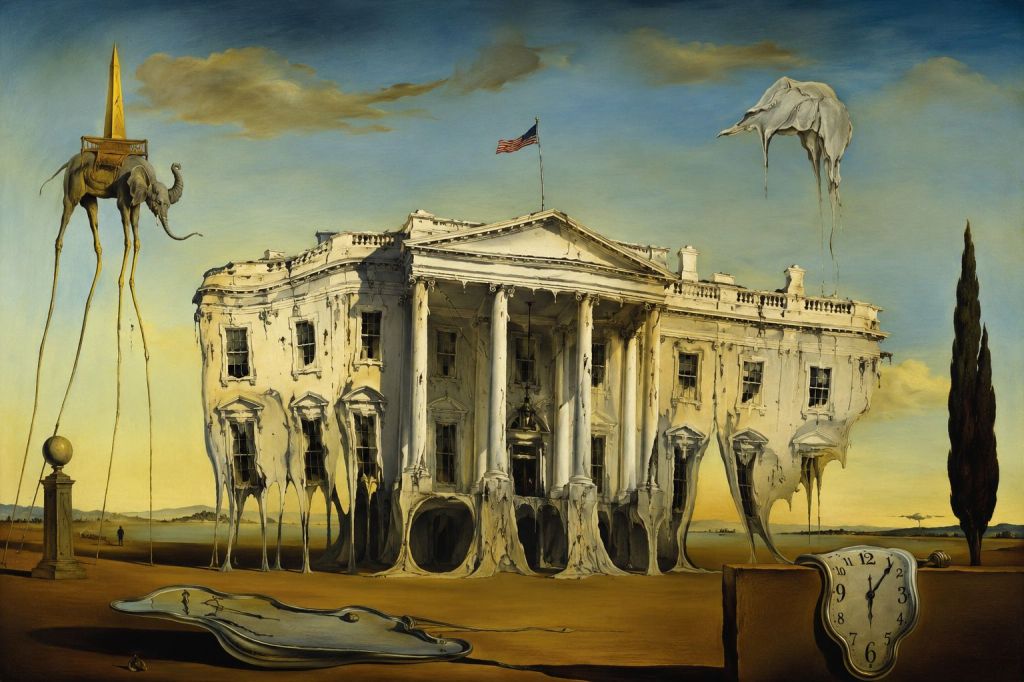
Surreal Presidency: Reassessing Trump as a performance artist

It is easy to describe the current American president and his presidency as unprecedented in a number of negative ways. His version of a special 4th of July this weekend can be seen as more glaring evidence of that.

But consider another radical possibility.

What if this president is actually a supreme political performance artist? What if his presidency is a groundbreaking art project, rather than simply a reflection of his own infirmities for the office?

Proposed here is the possibility that he is just such an artist, a surrealist. In his own terms, the greatest artist ever in history.

Could it be?

© 2026 Bob Schwartz

Cicadas are LOUD right now but the birds are still singing

This time of year, the male cicadas emerge to call out to potential mates. They are loud. Loud. So loud that the droning outside can be heard inside. The females may find this appealing. Others may not.

Early in the morning I go out to listen to the birds. Lately the birds are singing with the loud cicada drone almost overwhelming the sound. Imagine going to an orchestra concert and having the person in the next seat talking incessantly on the phone through the entire performance.

Yet the birds keep singing. I keep listening. The cicadas will stop at some time. The birds will still be singing and will keep singing. I will keep listening.

Strangers in a strange (AI) land

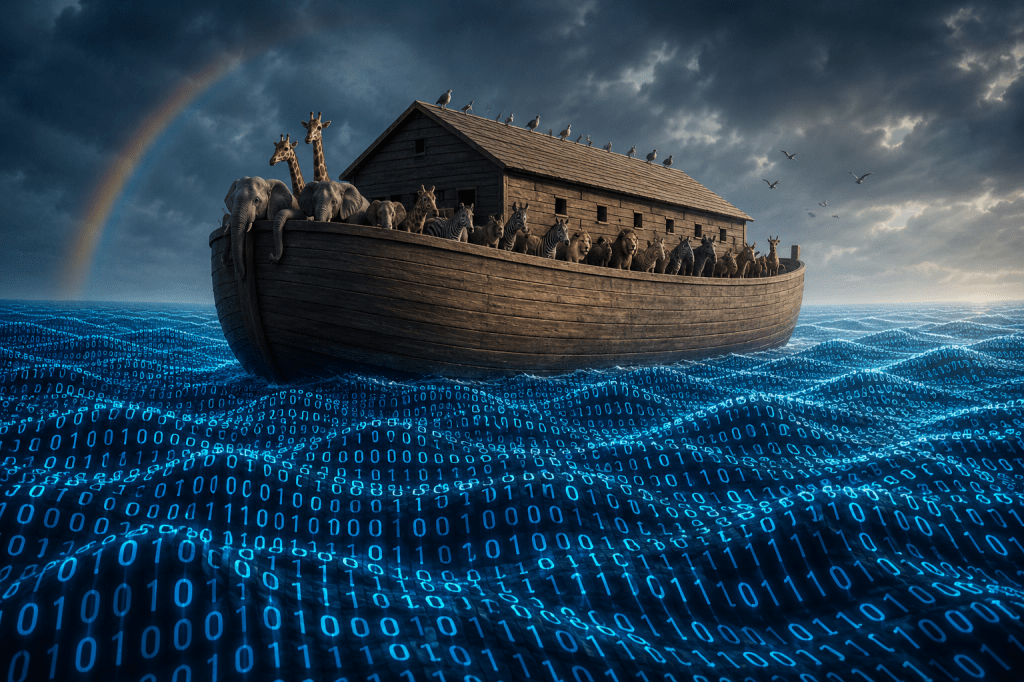
These are some of the oldest stories. People are exiled and journey to an unknown land. People arrive exiled into an unknown land. People are subject to catastrophe, natural or human, that fundamentally changes the land they live in, making it an unknown land. A flood inundates the earth and only a few remain to float and start again. A civilization flees across the desert to start again. The Bible includes the earliest of many stories, especially science fiction, of strangers in strange lands—even when that strange land is their once-familiar home.

There have been a few of these stories in modern times. Weapons, first atomic, then hydrogen, transformed this into a world that might disappear in an instant. A disease infected the world. A technology, artificial intelligence, seems capable of, to use the cliché, changing everything. This is now another strange land.

Our history of dealing as strangers in a strange land, starting with the Bible, is mixed. Early concerns about nuclear weapons—“Ban the bomb” rallies—gave way to dangerous proliferation. The covid pandemic led to welcome emergency scientific vaccine breakthroughs, but also to millions of unnecessary deaths, as some number of people stubbornly refused to believe it was as bad as science said, or bad at all. Arriving in the strange lands of nuclear annihilation or covid, some wanted—still want—to go back to the way things were. They just wanted to go home to a familiar land. We don’t know how we will do in the strange land of AI, though some current indicators are not promising.

In the words of Grateful Dead lyricist Robert Hunter in The Wheel:


The wheel is turning and you can’t slow down
You can’t let go and you can’t hold on
You can’t go back and you can’t stand still
If the thunder don’t get you, then the lightning will


© 2026 Bob Schwartz

Just war and the Catholic Church

“Pope Leo, his papal predecessors and his contemporary brethren are calling for returning to Christian roots, with one simple concept: War is fundamentally antithetical to the Gospel of Jesus Christ.”

More than two years ago, I posted a Gaza War reading list , which began with Michael Walzer’s Just and Unjust Wars: A Moral Argument with Historical Illustrations, Fifth Edition, the classic contemporary work on the subject.

I am adding a short opinion piece in the New York Times, It’s Time to Put This Catholic Teaching to Rest, by James Grimaldi, former executive editor of The National Catholic Reporter. The teaching referred to is just war theory. Excerpt follows:


It isn’t every day that a pope calls for an overhaul of a more than 1,000-year-old teaching of the Catholic Church, but that’s exactly what Pope Leo XIV did last month. In his inaugural encyclical, “Magnifica Humanitas,” which was mainly an exploration of how to protect human dignity in the age of artificial intelligence, Leo devoted a brief but critical passage to just war theory.

In a break with a foundational principle of Catholic thought on conflict, Leo called the theory “outdated” and made it clear that the teaching has been twisted to justify wars for decades, most recently the war in Iran. It is about time for the change.

Just war theory holds that wars must meet strict conditions: They should be in self-defense, and only if alternatives have been exhausted; the use of force should be proportional; there should be a likelihood of success and the threat should be imminent. Since World War II at least, several popes have criticized world leaders for using the theory as a fig leaf.

While Leo did not cite any specific war in the encyclical, he clearly had President Trump’s war on Iran in mind. On June 6, in remarks en route to Madrid for a visit, he was asked if a “just war” was being waged in Iran. The pontiff replied: “I believe this has already been made very clear: In Iran, the criteria for a just war are not present.” Leo wasn’t done. “The theory of the just war dates back to centuries when it was impossible to imagine the weapons and the destructive capacity available to humanity today,” he added….

In casting doubt on the usefulness of just war teaching in the modern era, Leo’s encyclical preserved “the right to self-defense in the strictest sense.” Instead of suggesting a new framework for justifying war, Leo all but rules out war’s legitimacy. “Humanity possesses far more effective and capable tools for promoting human life and resolving conflicts, such as dialogue, diplomacy and forgiveness,” Leo wrote. “The use of force, violence and weapons reflects a relational poverty that always has disastrous consequences for civilian populations.”

Overhauling just war teaching will be among the top issues to be discussed on Friday and Saturday at a consistory, or meeting of the pope’s cardinals, at the Vatican, according to Vatican News, the Holy See’s official outlet. The cardinals should not pull their punches. The moment urgently calls for new guidance, not just discussion. In reformulating the church’s view of war, the stakes for Catholicism, the United States and the world are high, and the Vatican needs to get this right. The universal church, with millenniums of moral reasoning and clergy on the ground in virtually every conflict zone, is uniquely situated to articulate a new intellectual framework on just war theory — especially as A.I. increasingly automates decisions on the battlefield.

The answer is deceptively simple. Leo, his papal predecessors and his contemporary brethren are calling for returning to Christian roots, with one simple concept: War is fundamentally antithetical to the Gospel of Jesus Christ.

James Grimaldi, It’s Time to Put This Catholic Teaching to Rest, New York Times, June 26, 2026


Democratic Party: In boldness there is genius, in timidity there is losing

The Democratic Party is now loudly concerned that insurgent progressives running under the Democratic Socialist banner are hurting the party. As if the party isn’t hurting itself just fine.

Where to begin? Two years ago, instead of intervening, telling Biden he shouldn’t/couldn’t run for the nomination, holding a real nominating contest, and selecting a strong and charismatic candidate to defeat Trump…we know what happened. And then, as Trump set out on a mission to demolish democracy—and the White House East Wing—the Democratic Party tried to figure out what it was and how to respond. One-and-a-half years later, it is still dithering, trying to decide. When newer and younger leaders emerged, with ideas the party found too bold and risky, the party could not suppress them fast enough.

Leading to two things. One, Democrats, that is the remaining people still willing to be included in that group, are disaffected beyond disappointment, and are showing their lack of enthusiasm in a way the party understands, as donor support is cratering. Two, those newer and younger leaders are catching fire, no matter how much the party tries to put that fire out.

America desperately needs an effective opposition party in this existential crisis. The Democratic Party, as now established, is not it.

© 2026 Bob Schwartz

Another call to philosophers: Come out and come forward

Philosophy is embedded in all that we do, believe, and is done to us. It often goes unrecognized and unattended. Among other places, it appears in our religious traditions, though we receive the philosophies of God, the founders and the wise people as givens which we follow and practice. The same goes for calls to patriotism, nationalism and war.

There are those whose lives and careers are devoted, in whole or in part, to philosophy. Some are in the academy, some are outside. If philosophy is important, and it is, it should be front and center. If media reports regularly included philosophical notes or discussions with philosophers, events and issues could go far and deep beyond “He said, he said, this country attacked, this country fought back, these children were killed, the killing is unfortunate but excusable.” Like that.

Philosophers don’t come more forward, or out at all, for many reasons. Some philosophers, brilliant and insightful as they are, are not easily comprehensible to ordinary people—including other philosophers. This lack of communicative clarity keeps media from regularly including philosophers in their interviews and round-tables. When issues are hot and controversial, as they are now, it is risky for philosophers to offer any insights, especially when the very higher ed institutions they work for are under investigation and assault.

Nevertheless, we need to dig deeper into war and the death of democracy, or the dozens of other issues we face, beyond black and white, good guys and bad guys. Philosophers can do that, as they have always done, when they are given a platform and can make themselves understood.

Philosophers: Come out and come forward.

© 2026 Bob Schwartz

Too much of nothing and everything

“If the doors of perception were cleansed every thing would appear to man as it is: Infinite.”
–William Blake, The Marriage of Heaven and Hell

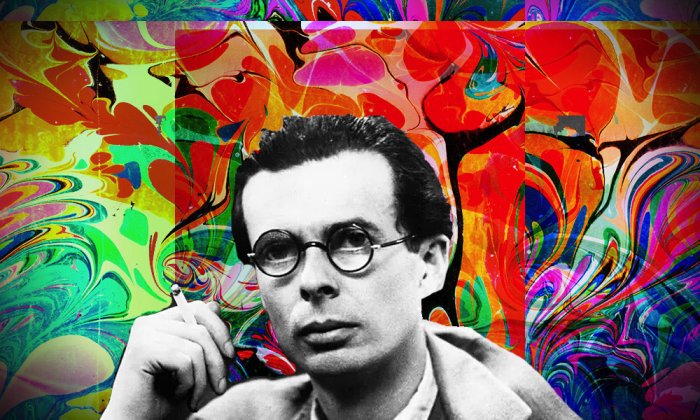
Aldous Huxley used this quote for the title of his 1954 essay, The Doors of Perception, about his experiences with mescaline.

It is commonly, if simplistically, thought that psychedelic experiences open the floodgates of perception and cognition, control valves that in everyday life are regulated and closed down to allow our lives to go on in a relatively orderly and productive way. The response to those experiences may be happy delirium (Oh wow!) to scary delirium (Oh shit!), and levels in between and with variously lasting impact. One might conclude, as Blake, Huxley and others have, that one will have experienced infinity—whatever that might be.

It is mentioned here to suggest what may be one of the biggest overall problems we now face—and it is not psychedelics, though strangely related.

We are living in a time when in some ways the floodgates of perception and cognition are wide open 24/7. Just as most people, despite their confidence in their balance and stability, are not ready or able to handle 24/7 psychedelic experiences, or at all, so are most not ready or able to handle the flood of everything we seek or is thrown at us. This is not to say that most people are walking around tripping, though that imagined scene is intriguing. This is to say that with those floodgates of perception and cognition open, keeping balance is an overwhelming challenge.

Immediately some will point out that this analysis fails, because so many are still engaged in productive and constructive activities. That would be impossible if, as is posited, everyone is going around, doors cleansed, experiencing infinity all the time.

That misses the point. We can find a way to handle this flood, which for the moment seems inevitable and unavoidable. Just as, from the earliest days of psychedelics, there are those able to manage the flood beneficially, so that they become or remain balanced, stable and sane.

Since we are now drowning in media and thinking, this is not going to be easy. So much stuff. If we want to extend this possibly tortured metaphor, we need to pay attention to our dosage. Whether or not is good for us, here it is, not going away, just growing everywhere all the time.

Handled right, we might even find infinity.

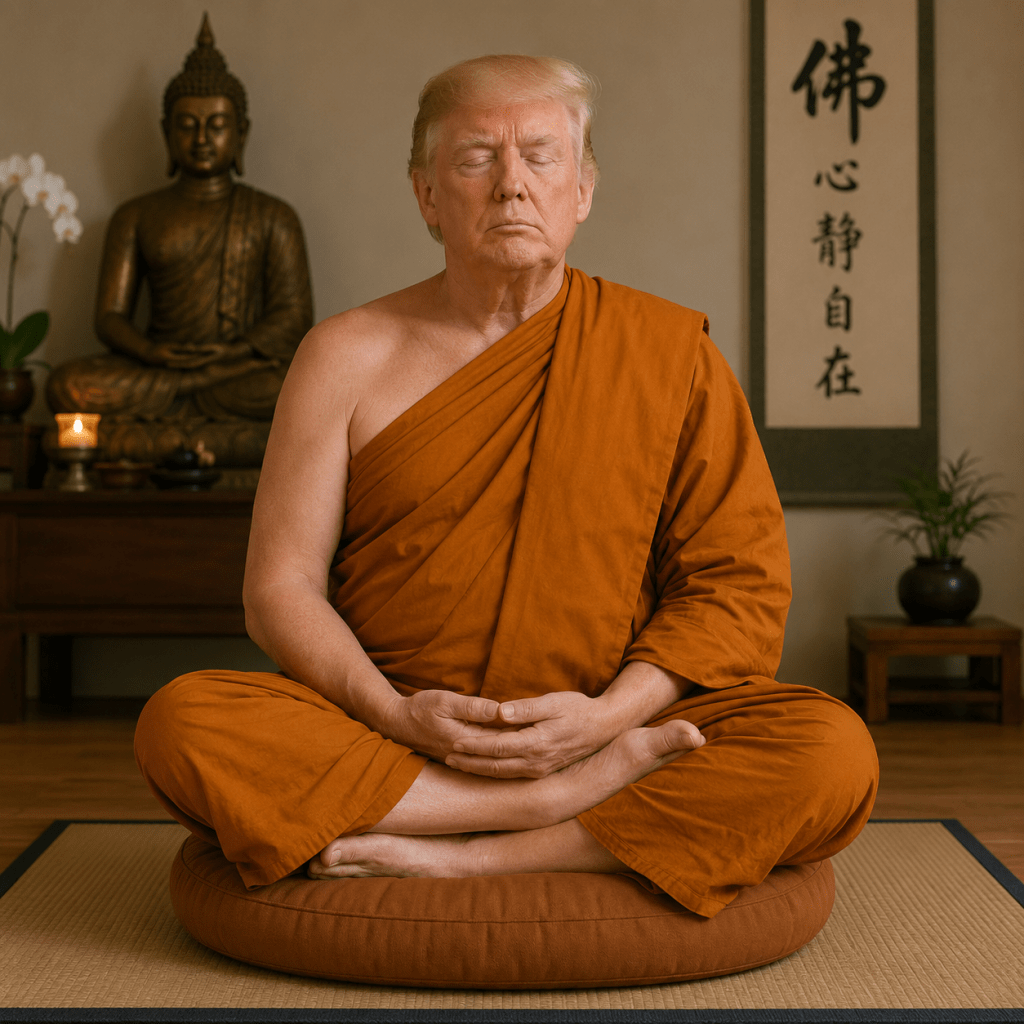
He needs Buddhism and we need him to follow it

There may be a bit of confusion about the above image, so a clarification.

No, this is not him as the Buddha, unlike images that appear to claim that he is Jesus. This is an image of him in Buddhist meditation.

No, he is not sleeping, although meditation has been known to lead to that, and he is known for spontaneous sleeping. This is an image of him in Buddhist meditation.

It would be good for America and the world if he followed any of beneficent traditions. By his own admission (sometimes) he is not much of a Christian or anything else. Whatever faith he may hold seems to include heaven and hell, since he has said he does not expect to go to heaven.

If he doesn’t want to adopt an entire Buddhist view, just sitting in meditation daily could do wonders for him and for all of us.