Bob Schwartz

Category: Psychology

How to Change Your Mind

Floral Chair

The phrase “how to change your mind” is, as are many English expressions, simple and complex:

“How to” as in which method.
“How to” as in which direction.
“Change your mind” as in making a different decision.
“Change your mind” as in transforming it.

Sorting through all that begins with an example.

There is a big colorful overstuffed chair. The fancy fabric is maybe striped or covered with big flowers or designs.

You look at it and think it is beautiful or ugly. You sit in it and think it is comfortable or uncomfortable.

Someone else looks at it and thinks it is beautiful or ugly. Sits in it and thinks it comfortable or uncomfortable.

You two discuss the chair, your thoughts and feelings about it. One may try and explain to the other why one view or experience is better or worse, right or wrong. You might talk about the construction and style relative to the current market for chairs or the historic evolution of chairs.

Yet there it just is. An object with four legs, to keep you sitting up from the floor. There it just is.

You might change your mind about the chair by engaging in the discussion about it, or by sitting in it a few more times.

Or you might realize that it is just that chair. About which your mind is fundamentally changed. Whether the chair is plain wood or elaborately upholstered. Whether you think about it or look at it or sit in it or not.

That is one way to change your mind.

MIND is the forerunner of all actions.
All deeds are led by mind, created by mind.
If one speaks or acts with a corrupt mind, suffering follows,
As the wheel follows the hoof of an ox pulling a cart.

Mind is the forerunner of all actions.
All deeds are led by mind, created by mind.
If one speaks or acts with a serene mind,
Happiness follows,
As surely as one’s shadow.

“He abused me, mistreated me, defeated me, robbed me.”
Harboring such thoughts keeps hatred alive.
“He abused me, mistreated me, defeated me, robbed me.”
Releasing such thoughts banishes hatred for all time.

From the Dhammapada, translated by Ananda Maitreya.

Opioids and Heroin: Where Does It Hurt?

There is bipartisan agreement that we have a national problem of opiodd and heroin addiction. But few politicos are willing to discuss the hard questions.

The political consensus is that we address the addicts and how to treat and end their addiction. Which is a good and humane objective.

But there are two other aspects the politicos are less willing to take on.

Supply chain

The old school war on drugs went for the top of the supply pyramid. Think El Chapo. In the case of opioids, that supply chain leads up from pharmacies to doctors to pharmaceutical companies. But if you listen to the grandstanding from Democrats and Republicans, you hardly if ever hear the legal producers of the drugs called to account. It is true that product makers are not unconditionally responsible for how people ultimately use their products—not alcohol makers, not cigarette makers, not gun makers. But at least those suppliers can be spotlighted as significant stakeholders.

Where does it hurt?

Pain killers are a blessing to those who suffer from chronic physical pain or from intermittent severe physical pain. That kind of pain is a damnable thing, and we should all be glad that we have developed such a solution.

Millions of those who use painkillers, prescription and otherwise, are not in physical pain. But many of them are in psychic pain, whether out of loss, desperation, frustration, purposelessness, difficult circumstances, or just boredom. It is convenient but not completely helpful to lump these into “mental Illness” for which increased funding and access could be made available. This kind of pain is not illness; it is just a response to a condition or injury, no different than the hurt that might come from being hit over the head really hard.

Politicos don’t want to talk about this. The solutions to this kind of pain involve changes in society and in people’s lives that require lots of self-awareness, lots of politically tricky analysis, lots of controversial proposals that go beyond better addiction services. And lots of hard questions that politicos don’t want to ask, let alone try to answer. Such as:

Where does it hurt?

Trump: Who’s the Wack Job Now?

Yesterday Donald Trump called U.S. Senator Bernie Sanders “a wack job.” He has also called U.S. Senator Ted Cruz “wacko” multiple times. Along with all his other free association invective, versions of “crazy” seem to be Trump favorites.

Back in November I wrote a post gently inquiring about Trump’s mental health. Now I discover that at the same time, actual psychiatrists and psychologists were considering the same thing.

Is Donald Trump Actually a Narcissist? Therapists Weigh In! appeared in Vanity Fair. Professionals raised genuine concerns that Trump’s history and his behavior during the campaign reflect a psychological shortfall, not an ideological or policy one. A shortfall big enough to put in question his fitness for the job he is seeking (and that he believes only he can succeed at).

As an observer, it isn’t hard to see some projection possibly going on here. Setting aside the lack of civility or respect in these accusations, neither Sanders nor Cruz nor any of the other “wack jobs” Trump finds are actually mentally unhealthy. Extreme, maybe, and not to Trump’s liking, but not crazy. Trump, on the other hand, may be revealing what he sees in the mirror. Besides a President.

It May Not Be Politically Correct to Talk About It, But Is Donald Trump Mentally Healthy?

Donald Trump says he saw something that nobody else did: people in Jersey City cheering as the Twin Towers fell on 9/11.

From the Washington Post:

Republican presidential candidate Donald Trump says he saw people cheering the Sept. 11 attacks across the river in New Jersey — a claim officials strongly deny.

Trump first told the story Saturday at a rally in Birmingham, Alabama, as he pressed the need for greater surveillance, including monitoring certain mosques, in the wake of the Paris attacks.

“I watched when the World Trade Center came tumbling down. And I watched in Jersey City, New Jersey, where thousands and thousands of people were cheering as that building was coming down. Thousands of people were cheering,” Trump said Saturday at a rally in Birmingham, Alabama.

Trump repeated the assertion Sunday in an interview with George Stephanopoulos on ABC’s “This Week,” as Stephanopoulos explained to Trump that police had refuted any such rumors at the time.

“It did happen. I saw it,” said Trump. “It was on television. I saw it.”

“There were people that were cheering on the other side of New Jersey, where you have large Arab populations. They were cheering as the World Trade Center came down,” he said.

“I know it might be not politically correct for you to talk about it,” he added, “but there were people cheering as that building came down, as those buildings came down. And that tells you something.”

It comes down to two possibilities.

One is that Trump is just saying stuff and making up stuff for political benefit. Pretty outrageous stuff, but it’s been working for him so far. There have long been internet rumors to this effect, but every possible objective source—police, news media, even Republican politicians—deny it ever happened. But it is a rumor that is a definite winner among certain constituencies.

Or. There is something creepily genuine about Trump’s profession of belief in this. He saw it on television, he says, even though it was never on television. Which means that maybe, just maybe, Donald Trump has a problem. A psychological one. People do and say all kinds of things that cross all kinds of lines—ethical, moral, criminal—without having mental illness. On the other hand, it would not be that surprising for someone who has skated for so long on the edge of saying whatever is needed—very successfully and profitably—to cross a boundary to the place where things that never happened do appear to have happened. All evidence to the contrary.

Not Born Bored

Here we are now
Entertain us
Nirvana, Smells Like Teen Spirit

A study by Lady Gaga’s Born This Way Foundation finds that, among other things, lots of high school students are bored. Suggested solutions included making teachers better and the experience more interesting.

There are some other possibilities, but to consider them we should look beyond high school.

First, people are not born bored. Babies are not bored. Everything is interesting to them.

People do grow up and develop something called boredom, about which we don’t spend nearly enough time defining or considering. We just lump it into the avoid-or-eliminate category, and associate it with pain. Fortunately for the suffering bored, at this moment in history we may have the most options for escaping boredom ever.

Pointing to high schoolers or young people in general as the easily bored is unfair to them. Plenty of their elders pursue ways to keep things constantly interesting. Mobile phones at dinner tables are not the purview of those under 21.

There’s no doubt that high school is not what it should be, never has been, and deserves attention and improvement. The same goes for the hourly and daily and yearly lives of many people, just like those students stuck being in a place they don’t want to be and doing things they don’t want to be doing.

One small suggestion: Don’t be bored. Put another way, instead of regularly working hard to eliminate boredom, once on a while eliminate boredom as a category of experience. You don’t have to think like a baby. But you might discover that seeing everything as interesting, even awesome, can provide some incredibly cheap and available thrills. And while we wait for high school to improve, maybe that’s something we can try to get across to our kids. Once we learn to practice it ourselves.

Compassion

A primary act of compassion is to lift the load and not add to the load of others.

Easy to say, not easy to do. Can you smile if unjoyful? Can you sing a happy song when you feel like a dirge?

Being true to your little self, no matter how dark it is, might seem like a good idea—if there is a little self, separate from the rest. We may be encouraged to let it all out, whether as a shout or a sulk. The complication is that if you think you are the center of the universe, privileged to make its own weather, you are right. You are the center of the universe, but so is everyone else. If they are to live subject to your clouds and storms, so you do to theirs.

Compassion, of which joy is an instrument, is at the top of the list for two reasons. It is the most powerful. And it is the hardest. So when next you wrap yourself in a blanket of seemingly private sadness, consider that you are most probably not alone. And that the smallest bit of light might be a big gift.

Craving Chaos

There are those who crave chaos, and some who create it when they don’t find it. Often they are those with low tolerance for boredom and regularity. They are like explorers and adventurers, who go places and do things that others question: Why are you doing this and why does it always have to be the hard way?

This isn’t good or bad. We need such people, because their constant engagement with challenges can result in remarkable learning, insight, and progress. That is, chaos is the nature of things, and dealing with it is a highly valuable skill. But it remains that those who find value in at least modest regularity and order might find all that occasionally troublesome.

Freud and Freund

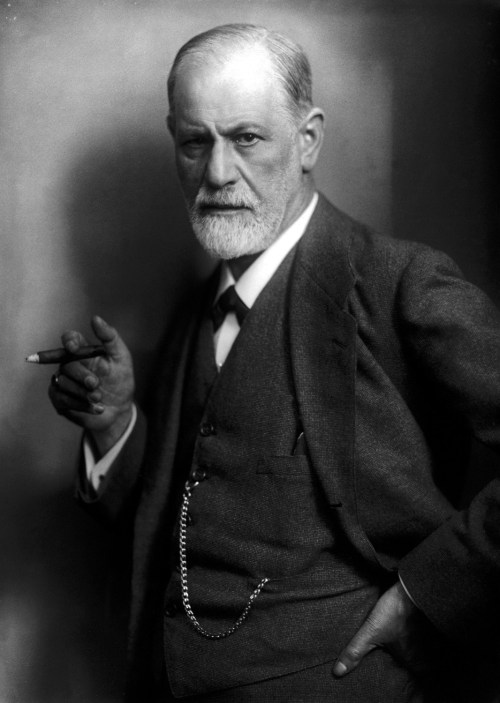
Sigmund Freud

Some dreams are literal or nearly so. Sometimes riding a roller coast is just riding a roller coaster. Some dreams, if you take a symbolic and analytical approach, mean more and say more than the action they depict. That roller coaster might be the story of your day or your life.

The rarest kind are wholly, or at least momentarily, conceptual and intellectual. That is, they are like reading a text or listening to a lecture, wherein an item is dictated or a point is announced.

Last night, a dream asked me to play a word game, to relate two words. It wasn’t quite a request, it was more like a reveal, as in “Look, don’t you see?”

The words were Freud and Freund (the German word for friend). I did not take this to mean that Freud is my friend. I took it to mean that analysis and investigation, which Freud is famous or infamous for, is/can be/may be near the heart of friendship. Friends may not want this or like this, we may not want to do this or complicate the joyful simplicity of a relationship, but it does happen.

Of course, Freud might find the dream and my interpretation of it…interesting. He might expect me to delve more deeply into why he made it into the dream at all, even if only as a name, and why in my dream I was playing word games instead of, say, riding a roller coaster or something equally thrilling. But then, I might ask him, as my freund, to kindly shut up and let me get back to sleep.

Why Be Curious?

Curious

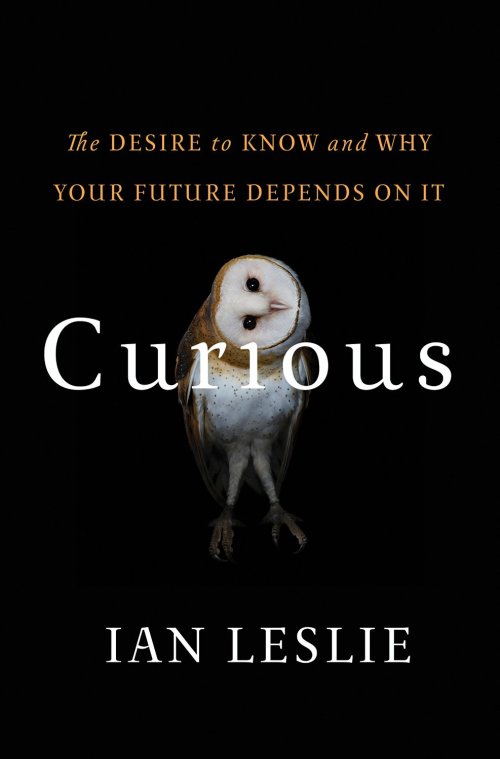
In his latest book Curious: The Desire to Know and Why Your Future Depends on It, Ian Leslie has found an essential key to the way things are and the way they—and we—might be much better.

Social observers are always looking for that one thing, that overriding concept, which succinctly explains how we got where we are, and how, if we are interested, we can use it as a way to move forward. Think Nassim Nicholas Taleb’s Black Swan. Think Malcolm Gladwell’s Tipping Point. Sometimes these concepts are interesting and useful, sometimes faddish and fatuous.

It’s impossible not to notice that something is fundamentally different about—or missing from—these times. It’s too facile just to inventory the innovative tools and techniques we enjoy, though that’s more than enough for the businesses making billions on them. We want an explanation.

Leslie explains:

A society that values order above all else will seek to suppress curiosity. But a society that believes in progress, innovation, and creativity will cultivate it, recognizing that the inquiring minds of its people constitute its most valuable asset. In medieval Europe, the inquiring mind—especially if it inquired too closely into the edicts of church or state—was stigmatized. During the Renaissance and Reformation, received wisdoms began to be interrogated, and by the time of the Enlightenment, European societies started to see that their future lay with the curious and encouraged probing questions rather than stamping on them. The result was the biggest explosion of new ideas and scientific advances in history.

The great unlocking of curiosity translated into a cascade of prosperity for the nations that precipitated it. Today, we cannot know for sure if we are in the middle of this golden period or at the end of it. But we are, at the very least, in a lull. With the important exception of the Internet, the innovations that catapulted Western societies ahead of the global pack are thin on the ground, while the rapid growth of Asian and South American economies has not yet been accompanied by a comparable run of indigenous innovation. Tyler Cowen, a professor of economics at George Mason University in Virginia, has termed the current period the Great Stagnation….

Our educational system is increasingly focused on preparing students for specific jobs. To teach someone to be an engineer or a lawyer or a programmer is not the same as teaching them to be a curious learner—yet the people who make the best engineers, lawyers, and programmers tend to be the most curious learners. So we find ourselves stuck in a self-defeating cycle: we ask schools to focus on preparing students for the world of work rather than on inspiring them, and we end up with uninspired students and mediocre professionals. The more we chase the goal of efficient education, the further it recedes.

The rewards of curiosity have never been higher, but our ideas about how curiosity works are muddled and misguided. We romanticize the natural curiosity of children and worry that it will be contaminated by knowledge, when the opposite is true. We confuse the practice of curiosity with ease of access to information and forget that real curiosity requires the exercise of effort. We focus on the goals of learning rather than valuing learning for itself. Epistemic curiosity is in danger of becoming the province of cognitive elites, with far too many of us losing or never learning the capacity to think deeply about a subject or a person. In a world where vast inequalities in access to information are finally being leveled, a new divide is emerging—between the curious and the incurious.

Curious is much more than just valuable diagnosis and description. After fascinating sections on How Curiosity Works and The Curiosity Divide, Leslie proposes a practical prescription, Seven Ways to Stay Curious:

Stay Foolish
Build the Database
Forage Like a Foxhog
Ask the Big Why
Be a Thinkerer
Question Your Teaspoons
Turn Puzzles into Mysteries

No summary or series of excerpts can do this book justice. Well-written and compelling, it is, to repeat, an essential. Read it. Even if you don’t want to apply it to yourself or your children or your colleagues, it is a book to keep handy as we try to remake what isn’t working and navigate unsteadily to a newer world.

See more from Ian Leslie here.

Man Arrested after Attempting Sex with ATM and Picnic Table

ATM

This is a test. It is an actual news story about a man who tried to have sex with an ATM and a picnic table.

Place and name have been deleted, and no link to the story is provided. There is more than enough embarrassment already. You can no doubt find the story if you are so moved.

This is a test not unlike an inkblot test. Listen to the police officer’s report. Then listen to your own thoughts. What are you thinking when you hear this? Are you laughing? Saddened? Disgusted? Confused? All that and more? What stories are you telling yourself? You might find that just as interesting as the original story.

A man was arrested Friday night and charged with public intoxication.

The police officer said, “He entered the bar and walked to the ATM. Once at the ATM, he pulled down his pants and underwear exposing his genitals, and then attempted to have sexual intercourse with the ATM…Once outside he again exposed himself and engaged in sexual intercourse with the wooden picnic table.”