Bob Schwartz

Category: Poetry

The Road of Life: A New Musical

Road of Life

Some of our greatest and most popular musicals have been set against the background of darkest history. Les Miserables. Miss Saigon. Fiddler on the Roof. Cabaret. In the context of adversity, shining stories of love and human spirit stand out starkly, movingly—and musically.

The German Siege of Leningrad, lasting 900 days between 1941 and 1944, has been relatively ignored when we think about the atrocities of that atrocious war. A million people died over the course of more than two years, and millions of others suffered attacks and depravations that brought them to the brink and marked their lives forever.

Ann Reid writes in Leningrad: The Epic Siege of World War II:

[T]he siege of Leningrad, the deadliest blockade of a city in human history…. Other modern sieges – those of Madrid and Sarajevo – lasted longer, but none killed even a tenth as many people. Around thirty-five times more civilians died in Leningrad than in London’s Blitz; four times more than in the bombings of Nagasaki and Hiroshima put together.

Hope, wrote Emily Dickinson, is the thing with feathers. A songbird who lifted the people of Leningrad during this cold hell was a poet named Olga Burggolts. Each day she broadcast from Leningrad’s only radio station—reporting events, reading her poems, exemplifying the imperative of survival. Just as the siege is too forgotten, so she is not very well-known or celebrated for her achievement. But as much as we may dismiss poetry as an idle pastime, maybe nowhere at no time has a poet done more to affect so many—and to help those people withstand the brutality of history.

The team of Jay Jacques and Mark Chimsky have created a bold and uplifting new musical intertwining this big history with the individual lives, loves, and losses that are its true components. It is an invitation to see this chapter of the not-so-distant past in a new light, one that demonstrates in theater and song how dreams rise from the depths. To find out more, please visit The Road of Life. Read the story, listen to the music, and be inspired.

The News and the Wheel

The Wheel - Jerry Garcia

The wheel is turning
and you can’t slow down
You can’t let go
and you can’t hold on
You can’t go back
and you can’t stand still
If the thunder don’t get you
then the lightning will

The Wheel
Jerry Garcia

If you are still listening to, watching, or reading the news, oh boy. If the world seems out of balance, that’s not just the news talking. That’s the way it is.

Thousands of U.S. troops sent to fight Ebola. No troops but planes and bombs to fight thuggish madmen disguised as religious fanatics whose organizational name we can’t keep straight. Honored gladiators beating their wives and children. Police shooting the people they are sworn to protect. The most powerful legislature in the world doing nothing when something is called for, something when nothing is called for, and blabbering on when silence is golden. Rampant use of destructive drugs, demonizing of less destructive drugs. Speaking of drugs, powerful pharmaceuticals interrupting your entertainment with the news that they can cure you, but may also kill you, harshly and slowly. And that’s just for starters.

Every time that wheel turn round
bound to cover just a little more ground

Won’t you try just a little bit harder
Couldn’t you try just a little bit more?
Won’t you try just a little bit harder?
Couldn’t you try just a little bit more?

Breathe. If it seems like madness, that’s because it is. But it’s our madness and we just have to live with it. Being strong and smart will move us forward, but it’s never enough. Being strong and smart will not, for example, cure our madness, and like those very high-tech pharmaceutical drugs, can do more harm than good. Misplaced confidence in our strength and our brains is like putting a thumb on the scale. Which is no way to get in balance.

Making No Sense

NASA - Stars

I looked at the stars
Like an astrologer
Saw constellations
Like an astronomer
Saw suns and planets.
I looked again
And saw stars.

Spring: Flowers in the Sky

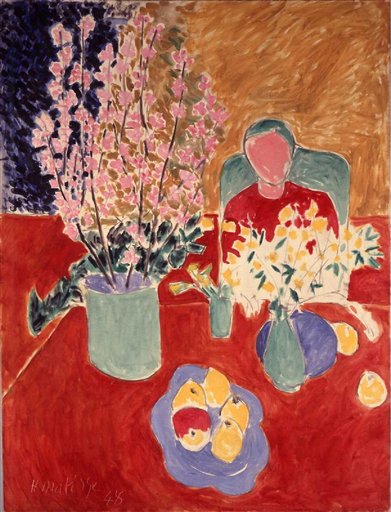
The Plum Blossoms - Henri Matisse
This message for the start of spring comes from the masterpiece Treasury of the True Dharma Eye (Shobo Genzo) by Dogen, the founder of Soto Zen.

The passage is taken from Fascicle 44, Flowers in the Sky, written in 1243:

Thus, when the time comes, flowers open. This is the moment of flowers, the arrival of flowers. At this very moment of flowers arriving, there is no other way. Plum and willow flowers unfailingly bloom on plum and willow trees. You see the flowers and know plum and willow trees. You understand flowers by looking at plum and willow trees. Peach and apricot flowers have never bloomed on plum and willow trees. Plum and willow flowers bloom on plum and willow trees. Peach and apricot flowers bloom on peach and apricot trees. Flowers in the sky bloom in the sky in just this way. They do not bloom on other grasses or trees.

Seeing the colors of flowers in the sky, you fathom the limitlessness of fruit in the sky. Seeing the opening and falling of flowers in the sky, study the spring and autumn of flowers in the sky. The spring of flowers in the sky and the spring of other flowers should be the same. Just as there are a variety of flowers in the sky, there should be a variety of springtimes. This being so, there are springs and autumns in the past and present.

Those who assume that flowers in the sky are not real and other flowers are real have not seen or heard the Buddha’s teaching. To hear the words that the sky originally had no flowers and assume that the flowers in the sky that did not exist do exist now is a lesser view based on shallow thinking. Step forward and think deeply.

The Magi

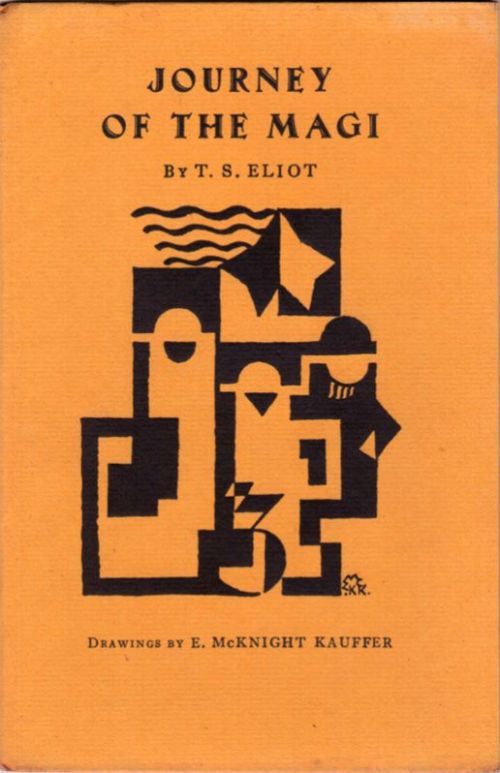
Journey of the Magi
The magi are for everyone, whatever your beliefs.

These three figures in the Christmas tradition appear in only one of the four Christian gospels, and even that role in Matthew is sketchy. They are foreigners bringing gifts for the infant Jesus and they return home by a different route to evade Herod. That’s it.

Translations and interpretations of what they brought vary, and even less clear is exactly who these foreigners were supposed to be in the story. They may be kings, wise men, astrologers or, as some have it, Zoroastrian priests from Persia.

This is why the particulars don’t matter much at all: the story is so basic and illuminating that it has captured the imagination of millions in its various retellings. Christian faithful have one view of it, and the more literal vision is that of concrete history. But for those who lean away from that, there is much to be gotten out of this compelling story:

  • Some people of discernment—in terms of wisdom, astrology or otherwise—had a sense that something special was going on outside of their ordinary sphere. Maybe they saw a light.
  • They travelled a long way to discover what was going on, and having found out, expressed their gratitude humbly and generously.

Again, that’s it. Some may want to think about theology. Others may want to think about other sorts of lights they’ve glimpsed, journeys they’ve made or haven’t made, and about possibilities. Christmas or just winter solstice and New Year, there is no better time to think about possibilities and all the rest.

T.S. Eliot wrote a brief but cinematic poem about the magi. It is written from a believer’s perspective, as the magi suffer twice, once on the journey, once again when they return home and find themselves so spiritually transformed by the experience that they feel like strangers in their own land. This is certainly a Christian view of the holiday, but non-Christians may just as well consider the more general phenomenon of all sorts of enlightenment, sitting between the way you have been and the way you discover you could be or already are. The magi say they would be glad of another death like that.

The Journey of the Magi
T.S. Eliot

‘A cold coming we had of it,
Just the worst time of the year
For a journey, and such a long journey:
The ways deep and the weather sharp,
The very dead of winter.’
And the camels galled, sorefooted, refractory,
Lying down in the melting snow.
There were times we regretted
The summer palaces on slopes, the terraces,
And the silken girls bringing sherbet.
Then the camel men cursing and grumbling
and running away, and wanting their liquor and women,
And the night-fires going out, and the lack of shelters,
And the cities hostile and the towns unfriendly
And the villages dirty and charging high prices:
A hard time we had of it.
At the end we preferred to travel all night,
Sleeping in snatches,
With the voices singing in our ears, saying
That this was all folly.

Then at dawn we came down to a temperate valley,
Wet, below the snow line, smelling of vegetation;
With a running stream and a water-mill beating the darkness,
And three trees on the low sky,
And an old white horse galloped away in the meadow.
Then we came to a tavern with vine-leaves over the lintel,
Six hands at an open door dicing for pieces of silver,
And feet kicking the empty wine-skins.
But there was no information, and so we continued
And arriving at evening, not a moment too soon
Finding the place; it was (you might say) satisfactory.

All this was a long time ago, I remember,
And I would do it again, but set down
This set down
This: were we led all that way for
Birth or Death? There was a Birth, certainly
We had evidence and no doubt. I had seen birth and death,
But had thought they were different; this Birth was
Hard and bitter agony for us, like Death, our death.
We returned to our places, these Kingdoms,
But no longer at ease here, in the old dispensation,
With an alien people clutching their gods.
I should be glad of another death.

Are Presidential Comparisons Odious?

Lydgate - Horse, Sheep and Goose
Comparisons are odious.

This phrase, roughly meaning that comparing people and situations can be unhelpful and counterproductive, is centuries old. It is variously attributed, but as good a source as any seems to be medieval British writer John Lydgate. It comes from his poem The Debate of the Horse, Goose, and Sheep (1436–37).

(For those concerned that this blog just makes stuff up, be assured that scholarly authorities have been consulted. Maura Nolan’s John Lydgate and the Making of Public Culture (2006) was not read in its 290-page entirety, but it was used. Consider this pertinent passage:

Lydgate’s debt to Gower in this passage is obvious; though he has clearly read both Isidore and Higden’s accounts (and possibly Bromyard’s as well), he takes from the Confessio Amantis the notion that the vagaries of Fortune constitute the lesson of the exemplum, a lesson he later directly applies to present-day rulers, ‘‘wise gouernours of euery londe and region’’ (65, lines 25–26). Note: Lydgate makes a similar point in ‘‘The Debate of the Horse, Goose, and Sheep,’’ dated 1436–37 by Pearsall ( John Lydgate (1371–1449), 51), telling his readers that ‘‘thees emperours . . . with ther victories & triumphes’’ (lines 638–39) are subject to Fortune and fall. The political message is explicit: ‘‘Beth war, ye pryncis, your suggettis to despise’’ (line 643). See MacCracken, ed., Minor Poems of John Lydgate, part 2, 539–66)

(Please feel free to show off to your friends and colleagues who wonder if your liberal arts degree, if you have one, is worth anything. Knowing that “In the fifteenth century Lydgate was the most famous poet in England, filling commissions for the court, the aristocracy, and the guilds. He wrote for an elite London readership that was historically very small, but that saw itself as dominating the cultural life of the nation” should impress them.)

About Presidents and odious comparisons: In the many crises of his presidency, including the most recent, President Obama has endured more comparisons than perhaps any other President. Just in the past few days, we have heard about Woodrow Wilson, George W. Bush, Lyndon B. Johnson, Ronald Reagan, Bill Clinton, Jimmy Carter, John F. Kennedy, and in this very blog, Harry Truman.

Comparisons are natural for a few reasons. It is an office that has been held by a relatively small number of people over more than two centuries, and so how you do the job is defined as much by what others did as some sort of abstract definitions and expectations. There is also the flawed logic: the United States is the greatest country in the world, the President is the leader of the United States, therefore the President is the greatest leader in the world. At moments yes, but please check history, the sometimes impossibility of situations, and the nature of imperfection of all powerful humans. Finally, Obama is so unlikely, if not unlike any of his predecessors, that you almost want to jump to comparisons.

My best attempts to find out what the horse, sheep and goose were debating about six centuries ago, and what it has to do with comparisons, have come up empty. So I do have had to make this part up. If the debate was about which one is superior—whether a horse, sheep or goose is better—the answer is elusive and equivocal. This is in no way to cut the current President the slightest bit of slack, as readers of the blog already know. But the presidency is not a single job, even in more stable and simple times, which these are not. So compare away, but don’t let those comparisons obscure clear thinking and distract us with reveries (or lingering antipathies) about this leader or that. That would be odious, in a country and world with odium enough.

Detroit: Motown and Corvettes and Tigers, Oh My!

Stingray 1963

Sometimes the best way to tell a story is not to tell it. The news about Detroit’s municipal bankruptcy, the biggest ever in America, is like that. Others will tell it at length. Sometimes the best way is to offer a few items that are interesting and related, and let readers and listeners make the connections, draw the lines, complete the picture.

Just in case your dot-connecting doesn’t make it clear, the story of Detroit’s bankruptcy is the biggest American story of the day, and possibly one of the biggest in many years. It is bigger than the story of Trayvon Martin and George Zimmerman, bigger than last fall’s story of the rich son of a former Michigan governor disastrously running for President (and loving those Michigan trees, though not Detroit), bigger than the continuing economic malaise, but related to all of them.

Fifty years ago, in July 1963, Motown Records, Hitsville U.S.A., released the single Heat Wave by Martha and the Vandellas. It reached #4 on the Billboard Top 100, but did top the R&B chart. Like so many Motown records, who cares about the numbers? Motown is some of the best pop music ever produced in America. Want proof? Just play Heat Wave, or other irresistible tracks by the Vandellas, the Temps, the Tops, or put on another Motown single from fifty years ago that did go to #1, the astonishing Fingertips (Part 2) by 11-year-old phenomenon Little Stevie Wonder. Motown founder Berry Gordy was not just a model of black entrepreneurship in a white country, at a time when black voting rights had still not been established, but was the model for some of the hugest entertainment moguls in the world, including Jay-Z. But that was fifty years ago in Detroit.

Fifty years ago, the Corvette Stingray was introduced. Edmunds not only rates it the best Corvette of all time; it says “A full half-century after its debut, the 1963 Corvette coupe remains one of the most alluring automotive designs ever conceived.” The ad above shows an airline pilot in Los Angeles (back when being a pilot was super-special manly, and LA was the city of the future) ogling the new Stingray. He was envying the Motor City vision. But that was fifty years ago.

This very day, as the second half of baseball season begins, the Detroit Tigers are one of the best teams in baseball, with maybe the best pitcher (Max Scherzer) and certainly the best hitter (Miguel Cabrera), who may be on his way to becoming the first player to win consecutive Triple Crowns. Detroit fans appreciate this, and have been showing up for home games at a solid pace, about 37,000 a game—equal to the attendance for the Los Angeles Angels and way more than the 17,000 fans per game that show up in “ultra cool” Miami.

Saying that Detroit will be back from beyond the brink isn’t just wishful thinking. The idea that Detroit can fail but that everybody else in America will be alright is all wrong. The 17th century poet John Donne said it:

No man is an Island, entire of itself; every man is a piece of the Continent, a part of the main; if a clod be washed away by the sea, Europe is the less, as well as if a promontory were, as well as if a manor of thy friends or of thine own were; any man’s death diminishes me, because I am involved in Mankind; And therefore never send to know for whom the bell tolls; It tolls for thee.

And if you don’t go for old poetry that you hated in high school, and would rather forget the troubles of Detroit and the world, Motown has lots to offer, especially on a sweltering July day.

Whenever I’m with him
Something inside starts to burning
And I’m filled with desire
Could it be a devil in me
Or is this the way love’s supposed to be?

It’s like a heat wave, burning in my heart
I can’t keep from crying, it’s tearing me apart

Rabindranath Tagore

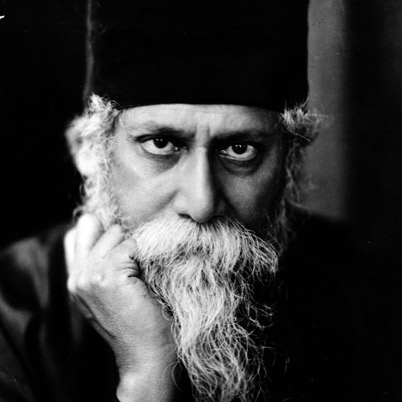
Rabindranath Tagore
Take a break with Rabindranath Tagore (1861-1941).

He was a Bengali poet, essayist, dramatist, composer and philosopher, and is the most esteemed creative artist of modern India. He was the first non-European to win the Nobel Prize in Literature in 1913.

A brief introduction is Stray Birds (1916), which consists of 326 very short verses—each one usually one or two sentences. Below is a selection of them. Among the many online items by and about Tagore there is a 1961 documentary about Tagore by Satyajit Ray, India’s most celebrated film director. Here is a PDF of Stray Birds as originally published, with a translation from Bengali to English by Tagore himself.

These literary stray birds may seem at first glance to be mere poetic aphorisms. Taken together, though, this is a worldview of inspired simplicity.

From Stray Birds by Rabindranath Tagore

1
Stray birds of summer come to my window to sing and fly away.
And yellow leaves of autumn, which have no songs, flutter and fall there with a sigh.

2
O troupe of little vagrants of the world, leave your footprints in my words.

6
If you shed tears when you miss the sun, you also miss the stars.

28
O Beauty, find thyself in love, not in the flattery of thy mirror.

35
The bird wishes it were a cloud. The cloud wishes it were a bird.

36
The waterfall sings, “I find my song, when I find my freedom.”

40
Do not blame your food because you have no appetite.

43
The fish in the water is silent, the animal on the earth is noisy, the bird in the air is singing,
But Man has in him the silence of the sea, the noise of the earth and the music of the air.

45
He has made his weapons his gods. When his weapons win he is defeated himself.

48
The stars are not afraid to appear like fireflies.

52
Man does not reveal himself in his history, he struggles up through it.

58
The sparrow is sorry for the peacock at the burden of its tail.

62
The Perfect decks itself in beauty for the love of the Imperfect.

75
We read the world wrong and say that it deceives us.

88
He who wants to do good knocks at the gate; he who loves finds the gate open.

121
I carry in my world that flourishes the worlds that have failed.

123
The bird thinks it is an act of kindness to give the fish a lift in the air.

128
To be outspoken is easy when you do not wait to speak the complete truth.

130
If you shut your door to all errors truth will be shut out.

141
When I travelled to here and to there, I was tired of thee, O Road, but now when thou leadest me to everywhere I am wedded to thee in love.

146
I have my stars in the sky,
But oh for my little lamp unlit in my house.

156
The Great walks with the Small without fear.
The Middling keeps aloof.

158
Power takes as ingratitude the writhings of its victims.

161
The cobweb pretends to catch dew-drops and catches flies.

166
The canal loves to think that rivers exist solely to supply it with water.

169
Thought feeds itself with its own words and grows.

178
It is the little things that I leave behind for my loved ones, –great things are for everyone.

184
He who is too busy doing good finds no time to be good.

193
A mind all logic is like a knife all blade.
It makes the hand bleed that uses it.

207
Praise shames me, for I secretly beg for it.

208
Let my doing nothing when I have nothing to do become untroubled in its depth of peace like the evening in the seashore when the water is silent.

210
The best does not come alone. It comes with the company of the all.

235
Do not say, “It is morning,” and dismiss it with a name of yesterday. See it for the first time as a new-born child that has no name.

243
The stream of truth flows through its channels of mistakes.

248
Man is worse than an animal when he is an animal.

258
The false can never grow into truth by growing in power.

280
Let the dead have the immortality of fame, but the living the immortality of love.

296
Blessed is he whose fame does not outshine his truth.

317
Man’s history is waiting in patience for the triumph of the insulted man.

319
I long for the Island of Songs across this heaving Sea of Shouts.

323
I have suffered and despaired and known death and I am glad that I am in this great world.

The Year Begins with Baseball

Mom Marlins
The New Year finally begins. It is Opening Day for Major League Baseball.

Non-baseball people are turning away with a lack of interest or understanding. Even non-sports people know that football long ago took over as America’s pastime. The Super Bowl v. the World Series? Who are you kidding? When’s the last time the Rolling Stones performed at a World Series halftime. (Note: There is no halftime in baseball. Just a brief break known as the seventh inning stretch, where we sing Take Me Out to the Ballgame, not a Stones song.)

If baseball has somehow been eclipsed, it may be symptomatic. Whatever it is that has made football more popular than baseball might not be such a good thing. There are tomes by eminent scholars written about this. The time element alone is telling. Those leaning towards short attention spans and busy lives like football because something is always happening and it is time-constrained by a clock. For non-baseball fans, there are long stretches where nothing seems to be going on in a baseball game, except most of the players just standing around. Games can theoretically go on forever, and sometimes they seem to, exceeding five hours. Once again the chorus asks: Who are you kidding?

George Carlin, one of the sharptest and funniest observers of American life, focused on the differences between baseball and football. You can read the complete text and listen to a recording. Here’s an excerpt:

Baseball and football are the two most popular spectator sports in this country. And as such, it seems they ought to be able to tell us something about ourselves and our values.

I enjoy comparing baseball and football:

Baseball is a nineteenth-century pastoral game.
Football is a twentieth-century technological struggle….

Baseball begins in the spring, the season of new life.
Football begins in the fall, when everything’s dying.

In football you wear a helmet.
In baseball you wear a cap….

In football you receive a penalty.
In baseball you make an error.

In football the specialist comes in to kick.
In baseball the specialist comes in to relieve somebody.

Football has hitting, clipping, spearing, piling on, personal fouls, late hitting and unnecessary roughness.
Baseball has the sacrifice….

And finally, the objectives of the two games are completely different:

In football the object is for the quarterback, also known as the field general, to be on target with his aerial assault, riddling the defense by hitting his receivers with deadly accuracy in spite of the blitz, even if he has to use shotgun. With short bullet passes and long bombs, he marches his troops into enemy territory, balancing this aerial assault with a sustained ground attack that punches holes in the forward wall of the enemy’s defensive line.

In baseball the object is to go home! And to be safe! I hope I’ll be safe at home!

There are dozens of books containing art, poetry and writing about baseball. The other sports may have some, but not of the quantity or the caliber of these. As pointed out before, and it will be pointed out again, for a brief moment in the late 1980s, cut tragically short by illness, A. Bartlett Giamatti was the Commissioner of Major League Baseball. Bart Giamatti was the President of Yale University, a professor of literature, and a writer of note. When and only when the NFL, NBA, NHL, or any other sports league decides to appoint a person of equal credentials as their commissioner, then and only then will it be worth having a conversation about the big picture relative merits.

Bart Giamatti also wrote the quintessential essay about baseball. The Green Fields of the Mind is written not about Opening Day, but about the last day of the season for his beloved Boston Red Sox in 1977. He didn’t live to see that one of baseball’s most hapless teams would go on to become a championship powerhouse years later.

The essay is a poetic take not only on the refrain of baseball fans everywhere—“wait until next year”—but on the way that refrain works in our lives. It reflects the progress from the hopes of spring to the dimming of prospects in the fall, but only in the meantime. There is no justice in an excerpt of it, but here is one anyway:

It breaks your heart. It is designed to break your heart. The game begins in the spring, when everything else begins again, and it blossoms in the summer, filling the afternoons and evenings, and then as soon as the chill rains come, it stops and leaves you to face the fall alone. You count on it, rely on it to buffer the passage of time, to keep the memory of sunshine and high skies alive, and then just when the days are all twilight, when you need it most, it stops. Today, October 2, a Sunday of rain and broken branches and leaf-clogged drains and slick streets, it stopped, and summer was gone.…

That is why it breaks my heart, that game–not because in New York they could win because Boston lost; in that, there is a rough justice, and a reminder to the Yankees of how slight and fragile are the circumstances that exalt one group of human beings over another. It breaks my heart because it was meant to, because it was meant to foster in me again the illusion that there was something abiding, some pattern and some impulse that could come together to make a reality that would resist the corrosion; and because, after it had fostered again that most hungered-for illusion, the game was meant to stop, and betray precisely what it promised.

Of course, there are those who learn after the first few times. They grow out of sports. And there are others who were born with the wisdom to know that nothing lasts. These are the truly tough among us, the ones who can live without illusion, or without even the hope of illusion. I am not that grown-up or up-to-date. I am a simpler creature, tied to more primitive patterns and cycles. I need to think something lasts forever, and it might as well be that state of being that is a game; it might as well be that, in a green field, in the sun.

Finally, a rare personal note. Many, many families have memories tied up with sports. I am no exception. Those memories aren’t important because the game is, just as the game isn’t important because of the memories. They are just tied up in a package that you open on occasions. Opening Day is one of them. Above is a photo of my Mom, a few years before she passed away. She is watching a Marlins game. As Bart Giamatti wrote, “there are others who were born with the wisdom to know that nothing lasts.”

That’s another reason we love baseball and are happy it is Opening Day again.

Political Speeches As Mass Shout-Outs

Some political audiences still get fired up by pandering platitudes and principles, even if the words are not backed up by any substantive proposals, or by any proposals at all.

This is sometimes punctuated by the occasional mention of a target interest group, just to show that the politico is paying attention to them. Once again, this might not be attached to anything concrete, but it often does the trick.

It is time for this to be taken to the next level.

A really bold and innovative politician could skip the platitudes, principles and proposals. Instead, entire speeches could be built out of the names of places, organization and people. If this sounds too much like reading an atlas, almanac or phone book out loud, without context, that is precisely the idea.

Depending on the crowd, this would be a string of guaranteed cheer and applause phrases. Las Vegas. Wichita. National Rifle Association. Veterans of Foreign Wars. Latinos. Blacks. Women.

This is far from an uncreative exercise. In fact, it is a sort of minimalist poetry, idea and intention reduced to the smallest possible expression. Obviously, there are a few pitfalls, so care must be taken. Saying the word “Nazi” out of context can be trouble; saying it in relation to saying “Jews” may be more or less trouble, without the benefit of further explanation.

All in all, this would be an exciting and enlightening direction for our politics to take. We can stop wondering and fretting about speeches filled with air and little more. The pretense would be gone; speeches could once again be rooted in reality, or at least in one political reality. That reality, which lives alongside the genuine value of getting things done, is the value of getting elected or getting someone else defeated. And then there is the value, if just for a moment, of giving a little harmless recognition to folks who are waiting, maybe quixotically, for much more.