Bob Schwartz

Category: Books

Winnie-the-Pooh

winnie-the-pooh

Winnie-the-Pooh is not only a children’s book, not exactly, though it should be read to and by every child. It wasn’t read to or by me as a child, but I found it later anyway, and have never let go of it since.

Pooh, as you know or might have heard, is a bear formally known as Edward Bear, but nicknamed by his friend Christopher Robin. He lives with his other friends Rabbit, Piglet, Eeyore, Kanga and her baby Roo in the Hundred Acre Wood.

In this bit from Chapter 7, Pooh and friends are trying to distract Kanga so that they can capture her baby. Pooh recites some spontaneous poetry:

“Talking of Poetry,” said Pooh, “I made up a little piece as I was coming along. It went like this. Er–now let me see–“

“Fancy!” said Kanga. “Now Roo, dear–“

“You’ll like this piece of poetry,” said Rabbit

“You’ll love it,” said Piglet.

“You must listen very carefully,” said Rabbit.

“So as not to miss any of it,” said Piglet.

“Oh, yes,” said Kanga, but she still looked at Baby Roo.

“How did it go, Pooh?” said Rabbit.

Pooh gave a little cough and began.

LINES WRITTEN BY A BEAR OF VERY LITTLE BRAIN

On Monday, when the sun is hot
I wonder to myself a lot:
“Now is it true, or is it not,”
“That what is which and which is what?”

On Tuesday, when it hails and snows,
The feeling on me grows and grows
That hardly anybody knows
If those are these or these are those.

On Wednesday, when the sky is blue,
And I have nothing else to do,
I sometimes wonder if it’s true
That who is what and what is who.

On Thursday, when it starts to freeze
And hoar-frost twinkles on the trees,
How very readily one sees
That these are whose–but whose are these?

On Friday—-

“Yes, it is, isn’t it?” said Kanga, not waiting to hear what happened on Friday. “Just one more jump, Roo, dear, and then we really must be going.”

Note to English and philosophy professors: Shakespeare is great, but if you are not including A.A. Milne and his Pooh books in your syllabus, you are shortchanging your students. As for philosophy, “what is which and which is what?” and “who is what and what is who?” are questions that could take up a full semester, if not a lifetime.

Note to parents and children of all ages: If you are not reading Pooh to your kids or you haven’t read the book yourself, just do it.

Note to lovers: This may not seem like very romantic literature. But it contains the sort of sweet nonsensical silliness that love, stripped down to its unserious basics, is all about.

WARNING TO ALL: The Disney version of Pooh is known and beloved by many, maybe including you. Sweet Christopher Robin and Pooh would never say unkind or harsh things, such as saying that the Disney version completely misses everything wonderful about the Pooh books and characters, and that it might be deemed a creative desecration. They would never say anything like that.

Broken Memory Card Books

Micro SD Card

The micro SD memory card I inserted into my tablet is now broken. Literally. Bent in two places. All the books, music and movies on it cannot be accessed. (How it got that way is another story. Also, all you cloud storage lovers can please be quiet about “This is why cloud storage is so much better.” I like my local electrons.)

This is not a tragedy in so many ways: compared to the rest of the world, the rest of my life, the rest of my digital life. None of the media was lost; it is simply a matter of loading a new card with any of them.

Micro SD cards are very small and delicate, but powerful. The size of thumbnail, this one had 32 GB (gigabyte) of memory. The average book is less than 1 MB (megabyte), a music track around 5 MB. One GB is about 1,000 MB. Not that I had a thousand books on that broken card (more like a few hundred), but I could have.

This is an opportunity. Rather than ask the memory card to remember all sorts of books that I might have loaded because I liked them a little or liked them once or thought them possibly interesting, but never actually got around to any more if at all, I will load the new card slowly and carefully, one by one, starting with those books that have meaning for me that is essential or nearly so. The moment I realized I was going to be starting over, I knew almost exactly which those were. Rather than desert island books, these are my broken memory card books.

There are metaphors about memory here, some pretty interesting ones, and you might have fun playing around with them. I might have time to do that too. But right now, I have put in a new card, and I’m about to load the first book. It won’t last forever as the only book on my tablet, but for now, it will be the center of my reading universe—a status it deserves.

Robert Stone

Robert Stone

Author Robert Stone (1937-2015) died a couple of weeks ago. You may not know of him, but do celebrate his career by reading a little of his extraordinary work.

If you write, and if you read (which you should do, often and well, if you write), you may find yourself reading certain authors and saying: wow, I wish I could sound like that. Stone was one of those who had a voice so good that even when one of his many novels didn’t hit the mark, you still wanted to listen.

His most celebrated novel was his second, Dog Soldiers (1974), which Time magazine named to its list of the Best English-language Novels from 1923 to 2005. It may be the best novel written about the Vietnam War in America. It is a short, sharp, and compulsively readable take on the craziness and morality of it all. Compare to Francis Ford’s Coppola’s film Apocalypse Now, also great, but big and spectacular, taking millions of dollars to do what Stone did in a few thousand words. (Speaking of movies, the film version of Dog Soldiers, called Who’ll Stop the Rain, is worth seeing only as evidence of the how great novels can and do go wrong on screen.)

Stone was interested in politics and government, particularly in the last quarter of the twentieth century, when those seemed to become unhinged and unmoored. People were becoming unhinged and unmoored too, but Stone never used his characters as mere stand-ins for ideas. He drew full-blooded, complex people.

He seemed to genuinely love people, even as they, and he, were at loose ends. If you like cultural history, read the memoir of his life and times in the early 1960s, Prime Green: Remembering the Sixties. It is a sketch of his role as a writer and traveler in the early counterculture, and while it is a very small picture, his honesty and self-awareness are refreshing and appealing.

Back to novels, if you do read Dog Soldiers and want more, try A Flag for Sunrise (1981). While the general topic of this political thriller is turbulent military and foreign policy in Latin America at that time, the subtext is timeless and global—as in, none of the issues has gone away, or will.

The Zen Teaching of Homeless Kodo

Zen Teachings of Homeless Kodo

Even if you are not interested in Zen or Buddhism, this is your invitation to discover one of the most fascinating and overlooked figures in 20th century religion.

If you are a student of Zen, and think you have a broad overview of Zen in the last century, you may wonder why you’ve never heard of Kodo Sawaki Roshi (1880-1965), let alone read any of his work. Up to now, circumstances worked against that. But that has changed with the just-published The Zen Teaching of Homeless Kodo from Wisdom Publications. You owe it to yourself to fill that gap.

Lineage is an essential element of Zen, a tracing of the conceptual DNA that reaches back to Bodhidharma, who in the 5th or 6th century BCE legendarily brought Buddhism from India to China. Thus begins the story of Chinese Ch’an (later Japanese Zen) Buddhism.

In the modern Western incarnations of Zen, some lineages are well-known. Arguably the most popular of all teachers in the West is Shunryu Suzuki Roshi, who founded the San Francisco Zen Center. The first collection of his teachings, Zen Mind, Beginner’s Mind, remains the bestselling introduction to Zen practice in English. It is clear and captivating, and it captured many, including me years ago.

Maybe not as well-known, but equally important, is the work of Kosho Uchiyama Roshi. Published at about the same time as Zen Mind, Uchiyama Roshi’s Approach to Zen lacked the design and print sophistication of Suzuki’s book. Instead of Zen Mind’s colorful cover, calligraphy, and fine typesetting, Approach to Zen is plain brown, with simple illustrations hand-drawn by Uchiyama Roshi.

Approach to Zen

Proving that you can’t judge a book by its cover or color, Approach to Zen is an excellent primer on practice and philosophy. It was later expanded into the even more valuable Opening the Hand of Thought: Foundations of Zen Buddhist Practice (where happily a few of the original drawings are kept). If you are Zen-curious, you could do no better than starting with the pair of Zen Mind and Opening the Hand of Thought.

Opening the Hand of Thought

Sawaki Roshi was Uchiyama Roshi’s teacher. Uchiyama Roshi’s best-known student is Shohaku Okumura, whose practice includes being one of the premier translators of Zen texts—now including the work of Sawaki Roshi. In this new book, these three teachers, three points on an extraordinary line, come together.

Zen masters often have complex lives, but more than most, Sawaki Roshi’s story defies quick summary. The emblematic thing to know about his life and teaching is that he was an iconoclast. It is conventional for great teachers to take over a temple, so that they can effectively (and perhaps comfortably) transmit their teachings. Sawaki refused that possibility; he was, as a teacher for decades, without a home.

People call me Homeless Kodo, but I don’t think they particularly intend to disparage me. They say “homeless” probably because I never had a temple or owned a house. Anyway, all human beings without exception are in reality homeless. It’s a mistake to think we have a solid home.

Zen is renowned for straight talk, even when that talk seems to be crooked, wandering around so that the undeniable point remains out of easy reach or reason. In these excerpts, Kodo Sawaki employs the straightest of straight talk—no less philosophically deep than the most puzzling of messages, but as punishing and sometimes sarcastic as a punch in the face.

When people are alone, they’re not so bad. However, when a group forms, paralysis occurs; people become totally foolish and cannot distinguish good from bad. Their minds are numbed by the group. Because of their desire to belong and even to lose themselves, some pay membership fees. Others work on advertising to attract people and intoxicate them for some political, spiritual, or commercial purpose.

I keep some distance from society, not to escape it but to avoid this kind of paralysis. To practice zazen is to become free of this group stupidity.


Some opinions have passed their prime and lost relevance. For instance, when grownups lecture children, they often simply repeat ready-made opinions. They merely say, “Good is good; bad is bad.” When greens go to seed, they become hard and fibrous. They aren’t edible anymore. We should always see things with fresh eyes!

Often people say, “This is valuable!” But what’s really valuable? Nothing. When you die, you have to leave everything behind. Even the national treasures in Kyoto and Nara will sooner or later perish. It’s not a problem even if they all burn down.

Equal to the value of these teachings is the layering of commentary on Sawaki Roshi by his student Uchiyama Roshi and by Uchiyama Roshi’s student Shohaku Okumura. Layered commentary is common not only to Zen, but to many religious and philosophical traditions. Yet this is remarkable for combining erudite exposition about the teachings and Zen with what can only be described as filial respect and affection—that is, love. Though two of the three participants have died, you feel as if you are present for an enlightened three-way conversation among grandfather, father, and son.

You will wish that it would never end. In a sense, it never does or has to. You can take the treasures you find here and incorporate them into your life, your thinking, and, if you are inclined that way, into your practice.

A horse and a cat once discussed the question, “What is happiness?” They couldn’t reach any agreement.

Why Be Curious?

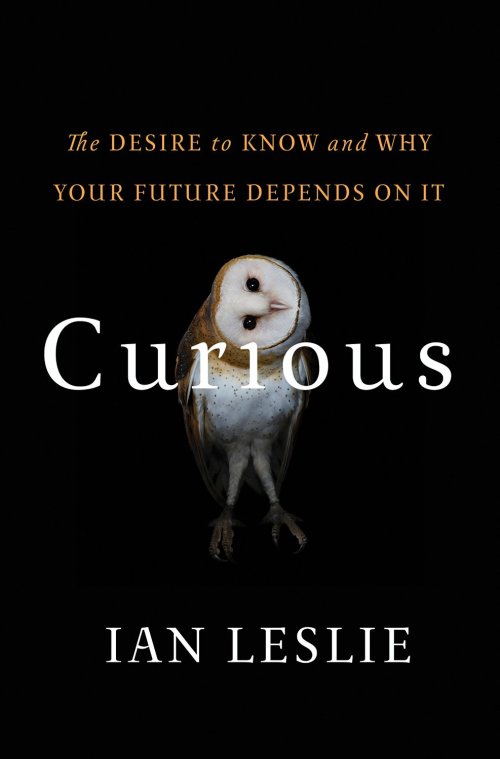
Curious

In his latest book Curious: The Desire to Know and Why Your Future Depends on It, Ian Leslie has found an essential key to the way things are and the way they—and we—might be much better.

Social observers are always looking for that one thing, that overriding concept, which succinctly explains how we got where we are, and how, if we are interested, we can use it as a way to move forward. Think Nassim Nicholas Taleb’s Black Swan. Think Malcolm Gladwell’s Tipping Point. Sometimes these concepts are interesting and useful, sometimes faddish and fatuous.

It’s impossible not to notice that something is fundamentally different about—or missing from—these times. It’s too facile just to inventory the innovative tools and techniques we enjoy, though that’s more than enough for the businesses making billions on them. We want an explanation.

Leslie explains:

A society that values order above all else will seek to suppress curiosity. But a society that believes in progress, innovation, and creativity will cultivate it, recognizing that the inquiring minds of its people constitute its most valuable asset. In medieval Europe, the inquiring mind—especially if it inquired too closely into the edicts of church or state—was stigmatized. During the Renaissance and Reformation, received wisdoms began to be interrogated, and by the time of the Enlightenment, European societies started to see that their future lay with the curious and encouraged probing questions rather than stamping on them. The result was the biggest explosion of new ideas and scientific advances in history.

The great unlocking of curiosity translated into a cascade of prosperity for the nations that precipitated it. Today, we cannot know for sure if we are in the middle of this golden period or at the end of it. But we are, at the very least, in a lull. With the important exception of the Internet, the innovations that catapulted Western societies ahead of the global pack are thin on the ground, while the rapid growth of Asian and South American economies has not yet been accompanied by a comparable run of indigenous innovation. Tyler Cowen, a professor of economics at George Mason University in Virginia, has termed the current period the Great Stagnation….

Our educational system is increasingly focused on preparing students for specific jobs. To teach someone to be an engineer or a lawyer or a programmer is not the same as teaching them to be a curious learner—yet the people who make the best engineers, lawyers, and programmers tend to be the most curious learners. So we find ourselves stuck in a self-defeating cycle: we ask schools to focus on preparing students for the world of work rather than on inspiring them, and we end up with uninspired students and mediocre professionals. The more we chase the goal of efficient education, the further it recedes.

The rewards of curiosity have never been higher, but our ideas about how curiosity works are muddled and misguided. We romanticize the natural curiosity of children and worry that it will be contaminated by knowledge, when the opposite is true. We confuse the practice of curiosity with ease of access to information and forget that real curiosity requires the exercise of effort. We focus on the goals of learning rather than valuing learning for itself. Epistemic curiosity is in danger of becoming the province of cognitive elites, with far too many of us losing or never learning the capacity to think deeply about a subject or a person. In a world where vast inequalities in access to information are finally being leveled, a new divide is emerging—between the curious and the incurious.

Curious is much more than just valuable diagnosis and description. After fascinating sections on How Curiosity Works and The Curiosity Divide, Leslie proposes a practical prescription, Seven Ways to Stay Curious:

Stay Foolish
Build the Database
Forage Like a Foxhog
Ask the Big Why
Be a Thinkerer
Question Your Teaspoons
Turn Puzzles into Mysteries

No summary or series of excerpts can do this book justice. Well-written and compelling, it is, to repeat, an essential. Read it. Even if you don’t want to apply it to yourself or your children or your colleagues, it is a book to keep handy as we try to remake what isn’t working and navigate unsteadily to a newer world.

See more from Ian Leslie here.

Republican Jewish Coalition and the Sabbath

Republican Jewish Coalition Spring Leadership 2014

It’s Saturday, the Sabbath in Jewish communities. Why is this Sabbath different than all other Sabbaths?

Because on this Sabbath Sheldon Adelson’s Republican Jewish Coalition is continuing its three-day Spring Leadership Meeting, including a galaxy of political and policy stars looking for support, prestige, power, and money, including:

New Jersey Governor Chris Christie
Ohio Governor John Kasich
Wisconsin Governor Scott Walker
Vice President Dick Cheney
Israeli Ambassador Ron Dermer
Ambassador John Bolton

It’s true that the majority of American Jews don’t fully honor the Sabbath as a time for rest, reflection, and study. It’s also true that some number of those do try in small ways to live in the spirit of the Sabbath. Where Sheldon Adelson and the RJC sit on this spectrum of Sabbath observance and honor is between them and their God and their party.

One of the things that most non-Jews and many Jews don’t recognize is the complex significance of the Sabbath. The year is filled with special days, some regarded as very serious, very important and, in the case of the High Holidays, literally awesome. The Sabbath, though, stands apart, characterized as a beloved or royalty, as a bride or queen.

The great, deep and inspiring Jewish theologian Abraham Joshua Heschel wrote an incomparable work on the nature and meaning of this. The Sabbath presents a spiritual picture of what he calls sacred time. The book is considered by readers of all faiths and even no faith an uplifting view of how we are to live in the context of such a powerful reality.

It would be presumptuous to say whether the late Dr. Heschel, who among his many achievements marched with Martin Luther King in Selma almost fifty years ago, would attend the RJC Spring Leadership Meeting. In any case, most likely not the RJC on the Sabbath.

Although the RJC will be holding its political beauty pageant today, they still might have a moment to squeeze in some Heschel. This passage from the Epilogue of The Sabbath is out of context, and not so easy to appreciate on its own. It does have something to say about space, which can be owned and fought over, and time, sacred time, in which we are all joined and connected and sharing—no matter who you are, no matter how many casinos you own, no matter how big your PAC:

Time, then, is otherness, a mystery that hovers above all categories. It is as if time and the mind were a world apart. Yet, it is only within time that there is fellowship and togetherness of all beings.

Every one of us occupies a portion of space. He takes it up exclusively. The portion of space which my body occupies is taken up by myself in exclusion of anyone else. Yet, no one possesses time. There is no moment which I possess exclusively. This very moment belongs to all living men as it belongs to me. We share time, we own space. Through my ownership of space, I am a rival of all other beings; through my living in time, I am a contemporary of all other beings. We pass through time, we occupy space. We easily succumb to the illusion that the world of space is for our sake, for man’s sake. In regard to time, we are immune to such an illusion.

Bookstores in New York


Rizzoli Bookstore

Bookstores in New York
The gleaming rooftops at sundown
Oh, bookstores in New York
It lifts you up when you run down

Dreamers with empty hands
They sigh for exotic lands

It’s bookstores in New York
It’s good to live it again

Apologies to Vernon Duke, Autumn in New York, the greatest of all Manhattan songs

The New York Times ran a story this week, Literary City, Bookstore Desert: Surging Rents Force Booksellers From Manhattan .

If you’re interested, you can read the story yourself. If you’re paying any attention to New York, business, media, or culture, you already know the story. Bookstores under siege by the rise of Amazon and digital books. Manhattan rents skyrocketing. The number of people who care about or have actually had the bookstore experience falling. The number of people who associate the Manhattan experience with the bookstore experience falling faster.

Above is a picture of the Rizzoli bookstore on West 57th Street. It will be closing soon, as the building owner will be tearing down the building. It is not the only great bookstore, past or present, which has contributed to the specialness of Manhattan. It is, though, a good example of that. If you have not walked down 57th, and have not turned into Rizzoli, and have not walked up those stairs and past those shelves, you will have to imagine. The same goes for all the other big and small bookstores of Manhattan, some less grand on less grand streets, all of them filled with books. All of them places to get lost for a while, for a long while if the aisles are long and the shelves high, the way you get lost in a flirtation or a lifelong love.

This is not nostalgia. This is not romance, at least not the kind that constructs an unreal and unattainable dream. It is real, it is still there, for now, the bookstores, the books, the place and time to scan the titles, to pick up and pull out and leaf through and browse. A refuge from the Manhattan streets, or whatever streets you walk, a place and time to be yourself, to be anywhere, and mostly to fall in love. It’s still good to live it.

Spring: Flowers in the Sky

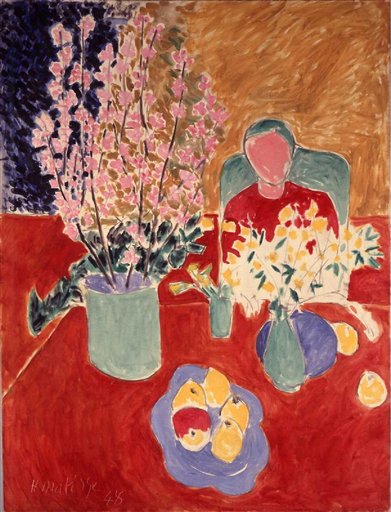
The Plum Blossoms - Henri Matisse
This message for the start of spring comes from the masterpiece Treasury of the True Dharma Eye (Shobo Genzo) by Dogen, the founder of Soto Zen.

The passage is taken from Fascicle 44, Flowers in the Sky, written in 1243:

Thus, when the time comes, flowers open. This is the moment of flowers, the arrival of flowers. At this very moment of flowers arriving, there is no other way. Plum and willow flowers unfailingly bloom on plum and willow trees. You see the flowers and know plum and willow trees. You understand flowers by looking at plum and willow trees. Peach and apricot flowers have never bloomed on plum and willow trees. Plum and willow flowers bloom on plum and willow trees. Peach and apricot flowers bloom on peach and apricot trees. Flowers in the sky bloom in the sky in just this way. They do not bloom on other grasses or trees.

Seeing the colors of flowers in the sky, you fathom the limitlessness of fruit in the sky. Seeing the opening and falling of flowers in the sky, study the spring and autumn of flowers in the sky. The spring of flowers in the sky and the spring of other flowers should be the same. Just as there are a variety of flowers in the sky, there should be a variety of springtimes. This being so, there are springs and autumns in the past and present.

Those who assume that flowers in the sky are not real and other flowers are real have not seen or heard the Buddha’s teaching. To hear the words that the sky originally had no flowers and assume that the flowers in the sky that did not exist do exist now is a lesser view based on shallow thinking. Step forward and think deeply.

Beyond Anger: How to Hold On to Your Heart and Your Humanity in the Midst of Injustice

Beyond Anger
The crisis in Ukraine is deepening, and with that lots of thought, opinion, and calls for action. It may seem like the wrong time for self-awareness and contemplation. Enough talk. This is a Nike world, so let’s just do it.

Whether it is about the Russian invasion of Ukraine or about unfairness in our own nation, our desire for justice and aversion to injustice is a good thing. But it can be so powerful and overwhelming that we easily get lost. It isn’t that we shouldn’t act decisively; it’s that in our zeal, we can be confused or overly certain about what the right decision is.

Last summer, in the face of terrible killings in India that had profound implications for Buddhist communities, Shambhala Publications published a free book you can get, Beyond Anger: How to Hold On to Your Heart and Your Humanity in the Midst of Injustice.

The publisher explains:

In July 2013, multiple bombs exploded in Bodh Gaya, India, in and around the holiest Buddhist pilgrimage site, the Mahabodhi temple that marks the spot where the Buddha attained enlightenment. In response, Shambhala Publications offers this free eBook consisting of excerpts from some of our books from a variety of Buddhist traditions that encapsulate values of love and nonviolence, which we can all practice ourselves.

You may not be a Buddhist, or care about Buddhist philosophy. You may or may not be angry about what is going on around the world, or about what some people say about how to solve the problems. You may believe that you have a better way, and you may be right. It’s just that no matter what, a different perspective can always be helpful.

In a section of the book called Conflict Resolution: Anger Is the Problem, The Karmapa, Ogyen Trinley Dorje talks about Global Conflicts, Global Solutions:

When bigger and more powerful nations step in to offer guidance to other nations, many of the same principles apply as when individuals intervene to resolve interpersonal conflicts. A sincere motivation is absolutely key, and on top of that, the intervention must be done with sensitivity and skill.

In this small world we live in, nations coexist interdependently. The actions of one country affect others deeply. Countries with more power have the potential to influence others more. I believe that with this power comes a great deal of responsibility, and that includes the responsibility not to exercise one’s power over others in pursuit of the private interests of one’s own nation….

Before you approve the actions proposed, you should be confident that they are in the best interest not only of your country, but of the world as a whole. To be a responsible, conscious citizen, it is important that you think for yourself, and take universal peace, stability, and well-being into account. Use your discernment and take a stand that serves the whole world, not just one corner of it.

Even when we are sure that the motivation to contribute positively to the well-being of the world is sincere, we also have to scrutinize the means used to pursue that aim. For example, in the name of bringing freedom to other countries, weapons are produced and wars are waged. As powerful countries themselves expand their arsenals and wage more war, the peace and stability of their own country and of the world are both placed at risk.

Again, a pure motivation needs to be applied with wisdom. I feel very strongly that war and fighting are not an effective means to bring about peace or prosperity, stability or freedom. I am certain that history will demonstrate war to be ineffective and counterproductive in the long run.

I have met many people from powerful countries who are deeply unhappy with how their leaders wield their power internationally. This seems especially common when people have failed in their efforts to urge the decision makers to pursue a more compassionate and skillful course. Some of these people become angry at their own governments. In other cases, people direct their anger at the governments of other countries.

If you find yourself angry at any government, please recollect how harmful anger is to yourself and others, and steady yourself with a firm resolve. Make an unwavering commitment to yourself that you will not allow your mind to become perturbed. Be immovable—unshakable from a peaceful state of mind.

The Gates Book and the Gates Speeches

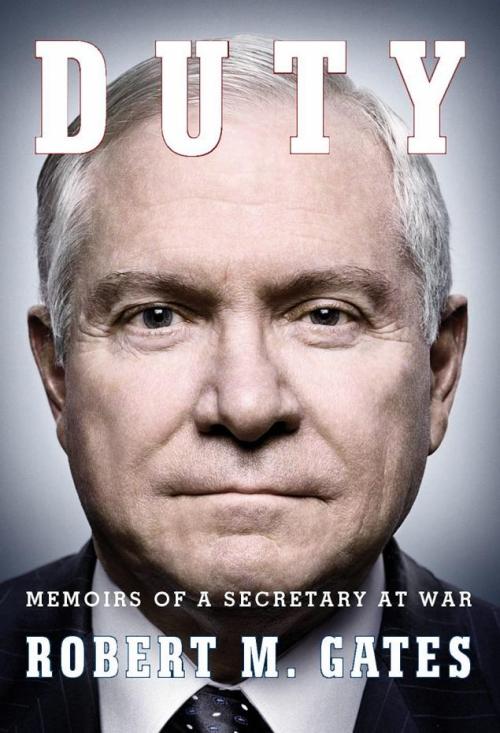
Duty
Former Secretary of Defense Robert M. Gates is about to release a memoir of his tenure under Presidents Bush and Obama. Provocative advance excerpts from Duty are now being released, and these explosive devices are anything but improvised.

Every news outlet, pundit and politician is already busy making points about President Obama, Vice President Biden, former Secretary of State Hillary Clinton and others, based on comments clipped from these excerpts, rather than having read the whole book. Even out of context, it is clear that Gates has formed some definite opinions based on working for and with these American leaders. That is anyone’s privilege, but particularly that of a man who spent forty-five years in laudable public service, much of it at the highest levels of government.

As always, though, opinion and criticism is a matter of perspective, that is, where the critic stands underlies what a critic sees and says.

You can read all the speeches that Gates delivered as Secretary of Defense. This is guaranteed not to be as titillating as reading or hearing about the “best parts” of Duty, but it might give you additional insight that will make the context of the book clearer.

Here, for example, are excerpts from remarks he made to the Heritage Foundation on May 13, 2008, when he was serving under President George W. Bush. (You can read the entire speech here) At that point, the Iraq war was five years old, only halfway to its conclusion. At that point, he had been Secretary of Defense for two years, and from that point, he would remain in that position under President Obama until July 2011.

But there is a more fundamental point that I will close with – and again, historical perspective is important. It is impossible to separate discussions of the “broken” Army following Vietnam – a conscription army – from the ultimate result of that conflict. At a congressional hearing last year, General Jack Keane, former Vice Chief of Staff of the Army, recounted the profound damage done to the Service’s “fiber and soul” by the reality of defeat in that war.

The risk of overextending the Army is real. But I believe the risk is far greater – to that institution, as well as to our country – if we were to fail in Iraq. That is the war we are in. That is the war we must win.

There it is, the context: Iraq was “the war we must win.” Gates’ insights into military matters is often brilliant and sensible, informed by his intelligence, experience and education. But on this point he candidly reveals a premise that for some colors everything else he offers. We must win Iraq because the failure to win would “break” the military the way that Vietnam did.

We did not win in Iraq, but technically, we did not lose. That current events in Iraq point to some devolution doesn’t really settle the question. That some U.S. Senators are calling for us to return to Iraq to avoid that loss or at least to avoid the appearance of futility is a partial reflection of exactly what Gates said.

We know that Gates’ personal critiques are based on close working relationships and observations. We also know, or should recognize, that those critiques are grounded in a worldview that others may not, very legitimately, share. If for Gates one of the measuring sticks is whether someone believes that Iraq had to be won, that measure may be skewed by genuine differences in informed opinion. One opinion is that as valorous as the service and sacrifice was, Iraq was a mistake, to be abandoned as prudently as possible; others might now say the same about Afghanistan. What Gates has to say about our leaders is certainly worth listening to, provided we pay equal attention to the mindset of the speaker.