Strangers in a strange (AI) land
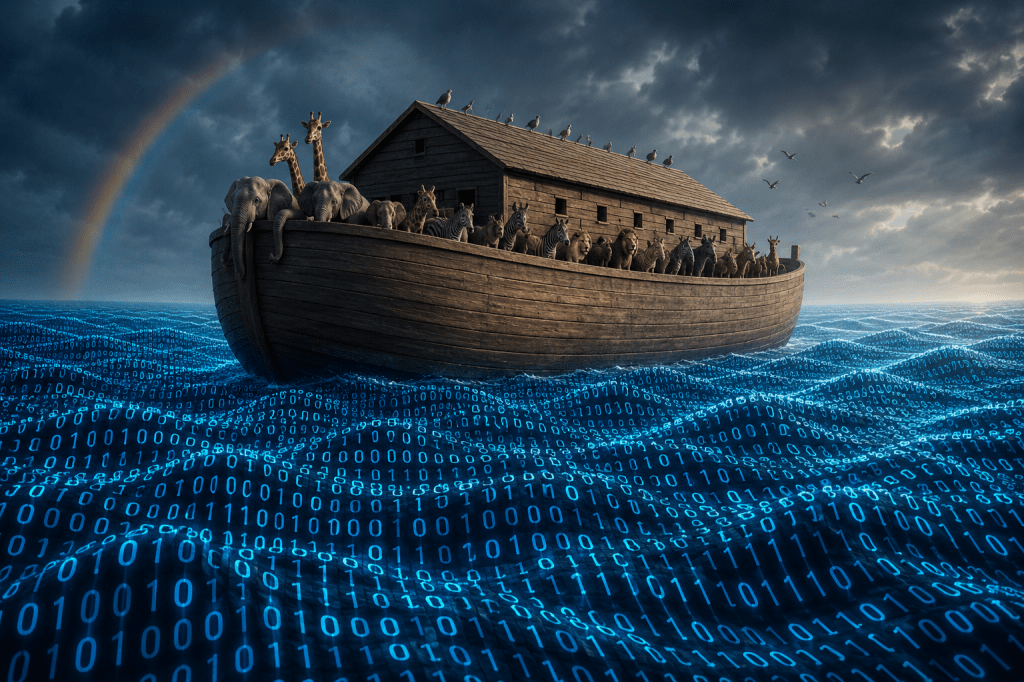
These are some of the oldest stories. People are exiled and journey to an unknown land. People arrive exiled into an unknown land. People are subject to catastrophe, natural or human, that fundamentally changes the land they live in, making it an unknown land. A flood inundates the earth and only a few remain to float and start again. A civilization flees across the desert to start again. The Bible includes the earliest of many stories, especially science fiction, of strangers in strange lands—even when that strange land is their once-familiar home.
There have been a few of these stories in modern times. Weapons, first atomic, then hydrogen, transformed this into a world that might disappear in an instant. A disease infected the world. A technology, artificial intelligence, seems capable of, to use the cliché, changing everything. This is now another strange land.
Our history of dealing as strangers in a strange land, starting with the Bible, is mixed. Early concerns about nuclear weapons—“Ban the bomb” rallies—gave way to dangerous proliferation. The covid pandemic led to welcome emergency scientific vaccine breakthroughs, but also to millions of unnecessary deaths, as some number of people stubbornly refused to believe it was as bad as science said, or bad at all. Arriving in the strange lands of nuclear annihilation or covid, some wanted—still want—to go back to the way things were. They just wanted to go home to a familiar land. We don’t know how we will do in the strange land of AI, though some current indicators are not promising.
In the words of Grateful Dead lyricist Robert Hunter in The Wheel:
The wheel is turning and you can’t slow down
You can’t let go and you can’t hold on
You can’t go back and you can’t stand still
If the thunder don’t get you, then the lightning will
© 2026 Bob Schwartz

