Bob Schwartz

Month: May, 2026

One mistake after another

Shoshaku jushaku. Literally, to use a file to file a file.

I first discovered the idea of shoshaku jushaku–one continuous mistake–a long time ago in talks by Shunryu Suzuki Roshi (see below). I may understand it a little better, just a little better, now, as I’ve made and experienced many more of what I considered mistakes, by me and others, one after another.

We seem to be witnessing so many public and harmful mistakes right now, which is how the phrase “one mistake after another” came to mind. We may point out constructively things that could be done or said better and offer corrections. But when we get mired in judgments about mistakes, we bring ourselves and others down. As Dogen wrote, “We should understand that, in reality, mistakes are called learning.” And as Suzuki Roshi said:

“So we should not say, “This is good,” or “This is bad.” Instead of saying bad, you should say, “not-to-do”!”


“When we reflect on what we are doing in our everyday life, we are always ashamed of ourselves. One of my students wrote to me saying, “You sent me a calendar, and I am trying to follow the good mottoes which appear on each page. But the year has hardly begun, and already I have failed!” Dogen-zenji said, “Shoshaku jushaku.” Shaku generally means “mistake” or “wrong.” Shoshaku jushaku means “to succeed wrong with wrong,” or one continuous mistake. According to Dogen, one continuous mistake can also be Zen. A Zen master’s life could be said to be so many years of shoshaku jushaku. This means so many years of one single-minded effort.”

–Shunryu Suzuki, Zen Mind Beginner’s Mind


“We should understand that, in reality, mistakes are called learning, and the state of no mistake is called nowness. In nowness there is no before or after, no goals, agendas, or fixed direction. Like the meandering river, it twists and turns in accord with circumstances but always knows how to find its way to the great ocean. If you wish to travel like this, you must go alone, not carry any baggage, and trust yourself implicitly.”

–Dogen, The True Dharma Eye


Law Day: Critical times are tough tests for lawyers. Some pass, some fail.

May 1, as I’ve mentioned in other posts today, is Law Day.

I’ve written frequently about the role of lawyers in the first Trump administration and during the attempts to deny that Trump lost the 2020 election (which six years later are still ongoing). None of the lawyers involved in that administration have been sanctioned, but a few of those who lied and promoted baseless election denial have lost their licenses to practice. As noted below, lawyers are officers of the court and are held to very high standards of professional ethics and responsibility.

Any contemporary discussion of miscreant presidential lawyers always brings us back to Watergate. The post below was originally published in October 2017 during the first year of that first Trump administration. It is safe to say that the current Trump lawyers make the lawyers of that first administration, where there was a semblance of upholding the rule of law, look like legal angels. The Watergate lawyers were no angels, and as one of the linked posts chronicles, they paid the price, with jail and professional sanctions.


Lawyers are sworn officers of the courts of their respective states and federal jurisdictions. They take a solemn oath. They take that oath because as citizens we give them substantial power as officers of the court. As Spiderman (not a lawyer) reminds us, with great power comes great responsibility.

In normal times it is hard enough for lawyers to balance all the interests surrounding them—professional, personal, political. In abnormal and critical times—like these—lawyers may be pushed to pick a lane. The onerous professional demands, as embodied in the oath, may be in conflict with other interests, including ambition, success and ideology.

In previous posts, I’ve mentioned a few examples of times in which lawyers chose poorly. One is the case of attorneys involved in Watergate, almost two dozen of whom ended up being punished and sanctioned.  Another is Hans Frank, a brilliant attorney known as Hitler’s Lawyer.  There are many other infamous examples.

The number of lawyers involved in current events, as principals or as advocates, is growing exponentially. It will only expand as dark matters surrounding the president get deeper and more serious. Please keep this in mind as this drama unfolds.

Here is an example of an oath, one taken by attorneys in the State of Washington:


OATH OF ATTORNEY

I do solemnly declare:

I am fully subject to the laws of the State of Washington and the laws of the United States and will abide by the same.

I will support the constitution of the State of Washington and the constitution of the United States.

I will abide by the Rules of Professional Conduct approved by the Supreme Court of the State of Washington.

I will maintain the respect due to the courts of justice and judicial officers.

I will not counsel, or maintain any suit, or proceeding, which shall appear to me to be unjust, or any defense except as I believe to be honestly debatable under the law, unless it is in defense of a person charged with a public offense. I will employ for the purpose of maintaining the causes confided to me only those means consistent with truth and honor. I will never seek to mislead the judge or jury by any artifice or false statement.

I will maintain the confidence and preserve inviolate the secrets of my client, and will accept no compensation in connection with the business of my client unless this compensation is from or with the knowledge and approval of the client or with the approval of the court.

I will abstain from all offensive personalities, and advance no fact prejudicial to the honor or reputation of a party or witness unless required by the justice of the cause with which I am charged.

I will never reject, from any consideration personal to myself, the cause of the defenseless or oppressed, or delay unjustly the cause of any person.


Labor, Loyalty and Law Day


It is May 1, and there is no Google Doodle for it. Maybe because it is hard for Google to know exactly which May 1 holiday to celebrate. Or maybe Google does not want to be involved in any controversy that the different May Days might engender.

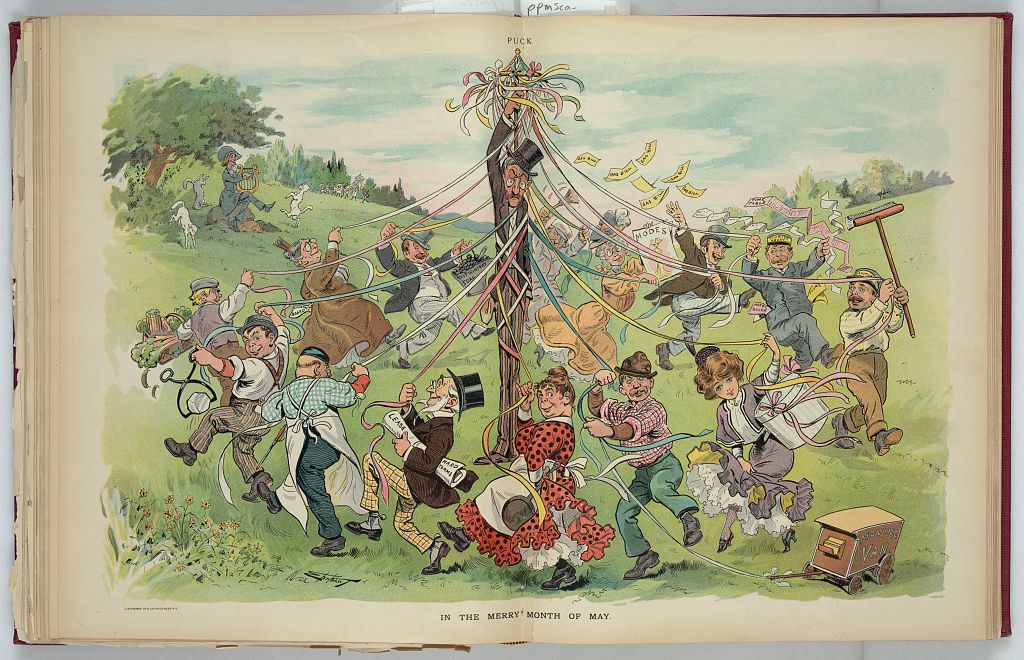
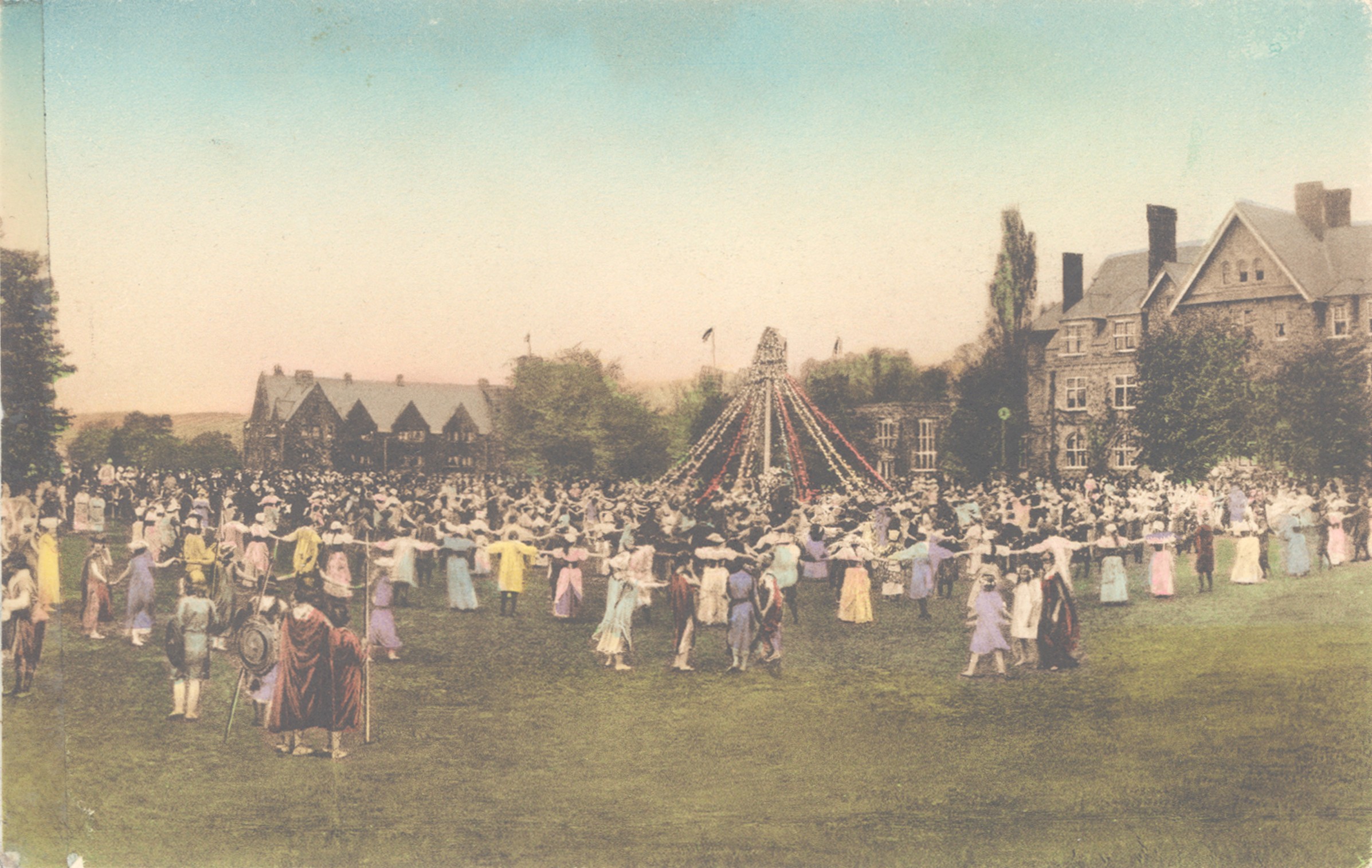
May Day has been for ages a universal celebration of spring, with sprightly traditions including dancing around the Maypole. Then it took a darker, more serious turn, becoming International Workers’ Day (Labor Day), a commemoration of the bloody death of workers at the Haymarket Riot in Chicago in 1886. To counter this populist/communistic direction, in 1921 it became Loyalty Day (originally Americanization Day), with Congress and President Eisenhower officially affirming this in 1959 at the height of the Cold War. Almost simultaneously, in 1958 the President also declared May 1 to be Law Day.

May Day remains all this and whatever else you choose to make of it. Consider these virtues: the importance of labor and economic justice, the value of deserved loyalty, the significance of the rule of law, and the joys of spring that make all of them worthwhile. If you miss May 1, May 2 or every other day will do for working on all these and for dancing, with or without a Maypole.

May 1: International Workers’ Day (aka May Day)

May 1 represents three different things, depending on who and where you are.

For ages it has been a celebration of spring, including dancing around the Maypole.

It is International Workers’ Day, a labor holiday celebrated around the world, where it is sometimes known simply as Labor Day.

It is Law Day in America.

The spring thing is obvious. International Workers’ Day and Law Day require a little history.

In 1886, a general labor strike was planned for May 1 in Chicago, to promote adoption of the 8-hour work day. It is estimated that 300,000 or more showed up in Chicago, and thousands more around America. A further demonstration was planned for Chicago’s Haymarket Square a few days later on May 4. Clashes there between police and anarchists led to death and destruction, in what is called the Haymarket Square Riot. Nine defendants were arrested for their alleged involvement, and six were ultimately hanged. Since then, May 1 has been International Workers’ Day.

In 1921, at the height of America’s first Red Scare, May 1 was designated Loyalty Day. Then in 1957, during another Red Scare, President Eisenhower declared May 1 Law Day, a celebration of the rule of law—something America needs now as much as ever.

Take your choice on May 1: Celebrate spring, celebrate workers, celebrate the rule of law. Why not all three?

© 2026 Bob Schwartz

May Day, Mayday!

May Day

May 1 is a very busy day.

It has been for ages a celebration of spring, with traditions including dancing around the Maypole.

It is International Workers’ Day, a labor holiday around the world. The date was set to commemorate the tragic Haymarket Riot in Chicago in 1886.

In 1921, to neutralize the socialist/communist aspects, in America it became known as Loyalty Day (originally Americanization Day). Congress and President Eisenhower officially affirmed this in 1959 at the height of the Cold War.

In 1958 President Eisenhower declared May 1 to also be Law Day.

What’s sometimes overlooked is the coincidental similarity to the international radio distress call: Mayday! Mayday! This was reportedly first used in the 1920s by pilots in France. One story has it that it comes from the French “venez m’aidez” (come help me).

Is it just a coincidence? If you are a worker, or a lawyer, or someone who feels put upon by law or lawyers, or just about anybody feeling distressed on May 1, 2026, please feel free to say it loud. Though dancing helps too.

© 2026 Bob Schwartz