Bob Schwartz

Tag: Trump

Trump Effect: Ids Gone Wild


Let’s let Freud describe the id, one of the three elements of his structural model of the psyche:

It is the dark, inaccessible part of our personality, what little we know of it we have learned from our study of the dreamwork and of course the construction of neurotic symptoms, and most of that is of a negative character and can be described only as a contrast to the ego. We approach the id with analogies: we call it a chaos, a cauldron full of seething excitations. …It is filled with energy reaching it from the instincts, but it has no organization, produces no collective will, but only a striving to bring about the satisfaction of the instinctual needs subject to the observance of the pleasure principle.
Sigmund Freud, New Introductory Lectures on Psychoanalysis

Along with the id, this “cauldron full of seething excitations”, the super-ego criticizes and moralizes, and the ego organizes these two into a healthy functioning identity. We are born, according to this model, all id.

We don’t say everything we think, we don’t do everything we think of doing. At least relatively  healthy, balanced people don’t, if they wish to occasionally get along with other people they might care about, or if they want to occasionally contribute to a working society.

Some people don’t seem to follow this. Children, especially young children, seem to require at least a little bit of outside guidance to help them get this. Some adults seem also to be frequently or solely driven by their gut, their instincts, their “seething excitations”.

That would describe our current president. And all those others who have been barely holding their own demons inside who now have high-level permission to let it all out. All of it.

Note: The latest racist and anti-Semitic tweet from Roseanne Barr, which just resulted in the cancellation of her hit TV show, was the impetus for this post. It was only the latest in a long series of outrageous tweets from Barr, a big fan of Trump. And only one of many expressions of uncontrolled indecency we are daily experiencing, but should never get used to.

Trump’s Ties: The Tragic Comic Idiosyncrasies of Dictators

“The general contemporary rule of thumb is that your tie should fall right at the top of your belt buckle, regardless of tie length, style of the tie, or how tall you are.”

Sometimes, as the Freudian cliche goes, a cigar is just a cigar. And a tie is just a tie.

In the case of Trump’s ludicrously long ties, which point at his crotch, it’s obvious something else is going on.

Dictators are often known for their idiosyncrasies. Sometimes there is a psychological basis. Sometimes it is a signature, part of a brand. Sometimes it is just a personal preference. Fidel Castro, for example, was associated with his cigar, which he obviously liked, which is Cuba’s best-known product, and which, well, is more than a cigar.

Trump is the first president to regularly refer to the size of his “hands”, his “button”, and once in a while, almost directly, his “penis”. The only evidence we have so far about this is from Stormy Daniels, who has only said that Trump is “average.” God willing, that is the only detail we ever have to deal with. But absent evidence, we only have Trump’s word for it. We all know what that’s worth. So most people don’t believe him. Or his ties.

Trump v. Kim: Who’s the Sucker?

Trump has been played by Kim of North Korea. Just as he is being played by Putin of Russia. Just as he is being played by Xi of China. Just as smart authoritarian rulers everywhere are lining up to see how to take advantage of him.

It brings up a proverbial thought: If you look around the poker table, and you can’t tell who the sucker is—it’s you.

Trump v. Moses: Grievances Win Over Vision

People can be complainers. Grievances can be powerful. Just ask Trump. Or Moses.

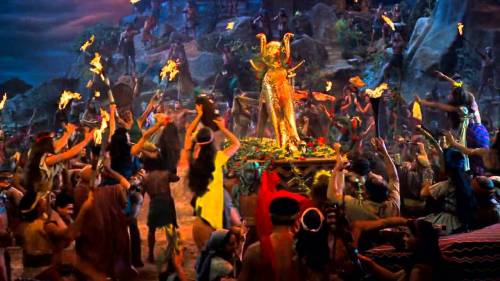
Prior freedom and miracles were not enough for the Jews at Mount Sinai. While Moses goes up the mountain, for what turns out to be a monumental visionary moment, the people head in an entirely different direction. They are still chronically unhappy and complaining about their lives and the way things have been going, and so engage in all sorts of crazy behavior. In that story, the vision does end up prevailing, but only after lots more tzuris (troubles) and mishegas (craziness).

The only chance for vision to prevail over grievance is for there to be an actual coherent and enlightened vision, and for there to be widespread confidence among people in that actual vision. Otherwise people, who are just human, will complain—sometimes selfishly and shortsightedly, sometimes justifiably. And they will channel those complaints into strange behaviors and choices.

In America, there are a lot of people with grievances. And there is a vision vacuum, at least among those whose supposed structural mission is to be practical visionaries (for example, Democrats and religious institutions). Even with miracles behind him, Moses had a tough time. Without miracles or vision, in elections and at other times, we may be seeing a lot more golden calves.


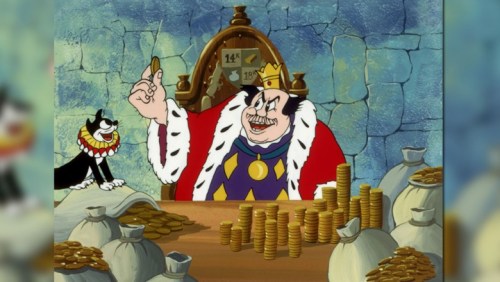
Trump: King Midas in Reverse Works His Magic on Kanye

He’s King Midas with a curse.
He’s King Midas in reverse.
He’s not the man to hold your trust,
Everything he touches turns to dust in his hands.
King Midas in Reverse, The Hollies

From The Hill:

President Trump on Friday thanked Kanye West during his speech at the National Rifle Association’s (NRA) annual convention, giving the artist credit for his rising popularity in the polls among African Americans.

“And by the way, Kanye West must have some power, because you probably saw, I doubled my African-American support numbers,” the president told those gathered in Dallas, Texas. “I went from 11 to 22 in one week.”

“Thank you Kanye, thank you,” he added….

West has sparked outrage and intense debate among the hip-hop and African-American communities in recent days with tweets in support of Trump, with some celebrities expressing support for West while others, including many of his fans, have expressed disappointment.

“We are both dragon energy. He is my brother,” West tweeted in one of his pro-Trump messages starting April 25….

Trump has previously thanked West for the support on Twitter, tweeting that it was “very cool!”

Kanye is only the latest in a long series of those who have seen their careers or lives turn to “dirt” (to be polite) simply by having anything to do with Trump. Sometimes it happens relatively quickly, as in the case of Dr. Ronny Jackson. Sometimes it happens after years and years, as in the case of Michael Cohen. Besides being an exceptional artist—which he has been—Kanye seems to have a bunch of other problems, not totally related to his Trump thing. But he seems to have been able to overcome some of those difficulties—until this. Being thanked by Trump at the NRA Convention is almost certainly the coup de grace.

The moral of the story: If you think it necessary or advantageous to get in bed with a pathological narcissist, know that you will wake up alone and covered in dirt. Possibly under a bus. Which is never very cool.

Trump After Two Terms as President

Imagine it is 2024. Trump is finishing out his second term as president. Eight years.

In a detailed and complex way, we may wonder what the lives of people in America and the world have been like during those years, day after day, thanks to his presidency. Wondering what we might do, what we might have done, to enjoy a different outcome.

But there is simple wondering too. Even at this point in 2018, it is hard to avoid seeing his face every day. Which led me to wonder: what face will we be looking at every day in 2024?

It turns out that a graphic designer at the Express newspaper in the UK has already helped us imagine that: “The intriguing image [see above] has been meticulously constructed by a professional graphic design artist, who specialises in biometric techniques to age the human face.”

Why Trump May Not Fire Department of Justice Officials (It’s Not Impeachment, a Constitutional Crisis or the Rule of Law)

It increasingly sounds like Trump is ready to rush in and try to stop the Mueller investigation:

A Rigged System – They [Department of Justice] don’t want to turn over Documents to Congress. What are they afraid of? Why so much redacting? Why such unequal “justice?” At some point I will have no choice but to use the powers granted to the Presidency and get involved!

Trump actually has no idea what the constitutional powers of the three branches of government are. He may not even know there are three co-equal and balanced branches of government. The only thing he knows is that he is THE PRESIDENT and that is the most powerful position in the world, EVER.

Trump’s firing people responsible for investigating him is wrong, is incident to a constitutional crisis, and breaches the fundamentals of the American rule of law. That won’t stop him. But this might:

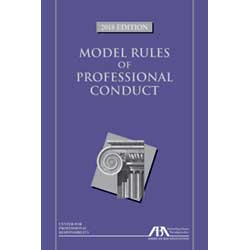
If Trump proceeds with his improper intervention, every responsible lawyer currently working on his behalf, and every responsible lawyer being asked to represent him, should and may leave and run the other way. Because by continuing or taking on that work in the aftermath of such action by Trump, they are complicit—even if tangentially and collaterally—in supporting those actions. There is a case to be made that by continuing in those circumstances, lawyers are in breach of their oaths (lawyers are all sworn officers of the court) and of the rules of professional conduct.

All of which is not meaningful or comprehensible to Trump. But he might notice that there are fewer quality lawyers willing to touch his legal problems, and that number will get infinitely smaller if he carries out his threats.

Trump’s Shtarkers

There is news that the offices of Trump’s long-time New York doctor were raided in February 2017 by Trump associates. A great Yiddish word comes immediately to mind: shtarker.

The Hill reports:

President Trump’s longtime personal doctor in New York said a trio of Trump associates raided his office in February 2017, seizing the president’s medical records.

Dr. Harold Bornstein told NBC News that Trump’s bodyguard, Keith Schiller, a lawyer with the Trump Organization and a third man came to his office the morning of Feb. 3, 2017. They took lab reports and Trump’s medical charts, he said.

“They must have been here for 25 minutes or 30 minutes. It created a lot of chaos,” Bornstein said, adding that he felt “raped, frightened and sad.”

Stark in Yiddish means strong, and so one of the usages of shtarker is to mean “strong man” or “tough guy.” But it acquired another, more sinister meaning in the lexicon of crime. A shtarker is a strong-arm man, an enforcer, a thug.

It is a word definitely well-known to the Russian and Eastern European Jews who surrounded Michael Cohen in his family and business (see A Brief History of Michael Cohen’s Criminal Ties . It is a word that may not be known to all of Trump’s people,  but it is a concept that some of them understand, endorse and are not afraid to use.

Explosive New Book: Trump/Russia: A Definitive History

“Kenneth McCallion, a former prosecutor who tracked the flows of Russian criminal money into Trump’s properties, told me, “Trump’s genius – or evil genius – was, instead of Russian criminal money being passive, incidental income, it became a central part of his business plan.””
Trump/Russia: A Definitive History

It was during the Moscow trip that Sater used his Kremlin connections to impress Trump’s daughter. Sater would later boast: “I arranged for Ivanka to sit in Putin’s private chair at his desk and office in the Kremlin.”
Trump/Russia: A Definitive History

Next week, the book Trump/Russia: A Definitive History will be released—and it will be explosive.

Written by Seth Hettena, an award-winning journalist who was a long-time investigative reporter for the Associated Press, it “chronicles the many years Trump has spent wooing Russian money and power. From the collapse of his casino empire—which left Trump desperate for cash—and his first contacts with Russian deal-makers and financiers, on up to the White House.”

The only excerpt available so far was published in Rolling Stone, A Brief History of Michael Cohen’s Criminal Ties. That brief excerpt paints one corner of a bigger picture that we will finally be able to see once the Mueller investigation is complete.


From Trump/Russia: A Definitive History:

Michael Cohen’s bare-knuckled tactics earned him the nickname of “Tom,” a reference to Tom Hagen, the consigliore to Mafia Don Vito Corleone in The Godfather. He grew up on Long Island, the son of a physician who survived the Holocaust in Poland, and like Tom Hagen spent a childhood around organized crime, specifically the Russian Mafiya. Cohen’s uncle, Morton Levine, was a wealthy Brooklyn doctor who owned the El Caribe Country Club, a Brooklyn catering hall and event space that was a well-known hangout for Russian gangsters. Cohen and his siblings all had ownership stakes in the club, which rented for years to the first Mafiya boss of Brighton Beach, Evsei Agron, along with his successors, Marat Balagula and Boris Nayfeld. (Cohen’s uncle said his nephew gave up his stake in the club after Trump’s election.)

I spoke to two former federal investigators who told me Cohen was introduced to Donald Trump by his father-in-law, Fima Shusterman, a naturalized U.S. citizen from Ukraine who arrived in the U.S. in 1975. Shusterman was in the garment business and owned a fleet of taxicabs with his partners, Shalva Botier and Edward Zubok – all three men were convicted of a money-laundering related offense in 1993….

Shusterman, who owned at least four New York taxi companies, also set his son-in-law up in the yellow cab business. Cohen once ran 260 yellow cabs with his Ukrainian-born partner, the “taxi king” Simon V. Garber, until their partnership ended acrimoniously in 2012…

Cohen was able to purchase a $1 million condo at Trump World Tower in 2001, persuading his parents, his Ukrainian in-laws and Garber to do the same in other Trump buildings. Cohen’s in-laws Fima and Ania Shusterman bought three units in Trump World Tower worth a combined $7.66 million. Cohen later purchased a nearly $5 million unit in Trump Park Avenue. In a five-year period, he and people connected to him would purchase Trump properties worth $17.3 million….

A year after Trump World Tower opened in 2002, Trump had agreed to let Miami father-and-son developers Gil and Michael Dezer use his name on what ultimately became six Sunny Isles Beach condominium towers, which drew in new moneyed Russians all too eager to pay millions. “Russians love the Trump brand,” said Gil Dezer, who added that Russians and Russian-Americans bought some 200 of the 2,000 or so units in Trump buildings he built. A seventh Trump-branded hotel tower built up Sunny Isles into what ostensibly has become a South Florida Brighton Beach.

An investigation by Reuters found that at least 63 individuals with Russian passports or addresses have bought at least $98.4 million worth of property in the seven Trump-branded luxury towers. And that was a conservative estimate. At least 703 – or about one-third – of the 2044 units were owned by limited liability companies, or LLCs, which could conceal the property’s true owner. Executives from Gazprom and other Russian natural resource giants also owned units in Trump’s Sunny Isles towers. In an observation that several people I spoke with echoed, Kenneth McCallion, a former prosecutor who tracked the flows of Russian criminal money into Trump’s properties, told me, “Trump’s genius – or evil genius – was, instead of Russian criminal money being passive, incidental income, it became a central part of his business plan.” McCallion continued, “It’s not called ‘Little Moscow’ for nothing. The street signs are in Russian. But his towers there were built specifically for the Russian middle-class criminal.”

Cohen joined the Trump Organization around the time that the second Sunny Isles tower was being built. A few years earlier, he had invested $1.5 million in a short-lived Miami-based casino boat venture run by his two Ukrainian business partners, Arkady Vaygensberg and Leonid Tatarchuk. Only three months after its maiden voyage, it would become the subject of a large fraud investigation. But Cohen was saved from his bad investment by none other than Trump himself, who hired Cohen as an attorney just before his casino ship sank. A source who investigated Cohen’s connections to Russia told me, “Say you want to get money into the country and maybe you’re a bit suspect. The Trump organization used lawyers to allow people to get money into the country.”…

Michael Cohen’s in-laws, the Shustermans, also bought real estate in Sunny Isles. The development was paying off. Trump’s oldest son, Don Jr., would later note, “We see a lot of money pouring in from Russia.” There is no question Trump owed his comeback in large part to wealthy Russian expatriates.

Cohen and Felix Sater have known each other for nearly 30 years. They met in Brighton Beach when Cohen started dating his future wife, Shusterman’s daughter, Laura, who Sater says he knew from the neighborhood. When Cohen joined the Trump organization, Sater had become a fixture in the office. Sater was developing Trump SoHo, a hotel-condo in lower Manhattan that later would be consumed by scandal, and had earned Trump’s trust. Trump asked him to look after his children, Ivanka and Don Jr., on a 2006 visit to Moscow. (It was during the Moscow trip that Sater used his Kremlin connections to impress Trump’s daughter. Sater would later boast: “I arranged for Ivanka to sit in Putin’s private chair at his desk and office in the Kremlin.”) When Sater’s criminal past was exposed in The New York Times, Trump suddenly looked and acted like a man with something to hide. Despite laying claim to “one of the great memories of all time,” he seemed to be having trouble recollecting who Sater was. “Felix Sater, boy, I have to even think about it,” Trump told The Associated Press in 2015. “I’m not that familiar with him.”


Politely Ask Trump to Resign

The majority of Americans think that Trump is a threat to civility, to honesty, to American values, democracy and institutions, and to American and global peace and progress. As one new and untried tactic, we should simply, politely and plainly ask him to resign.

This is not a replacement for any of the other ongoing approaches, including investigation of his wrongdoing, ridicule, humor, and calls for impeachment or action under the 25th amendment. And of course, voting.

It is, however, a civilized way of doing something it is increasingly hard to do: be a better and more civilized person than Trump himself. It is hard not to fall into the sinkhole of being as terrible as our worst nemesis—that is an ancient theme. The pragmatic fact is that it is sometimes unavoidable, if the better is to triumph over the lesser. But when that happens, we are in danger of being just as bad, and our remaining upright and our job of healing and recovering is made that much more difficult.

So let us ask Trump to resign, politely explaining the many reasons it is best for America and Americans, and for the world. Of course he will not do it or consider it, and will mock it, since in his mind any show of decency and quiet reason is a show of weakness. Instead, though, it is a small demonstration that we still believe that decency is a show of strength. Which is something we are understandably starting to forget.

Note:

As is my practice, I asked the I Ching about this proposal. It is appropriate to do that for two reasons. The I Ching itself is in part a philosophical response to centuries of national political changes in China, cataclysms that make a few years of Trump look like a picnic. Second, China itself in 2018 still uses the I Ching for guidance. So why shouldn’t we?

The I Ching says (Alfred Huang translation):

59
Huan • Dispersing

NAME AND STRUCTURE

Originally Huan meant ice breaks, melts, and vanishes. Later on, it came to mean to separate and scatter.

Sequence of the Gua: After happiness and joyfulness, there comes dispersing. Thus, after Joyful, Dispersing follows.

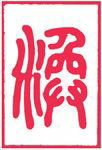
The ideograph of Huan expresses its original meaning. The image on the left represents water. It resembles the primary gua for Water, turned vertically. On the top right is a knife, and on the bottom are two hands with fingers and arms. In the middle are two pieces of ice. Taken as a whole, this ideograph pictures a knife used to break up the ice, with two hands separating the pieces of ice. The ice melts and becomes water, at last dispersing and vanishing. The structure of the gua is Wind   above, Water   below. The wind blows over the water and disperses the waves. The inner gua is Water; its attribute is danger. It symbolizes one’s vital energy blocked within. The outer gua is Wind; its attribute is penetration. Penetrating and breaking the blockage leads to dispersion.

Decision

Dispersing.
Prosperous and smooth.
The king arrives at the temple.
Favorable to cross great rivers.
Favorable to be steadfast and upright.

Commentary on the Decision

Dispersing.
Prosperous and smooth.
The firm comes without hindrance.
The yielding is at the proper place.
It goes out to meet its similarity above.
The king arrives at the temple.
He is in the central place.
Favorable to cross great rivers.
The merit comes from mounting on the wood.

Commentary on the Symbol

The wind moves over the water.
An image of Dispersing.
In correspondence with this,
The ancient king offers sacrifice to the Lord of Heaven
And establishes temples.

SIGNIFICANCE

The gua takes the image of the wind moving over the water to demonstrate the act of dispersing people’s resentment. During the time of dispersing, having a leader with wisdom and foresight is crucial. The king approaching his temple gives us an image of his connection with the spiritual world. Crossing great rivers signifies the hardship and difficulty of the work. Steadfastness and uprightness should be the virtue of a great leader. He has self-confidence, so he is able to live and work in peace. The host of the gua is the solid line at the fifth place. This line represents the king who approaches his temple to connect himself with the Lord of Heaven. During the time of dispersing he is the only one who, in the honored place, is able to establish order throughout his nation. The fourth line represents the king’s minister, while the second line is his officer. They faithfully assist the king to unite the people in the time of dispersing.

During King Wen’s sitting in stillness he meditated upon joyfulness and dispersion. After people had been joyful, their energy dispersed, and their focus was scattered. At such a time, a leader with wisdom and foresight was needed. He arrived at his temple and communicated with the deity. His sincerity and trustworthiness encouraged people to work in full cooperation and with unity of purpose. The Duke of Zhou narrates that to be of help at such a time, one should have the speed of a strong horse. Dispersing self-serving groups led to a union as solid as a mound.