Bob Schwartz

Tag: education

Prophetic perspective on AI: Ivan Illich and Tools for Conviviality

“One of the world’s great thinkers…. in the last 20 years of his life he became an officially forgotten, troublesome figure. This position obscures the true importance of his contribution.”
Guardian obituary of Ivan Illich, 8 December 2002

“The hypothesis on which the experiment was built must now be discarded. The hypothesis was that machines can replace slaves. The evidence shows that, used for this purpose, machines enslave men.”
Ivan Illich, Tools for Conviviality (1973)

If you have heard of Ivan Illich or include him in your conversations, you are in a small minority. His published critiques of major institutions—education, medicine, technology—had the establishment and those increasingly dominant institutions treating him as a “troublesome” marginal thinker. When you read Illich today, however, he comes across like a prophet. Prophets are almost always troublemakers.

From the Guardian obituary:


Ivan Illich: A polymath and polemicist, his greatest contribution was as an archaeologist of ideas, rather than an ideologue
Andrew Todd and Franco La Cecla
Sun 8 Dec 2002

Ivan Illich, who has died of cancer aged 76, was one of the world’s great thinkers, a polymath whose output covered vast terrains. He worked in 10 languages; he was a jet-age ascetic with few possessions; he explored Asia and South America on foot; and his obligations to his many collaborators led to a constant criss-crossing of the globe in the last two decades.

Best known for his polemical writings against western institutions from the 1970s, which were easily caricatured by the right and were, equally, disdained by the left for their attacks on the welfare state, in the last 20 years of his life he became an officially forgotten, troublesome figure. This position obscures the true importance of his contribution….

Illich was born in Vienna into a family with Jewish, Dalmatian and Catholic roots. His was an errant life, and he never found a home again after his family had to leave Vienna in 1941. He was educated in that city and then in Florence before reading histology and crystallography at Florence University.

He decided to enter the priesthood and studied theology and philosophy at the Vatican’s Gregorian University from 1943 to 1946. He started work as a priest in an Irish and Puerto Rican parish in New York, popularizing the church through close contact with the Latino community and respect for their traditions. He applied these same methods on a larger scale when, in 1956, he was appointed vice-rector of the Catholic University of Puerto Rico, and later, in 1961, as founder of the Centro Intercultural de Documentación (CIDOC) at Cuernavaca in Mexico, a broad-based research center which offered courses and briefings for missionaries arriving from North America….

Illich retained a lifelong base in Cuernavaca, but travelled constantly from this point on. His intellectual activity in the 1970s and 1980s focused on major institutions of the industrialized world. In seven concise, non-academic books he addressed education (Deschooling Society, 1971), technological development (Tools For Conviviality, 1973), energy, transport and economic development (Energy And Equity, 1974), medicine (Medical Nemesis, 1976) and work (The Right To Useful Unemployment And Its Professional Enemies, 1978, and Shadow Work, 1981). He analyzed the corruption of institutions which, he said, ended up by performing the opposite of their original purpose….

Illich lived frugally, but opened his doors to collaborators and drop-ins with great generosity, running a practically non-stop educational process which was always celebratory, open-ended and egalitarian at his final bases in Bremen, Cuernavaca and Pennsylvania.

Ivan Illich, thinker, born September 4 1926; died December 2 2002


I have been rereading Tools for Conviviality, especially in light of the overwhelming AI phenomenon, and find it as insightful as anything I’ve read—even though it was written more than fifty years ago and it doesn’t directly address AI. Great thinking from great thinkers always ages well.

No brief excerpt can do Tools for Conviviality justice. Here are just a few paragraphs:


The symptoms of accelerated crisis are widely recognized. Multiple attempts have been made to explain them. I believe that this crisis is rooted in a major twofold experiment which has failed, and I claim that the resolution of the crisis begins with a recognition of the failure. For a hundred years we have tried to make machines work for men and to school men for life in their service. Now it turns out that machines do not “work” and that people cannot be schooled for a life at the service of machines. The hypothesis on which the experiment was built must now be discarded. The hypothesis was that machines can replace slaves. The evidence shows that, used for this purpose, machines enslave men. Neither a dictatorial proletariat nor a leisure mass can escape the dominion of constantly expanding industrial tools.

The crisis can be solved only if we learn to invert the present deep structure of tools; if we give people tools that guarantee their right to work with high, independent efficiency, thus simultaneously eliminating the need for either slaves or masters and enhancing each person’s range of freedom. People need new tools to work with rather than tools that “work” for them. They need technology to make the most of the energy and imagination each has, rather than more well-programmed energy slaves….

I here submit the concept of a multidimensional balance of human life which can serve as a framework for evaluating man’s relation to his tools. In each of several dimensions of this balance it is possible to identify a natural scale. When an enterprise grows beyond a certain point on this scale, it first frustrates the end for which it was originally designed, and then rapidly becomes a threat to society itself. These scales must be identified and the parameters of human endeavors within which human life remains viable must be explored.

Society can be destroyed when further growth of mass production renders the milieu hostile, when it extinguishes the free use of the natural abilities of society’s members, when it isolates people from each other and locks them into a man-made shell, when it undermines the texture of community by promoting extreme social polarization and splintering specialization, or when cancerous acceleration enforces social change at a rate that rules out legal, cultural, and political precedents as formal guidelines to present behavior. Corporate endeavors which thus threaten society cannot be tolerated. At this point it becomes irrelevant whether an enterprise is nominally owned by individuals, corporations, or the state, because no form of management can make such fundamental destruction serve a social purpose….

It is now difficult to imagine a modern society in which industrial growth is balanced and kept in check by several complementary, distinct, and equally scientific modes of production. Our vision of the possible and the feasible is so restricted by industrial expectations that any alternative to more mass production sounds like a return to past oppression or like a Utopian design for noble savages. In fact, however, the vision of new possibilities requires only the recognition that scientific discoveries can be used in at least two opposite ways. The first leads to specialization of functions, institutionalization of values and centralization of power and turns people into the accessories of bureaucracies or machines. The second enlarges the range of each person’s competence, control, and initiative, limited only by other individuals’ claims to an equal range of power and freedom.

To formulate a theory about a future society both very modern and not dominated by industry, it will be necessary to recognize natural scales and limits. We must come to admit that only within limits can machines take the place of slaves; beyond these limits they lead to a new kind of serfdom. Only within limits can education fit people into a man-made environment: beyond these limits lies the universal schoolhouse, hospital ward, or prison. Only within limits ought politics to be concerned with the distribution of maximum industrial outputs, rather than with equal inputs of either energy or information. Once these limits are recognized, it becomes possible to articulate the triadic relationship between persons, tools, and a new collectivity. Such a society, in which modern technologies serve politically interrelated individuals rather than managers, I will call “convivial.”

After many doubts, and against the advice of friends whom I respect, I have chosen “convivial” as a technical term to designate a modern society of responsibly limited tools…. I am aware that in English “convivial” now seeks the company of tipsy jollyness, which is distinct from that indicated by the OED and opposite to the austere meaning of modern “eutrapelia,” which I intend. By applying the term “convivial” to tools rather than to people, I hope to forestall confusion.

“Austerity,” which says something about people, has also been degraded and has acquired a bitter taste, while for Aristotle or Aquinas it marked the foundation of friendship. In the Summa Theologica, II, II, in the 186th question, article 5, Thomas deals with disciplined and creative playfulness. In his third response he defines “austerity” as a virtue which does not exclude all enjoyments, but only those which are distracting from or destructive of personal relatedness. For Thomas “austerity” is a complementary part of a more embracing virtue, which he calls friendship or joyfulness. It is the fruit of an apprehension that things or tools could destroy rather than enhance eutrapelia (or graceful playfulness) in personal relations.

Ivan Illich, Tools for Conviviality


More post-election music: Us and Them by Pink Floyd

Black and blue
And who knows which is which, and who is who?
Up and down
And in the end, it’s only round and round, and round

Pink Floyd, and especially Roger Waters, are at or near the top of iconoclastic (“icon smashing”) pop music. (Waters continues to swim outside the mainstream, getting him into trouble with certain constituencies, but from my perspective, his artistic contribution grants him a license.)

Take the issue of education. We know the schools are not working, if the mission is to cultivate citizens with solid basic skills and knowledge. Instead of, for example, schools that deliver many students to college who are deficient in elementary math and who can’t conscientiously research and coherently write without the assistance of AI. What some parents clamor for is education that inculcates their children with the “right” ideology.

More than forty years ago, this is what Waters wrote in Another Brick in the Wall:

We don’t need no education
We don’t need no thought control
No dark sarcasm in the classroom
Teacher, leave them kids alone

All in all, it’s just another brick in the wall
All in all, you’re just another brick in the wall

Back to post-election music. Two years after John Lennon—another iconoclast—released his anti-war track, Happy Xmas (War Is Over) (1971), Pink Floyd featured Waters’ view about war on Dark Side of the Moon (1973). Us and Them is about war, but more broadly about the pointless and thoughtless identities that lead inevitably to pointless and thoughtless conflict.

Us and them
And after all, we’re only ordinary men
Me and you
God only knows it’s not what we would choose to do

“Forward!” he cried from the rear
And the front rank died
The general sat, and the lines on the map
Moved from side to side

Black and blue
And who knows which is which, and who is who?
Up and down
And in the end, it’s only round and round, and round

“Haven’t you heard it’s a battle of words?”
The poster bearer cried
“Listen, son,” said the man with the gun
“There’s room for you inside”

Down and out
It can’t be helped, but there’s a lot of it about
With, without
And who’ll deny it’s what the fighting’s all about?

Out of the way, it’s a busy day
I’ve got things on my mind
For want of the price of tea and a slice
The old man died

The Still Secret Story of Trump at Wharton

Poor University of Pennsylvania. One of America’s great universities, with one of America’s great business schools in Wharton, finally got a U.S. president. The bad news is that it is Donald Trump, who spent two years at Wharton as a transfer from Fordham.

Normally—that is, when there was a normal—Penn would be proudly crowing about finally matching other Ivy League schools that can claim such an honor, e.g., seven presidents have Harvard degrees. Instead, Penn has hunkered down, maintaining total silence about Trump’s time at Wharton, his admission, his grades, etc. Almost all the information we have is from Trump himself, most of which has been proven false.

Which leaves Americans, journalist and interested alums gathering crumbs of information. The latest is in the Washington Post: Trump has referred to his Wharton degree as ‘super genius stuff.’ An admissions officer recalls it differently.

A few of the questions that still have no definitive answer:

How did Trump get into Wharton?

At the time he transferred from Fordham to Wharton, it wasn’t nearly as hard to get in as it is now—about a 40% admission rate then, only 7% today. Even with that, his rich father Fred went along on the interview trip, and we don’t know whether any financial incentives changed hands.

How well did Trump do at Wharton?

Hard to tell without grades or many anecdotes, but probably average. It appears that he did pay close attention in real estate class, but was known never to read books. As for his claim that he graduated first in his class:

Trump’s name was not among the top honorees at his commencement. Nor was he on the dean’s list his senior year, meaning he was not among the top 56 students in his graduating class of 366. All that is known for certain is that Trump received at least a 2.0 average, or C, enabling him to graduate.

Does any of this matter?

As usual, Trump simultaneously lies about his achievements and hides the facts. So in one sense this is no different than all his other duplicitous concealments. Still, there are thousands and thousands of people who work really hard to genuinely achieve educational excellence, at Penn and at so many other colleges. It is sad to say that the loudest college graduate in the world isn’t one of those.

Veterans Studies as an Academic Discipline

This began with a simple thought: The use of veterans as a political prop is about as immoral as the failure as a nation to fully and properly honor their service beyond politically expedient lip-service.

I wondered just how seriously we take veterans, and whether they have yet received the same sort of academic attention that practically every other cultural and social cohort has. The answer is that it is just starting, and that is a good thing.

Travis L. Martin has helped pioneer the program:

My goal is to inform people of the importance and feasibility of establishing “Veterans Studies” as an academic discipline. Below you will hear my story, as well as those of students I’ve taught in Eastern Kentucky University’s Veterans Studies Program. I was a student veteran when I approached faculty and administrators with the idea. And it will take that kind of grass roots activism to get Veterans Studies established as a discipline at institutions across the country….

Why do we need Veterans Studies programs? Well, in 1947, veterans comprised up to 49% of all college students. Professors from that era will tell you stories of makeshift camps and barracks built to accommodate them. In the wake of WW2, the option to pursue higher education helped America avoid a catastrophic influx of unemployed veterans into the job market. School became synonymous with service. However, a rift formed between the military and academia when the anti-war movement found a home on college campuses during the Vietnam War. While veterans have come a long way since then, those returning home from Iraq and Afghanistan still deal with many of the same stereotypes….

The first Women’s Studies program was founded in 1970 at San Diego State. This program sought to undo the stereotypes that held back the advancement of women in society for centuries. Today, there are more than 900 Women’s and Gender Studies programs throughout the world. Likewise, the first program to examine the culture of African Americans originated at San Francisco State in 1968. Today, there are more than 300 programs. Similar stories can be found about programs ranging from Appalachian Studies, to Irish Studies, to Jewish Studies, to programs for about every underrepresented, misunderstood population on the globe. Why are veterans excluded from these initiatives?

This problem is one driven by too much lip-service and not enough action. In 2011, $9.9 billion had already been spent on tuition assistance. Student veterans are big business. While this money is certainly a welcome relief for those institutions of higher learning struggling with low enrollments and government budget cuts, those benefiting do not seem concerned with investing it in long-term initiatives designed to transform the societies in which their veteran graduates live and work….

Veterans Studies is not just about teaching veterans. It is about bringing non-veterans and veterans together at a common center rooted in scholarship. Non-veteran students take my courses to complete “diversity of experience” credits and, if they choose, go on to earn a minor or certificate in a field that prepares them for work within military and veteran communities….

That both veterans and non-veterans take the course is vital. The two groups learn to communicate by framing veteran experience in three key ways: the institutional, cultural, and relational dimensions of Veterans Studies. The institutional portion of the course teaches the students how the different branches function as a hierarchy and together—in the past as well as the present—to keep America safe. The cultural dimension exposes them to works of literature, films, and the typical ways in which veterans are depicted by the media. Finally, in the last portion of the course, students learn about how veterans assimilate into society after taking off the uniform….

Veterans Studies, as it exists in the courses I’ve designed, integrates oral, written, and visual communications skills in projects requiring critical inquiry and research. Students, taking Veterans Studies courses for a variety of professional and personal reasons, must cross disciplinary lines in order to make the first forays into this field. Further, group work, specifically, the kind of group work that asks veteran and non-veteran students to collaborate and produce work relevant to all parties, is foundational in both composition and the future of Veterans Studies….

Schools benefiting financially from the sacrifices of service men and women have a responsibility to create veteran-friendly environments and produce graduates capable of interacting respectfully and knowledgeable about veterans issues in the workplace and their day-to-day lives. The time has come for Veterans Studies Programs to claim their rightful places within the walls of academia.

American Dislike of Studying History and Government Comes to Haunt Us

I have loved reading about American history and government since, well, since I have been reading. I was an officer in our high school Future Voters of America club, and I was a delegate to a mock presidential convention. A nerd then, and maybe still.

That is not typical for a large number of Americans, who seem disinclined to read much (and that is read, not just listen or watch) about these subjects. Partly that is because these subjects are usually required in school and are not always very well taught, with all due respect to those who have the sometimes thankless job of teaching.

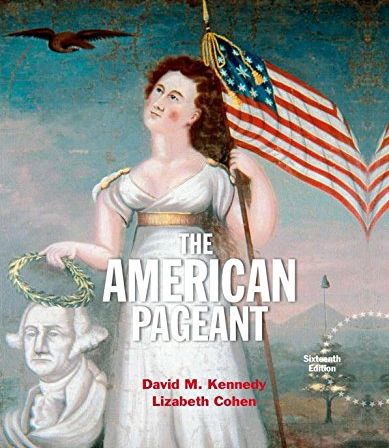
My high school American History teacher was also our basketball coach, a decently smart and affable guy who happened to have been given one of the all-time exciting American History textbooks to teach from: The American Pageant, which thanks to the unique approach of its original author, historian Thomas A. Bailey, remains in print in its 16th edition. It was, and hopefully still is, one of the most fun reads of any textbook on any subject. Yes, I said “fun.” Without speaking for my classmates, I was excited to read each chapter.

I don’t believe all Americans think of learning about history and government as fun. More like work, maybe hard and distasteful and avoidable work. Except that avoiding knowing history and government means that when, as can happen, things get way out of whack, you won’t recognize what is happening, or recognize that as a historical matter, the consequences may be unfortunate, if not dire.

As can happen, things may get way out of whack, and they have. Maybe those who find learning about American history and government useless might squeeze it into their busy schedules. Particularly if they love America, because as we know, true love means learning about the one you love.

Why We Should Teach and Learn Ancient History First

Children in America who attend some sort of religious school, even before going to secular school, may learn some limited sort of ancient history. Ancient in that it concerns purported people and events from millennia ago. Limited in that some number of those people and events, however instructional and enlightening, may be of some historical question.

There is other ancient history worth teaching our kids early, and catching up with ourselves, just in case we missed it in our own education. There are continuous civilizations all around the world that have been ongoing, in the same place, also for millennia.

China, for example. Or India. Or the native populations in the Americas. This is where education should start, before we start talking about admittedly important people arriving on these North American shores and establishing an admittedly important nation just a few centuries ago.

Why? Because it would give us a sense of perspective on what we have, or have not, achieved so far. And because it would give us a missing sense of the scope of history, in that everything comes and goes. Which you could learn from the history of China. Or you could learn from reading the I Ching, the book about things changing, written in China millennia ago. Or if you prefer something more Western and familiar, from reading the Bible itself. A time for every purpose, it says. And so it goes.

“Books Smell Like Old People”

Denby - Decline of Teen Reading

David Denby in the New Yorker asks: Do Teens Read Seriously Anymore?

If reading means books or other extended forms of writing, evidence and anecdote say the answer is no.

Denby doesn’t have anything particularly new to say about the big picture and long term consequences of generations who are less interested in books than ever. This is an ongoing conversation that just gets more and more attention as digital demographics continue to roll over us all.

Still, it’s worth reading his piece as a reminder and, for some, a wakeup call.

Denby mentions the related ascendance of STEM education:

The Times reported on Monday that at least fifteen state governments were offering some type of bonus or premium for high-demand STEM degrees. “All the people in the world who want to study French literature can do so,” Matt Bevin, the governor of Kentucky, said. “They’re just not going to be subsidized by the taxpayers like engineers will be, for example.” (Governor Bevin, as it turns out, graduated from Washington and Lee with a bachelor’s degree in Japanese and East Asian studies. So much for the crippling effects of the humanities.)

Denby also mentions a recent book by media scholar Sherry Turkle, Reclaiming Conversation: The Power of Talk in a Digital Age:

Much of their social life, for boys as well as girls, is now conducted on smartphones, where teen-agers don’t have to confront one another. The terror of eye contact! Sherry Turkle, in her recent book “Reclaiming Conversation,” has written about the loss of self that this avoidance creates and also of the peculiar boredom paradoxically produced by the act of constantly fleeing boredom.

Denby doesn’t come off like a snobbishly literate dinosaur. He doesn’t over-idealize “the way things were” as being infinitely and generally better, which they weren’t. He is just an astute observer making the point that extended discourse, written and read, is an essential part of moving society and civilization along. How we reclaim that, if it is in fact getting lost, is a difficult but worthwhile mission.

Prisoners Beat Harvard in Debate

Bard Prison Initiative

A team from a prison just beat a team from Harvard. In a debate.

The Washington Post reports not just the victory of the team, part of the Bard Prison Initiative, but the constraints that the debaters prepared under—including having to research without the internet, from actual books and articles, but only those approved by the prison administration.

Too many lessons to count. Among them:

The two million or so people we consign to prison aren’t all there because they are not smart enough or motivated enough to function or excel in the real world.

The people who consign themselves to our most privileged houses of learning aren’t all as smart and motivated as some of those consigned to prison.

If you want to learn, really learn, learn enough to defeat the nation’s purportedly premier scholars, you can do it offline. Just like this prison debate team. Just like Abraham Lincoln.

Independence Day and STEM Democracy

Thomas Jefferson with Telescope

Is the increasing hegemony of STEM education dangerous to the future of American democracy?

In Science and the Founding Fathers: Science in the Political Thought of Thomas Jefferson, Benjamin Franklin, John Adams, and James Madison, Professor I. Bernard Cohen might see it otherwise. As one of the most eminent historians of science, he makes the case that the familiarity of some Founding Fathers with science inspired the new nation, and that the shape of the new democracy was directly based on scientific principles.

One review notes about Professor Cohen’s theory:

The Declaration of Independence, which he [Jefferson] wrote, reverberates with echoes of Newtonian science, as when he invokes “self-evident” truths or “laws of nature.” Benjamin Franklin, far from being a mere tinkerer or inventor, pioneered the science of electricity. Franklin also developed a demographic theory that North America would become a population center of the British world; this led to the policy according to which the British annexed Canada rather than Guadeloupe as the spoils in the war against the French (1754-63). John Adams, who studied astronomy and physics at Harvard, was a founder of the American Academy of Arts and Sciences in Boston. And James Madison, a devoted amateur scientist, drew on scientific metaphors and analogies in his Federalist articles.

Maybe. But in fact, most of those in Philadelphia for the Continental Congress from which the Declaration of Independence emerged were not scientists or even science fans. And even those whose philosophy was shaped in part by science enjoyed a much broader education, one that gave complete dimension to their thinking, what we now call liberal arts. So that while the intriguing questions that Professor Cohen raises are significant, so is the parallel question: If the Continental Congress had been mostly or entirely filled with 18th century scientists, just what kind of Declaration would have been produced, and more broadly, what kind of nation would we be?

Nowhere can the nexus of Big Science and Big Political Philosophy be better seen than in Richard Rhodes’ magnificent book The Making of the Atomic Bomb. It is sort of a fun house mirror of what Cohen claims for the American founding. Rather than world-changing political thinkers with a scientific bent, we have equally historic scientists with a worldly and philosophical bent. They had been educated in the early 20th century, many in Europe, and the standard for education then and there was broad learning beyond the laboratory. In the end, their science was driven by the realities of World War II and Hitler, but that did not stop them from philosophical ponderings and quandaries about the work they were doing and its ultimate impact.

So, yes, it may be that science did help give us what by all measures is a remarkably robust and resilient democracy, starting with the rousing rhetoric of the Declaration of Independence. And we should educate scientists, to make progress and to advance the liberty, peace, and security we want. But we should also have many other thinkers, scientists or otherwise, who are capable of leading and having enlightening debates about exactly what we do need and want, and about the means we choose to get there, and about where it might lead. We do need scientists, technologists, engineers, and mathematicians. But it is never enough, not nearly enough, at least not in this democracy.

Educating Prophets

If we view prophets in a broad sense, in a big sense, not something necessarily biblical or spiritual, not as fortune tellers, but as witnesses, critics, analysts, teachers, and guides, it is something we have always had and needed.

That kind of prophecy may be viewed as a gift, but it is something that can be cultivated and encouraged. That isn’t always to the liking of many. Prophets can point in a constructive direction, but in their role as critics they can also be harsh, and stand in the way of those who benefit and profit from the status quo. So some prophets are more acceptable than others, and some are treated as enemies.

Education, in and out of institutional settings, is a part of cultivating and encouraging prophets and prophecy. That isn’t often, or ever, on the list of what education is for or about. So maybe, if we are intent on viewing education as a path to employment and the jobs of the future, we should make sure to include prophet among those jobs. And should include the sorts of subjects and fields in which prophets and prophecy of all kinds grow.