Ebola Stress Test (2014)

Quietly, where no one can hear, some leaders and citizens are probably worried that if this was a real Ebola outbreak in the U.S., and not the thankfully tiny and so far isolated problem it is, we would fall apart. Utterly fail the test. (2014)
The post below was published on October 27, 2014. It comes to mind today for a couple of reasons. There is a current Ebola outbreak in the Democratic Republic of Congo. And various recent public health developments, including a sea change in how the federal government looks at disease and vaccines, has prompted scientists to shout that we are not ready for the next pandemic, just as we weren’t ready for the last one. Remember that?
Stress tests. We see them in medicine, in banking, in construction.
How well will the patient’s heart perform when he is on a treadmill? How sound are a bank’s finances in the worst case scenario? How will building materials stand up under maximum pressure?
Public crises are stress tests. So far, Ebola is the latest demonstration of the tendency for our civic infrastructure to crack—or show signs of it—under pressure.
Quietly, where no one can hear, some leaders and citizens are probably worried that if this was a real Ebola outbreak in the U.S., and not the thankfully tiny and so far isolated problem it is, we would fall apart. Utterly fail the test.
The latest episode concerns this weekend’s rapid response by multiple states to Craig Spencer, a doctor returning from West Africa and becoming sick with Ebola in New York City last week. In addition to New York and New Jersey, other states are now or may be requiring returning health care workers to be quarantined.
There is a problem: none of these states appear to have thought through any of it—most especially the practical aspects of whisking someone coming home from a heroic medical mission into isolation that is supposed to be comfortable, suitable, sensible, and sensitive under the circumstances. It now seems the scenario is act first, plan later.
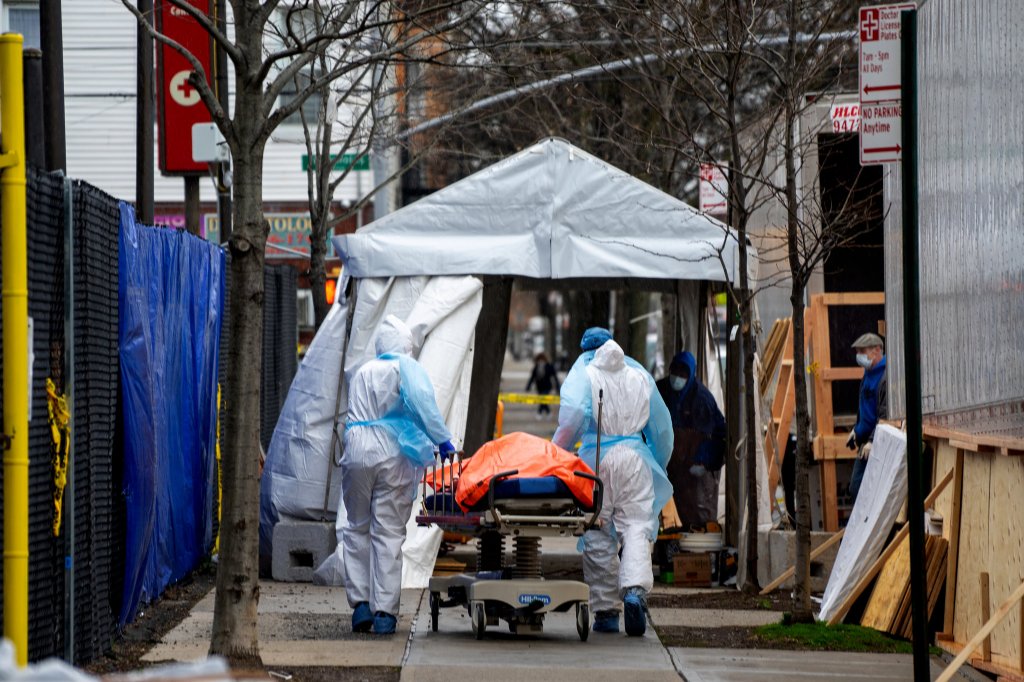
Nurse Kaci Hickox is the first one caught in this trap. She is not sick and is showing no symptoms. Arriving at Newark Airport Friday night, she was taken to a tent behind a hospital, with a portable toilet, no shower, no television, and little cellphone reception. She castigated all involved, particularly Governor Chris Christie, who said she had symptoms and was sick, when she hadn’t and wasn’t. She plans a federal lawsuit challenging the quarantine.
“I also want to be treated with compassion and humanity, and I don’t feel I’ve been treated that way in the past three days. I think this is an extreme that is really unacceptable. I feel like my basic human rights have been violated.”
(Update: Governor Christie has relented, allowing her to return home to Maine, where, if you read between the lines, the message is that it will then be Maine’s problem to monitor her and where, if something goes wrong, it will be on their head.)
We seem to have forgotten how to solve problems, enthralled by our own voice either positing solutions, making points, or complaining. Or maybe it is that this is America, with a history of being bigger, stronger, smarter, and most of all, righter, in all circumstances. Even if that was ever true, politics—in the big sense of privileging positions over effective and thoughtful answers—has poisoned that well. Worthy questions and deliberate solutions are rejected out of hand because of the source, because they don’t fit some preconceived notion or program, or simply because they won’t help win or not lose elections.
Whether or not quarantine of heroic Ebola care givers returning from West Africa is a good idea, it is certainly a good idea to evaluate and plan exactly how you are going to practically handle it. Maybe, though, we shouldn’t be at all surprised. In recent years we did, after all, send hundreds of thousands of troops abroad, and when the promised rewards for their heroic service came due, we seemed unable to fulfill and, worse, were suddenly unenthusiastic about keeping the promise anyway.
If this is a war on Ebola, we better make sure we are committed to those who are sacrificing, part of which is actual planning and resourcing, not ignorant and reflexive pontificating and politicking. So far, this is looking too much like some of our other recent wars. Maybe we can use this as an opportunity to get better and be better at it.
© 2014 Bob Schwartz