Bob Schwartz

Tag: Christianity

More About Jim Wallis: The Truth Will Set You Free

americas-original-sin

Yesterday I posted about Jim Wallis of Sojourners and his post-election essay Time For Healing. And Resistance. Hopefully you had a chance to look at the essay and learn about Jim Wallis and Sojourners.

I just started reading the most recent of his many books about the religious imperative of social justice. The following is from the Introduction to America’s Original Sin: Racism, White Privilege, and the Bridge to a New America.


In the following pages we will take a positive, hopeful, and forward-looking approach. We will talk about what it means to “repent” of our original sin—and repentance means more than just saying you’re sorry. It means turning in a new and better direction, which I believe we can do. We look backward in order to look forward. And this book makes a spiritual statement: our racial diversity and social pluralism are a great strength and a gift for our future, because our primary identity is as the children of God—all of us are created in God’s image. Thinking about ourselves in that deeper way helps us to sort out a lot of things.

So what can the truth do for us?

You will know the truth, and the truth will make you defensive? I think we can do better than that.

You will know the truth, and the truth will make you dishonest? I don’t think we want to keep doing that.

You will know the truth, and the truth will make you deceptive? We’ve seen way too much of that from public officials, and many people are now calling for accountability.

You will know the truth, and the truth will make you bitter? That just makes us miserable, and miserable to live with.

You will know the truth, and the truth will make you angry? Anger can be a positive thing, but only if it is channeled toward constructive change and gives us energy instead of hatred. We can eventually move beyond that too.

You will know the truth, and the truth will make you free. I truly believe that would be the best thing for all of us.

To become more free because of the truth.

To become more honest because of the truth.

To become more responsible because of the truth.

To become better neighbors because of the truth.

To become more productive and contributing citizens because of the truth.

To become better Christians, Jews, Muslims, Buddhists, people of other faiths, or people of conscience with no religion—all better because of the truth.

To become a better and freer country for all of us because of the truth.

And a big issue for me, as the father of two teenage boys, is how we can all become better parents who are more supportive of other parents because of the truth.

Finally, to become better and freer human beings because of the truth. I think that’s what Jesus was getting at in the Gospel passage.

We can no longer be afraid of the truth about race in this country—past, present, and future—because our fears will keep us captive to all kinds of untruths.

This book is about how to find the truth together in these difficult, challenging, and complicated matters of race in America.

We will try to answer the question Dr. Martin Luther King Jr. named in the title of his last book, released just months before we lost him: Where Do We Go from Here: Chaos or Community? A new generation will answer that question for a new time.

I crossed the famous Edmund Pettus Bridge in Selma, Alabama, on the fiftieth anniversary of the historic march that helped bring voting rights to all our fellow citizens. It was then I realized that the answers to these questions will be found in crossing another bridge—the bridge to a new America that will soon be a majority of minorities. This book seeks to describe that new bridge and how we and our children can cross it together.

We need to better understand the past so we can cross the bridge to a new, freer American future where our growing diversity is experienced as a great benefit and not as a great threat. I hope you will take this book as an invitation—to explore the truth of America’s racial past, present, and hopeful future so that, yes, together, we might all become more free, our congregations more faithful, and the state of our union “more perfect.”

You will know the truth, and the truth will set you free.

Sojourners: Time for Healing. And Resistance.

time-for-healing-and-resistance

Jim Wallis, founder of Sojourners, has long been the loudest, most articulate, and most respected voice on behalf of social justice from a genuinely Evangelical Christian perspective. Not “Evangelical Christian” in the sense of those who have made that identical with a right-wing political agenda. “Evangelical Christian” in the sense of what Jesus would have those who claim to follow him do.

His post-election essay, Time for Healing. And Resistance. is so coherent and inspirational that it doesn’t bear quoting from in pieces. Please read it, whatever your religious or spiritual leanings, if any.

Jim Wallis writes, “I just want you to know that I AM IN for whatever this will require of us.” He is speaking to and about Christians, but he is really challenging those of all faiths or of no faith at all to speak out and stand up.

Two Thoughts on the Passion: The Buddha and Bob Dylan


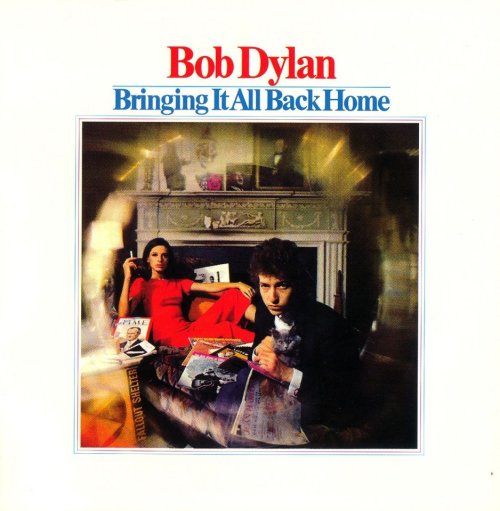
Bringing It All Back Home

“He not busy being born is busy dying.”

For anyone, Christian or not, the story of Easter is remarkable. Story, that is, not necessarily treated either as a story told or as a history chronicled.

Two of a thousand thoughts.

1.

The Buddhist conception of rebirth is complicated, beyond my simple and simplest understanding. So consider this just a summary and a thought about something of nearly infinite scope.

The realization that we are bound to grow old and die breaks the spell of infatuation cast over us by sensual pleasures, wealth, and power. It dispels the mist of confusion and motivates us to take fresh stock of our purposes in life. We may not be ready to give up family and possessions for a life of homeless wandering and solitary meditation, but this is not an option the Buddha generally expects of his householder disciples. Rather, as we saw above, the first lesson he draws from the fact that our lives end in old age and death is an ethical one interwoven with the twin principles of kamma and rebirth. The law of kamma stipulates that our unwholesome and wholesome actions have consequences extending far beyond this present life: unwholesome actions lead to rebirth in states of misery and bring future pain and suffering; wholesome actions lead to a pleasant rebirth and bring future well-being and happiness. Since we have to grow old and die, we should be constantly aware that any present prosperity we might enjoy is merely temporary. We can enjoy it only as long as we are young and healthy; and when we die, our newly acquired kamma will gain the opportunity to ripen and bring forth its own results. We must then reap the due fruits of our deeds. With an eye to our long-term future welfare, we should scrupulously avoid evil deeds that result in suffering and diligently engage in wholesome deeds that generate happiness here and in future lives.

In the Buddha’s Words: An Anthology of Discourses from the Pali Canon

My own take is that these rebirths are not a succession of lives, in the sense of multiple spans, but within this one life, this span of decades. We are constantly offered the opportunity to be new, based on who we have been but also on who we will be—who we will ourselves through thoughts and actions to be. If this sounds somewhat like the premise of Christian rebirth—of being born again—it might be.

(Note: To add yet another layer, Zen Master Bankei   talked about the unborn, that is, the unborn Buddha mind. When we realize that there is a reality that is there even before birth, we are marvelously illuminated. Not being born, we are not even subject to rebirth. But that’s another story.)

2.

Thinking about the story of the death and resurrection of Jesus, a soundtrack came to mind: Bob Dylan’s song It’s Alright, Ma (I’m Only Bleeding), from the album Bringing It All Back Home (1965).

I looked to see whether Dylan had ever talked about a connection between the song and the Bible story. At first glance, it looks like not.

Maybe I’m just reaching, the way exegetes sometimes do, but it seems clear to me. If you’re not familiar with the song, please read the lyrics (below) and listen to the track. As a poem, it is up there with the classics of modern beat poetry, such as Allen Ginsberg’s Howl. It is that good.

The song begins with a son singing to his mother about a darkness at noon. He obviously is, or considers himself, some kind of prophet, railing against the status quo and the powers that be. He acknowledges that this is dangerous. He finishes by imagining his execution: “And if my thought-dreams could be seen/They’d probably put my head in a guillotine.”

All along, he assures the mother that everything is alright:

It’s alright, Ma, I’m only bleeding…
It’s alright, Ma, I’m only sighing…
And it’s alright, Ma, I can make it…
I got nothing, Ma, to live up to…
But it’s alright, Ma, if I can’t please him…
But it’s alright, Ma, it’s life, and life only


It’s Alright, Ma (I’m Only Bleeding)
Written by Bob Dylan

Darkness at the break of noon
Shadows even the silver spoon
The handmade blade, the child’s balloon
Eclipses both the sun and moon
To understand you know too soon
There is no sense in trying

Pointed threats, they bluff with scorn
Suicide remarks are torn
From the fool’s gold mouthpiece the hollow horn
Plays wasted words, proves to warn
That he not busy being born is busy dying

Temptation’s page flies out the door
You follow, find yourself at war
Watch waterfalls of pity roar
You feel to moan but unlike before
You discover that you’d just be one more
Person crying

So don’t fear if you hear
A foreign sound to your ear
It’s alright, Ma, I’m only sighing

As some warn victory, some downfall
Private reasons great or small
Can be seen in the eyes of those that call
To make all that should be killed to crawl
While others say don’t hate nothing at all
Except hatred

Disillusioned words like bullets bark
As human gods aim for their mark
Make everything from toy guns that spark
To flesh-colored Christs that glow in the dark
It’s easy to see without looking too far
That not much is really sacred

While preachers preach of evil fates
Teachers teach that knowledge waits
Can lead to hundred-dollar plates
Goodness hides behind its gates
But even the president of the United States
Sometimes must have to stand naked

An’ though the rules of the road have been lodged
It’s only people’s games that you got to dodge
And it’s alright, Ma, I can make it

Advertising signs they con
You into thinking you’re the one
That can do what’s never been done
That can win what’s never been won
Meantime life outside goes on
All around you

You lose yourself, you reappear
You suddenly find you got nothing to fear
Alone you stand with nobody near
When a trembling distant voice, unclear
Startles your sleeping ears to hear
That somebody thinks they really found you

A question in your nerves is lit
Yet you know there is no answer fit
To satisfy, insure you not to quit
To keep it in your mind and not forget
That it is not he or she or them or it
That you belong to

Although the masters make the rules
For the wise men and the fools
I got nothing, Ma, to live up to

For them that must obey authority
That they do not respect in any degree
Who despise their jobs, their destinies
Speak jealously of them that are free
Cultivate their flowers to be
Nothing more than something they invest in

While some on principles baptized
To strict party platform ties
Social clubs in drag disguise
Outsiders they can freely criticize
Tell nothing except who to idolize
And then say God bless him

While one who sings with his tongue on fire
Gargles in the rat race choir
Bent out of shape from society’s pliers
Cares not to come up any higher
But rather get you down in the hole
That he’s in

But I mean no harm nor put fault
On anyone that lives in a vault
But it’s alright, Ma, if I can’t please him

Old lady judges watch people in pairs
Limited in sex, they dare
To push fake morals, insult and stare
While money doesn’t talk, it swears
Obscenity, who really cares
Propaganda, all is phony

While them that defend what they cannot see
With a killer’s pride, security
It blows the minds most bitterly
For them that think death’s honesty
Won’t fall upon them naturally
Life sometimes must get lonely

My eyes collide head-on with stuffed
Graveyards, false gods, I scuff
At pettiness which plays so rough
Walk upside-down inside handcuffs
Kick my legs to crash it off
Say okay, I have had enough, what else can you show me?

And if my thought-dreams could be seen
They’d probably put my head in a guillotine
But it’s alright, Ma, it’s life, and life only

Dim Dusty Mirror

For now we see in a mirror, dimly, but then we will see face to face. Now I know only in part; then I will know fully, even as I have been fully known.
1 Corinthians 13:12 (New Revised Standard Version)

Can you keep your crescent soul from wandering
can you make your breath as soft as a baby’s
can you wipe your dark mirror free of dust
can you serve and govern without effort
can you be the female at Heaven’s Gate
can you light the world without knowledge
can you give birth and nurture
but give birth without possessing
raise without controlling
this is Dark Virtue
Verse 10, Lao-tzu’s Taoteching
Translated by Red Pine

“Our spirit dwells in our eyes. When the eyes see something, the spirit chases it. When we close our eyes and look within, everything is dark. But within the dark, we still see something. There is still dust. Only by putting an end to delusions can we get rid of the dust.”
Commentary on Verse 10 by Wu Ch’eng (1249–1333)

The Revival of Enlightened and Transformative Politics

Talking about the revival of enlightened and transformative politics is bound to be imprecise.

That concept has never actually been dead. Looking at Christianity, a recent post about Jim Wallis and Sojourners highlights just one instance. A bigger and much more famous current example is Pope Francis. And it is nothing new. The Social Gospel movement, which is still represented (though not always appreciated), aimed to see the realization of the highest Christian principles in everyday practical society.

Keeping with the Christian theme, this is not about what Jesus would say about abortion or gay marriage or prayer in schools or any of these specific arguments—though all have a certain significance. It is about politics as a tool of overall transformation, beyond sectarian concerns.

This is not limited to Christianity. Every one of the traditions has a core of enlightenment and large scale transformation. But each of those traditions has found a way to occasionally devolve that mission into movements and policies and tactics that diverge and even contradict the higher principles and aspirations. It isn’t necessary to point out the wrong turns that, for example, Judaism and Islam have taken along the way to supposedly establish heaven on earth.

In the era of what was affectionately, or for some derisively, known as the New Age movement, this concept of politics as a transformative tool was central. There was the idea that if we kept our eyes on the prize—not just a country but a world elevated above our baser selves—we could together create something better. Politics was one of the tools that would serve that end, instead of enabling smaller personal ambitions and selfish, possibly pernicious, goals.

So here we are. Enlightened and transformative politics is not dead. But it may be missing in action. Each political choice we make—each donation, each tweet, each vote and, yes, each post—might help us find it. Or kill it. It’s up to us.

Jim Wallis: Evangelical Voters Have Some Explaining To Do

Embarrasing to Be an Evangelical

Jim Wallis says that some Evangelical voters should be embarrassed.

Wallis is President and Founder of the Christian social justice organization Sojourners. It is impossible in short form to explain what treasures Jim Wallis and Sojourners are. So please visit the links to read the descriptions.

Wallis is a stubborn reminder of what he believes Jesus would expect from American Christians, in the face of some of their shortcomings, hypocrisy and grandstanding. No matter what your own faith preference, he is admirable as a brave and insistent conscience for America.

Please read today’s piece, “It’s Embarrassing to Be an Evangelical This Election:
The So-Called ‘Evangelical Vote’ Has Some Explaining to Do.

One God Two God

One Fish Two Fish

One God
Two God
Red God
Blue God
(apologies to Dr. Seuss)

A professor at Wheaton College may be dismissed for saying that Christian and Muslims worship the same God.

There is so much that could be said about this.

About the history of American evangelicalism, of which Wheaton is a part. How it began as an open and activist socially liberal Christian movement and has ended up in some instances a radically conservative and strictly exclusivist movement.

About theology as complex as any machine ever built, and just as incomprehensible to those who are not religion mechanics and engineers. How even though the God of the Jews was absolutely the God of Jesus, and the God of the Jews and Jesus was absolutely the God of Muhammed, that isn’t so according to people who may think themselves smarter and more important than Jesus or Muhammed.

The concept of one God was a revolution in civilization. The earlier belief in an entourage of gods, greater and lesser, has been mostly replaced by the one. (Whether that one might be three-in-one goes back to the theology complexities mentioned above, so let’s leave that for now.)

It is no wonder that after thousands of years with religion as a standard way of life, more people are rejecting it than ever. Because if there is a God, and if religions have sprung up on his behalf (with or without his blessing), that God and those religions can look spectacularly ridiculous in the eyes of good people who want nothing but good for people. And because if God really cares about all this very human nonsense, a growing number of people want nothing to do with him or his religions. And who can blame them?

Ask for Forgiveness: The Perfect Ben Carson Strategy That He Won’t Use

Ben Carson

Ben Carson has gotten caught embellishing/lying about some details in his life that are part of his inspirational narrative.

What’s weirdest about his response—spin, blame the media, discount the degree of untruth, etc.—isn’t that making up stuff is unusual for politicians. Zebras and stripes, leopards and spots. What’s weird is that being a sincere and serious Christian, all he has to do is tell the truth. Say that he exaggerated or even lied, and ask for forgiveness. Because he is, after all, only human, only a sinner like us all.

His many Christian supporters should not only forgive him. They should see him as a model of genuine Christian contrition and humility. Which presumably is what God and Jesus ask of us. Not to be saints, which we can’t be anyway, but to be self-aware, confessing humans, bent on being better. It is entirely possible that he could actually make gains among Christian supporters for doing that.

If those supporters refused to forgive, that might put in question the depth of their unconditional Christian commitment. Lying itself doesn’t put your faith and commitment in question (remember, only human), but stubbornly persisting in finding every which way not to say you have lied is a little more troubling. And maybe a little less Christian.

Bacon and Ribs Illegal in America When Jews and Muslims Take Over

When Orthodox Jews or Muslims are in charge, bacon, ribs, and all sorts of other things will be made illegal.

Of course, that will never happen. Not because Orthodox Jews or Muslims will never take control of American democracy (anything’s possible). But because the U.S. Constitution—that imperfectly perfect protector of individual rights—would not permit it.

In the secular sphere, there is no higher law than the Constitution. Beyond being the law of the land, it is the law of the law of the land. Those who study it in the context of world history and politics recognize that it is a one-of-a-kind, no-other-time-or-place achievement.

Those who say there is some kind of higher law than that in the civic arena are misinformed, or in some cases, such as Ted Cruz who should know better, strategically mistaken. The question those folks have to answer is this: If there is higher law than the Constitution, whose law is it? If it’s “God’s” law, recall that God talks to lots of people in lots of religious traditions, and apparently isn’t always heard to say the same thing to everyone. It will shock some Christians to learn that God has been speaking to Jews for thousands more years, and while there seemed to have been plenty of talk about a messiah, nothing to indicate that one actually arrived. Or asked county clerks in Kentucky to stop issuing marriage licenses. Or told presidential candidates who claim to believe in law and order to defy the law of the law of the land. In his name. Amen.

Mountains Walking

Jesus, Dogen and Donovan each have something to say about mountains. In some ways the same thing.

Jesus says that faith can move mountains, by which he may mean that understanding the nature of things, including mountains, will allow us to see that mountains are always moving, if we will see it. Jesus is all about what we don’t see that is right in front of us.

Dogen says that mountains are mountains and mountains are walking. If you can walk, mountains can walk. Those without eyes to see mountains cannot notice, understand, see, or hear this reality.

Donovan sings about this reality of mountains appearing, disappearing, appearing.

Jesus

He answered, ‘Because you have so little faith. In truth I tell you, if your faith is the size of a mustard seed you will say to this mountain, “Move from here to there,” and it will move; nothing will be impossible for you.’ (Matthew 17:20, New Jerusalem Bible)

Dogen Zenji

Priest Daokai of Mount Furong said to the assembly, “The green mountains are always walking; a stone woman gives birth to a child at night.”

Mountains do not lack the characteristics of mountains. Therefore, they always abide in ease and always walk. Examine in detail the characteristic of the mountains’ walking.

Mountains’ walking is just like human walking. Accordingly, do not doubt mountains’ walking even though it does not look the same as human walking. The buddha ancestor’s words point to walking. This is fundamental understanding. Penetrate these words.

Because green mountains walk, they are permanent. Although they walk more swiftly than the wind, someone in the mountains does not notice or understand it. “In the mountains” means the blossoming of the entire world. People outside the mountains do not notice or understand the mountains’ walking. Those without eyes to see mountains cannot notice, understand, see, or hear this reality.

If you doubt mountains’ walking, you do not know your own walking; it is not that you do not walk, but that you do not know or understand your own walking. Since you do know your own walking, you should fully know the green mountains’ walking.

Green mountains are neither sentient nor insentient. You are neither sentient nor insentient. At this moment, you cannot doubt the green mountains’ walking.

From Mountains and Waters Sutra, Shobo Genzo, Fascicle 15 (1240)

Donovan

The caterpillar sheds his skin to find a butterfly within
Caterpillar sheds his skin to find a butterfly within
First there is a mountain, then there is no mountain, then there is

From There Is a Mountain