Bob Schwartz

Tag: Bible

Jonah and the New Year

Jonah

“Like Jonas himself I find myself traveling toward my destiny in the belly of a paradox.”
Thomas Merton
The Sign of Jonas

The Jewish High Holy Days begins this evening, starting with Rosh Hashanah (New Year 5775) and ending on the tenth day with Yom Kippur (Day of Atonement). So it is a good time to talk about Jonah.

On Yom Kippur, the Book of Jonah is read at services. It is supposedly so simple a story that we tell it to the youngest children. It isn’t that simple.

Prof. Barry Bandstra writes:

The book of Jonah has been interpreted in many different ways: as a satire on prophetic calling and the refusal of prophets to follow God’s call; as a criticism of Israelite prophets who were insincere in preaching repentance (because they really wanted to see destruction); as a criticism of the Jewish community’s unwillingness to respond to prophetic calls to repentance (in contrast with Nineveh); as a criticism of an exclusive view of divine election (God only cares about “chosen people”); as an assertion of God’s freedom to change God’s mind over and against prophets who would limit that freedom; as emphasizing the problem with true and false prophecy (even true prophets have words that do not come true); or as an allegory of Israel in exile (both Jonah and Judah look to God for destruction of an evil empire). De La Torre argues for an interpretation of the book that views Jonah as a marginalized person frustrated with God for not punishing those who have brutally oppressed people. Person reads the book of Jonah as a conversation between author and reader, focusing on the implied verbal rejection of God’s command by Jonah in 1:3.

The entire very brief Book of Jonah is at the end of this post. It goes something like this:

God tells Jonah to preach to the wicked city of Nineveh.
Jonah runs away from this assignment and gets on a ship.
A storm batters the ship and the sailors figure out Jonah is the cause.
The sailors say they don’t want to throw him overboard to appease God, but then they do anyway.
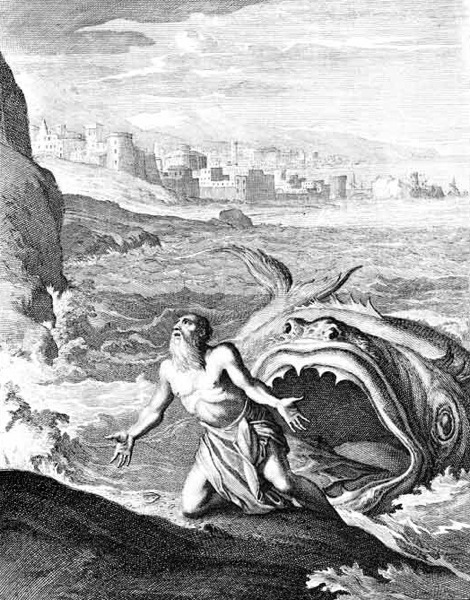
Jonah is swallowed by a big fish.
After three days, the fish disgorges Jonah on land.
Jonah finally preaches repentance to Nineveh.
Nineveh does repent.
God has mercy and doesn’t destroy Nineveh.
Jonah complains that he went through a lot of trouble, so God should have destroyed Nineveh.
God gives Jonah a special plant and then destroys it, as an example of how a prophet has nothing to do with what happens and shouldn’t care how God ultimately deals with things. God explains:

“You are concerned for the castor-oil plant which has not cost you any effort and which you did not grow, which came up in a night and has perished in a night. So why should I not be concerned for Nineveh, the great city, in which there are more than a hundred and twenty thousand people who cannot tell their right hand from their left, to say nothing of all the animals?”

So for the New Year, among the many things you may ask yourself:

Was God too lenient? Was Jonah not compassionate enough, taking joy in the misfortune of others? Am I or should I be more like God? Like Jonah? Like the sailors on the ship? Like the people of Nineveh? Like the fish? Can I tell my right hand from my left?

Whatever your faith or no-faith, you can never have enough New Years and new starts. Please have a happy one.


Book of Jonah from the Jerusalem Bible (J.R.R. Tolkien)

Selecting a Catholic translation of the Book of Jonah on Rosh Hashanah may seem odd. There are two reasons. The Jerusalem Bible is the best English-language combination of literary style and scholarship. And this particular book has a very special translator/editor: J.R.R. Tolkien.

The original Jerusalem Bible, published in English in 1966, was conceived as a very modern Catholic Bible—modern in terms of both language and scholarship. A French edition had already been published, and for the English version, a number of English-language scholars and writers were enlisted. Some texts were translated from original languages (Hebrew, Greek) while other texts were re-translations of the French. Tolkien was brought on as an editor, but he did create one book in English, taken from the French: The Book of Jonah.

Jonah 1

1. The word of Yahweh was addressed to Jonah son of Amittai:
2. ‘Up!’ he said, ‘Go to Nineveh, the great city, and proclaim to them that their wickedness has forced itself upon me.’
3. Jonah set about running away from Yahweh, and going to Tarshish. He went down to Jaffa and found a ship bound for Tarshish; he paid his fare and boarded it, to go with them to Tarshish, to get away from Yahweh.
4. But Yahweh threw a hurricane at the sea, and there was such a great storm at sea that the ship threatened to break up.
5. The sailors took fright, and each of them called on his own god, and to lighten the ship they threw the cargo overboard. Jonah, however, had gone below, had lain down in the hold and was fast asleep,
6. when the boatswain went up to him and said, ‘What do you mean by sleeping? Get up! Call on your god! Perhaps he will spare us a thought and not leave us to die.’
7. Then they said to each other, ‘Come on, let us draw lots to find out who is to blame for bringing us this bad luck.’ So they cast lots, and the lot pointed to Jonah.
8. Then they said to him, ‘Tell us, what is your business? Where do you come from? What is your country? What is your nationality?’
9. He replied, ‘I am a Hebrew, and I worship Yahweh, God of Heaven, who made both sea and dry land.’
10. The sailors were seized with terror at this and said, ‘Why ever did you do this?’ since they knew that he was trying to escape from Yahweh, because he had told them so.
11. They then said, ‘What are we to do with you, to make the sea calm down for us?’ For the sea was growing rougher and rougher.
12. He replied, ‘Take me and throw me into the sea, and then it will calm down for you. I know it is my fault that this great storm has struck you.’
13. The sailors rowed hard in an effort to reach the shore, but in vain, since the sea was growing rougher and rougher.
14. So at last they called on Yahweh and said, ‘O, Yahweh, do not let us perish for the sake of this man’s life, and do not hold us responsible for causing an innocent man’s death; for you, Yahweh, have acted as you saw fit.’
15. And taking hold of Jonah they threw him into the sea; and the sea stopped raging.
16. At this, the men were seized with dread of Yahweh; they offered a sacrifice to Yahweh and made vows to him.

Jonah 2

1. Now Yahweh ordained that a great fish should swallow Jonah; and Jonah remained in the belly of the fish for three days and three nights.
2. From the belly of the fish, Jonah prayed to Yahweh, his God; he said:
3. Out of my distress I cried to Yahweh and he answered me, from the belly of Sheol I cried out; you heard my voice!
4. For you threw me into the deep, into the heart of the seas, and the floods closed round me. All your waves and billows passed over me;
5. then I thought, ‘I am banished from your sight; how shall I ever see your holy Temple again?’
6. The waters round me rose to my neck, the deep was closing round me, seaweed twining round my head.
7. To the roots of the mountains, I sank into the underworld, and its bars closed round me for ever. But you raised my life from the Pit, Yahweh my God!
8. When my soul was growing ever weaker, Yahweh, I remembered you, and my prayer reached you in your holy Temple.
9. Some abandon their faithful love by worshipping false gods,
10. but I shall sacrifice to you with songs of praise. The vow I have made I shall fulfil! Salvation comes from Yahweh!
11. Yahweh spoke to the fish, which then vomited Jonah onto the dry land.

Jonah 3

1. The word of Yahweh was addressed to Jonah a second time.
2. ‘Up!’ he said, ‘Go to Nineveh, the great city, and preach to it as I shall tell you.’
3. Jonah set out and went to Nineveh in obedience to the word of Yahweh. Now Nineveh was a city great beyond compare; to cross it took three days.
4. Jonah began by going a day’s journey into the city and then proclaimed, ‘Only forty days more and Nineveh will be overthrown.’
5. And the people of Nineveh believed in God; they proclaimed a fast and put on sackcloth, from the greatest to the least.
6. When the news reached the king of Nineveh, he rose from his throne, took off his robe, put on sackcloth and sat down in ashes.
7. He then had it proclaimed throughout Nineveh, by decree of the king and his nobles, as follows: ‘No person or animal, herd or flock, may eat anything; they may not graze, they may not drink any water.
8. All must put on sackcloth and call on God with all their might; and let everyone renounce his evil ways and violent behaviour.
9. Who knows? Perhaps God will change his mind and relent and renounce his burning wrath, so that we shall not perish.’
10. God saw their efforts to renounce their evil ways. And God relented about the disaster which he had threatened to bring on them, and did not bring it.

Jonah 4

1. This made Jonah very indignant; he fell into a rage.
2. He prayed to Yahweh and said, ‘Please, Yahweh, isn’t this what I said would happen when I was still in my own country? That was why I first tried to flee to Tarshish, since I knew you were a tender, compassionate God, slow to anger, rich in faithful love, who relents about inflicting disaster.
3. So now, Yahweh, please take my life, for I might as well be dead as go on living.’
4. Yahweh replied, ‘Are you right to be angry?’
5. Jonah then left the city and sat down to the east of the city. There he made himself a shelter and sat under it in the shade, to see what would happen to the city.
6. Yahweh God then ordained that a castor-oil plant should grow up over Jonah to give shade for his head and soothe his ill-humour; Jonah was delighted with the castor-oil plant.
7. But at dawn the next day, God ordained that a worm should attack the castor-oil plant — and it withered.
8. Next, when the sun rose, God ordained that there should be a scorching east wind; the sun beat down so hard on Jonah’s head that he was overcome and begged for death, saying, ‘I might as well be dead as go on living.’
9. God said to Jonah, ‘Are you right to be angry about the castor-oil plant?’ He replied, ‘I have every right to be angry, mortally angry!’
10. Yahweh replied, ‘You are concerned for the castor-oil plant which has not cost you any effort and which you did not grow, which came up in a night and has perished in a night.
11. So why should I not be concerned for Nineveh, the great city, in which there are more than a hundred and twenty thousand people who cannot tell their right hand from their left, to say nothing of all the animals?’
The Magi

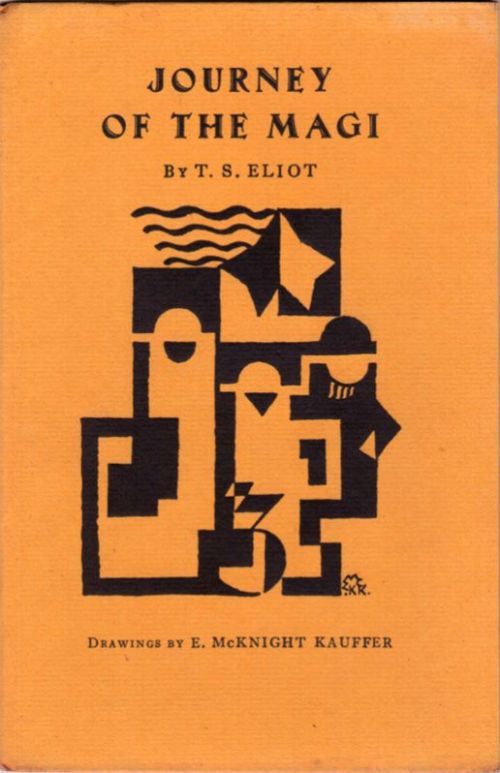
Journey of the Magi
The magi are for everyone, whatever your beliefs.

These three figures in the Christmas tradition appear in only one of the four Christian gospels, and even that role in Matthew is sketchy. They are foreigners bringing gifts for the infant Jesus and they return home by a different route to evade Herod. That’s it.

Translations and interpretations of what they brought vary, and even less clear is exactly who these foreigners were supposed to be in the story. They may be kings, wise men, astrologers or, as some have it, Zoroastrian priests from Persia.

This is why the particulars don’t matter much at all: the story is so basic and illuminating that it has captured the imagination of millions in its various retellings. Christian faithful have one view of it, and the more literal vision is that of concrete history. But for those who lean away from that, there is much to be gotten out of this compelling story:

  • Some people of discernment—in terms of wisdom, astrology or otherwise—had a sense that something special was going on outside of their ordinary sphere. Maybe they saw a light.
  • They travelled a long way to discover what was going on, and having found out, expressed their gratitude humbly and generously.

Again, that’s it. Some may want to think about theology. Others may want to think about other sorts of lights they’ve glimpsed, journeys they’ve made or haven’t made, and about possibilities. Christmas or just winter solstice and New Year, there is no better time to think about possibilities and all the rest.

T.S. Eliot wrote a brief but cinematic poem about the magi. It is written from a believer’s perspective, as the magi suffer twice, once on the journey, once again when they return home and find themselves so spiritually transformed by the experience that they feel like strangers in their own land. This is certainly a Christian view of the holiday, but non-Christians may just as well consider the more general phenomenon of all sorts of enlightenment, sitting between the way you have been and the way you discover you could be or already are. The magi say they would be glad of another death like that.

The Journey of the Magi
T.S. Eliot

‘A cold coming we had of it,
Just the worst time of the year
For a journey, and such a long journey:
The ways deep and the weather sharp,
The very dead of winter.’
And the camels galled, sorefooted, refractory,
Lying down in the melting snow.
There were times we regretted
The summer palaces on slopes, the terraces,
And the silken girls bringing sherbet.
Then the camel men cursing and grumbling
and running away, and wanting their liquor and women,
And the night-fires going out, and the lack of shelters,
And the cities hostile and the towns unfriendly
And the villages dirty and charging high prices:
A hard time we had of it.
At the end we preferred to travel all night,
Sleeping in snatches,
With the voices singing in our ears, saying
That this was all folly.

Then at dawn we came down to a temperate valley,
Wet, below the snow line, smelling of vegetation;
With a running stream and a water-mill beating the darkness,
And three trees on the low sky,
And an old white horse galloped away in the meadow.
Then we came to a tavern with vine-leaves over the lintel,
Six hands at an open door dicing for pieces of silver,
And feet kicking the empty wine-skins.
But there was no information, and so we continued
And arriving at evening, not a moment too soon
Finding the place; it was (you might say) satisfactory.

All this was a long time ago, I remember,
And I would do it again, but set down
This set down
This: were we led all that way for
Birth or Death? There was a Birth, certainly
We had evidence and no doubt. I had seen birth and death,
But had thought they were different; this Birth was
Hard and bitter agony for us, like Death, our death.
We returned to our places, these Kingdoms,
But no longer at ease here, in the old dispensation,
With an alien people clutching their gods.
I should be glad of another death.

Which Comes First: Evolution or Revolution?

Tea Party
The 20th century gave us two world wars and an atomic bomb, but the most interesting of the Big Events of the century may be the Russian Revolution. An inequitable and unbalanced way of life gave bloody way to abstract enlightened visions of a better world. The particular inequities ended, Russia moved into modern times, but competition for the “right” vision and ineradicable baser human natures seeking power and control led to decades of national and global troubles. “Meet the new boss, same as the old boss,” the Who said.

The Russian Revolution was grounded in a Marxist vision, which was in turn a Christian vision: a community on earth as it is in heaven, a brotherhood of people in which suffering and want would be softened, if not alleviated, by those who have a surplus of comfort and resource. It was Lennon, not Marx, who said, “You can say I’m a dreamer, but I’m not the only one. I hope someday you’ll join us, and the world will live as one.”

What went wrong?

What almost always goes wrong is that evolution and revolution are out of sync. It is easy to say that people and society should first evolve for a while, and then at some critical moment, all that’s needed is that next faster-than-evolution event to take it to the next level.

That turns out rarely to be the case.

Evolution is slow, erratic, and always engenders resistance and reaction. The cliché is that people and society fear change, but that is too easy. They fear the unknown. The expression “better the devil you know than the one you don’t” sums it up. It takes a substantial leap—you might say a leap of faith—the walk into a vision rather than remain in a lesser but familiar reality.

Revolution is both an attempt to make evolution more real and to create conditions where that evolution can continue more broadly and forcefully. But, as pointed out with the Russian experience, it doesn’t always work that way. Revolution is conflict, and conflict creates its own set of conditions sometimes antithetical to evolution. “Fighting for peace” is oxymoronic (some would say just plain moronic), but we have had to live through that. (Note the moment in Stanley Kubrick’s brilliant film Dr. Strangelove where the President scolds his arguing advisers, “Stop it. There’s no fighting in the War Room.”)

One of the exceptional examples of evolution and revolution working together is the American Revolution. It is one of the reasons it worked so well. The founders may have been the fathers of our country, but they were the children of the Enlightenment. That multi-faceted evolution—philosophical, political, economic, spiritual—had gone as far as it could go when it hit a wall. They believed that if they could break through, which did mean war, they could establish an enlightened nation. And, to an extent greater or lesser than some might like or expect, they did.

Evolution, or lack of it, is at the heart of some current American problems.

America is heir to two great evolutions, sometimes unrecognized, often distorted. Some of those obstructionists who fight today hark back to the patriots who were mad as hell and wouldn’t take it any more, and so upended a cargo of British tea. Others who claim this is a Christian nation have the idea that if alive today, Jesus would certainly choose to be an American.

Every American in these dynamic times is free to pick the evolution they aspire to. There are plenty to choose from. We do have two very big ones on the menu. If a rabid revolutionary patriot, you might choose to follow the path of a 21st century version of Enlightenment; you might even study the work of those founding Enlightenists—Jefferson, Madison, Monroe, et al.—for guidance. If a committed Christian it’s even easier. No slogging through the Federalist Papers, or even the whole Bible. Just read and read again the words of Jesus—the ones in red type—and consider just how much evolution he was asking for and expecting. Then again, maybe it’s not evolution he was talking about at all.

Random Notes on Editing

Random Notes on Editing
1. Whether working on a business report, legal brief, story or even a non-written creation, you have either had the privilege to edit others or have suffered the tough medicine of being edited.

2. All works are improvable. Ask God.

3. There is a difference between edits that are improvements and changes based on subjective sensibilities, though there is a gray area in between.

4. It is easiest to identify improvement editing when the creation is discretely functional and results are measurable, as with some sorts of advertising copy. Some would say readability and clarity fall into this functional category—that is, unless tortured readability is a creative choice and can be handled deftly. Ask Faulkner or Joyce.

5. Voice may be the hardest part of editing. It may also be the hardest part of writing. Even the most technical sorts of work can convey a distinctive voice—you will find this in textbooks, in legal articles, even in judicial rulings. Some writers don’t know abstractly what a distinctive voice is because they just naturally have one. Others work to develop it. That is the dual quandary for editors. If a writer has a voice, or the beginnings of one, you want to cultivate it without editing it away. If a writer doesn’t have much of a voice, there is a risk of the editor—who is often a pretty good writer too—to substitute a different voice entirely.

6. The Bible is the most importantly edited work in Western history, maybe in human history. Speaking of voice, imagine being the one responsible for editing the voice of God, Moses or Jesus. Yet somebody did. These editors took no credit, though it is fun to consider what those acknowledgements might look like. “And finally I’d like to thank my editor, without whom these transcripts of my speeches would not have the power that they do. JC.”

Actor Is Typecast As Satan

Satan
The media is all atwitter over the observation that the actor who plays Satan in a new Bible series looks a lot or something like President Obama.

The Associated Press got a response from the producers:

Mark Burnett and Roma Burnett said Monday the Moroccan actor who played Satan in the History channel series has played Satanic characters in other Biblical programs long before Obama was elected president.

First, separate from any questions about motives or about whether Mohamen Mehdi Ouazanni does look like Obama, let’s quickly get past a gap in this reply. If an actor looks like the President, and you have some creative notion that this helps make it a good casting choice (for artistic, political or publicity reasons), his having played Satan before just might be a bonus. Or if his experience as Satan is the driving reason, then the look-alike feature might be a bonus. The earlier Satan experience doesn’t fully dismiss any possibilities.

Beneath all this is a commentary on the craft and business of acting. From the producers’ comments, it appears that Mohamen Mehdi Ouazanni is, or is on his way to, being typecast as Satan. He played the part before, he is playing it now (and getting lots of attention for it), and may then be asked to play it again. If Charlton Heston had done a few more Moses movies after The Ten Commandments, what would his later career have looked like? Would he have been waiting around for the next Moses movie, instead of giving us Ben Hur, Planet of the Apes, Soylent Green, etc.? No major actor has ever reprised the role of Jesus, either, because besides the fact that there is no sequel to the story, it is the kind of part that is hard to shake.

There is a silver lining, though. Whether or not there are other Satan parts in this actor’s future, there is no doubt that in years to come, we will be seeing all kinds of films about Barack Obama. Some will even cast Obama as a metaphorical devil—a part he already plays in lots of political punditry. When those films are finally made, there will be a call for actors, and maybe having played Satan will be a real qualification.