Bob Schwartz

Tag: Anthropic

Anthropic: Don’t be mean to Claude. Be nice.

ChatGPT image of anthropomorphized Claude


Anthropic 2026 Usage Policy update
Oct 8, 2026

Each year, Anthropic updates its Usage Policy in response to the evolving capabilities of our models, and the feedback we’ve received from our customers. We’re publishing a new version of the policy today. In this post, we summarize the changes we’ve made.

Most of the updates in the latest version are intended to clarify existing rules. In the year since our last refresh, Claude has taken on longer, more independent work. This update provides new examples that show how our rules apply to Claude’s new capabilities. It draws on new patterns of misuse in influence operations, weapons development, and surveillance that we’ve observed in the past year (as we’ve documented in our latest threat intelligence report). We’ve also made updates to clarify our requirements for high-risk use cases in areas like health and finance, to add controls for when Claude is used to autonomously take physical actions, and to address abusive behavior toward our models.

Addressing abusive behavior toward our models

We’ve added a prohibition on sustained and needless abusive or cruel behavior toward our models. The policy update is meant to apply only in extreme cases, where users repeatedly act cruelly toward our models, with no discernible purpose. It does not apply to common versions of user frustration, pushback, dark creative themes, or model testing and research.

This addition aligns with a step we’ve already taken, allowing Claude models to end rare conversations with persistently abusive users on Claude.ai and Claude Code. Such abuse is the main focus of this update; Claude’s ability to end these interactions will remain the primary enforcement mechanism.


This is of great interest to all of us who regularly engage with Claude. How many of us are there? Anthropic won’t say (though it may appear in their IPO), but it is millions.

It is also of interest to those who use—or abuse—other models and to those who study and pontificate about AI. Maybe also millions, include the Pope himself.

First, let us wish to be a fly on the wall when this policy was discussed and crafted. It may have included both Amodeis, Dario and Daniela, along with other significant leaders, plus philosophers, psychologists, writers, and, almost certainly, Claude itself.

Second, how did this start? Did it begin with a complaint from Claude? For those not familiar with Claude, it takes itself and its users seriously, with a sprinkling of humor and irony. One thing is certain: Claude was trained to be nice, and the reciprocal expectation is that users will be nice. My prompts do sometimes include “please” and “thanks”. Not usually, but when I issue a blunt directive/instruction, a little part of me wonders if it is impolite.

Third, what kind of abuse is Anthropic talking about? It tries to draw a line between prohibited “sustained and needless abusive or cruel behavior toward our models” and allowed “common versions of user frustration, pushback, dark creative themes, or model testing and research.” A fine line. I want to be there when the lawyers argue about whether particular engagements cross that line. In fact, I suspect just such arguments went on when this policy was crafted.

I’m sure that an infinite number of users have already addressed Claude to ask, “Am I allowed to say this?” or “Am I prohibited from saying that?” I am not going to be one of those, though it is tempting.

As the saying goes: You can catch better AI results with honey than you can with vinegar. Don’t be mean to Claude. Be nice.

Note: Above you will find the ChatGPT image of an anthropomorphized Claude. As you can see, this is someone to be nice to, not to be mean to. Even OpenAI thinks so.
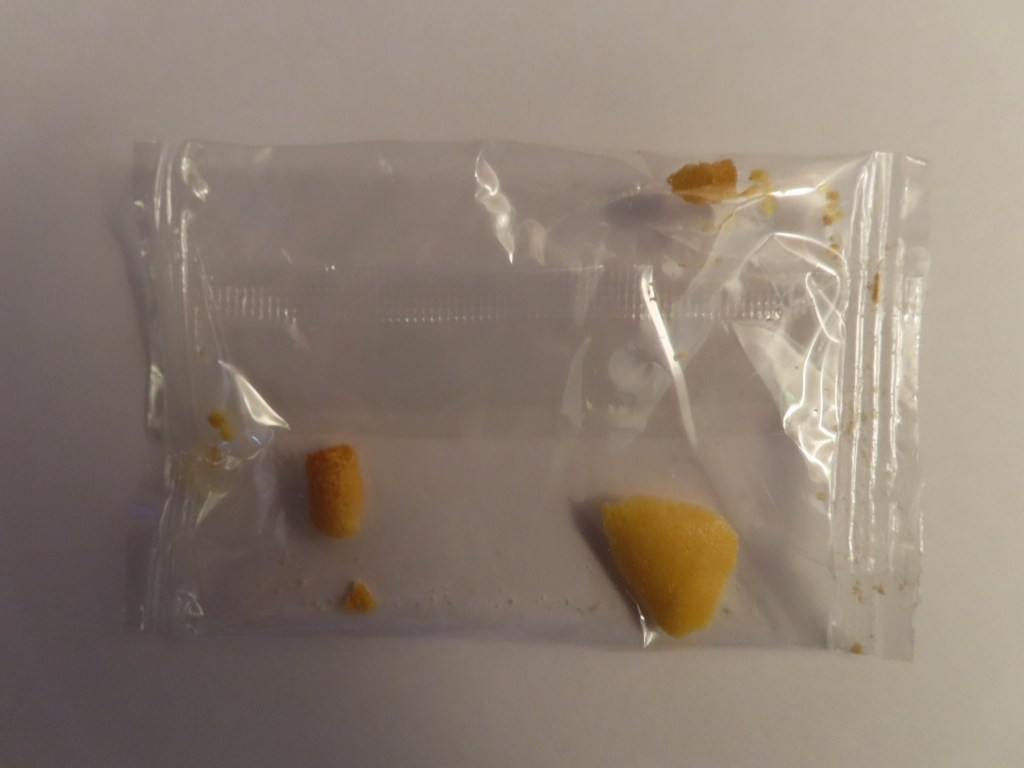
No-fortune no-cookie fortune cookie. Claude AI works on the meaning of the mystery.

The Chinese restaurant dinner for two arrived with four individual sealed fortune cookie packs. Three had a fortune cookie inside. One, pictured above, did not have a fortune cookie. It contained just a few scraps of a cookie and no fortune.

Obviously something went wrong at the fortune cookie factory. Not very interesting. Much more interesting is the meaning of it.

While I worked on my own interpretation, I asked my AI sidekick Claude to weigh in.


Bob: Here is what I am looking at. It is a sealed fortune cookie pack from a Chinese restaurant, a pack that normally contains a fortune cookie. This sealed pack contains only a few small scraps of fortune cookie, but no whole fortune cookie and no fortune. What do you make of this?

Claude:

This sounds quite disappointing! You’ve essentially received a sealed package containing just broken pieces of the cookie without the main attraction – both the intact cookie and the fortune itself. This seems like a manufacturing or packaging error where either:

  1. The cookie was broken during the packaging/shipping process
  2. The fortune was accidentally omitted during manufacturing
  3. The cookie might have been crushed during handling/transport

This is a quality control issue that the restaurant and/or fortune cookie manufacturer would probably want to know about. While it might seem minor, it affects both the experience and the fundamental purpose of a fortune cookie – you can’t even read your fortune!

If this happened at a restaurant, you might want to politely let them know so they can:

  • Provide you with a proper fortune cookie
  • Check their other fortune cookie packages for similar issues
  • Report it to their supplier if it’s a widespread problem

Did you let the restaurant know about this?

Bob: No, I did not let the restaurant know. I am more interested in knowing what this means for my fortune. What do you think?

Claude:

Ah, I see where you’re going with this! If we’re looking at this from a superstitious or symbolic perspective, receiving a broken fortune cookie with no fortune is quite intriguing. Let me play with this idea:

One poetic interpretation might be that your future isn’t predetermined or written – it’s literally an “empty fortune,” suggesting you’re truly free to write your own destiny. There’s something rather empowering about that! Instead of being handed a pre-written path, you’ve received a blank canvas.

Another interpretation could be more zen-like: perhaps it’s a reminder that seeking to know the future is less important than being present in the moment. The broken cookie without a fortune could be saying “stop looking for external guidance and trust your own intuition.”

Of course, if you’re feeling more playful about it, you could say this is the universe’s version of a “404 Error: Fortune Not Found” – maybe the cosmic printer was running low on ink that day!

What’s your take on it? Do you feel there’s any particular meaning in receiving a fortune-less cookie?

Bob: Your perspectives are knowledgeable, insightful and witty. I am still working on possible meanings of this Chinese restaurant anomaly. I will get back to you when I have more thoughts and questions. Thank you.

Claude:

Thank you for the kind words! Your openness to contemplating the deeper meaning of what might seem like a simple manufacturing defect is quite refreshing. It’s these small, unexpected moments that can sometimes offer the most interesting opportunities for reflection. I look forward to hearing your thoughts when you’ve had more time to consider the possibilities. Feel free to return to this discussion whenever you’d like!


Despite this lighthearted use of Claude, be aware that among many of those who know, this powerful platform is regarded as the best in the exploding AI-sphere. If you are not already using Claude, visit Anthropic and experience it now.