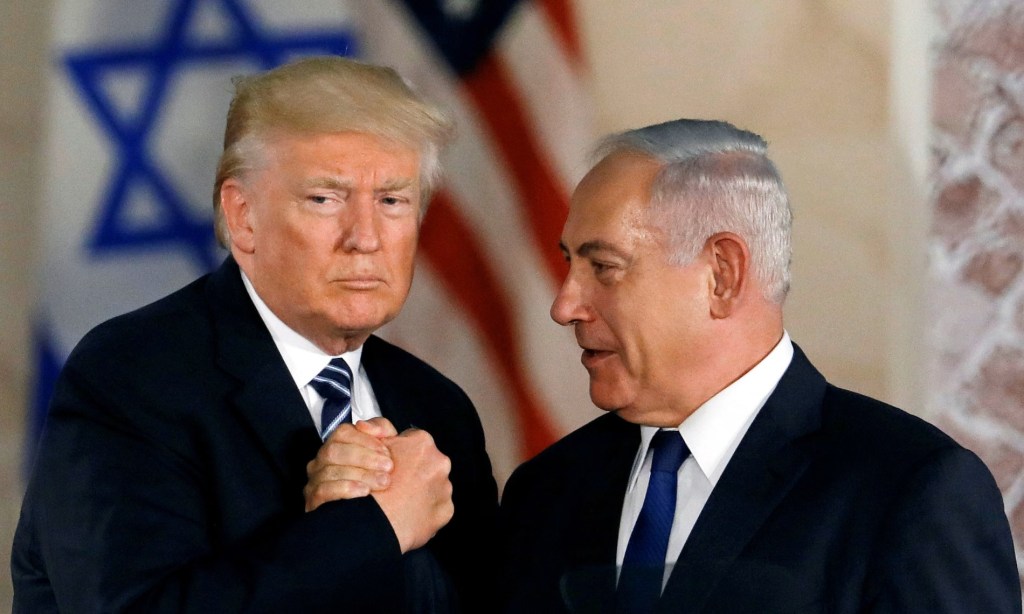
The similarities between Israel and America are so striking that they might as well be twin nations.
Israel and America have stopped caring, to the extent they ever did, about what the world or their neighbors think.
Israel and America believe the whole world is against them.
Israel and America have stopped behaving according to the established conventions of statecraft or the rule of law, national or international.
The leadership of Israel and America is supported by a minority of the citizenry and the majority of the citizenry oppose the regimes.
The leadership of Israel and America use real emergencies (Israel) and pretext pretend emergencies (America) to justify their agenda, maintain office and extend power.
Self-portraits, of which selfies are a modern version, are nothing new. Whether by words or images, telling and showing about yourself is as old as telling and showing.
Selfies can be viewed different ways. They say: I was here, in this place, with this person or these people. They might also say, in the same breath: Here I am, not just in the picture but essential to the picture, the most important thing in the picture.
When the following note was written, Trump was still in the first year of his first term. So much has happened since that we may forget that Trump 1.0 was just an earlier model of Trump 2.0. I was then speculating that things could be worse with a smarter and more skilled demagogue. What I didn’t imagine was that the next demagogue wouldn’t be smart, skilled, knowledgeable, attractive, or capable, but would be Trump himself.
Donald Trump thinks of himself as the greatest demagogue America has ever seen, a popular savior and Supreme Leader at a time of widespread dissatisfaction, whose loyal cult of personality allows him to get away with anything.
He has turned out to be wrong, for the simple reasons that he has no real governing skills, that he is psychologically unstable, narcissistic and childish, and that he is monumentally ignorant of national and world affairs.
Some think that once this peculiar chapter is over, and a potentially tragic and dangerous chapter it still may be, America will choose to swing back to stability, sanity, intelligence, competence and moderation in its leader.
But here is a different thought. What if America still has a passion for radical change in its government, and the next time chooses a real demagogue who is everything Trump is not, someone smart, knowledgeable, attractive, and actually capable of running the government? You know how people say that with Trump, the old rules of politics don’t seem to apply? What if that is true even after Trump, and what if we haven’t seen anything yet?
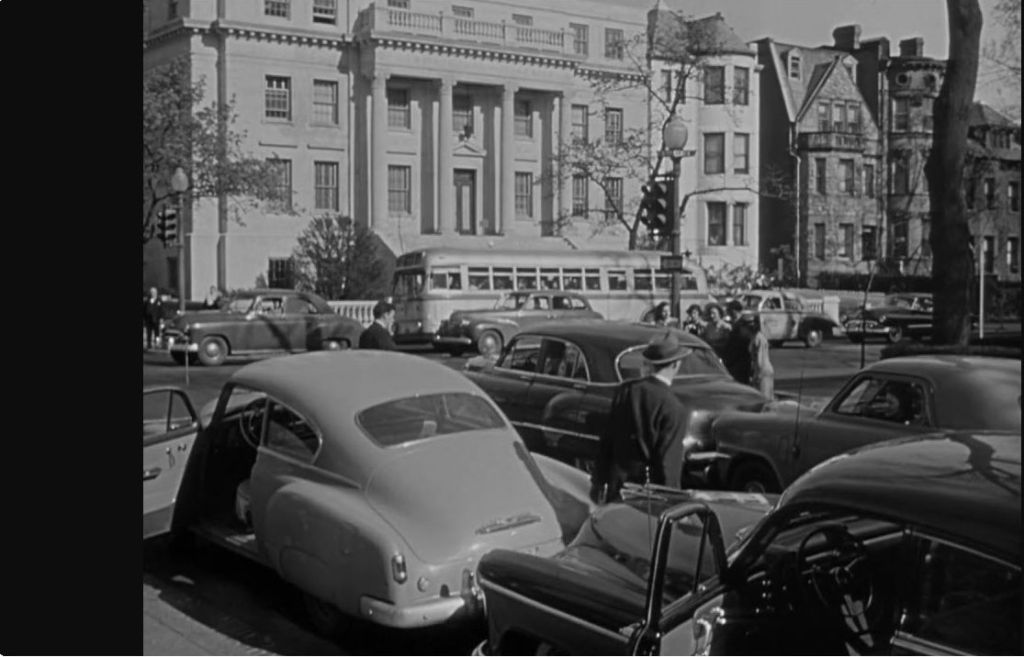
In it, Klaatu arrives from a distant world to warn people of earth that their selfish destructive ways threaten the order of the entire universe, and they must stop.
He asks Professor Barnhardt (a stand-in for Albert Einstein) to help. Klaatu is to address an assembly of all world leaders. He says that if people of earth don’t change their ways, the earth will be destroyed.
KLAATU I came here to warn you that, by threatening danger, your planet faces danger — very grave danger. I am prepared, however, to offer a solution.
BARNHARDT Would you care to be more specific?
KLAATU What I have to say must be said to all concerned.It is too important to be entrusted to any individual.
BARNHARDT I gather that your efforts on the official level were not entirely successful.
KLAATU I come to you as a last resort — and I confess that my patience is wearing thin.Must I take drastic action in order to get a hearing?
BARNHARDT What — what sort of action do you mean?
KLAATU Violent action — since that seems to be the only thing you people understand.Leveling the island of Manhattan, perhaps — or dropping the Rock of Gibraltar into the sea.
BARNHARDT Would you be willing to meet with the group of scientists I am calling together?. Perhaps you could explain your mission to them, and they in turn could present it to their various peoples.
KLAATU That’s what I came to see you about.
BARNHARDT It is not enough to have men of science. We scientists are too easily ignored — or misunderstood. We must get important men from every field. Educators — philosophers — church leaders — men of vision and imagination — the finest minds in the world.
KLAATU I leave that in your hands.
BARNHARDT You’d have no objection to revealing yourself at this meeting?
KLAATU No — not at all.
BARNHARDT What about your personal safety in the meantime? What about the Army — and the police?
KLAATU My name is Carpenter and I’m a very earthy character living in a respectable boarding house.
BARNHARDT I’m afraid I can’t offer you any real protection. I have no influence in cases of inter-planetary conspiracy.
KLAATU I’m sure I’ll be quite safe until the meeting.
BARNHARDT One thing, Mr. Klaatu. Suppose this group should reject your proposals. What is the alternative?
KLAATU I’m afraid you have no alternative. In such, a case the planet Earth would have to be — eliminated.
BARNHARDT Such power exists?
KLAATU I assure you such power exists.
BARNHARDT The people who came to the meeting must be made to realize this. They must understand what is at stake.You mentioned a demonstration of force–
KLAATU Yes.
BARNHARDT Would such, a demonstration be possible before the meeting?
KLAATU Yes — of course.
BARNHARDT Something that would dramatize for them and for their people the seriousness of the situation. Something that would affect the entire planet.
KLAATU That can easily be arranged.
BARNHARDT I wouldn’t want you to harm anybody — or destroy anything.
KLAATU Why don’t you leave it to me? I’ll think of something.
BARNHARDT Maybe a little demonstration.
KLAATU Something dramatic — but not destructive.It’s quite an interesting problem.Would day after tomorrow be all right? Say about noon?
The dramatic demonstration he arranges is to stop all power in the world, with the exception of that needed for health and safety. Normal life is brought to a standstill.
People of America are concerned. Maybe those who are concerned can borrow an idea from Klaatu. Maybe we can stop all that we are doing—with the exception of health and safety—for an hour at noon. Maybe that will be a demonstration of our concern that won’t be ignored.
Let’s assume Trump is a problem—for democracy, for the rule of law, for the economy, for the world order. If that seems like a big problem, yeah, so it seems.
What to do? What for us to do? What for you to do?
It is counterintuitive, even dangerous, to stop in the face of an emergency. Better to do something than do nothing. But is it better to do anything than nothing?
It is unnatural not to yell, criticize and curse in the face of a crisis. It seems cathartic to pile on and inspire others to resistance. But if it only adds to the environment of dark negativity, having little practical beneficial effect, are we poisoning ourselves?
Thinking is hardest of all, which seems a luxury as things get worse by the day. But before acting and speaking, think independently and fully, if you can, free of ideology and influence. If there is a solution, in the near term, midterm, long term, investigate and act. And as a bonus, enjoy the moments of quiet contemplation and stillness within which the solutions will be born.
Following is the third post published on this blog, from March 13, 2012. What do I make of my expectation, “standard bearer of global compassion”? Maybe I was blinded by inspiration and idealism. Maybe I was naive. Maybe dreams end in misguided pragmatism. But I believe they don’t have to.
Can Israel stop the Syrian genocide? On its face, the question seems practically preposterous and crazy. But at its heart, the question has a right resonance.
Argue about conflict and aggression, current and historic, argue about religion, argue about appropriation, argue about morals and equities, but Israel remains the standard bearer and source of a tradition of forceful global compassion. On top of that, the existence of modern Israel is grounded in the repudiation of one of history’s most notorious genocides—it was the Holocaust that in part gave rise to the term itself.
Is there any practical expression of this, at this moment, in that neighborhood, that makes any sense or would not worsen rather than better situations? Almost certainly not. But in a world and region that continues to exhibit madness, maybe moments of crazy wisdom are what we need to break through. Because whatever we are doing isn’t working.
Few sports feats are more complicated than pitching a baseball. There are just so many ways to throw a football. There are infinite ways for a pitcher to grip a baseball and move his hand, wrist, arm, body, all with the intent of fooling a batter or getting contact that leads to outs. That’s why great pitchers are rare, and great or good pitchers may have bad games or bad seasons. It’s that hard.
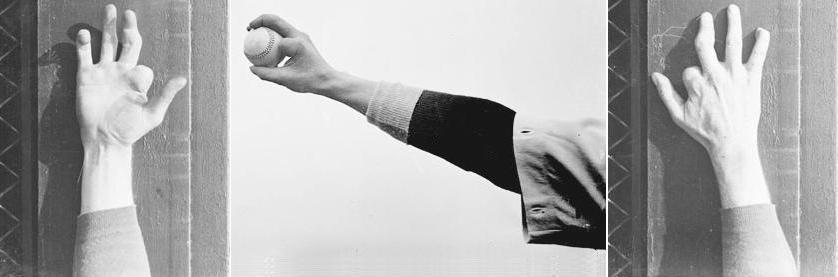
Mordecai “Three Finger” Brown played in the major leagues from 1903 to 1916. His record of 239 wins–130 losses, with a 2.06 Earned Run Average, puts him in the elite of all-time pitchers. He did this with a pitching hand, due to youthful accidents, that had just three fully-working fingers. He adjusted his grip, in a way that gave him a unique curve ball.
We all have three working fingers on our pitching hand, however it happened, whether or not we know or acknowledge it. Rather than delude ourselves, we can practice a different grip that takes advantage of it, leaving batters perplexed and fans amazed.
Browsing my image collection today, thinking about posting something fun, I stopped at the picture above.
It is an image of the forecast track for Hurricane Katrina. Exactly twenty years ago today, Hurricane Katrina had just grazed the tip of Florida, heading into the Gulf. By Monday it was forecast to hit somewhere around Mississippi, maybe close to New Orleans. That it did.




 Bob Schwartz