Bob Schwartz

Don’t forget Gaza

Walter Brueggemann

One crisis after another.

Greenland. Venezuela. Minneapolis. It is easy to forget any particular crisis. Or put another way, it is impossible to pay attention to all the crises. Not to mention all the non-critical items that crop up in our lives and our vision, some pleasant, some not.

So when one crisis gets mentioned or covered, there may be a tendency to say “well, what about…?”

So here I am saying, “What about Gaza?” That is, despite all the other headlines, don’t forget Gaza.

As I’ve implied before, in posts and conversations, Israel, including the Gaza situation, is all about theology, particularly Old Testament theology.

Walter Brueggemann (1933-2025) was one of the most prolific and influential theologians of the 20th and 21st centuries. Much of his work focused on the Old Testament, in which he found radical guidance for modern people of faith—a Bible that does not demand, justify or accept damaging political ideologies and nationalism.

In 2015 Brueggemann published Chosen?: Reading the Bible Amid the Israeli-Palestinian Conflict. He wrote:


INTRODUCTION

The seemingly insolvable conflict between the state of Israel and the Palestinian people requires our best thinking, our steadfast courage, and a deep honesty about the politically possible. The conflict is only “seemingly” beyond solution, because all historical-political problems have solutions if there is enough courage, honesty, and steadfastness.

The conflict is not a fixed, unchanging situation; rather, it is a dynamic historical reality that is dramatically changing and being redefined over time. As a result, it is imperative that our thinking not be settled in a fixed position but that it be regularly reevaluated in response to the changed and changing realities on the ground. If we should settle for a fixed solution, then we will have arrived at an ideology, which is quite unhelpful for real problems on the ground.

In my own thinking, which is much influenced by my work as a Scripture scholar, I begin with a focus on the claim of Israel as God’s chosen people. That conviction is not in doubt in the Bible. It is a theological claim, moreover, that fits with compelling persuasiveness with the reality of Jews in the wake of World War II and the Shoah. Jews were indeed a vulnerable people whose requirement of a homeland was an overriding urgency. Like many Christians, progressive and evangelical, I was grateful (and continue to be so) for the founding and prospering of the state of Israel as an embodiment of God’s chosen people. That much is expressed in my earlier book entitled The Land. I took “the holy land” to be the appropriate place for the chosen people of the Bible which anticipates the well-being of Israel that takes land and people together.

Of course, much has changed since then in the linkage between the state of Israel and the destiny of the chosen people of God.

–The state of Israel has evolved into an immense military power, presumably with a nuclear capacity. There is no doubt that such an insistence on military power has been in part evoked by a hostile environment in which the state of Israel lives, including periodic attacks by neighboring states.

–The state of Israel has escalated (and continues to escalate) its occupation of the West Bank by an aggressive development of new settlements.

–The state of Israel has exhibited a massive indifference to the human rights of Palestinians.

Thus, it seems to me that the state of Israel, in its present inclination and strategy, cannot expect much “positive play” from its identity as “God’s chosen people.” As a consequence, my own judgment is that important initiatives must be taken to secure the human rights of Palestinians. This changed stance on my part is reflected in the new edition of my book on the land. It is a change, moreover, that is featured in the thinking of many critics who have been and continue to be fully committed to the security of the state of Israel, as am I.

This rethinking is important both for political reasons and for more fundamental interpretive issues. A change in attitude and policy is important to help resolve the conflict. It is clear enough that the state of Israel will continue to show little restraint in its actions toward Palestinians as long as U.S. policy gives it a “blank check” along with commensurate financial backing. Such one-sided and unconditional support for the state of Israel is not finally in the interest of any party, for peace will come only with the legitimation of the political reality of both Israelis and Palestinians. As long as this issue remains unaddressed, destabilization will continue to be a threat to the larger region.

It will not do for Christian readers of the Bible to reduce the Bible to an ideological prop for the state of Israel, as though support for Israel were a final outcome of biblical testimony. The dynamism of the Bible, with its complex interactions of the chosen people and other peoples, is fully attested, and we do well to see what is going on in the Bible itself that is complex and cannot be reduced to a simplistic defense of chosenness. The Bible itself knows better than that!

It is my hope that the Christian community in the United States will cease to appeal to the Bible as a direct support for the state of Israel and will have the courage to deal with the political realities without being cowed by accusations of anti-Semitism.

It is my further hope that U.S. Christians will become more vigorous advocates for human rights and will urge the U.S. government to back away from a one-dimensional ideology for the sake of political realism. It seems to many of us that the so-called two-state solution is a dead possibility, as Israel in its present stance will never permit a viable Palestinian state. We are required to do fresh thinking about human rights in the face of the capacity for power coupled with indifference and cynicism in the policies of the state of Israel, which is regularly immune to any concern for human rights.

I have not changed my mind an iota about the status of Israel as God’s chosen people or about urgency for the security and well-being of the state of Israel. Certainly the Christian West continues to have much to answer for with its history of anti-Semitic attitudes and policies. None of that legacy, however, ought to cause blindness or indifference to political reality and the way in which uncriticized ideology does enormous damage to prospects for peace and for the hopes and historical possibilities of the vulnerable. The attempt to frame the Israeli-Palestinian conflict in terms of anti-Semitism is unpersuasive. More courage and honesty are required amid the realities of human domination and human suffering. As the hymn writer James Russell Lowell wrote in reference to the U.S. Civil War, “New occasions teach new duties.” The current conflict, with its escalation of cynical violence, is a new occasion. New duties are now required.

Walter Brueggemann, Chosen?: Reading the Bible Amid the Israeli-Palestinian Conflict


The American Revolution and today: Might does not make right.

Gadsden Flag (1775)

This year we celebrate the 250th anniversary of the Declaration of Independence and the American Revolution. This week we see the U.S. invasion of Venezuela, a sovereign nation, to capture that nation’s leader—however malevolent he may be—contrary to principles of international and American justice.

The only principle of that invasion and capture: Might makes right.

A primary principle of the American Revolution and of the next 250 years of America: Might does not make right.

As much talk as we hear and action we witness, including extending similar invasions to other nations, keep this motto in mind: Might does not make right.

The flag above, designed in 1775 by Christopher Gadsden, a delegate to the Continental Congress, is a symbol of that principle. The Gadsden flag was an inspiration then and remains essential. To put it in contemporary terms: No Kings.

Might does not make right.

Who should be awarded the first Putin Peace Prize?

Alfred Nobel invented dynamite, among his other profitable and world-changing achievements.

In his will, he bequeathed part of his fortune to the establishment of five Prizes, including the Peace Prize. According to his will, it is to be awarded to the person who “shall have done the most or the best work for fraternity between nations, for the abolition or reduction of standing armies and for the holding and promotion of peace congresses”.

We know two things about the current state of Peace Prizes. One is that the current president of the U.S. really wants the Nobel Peace Prize. Two is that his supplicants are now creating new Peace Prizes for him to win.

In this spirit of new Peace Prizes, proposed is the Putin Peace Prize. Apparently, you can now win (admittedly fake) Peace Prizes, such as the FIFA football Peace Prize, even if you are a leading war maker who does not “work for fraternity between nations”. So we might consider going all the way, actually naming the prize itself in honor of a distinctly unpeaceful leader.

Who should be awarded the first Putin Peace Prize?

New York Mayor Zohran Mamdani Inauguration Speech

On New Year’s Day, Zohran Mamdani was sworn in as Mayor of New York.

Much has been said about his election as leader of America’s biggest and most important city and one of the most significant cities in the world.

You have heard that he is young, that he is charismatic, that he is a Democratic Socialist, that he is a Muslim who was sworn in on a Quran, that his election was unexpected. You have heard that he has been attacked as a Communist, a terrorist, an antisemite. You have heard that New York billionaires are considering leaving the one-of-a-kind city they love and that enabled them to become billionaires. (No, he is not a Communist, terrorist or antisemite. No, those billionaires will not be leaving New York because, well, it’s New York.)

Whatever you’ve heard, hear for yourself. Following is the inspired and inspiring speech Mamdani gave at his inauguration. Leading New York City is more challenging than leading many states, especially in 2025. Whatever your politics and public philosophy, you will hear a genuinely optimistic call to expect more and work together to achieve it. For every mention of New York and New Yorkers, substitute America and Americans.

I am a native New Yorker, spending most of my life away from the city, in a sort of geographical diaspora. Meaning: I am always a New Yorker. I could not be prouder to say that than when watching the future of New York with Mamdani.

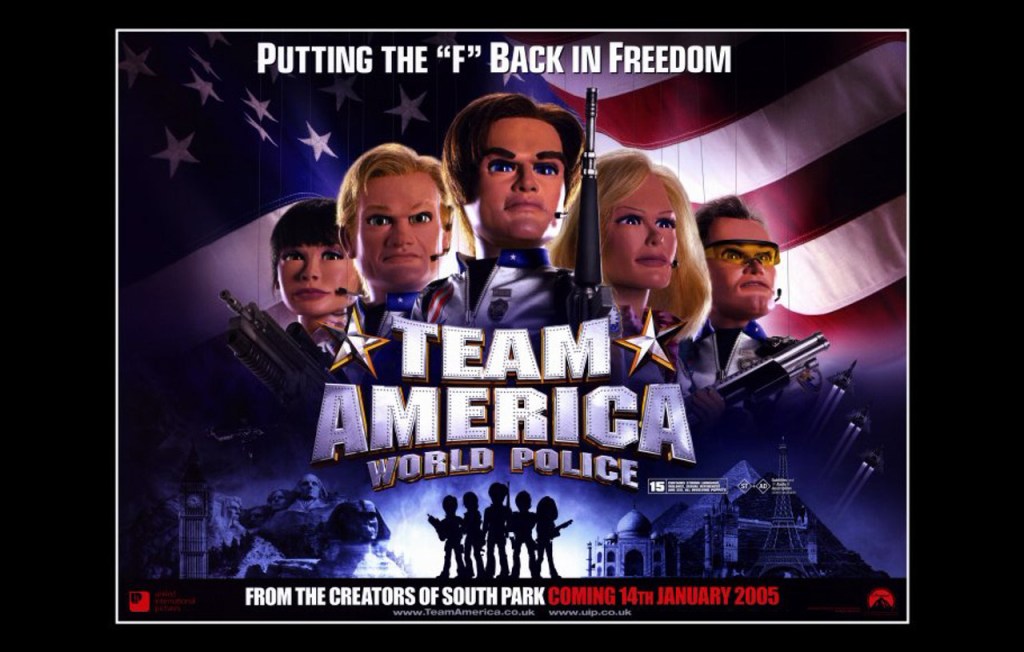
Team America: World Police

America! Fuck yeah!

I am ashamed to learn that I have never posted about the movie Team America: World Police (2004), from Trey Parker and Matt Stone, creators of South Park. I apologize.

If you like or love South Park, if you don’t like or love South Park, if you never see an episode or another episode of South Park, find this movie and watch it. Timely in 2004 and at many moments since, it is even more timely today.

Absurdly funny, indiscriminately cruel, and mercilessly true. Nothing is to everyone’s tastes. But if you see reviews or comments questioning the qualities of this movie, ignore them until you’ve seen it for yourself. Because under the current circumstances, or under the circumstances of 2004, or before that or after now, this is the ultimate puppet analysis of modern American geopolitics.

Once you see it, you’ll never forget it. As we occupy Venezuela, or Iran, or…Greenland?

It is not currently streaming for free. Pay for it if you have to. Meanwhile, following are a trailer and some clips to entertain and inform you.

America! Fuck yeah!

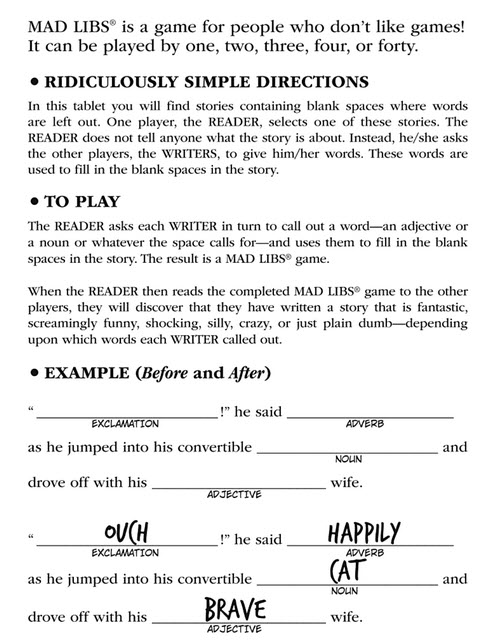
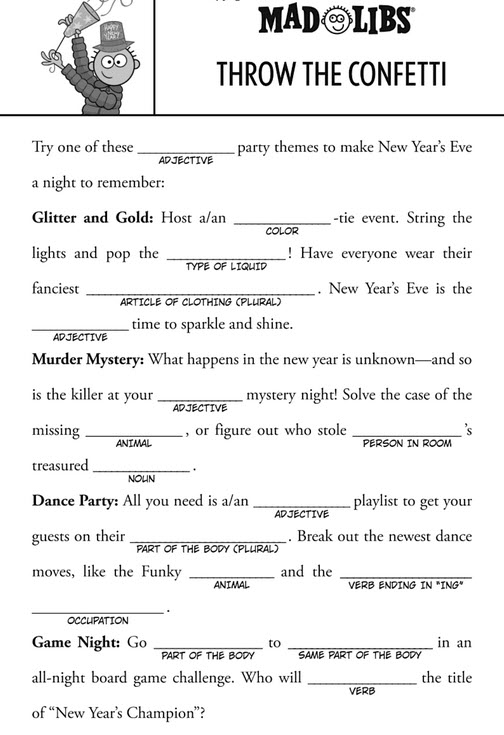
Happy New Year Mad Libs

Happy New Year Mad Libs

New Year: I Ching Hexagram 64—Not Yet Fulfilled


64
Fire Over Water
Wei Ji • Not Yet Fulfilled

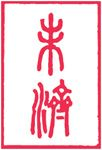
The ideograph of wei above is meticulous—it looks simple, yet its meaning is profound. The stem of the ideograph is a tree, mu. A second curved stroke was added through the tree and thus the ideograph of wei was created. Without the horizontal stroke we have a picture of a tree with its roots growing downward and its branches growing upward. The horizontal stroke represents the ground. The portion of the tree underneath the ground is still alive. It has already grown to its full height (fulfilled its growth), and now it starts a new cycle of growth. The structure of the ideograph supplies a vivid picture of having achieved one’s goal, but not yet having been fulfilled. There is a new cycle to come. The meaning of the ideograph of ji signifies crossing a river, from here to there, or from beginning to end.

SIGNIFICANCE

This gua ends the sixty-four gua and the three hundred and eighty-six yao of the I Ching. But the principle of change continues without end. Events in the universe move forward and alternate in cycles. The stage of Not Yet Fulfilled will gradually reach the stage of Already Fulfilled. The stage of Already Fulfilled is merely the fulfillment of certain events or of a certain stage in a cycle of events. If some occurrences have reached the stage of Already Fulfilled, there are always others that are Not Yet Fulfilled. The stage of Already Fulfilled is also the stage of Not Yet Fulfilled. The stage of Not Yet Fulfilled is the beginning, like the dark before the dawn. The I Ching starts with Qian, the Initiating, and ends with Wei Ji, Not Yet Fulfilled. When the development of events reaches the end of a cycle, Already Fulfilled, then another cycle, Not Yet Fulfilled, begins. In this way, the cycles of change and development repeat endlessly.

A transition from disorder to order is representative of the I Ching as a whole. In the beginning it swings from extreme to extreme, with no balance in between. By the time it reaches the final gua, Already Fulfilled and Not Yet Fulfilled, a perfect state of balance has been achieved.

During King Wen’s sitting in stillness he reflected on the past in light of the present. The destiny of the Shang dynasty had been fulfilled. The destiny of the Zhou was not yet fulfilled. Its situation was like that of the little fox who had almost crossed a river. There was success in store, and nothing was unfavorable.

The Complete I Ching, Taoist Master Alfred Huang


2026: Too Much of Nothing?

Too much of nothing
Can make a man feel ill at ease
One man’s temper rises
While another man’s temper might freeze
Now it’s a day of confession
And we cannot mock a soul
Oh, when there’s too much of nothing
No one has control
Bob Dylan, Too Much of Nothing

Count the items in your day. What you encounter and engage with. Inside and outside. Things and thoughts. Incidentally or by choice. It’s a lot.

As you count, you might consider the character and value of those items. What is each one adding? What is each one subtracting? More to the point, what is each one adding to or subtracting from what you value?

AI is literally trained on items, ready to process and offer those items. And it is an item itself. So if the volume of items already exploded with the digital access of internet and devices, that is now exponentially larger.

It is certain that 2026 will be another “year of AI”, as will every year in the foreseeable future. More items for us to encounter and engage in, incidentally and by choice, added to the proliferation of items we are already experiencing.

It is also certain that we, as lovely as we are, are not yet equipped to handles all these items in ways that are good for us as individuals and as societies. If we work at it maybe someday, but not yet, though hopefully before it overtakes us and we drown.

Which is why counting and valuing items may be helpful. It is, if you like to think of it this way, just awareness and consciousness of the items, their value, and your values. Once you are aware, you choose.

One person’s drowning is another person’s swimming in a vast ocean. If you understand the ocean and you know how to swim.

© 2025 Bob Schwartz

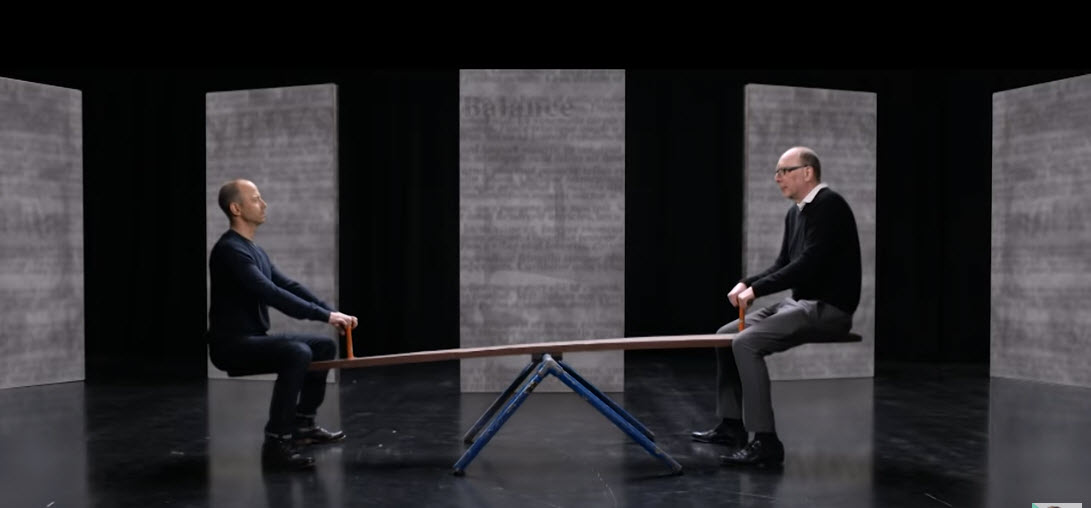
Media Balance v. Truth: “A Balanced Treatment of an Unbalanced Phenomenon Distorts Reality”

This is a replay of a post from April 30, 2019. It is repeated not only because at that time we were deep into the first Trump administration. It is repeated because here and now, the attempts to “balance” coverage of the second Trump administration are–hoping not to sound over-dramatic–existentially dangerous for America.

While we regularly employ balancing and weighing in our personal and public lives–the traditional pro-con lists–there is a special provision. The “joke” describing Mussolini’s fascist regime was “he made the trains run on time.” Yes, and he was a brutal fascist. The provision is that at some point, the weighing must end, because the damage is so overwhelming that balancing has no place.

The news principle of balance is considered almost sacred, and has its place under many circumstances. But not all circumstances. On the one hand, on the other hand, you decide, is no longer enough. For example, on the one hand, a president is by all evidence physically and psychologically unwell and perhaps unstable. On the other hand, he says he is in excellent, unparalleled, psychological and physical health. We report both, you decide.

Six years later, there is better news about news. Many more independent outlets are doing reporting that is reliable and “balanced” in favor of reality. Still, some of the major once-respected news organizations are shying away from reality, sometimes running away from it, out of their own leanings or out of fear.


You may have seen or heard about Samantha Bee’s Not the White House Correspondents’ Dinner on TBS. The first one of these two years ago was meant to point to Trump’s attempt to diminish journalism by not attending, as president’s have for decades. In years past, the WHCA Dinner became known as the Nerd Prom, combining a celebration of a free press, journalists, celebrities and sharp roasting—including roasting the president.

This year, thin-skinned Trump not only held his usual alternative rally at the exact same time, but somehow cowed the White House Correspondents’ Association into abandoning roasting, humor and celebrities entirely, in favor of earnest attention to journalism. Samantha Bee would have none of it, instead offering her own combination of humor, entertaining discussion, and celebrities.

The segment getting the most attention is probably her closing roast of Trump, which was no holds barred. But in the analysis category, no segment was better than the one on how media attempts to offer “balanced” coverage is useless when the matter covered doesn’t really have two civilized and defensible sides. The segment was grounded in this from an op-ed piece by Norm Ornstein and Thomas Mann:

We understand the values of mainstream journalists, including the effort to report both sides of a story. But a balanced treatment of an unbalanced phenomenon distorts reality. If the political dynamics of Washington are unlikely to change anytime soon, at least we should change the way that reality is portrayed to the public.

Our advice to the press: Don’t seek professional safety through the even-handed, unfiltered presentation of opposing views.

“Balanced” media coverage, not calling out demagoguery, venality and incompetence at an early stage, is part of how Trump managed to get elected, and how the current devolution of American democracy continues. For more than two centuries, a mostly two-party America could say that there were very fine people on both sides. But it is not only possible that that is not eternally true; we are living through the proof.

April 30, 2019

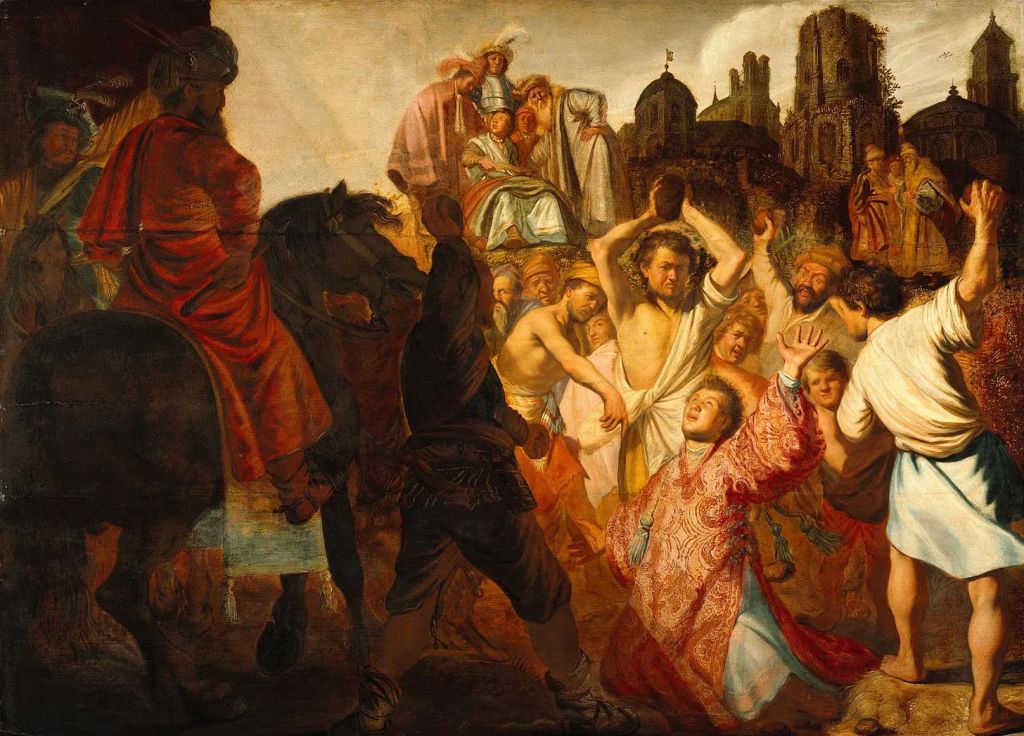
Feast of St. Stephen: Love your enemies

Stoning of St. Stephen, Rembrandt (1625)

Today, the day after Christmas, is the Feast of St. Stephen, the first Christian martyr. As he was being stoned to death, he prayed for his attackers.

There is a video of the Christmas Eve dinner at Mar-A-Lago. Trump is sitting at a cordoned-off table, with his wife Melania and an unidentified man. Melania is talking to the man, Trump is alone, mostly ignored. It was sad.

In Buddhist traditions, we are asked to treat enemies as treasures and spiritual friends:

When I see ill-natured people,
Overwhelmed by wrong deeds and pain,
May I cherish them as something rare,
As though I had found a treasure-trove…

Even if someone whom I have helped
And in whom I have placed my hopes
Does great wrong by harming me,
May I see them as an excellent spiritual friend.

If you are one of the many affected directly or indirectly by what appears to be a one-man mission to carelessly hurt others and make things worse, it is beyond challenging to “love your enemy”—no matter that we have that advice on good authority.

A couple of things:

Empathy makes you stronger, not weaker.

Empathy does not mean giving up on trying to work against the worst and for the best, including opposition to those “ill-natured people, overwhelmed by wrong deeds and pain.”