Bob Schwartz

Hitmakers Reborn: Etta James and Gil Scott-Heron

Twice, artists who died in the past year have been reborn as hitmakers through the miracle of musical merger.

Both Etta James and Gil Scott-Heron play posthumous parts in two irresistible and near-perfect records—even if only a small number of listeners know exactly what they are listening to and who made these records the success they are.

Hip-hop sampling has been a great creative development. What began as inclusion of bits and pieces has become a full-scale integration unknown in any art. This isn’t quoting or paraphrasing or homage or covering. This is merger.

One case is Flo Rida’s Good Feeling, a three-layer cake with the incomparable Etta James at the foundation (and as the icing). You’ll recognize her powerful gospel-soul riff from 1962’s Something’s Got a Hold on Me:

“Oh, oh, sometimes I get a good feeling, I get a feeling that I never, ever, ever had before.”

In 2011, Swedish producer and DJ Avicii made this hook the centerpiece of his dance hit Levels, laying it in the middle of the beats and the record. Flo Rida in turn sampled Avicii’s recording, including Etta James, to create Good Feeling. The song is even named for the lyrics of the original. Flo Rida had the commercial good sense to put Etta James’ voice right out front, just six seconds into the record. For the next four minutes we can’t wait for her voice to rise up again. And to demonstrate just how powerful the riff is, you can now hear the record in major commercial campaigns, including one for Buick.

Then there is Drake’s Take Care, featuring Rihanna. This is even more layered. It begins with the song I’ll Take Care of You, written by Brook Benton and recorded by Bobby “Blue” Bland in 1959. Groundbreaking musician and poet Gil Scott-Heron (The Revolution Will Not Be Televised) recorded the song on his final album I’m New Here (2010). The track was remixed the next year by Jamie xx, amping a plaintive and soulful performance into a beat-based I’ll Take Care of U. This is the mix at the heart of Take Care.

One piece of good news is that the records that emerged from this process are simply great. They are great, especially in the case of Good Feeling, because of the artistry they are based on. There is also good news in that the current artists have given some credit to these predicate performers and performances, though it could have been and still could be much more.

The final good news is that this creates an opportunity for music fans to learn that music didn’t start in 2012, or 2000, or 1990, or wherever the old/new or really-old/old/new line lies for listeners. Listen to Gil-Scott Heron, listen to Bobby “Blue” Bland, and most of all…

Listen to Etta James. You might know Etta James from her biggest hit At Last, which Beyonce sang at an Obama Inaugural Ball. You might know Etta James from the interesting movie Cadillac Records, a dramatized history of Chess Records, featuring Beyonce as Etta James.

But you may not know, and should learn, that Etta James was one of the most talented and versatile artists of her generation, singing standards, pop, R&B, even a little country, and straight blues. Her popularity in other genres kept her from being recognized as one of the blues greats: listen to The Sky Is Crying, Dust My Broom, or Lil’ Red Rooster. A place to start is The Chess Box. And no, there’s no Beyonce anywhere in sight.

Logo of a Lifetime


The image above is not the new Lifetime Network logo, launched on May 2 as part of the network’s rebranding. Instead, it is from the Sci-Fi Channel, which rebranded itself as Syfy in 2009. But for a brief moment, from November 1998 to March 1999, it asked to be called SF until it could decide what it wanted to be when it grew up. This is that interim logo.

Here is the new Lifetime logo, designed by Leroy+Clarkson:

Designing logos, while it may be well-compensated work, can be a thankless job. No matter how much sophisticated research goes into the process, it is art for commerce, but definitely art, and opinions vary according to taste (even when the discussion is seemingly objective, scientific and market-based). Add to that the creation and integration of a tag line and it is amazing that the process ever ends.

In 28 years, Lifetime has had 11 logos. You can see them on parade at Logopedia.

Elsewhere you can read explanations of what the new logo and the tag line mean relative to Lifetime’s strategies and its audience. Here and now, the logo can speak for itself…though it might have been worthwhile for A&E (owner of Lifetime) to consider reaching out to NBCUniversal (owner of Syfy) to see if maybe, just maybe, the old SF logo might still be available. Not nearly as subtle, Eastomystical, or feminine as the new logo, but it would be tons of fun:

The President’s Commission on Campus Unrest: A 1970 Manifesto of Hope

These first weeks of May mark events in 1970 unlike any in American history. Along with the most tragic consequence, an almost forgotten document of that time offers an eloquent statement of hope—for then and for now.

On April 30, President Richard Nixon announced the U.S. bombing of Cambodia as an escalation of the Vietnam War. Student protests and strikes swept colleges across the country. On May 4, National Guard troops at Kent State University shot at students, killing four and wounding nine. Protests and demonstrations expanded, and within the week hundreds of campuses were affected or closed down. Then ten days after Kent State, on May14, black students and other demonstrators at Jackson State College in Mississippi engaged with city and state policemen. Two students were killed and at least twelve were wounded.

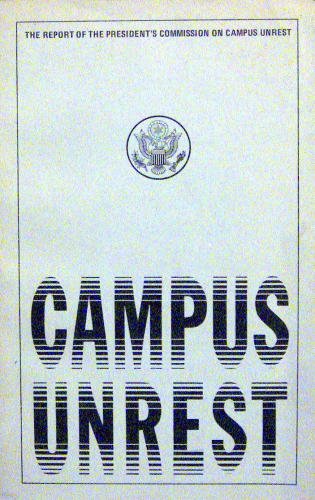
Only a few weeks later, President Nixon established the President’s Commission on Campus Unrest on June 13, 1970. The Commission was chaired by William Scranton, former Pennsylvania Governor, and issued its report in October 1970.

Defining events have a half-life. Time passes, people pass, and more immediate crises displace the old. There are round-number anniversaries, and these events did get a boost from the fortieth anniversary a couple of years ago. Even when they are remembered, the visceral actuality and meaning get lost. If the event is at all controversial, it may be better to avoid the reminders completely and not have to deal with still-unsettled topics and themes. An example of this was the virtual silence surrounding last year’s 150th anniversary of the start of the Civil War. That could have been a platform for discussing so many issues—race, state’s rights, etc.—but we were understandably too busy trying to fix a broken national and world economy.

Maybe it is not surprising then that the 1970 report on campus unrest is so little mentioned or sought and so hard to find, even in this age of digital archives. It is worth reading, and not just as an historical artifact. President Nixon and others in his circle believed that colleges had become the breeding ground not just for opposition to the Vietnam War but for virulent and violent un-Americanism/anti-Americanism.

He hoped that the Commission would support this view of America. He got some of that, with conclusions that there were a minority of strident academics and students who, well-meaning or not, had created an environment of intolerance where discord and violence were the inevitable outcomes.  This the report called a “Crisis of Violence.”

But the Commission also found what it called a “Crisis of Understanding.” This moderate and idealistic analysis was not what President Nixon had in mind. It is an unbearably eloquent statement of aspiration and progress that could be written today—not in spite of the specifics being so different, but in their being so much of the moment.

From the introduction:

The crisis on American campuses has no parallel in the history of the nation. This crisis has roots in divisions of American society as deep as any since the Civil War. The divisions are reflected in violent acts and harsh rhetoric, and in the enmity of those Americans who see themselves as occupying opposing camps. Campus unrest reflects and increases a more profound crisis in the nation as a whole. This crisis has two components: a crisis of violence and a crisis of understanding.…

Behind the student protest on these issues and the crisis of violence to which they have contributed lies the more basic crisis of understanding. Americans have never shared a single culture, a single philosophy, or a single religion. But in most periods of our history, we have shared many common values, common sympathies, and a common dedication to a system of government which protects our diversity. We are now in danger of losing what is common among us through growing intolerance of opposing views on issues and of diversity itself. A “new” culture is emerging primarily among students. Membership is often manifested by differences in dress and life style. Most of its members have high ideals and great fears. They stress the need for humanity, equality, and the sacredness of life. They fear that nuclear war will make them the last generation in history. They see their elders as entrapped by materialism and competition, and as prisoners of outdated social forms. They believe their own country has lost its sense of human purpose. They see the Indochina war as an onslaught by a technological giant upon the peasant people of a small, harmless, and backward nation. The war is seen as draining resources from the urgent needs of social and racial justice. They argue that we are the first nation with sufficient resources to create not only decent lives for some, but a decent society for all, and that we are failing to do so. They feel they must remake America in its own image….

At the same time, many Americans have reacted to this emerging culture with an intolerance of their own. They reject not only that which is impatient, unrestrained, and intolerant in the new culture of the young, but even that which is good. Worse, they reject the individual members of the student culture themselves. Distinctive dress alone is enough to draw insult and abuse. Increasing numbers of citizens believe that students who dissent or protest, even those who protest peacefully, deserve to be treated harshly. Some even say that when dissenters are killed, they have brought death upon themselves. A nation driven to use the weapons of war upon its youth is a nation on the edge of chaos. A nation that has lost the allegiance of part of its youth is a nation that has lost part of its future.

We urgently call for reconciliation. Tolerance and understanding on all sides must reemerge from the fundamental decency of Americans, from our shared aspirations as Americans, from our traditional tolerance of diversity, and from our common humanity. We must regain our compassion for one another and our mutual respect. There is a deep continuity between all Americans, young and old, a continuity that is being obscured in our growing polarization. Most dissenting youth are striving toward the ultimate values and dreams of their elders and their forefathers. In all Americans there has always been latent respect for the idealism of the young. The whole object of a free government is to allow the nation to redefine its purposes in the light of new needs without sacrificing the accumulated wisdom of its living traditions. We cannot do this without each other. Despite the differences among us, powerful values and sympathies unite us. The very motto of our nation calls for both unity and diversity: from many, one. Out of our divisions, we must now recreate understanding and respect for those different from ourselves. Violence must end. Understanding must be renewed. All Americans must come to see each other not as symbols or stereotypes but as human beings. Reconciliation must begin. We share the impatience of those who call for change. We believe there is still time and opportunity to achieve change. We believe we can still fulfill our shared national commitment to peace, justice, decency, equality, and the celebration of human life. We must start. All of us.


Likeability and Political Forgiveness


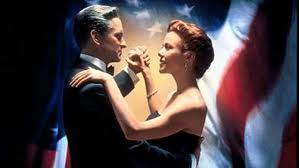
In the most charming of political romantic comedies, The American President, an incandescently beautiful lobbyist (Annette Bening) chastises the handsome and liberal President (Michael Douglas), though not to his face:

The President has critically misjudged reality. If he honestly thinks that the environmental community is going to whistle a happy tune while rallying support around this pitifully lame mockery of environmental leadership just because he’s a nice guy and he’s done better than his predecessors, then your boss is the Chief Executive of Fantasyland.

The President is a very nice guy. He overhears this tirade, which leads to their meeting cute, having sex in the White House, splitting up, getting back together, and living happily ever after, romantically and politically. All is forgiven.

Everyone agrees that likeability matters. There is an apparent likeability gap between President Obama and Mitt Romney. Under normal circumstances, relative likeability is a solid predictor of Presidential outcomes. But these are anything but normal times. There are plenty of world-class doctors who are personality challenged, and given the choice between the one you would have a beer with and the one who can keep you alive, there isn’t much choice.

Still, likeability provides something that other characteristics cannot: room for forgiveness. That is why likeability matters, in politics and elsewhere. Everyone screws up, and the willingness of others to get over or past that is essential. Without denying his substantial talents and achievements, Bill Clinton survived on his likeability more than once. In the much darker and non-romantic comedy Primary Colors, based on Joe Klein’s roman a clef about pre-Presidential Bill Clinton, the candidate’s close friend and no-bullshit confidant, played by Kathy Bates, sums up the Peck’s Bad Boy of politics:

Now what kind of shit is that, Jack? Oh, excuse me. I forgot. It’s the same old shit. The shit no one ever calls you on, ever. Because you are so completely fucking special! Because everyone was always so proud of you. Me, too. Me, the worst.

Likeability matters because it makes you special, at least long enough to get beyond the worst of it. As President Obama confessed early on, he is not a perfect man, and would not be a perfect President. He hasn’t been, but who can be? The judgment depends on just how badly imperfect you are and how much people will forgive. That’s the well we all go to, and likeability keeps the well filled—at least for a while. Mitt Romney is not a perfect man or a perfect candidate. At some point, he will likely have to go to the well of likeability and forgiveness. We wonder whether there will be anything there when he does.

Labor, Loyalty and Law Day


It is May 1, and there is no Google search page gimmick for it. Probably because it is hard for Google to know exactly which May 1 to celebrate.

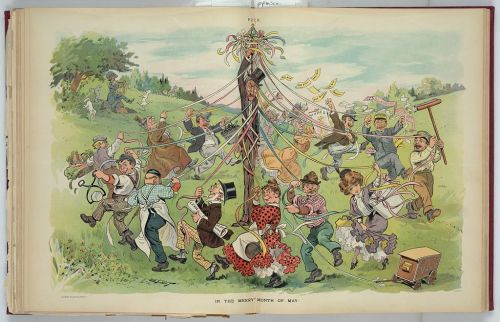
May Day has been for ages a universal celebration of spring, with sprightly traditions including dancing around the Maypole. Then it took a darker, more serious turn, becoming International Workers’ Day (Labor Day), a commemoration of the bloody death of workers at the Haymarket Riot in Chicago in 1886. To counter this populist/communistic direction, in 1921 it became Loyalty Day (originally Americanization Day), with Congress and President Eisenhower officially affirming this in 1959 at the height of the Cold War. Almost simultaneously, in 1958 the President also declared May 1 to be Law Day.

May Day remains all this and whatever else you choose to make of it. Consider these virtues: the importance of labor and economic justice, the value of deserved loyalty, the significance of the rule of law, and the joys of spring that make all of them worthwhile. If you miss May 1, May 2 or every other day will do for working on all these and for dancing, with or without a Maypole.

Breathing and Relaxing with the Department of Defense

The U.S. Department of Defense might seem an unlikely place to look for cutting edge technology to relieve stress and promote psychological well-being. That is exactly what you find at The National Center for Telehealth and Technology (T2):

Our mission is to lead the development of telehealth and technology solutions for psychological health and traumatic brain injury to improve the lives of the Nation’s Warriors, Veterans, and their Families. T2 seeks to identify, treat, and minimize or eliminate the short and long-term adverse effects of TBI and mental health conditions associated with military service.

Out of this work, T2 has developed some remarkable mobile apps , aimed at military communities, but available and valuable for anyone. Two of these will be of particular interest to those who believe that simple breathing techniques are a primary key to psychological health.

Tactical Breather and Breate2Relax are simple yet sophisticated tools for an instant, easy-to-follow exercise of breathing for stress reduction and relaxation.

Tactical Breather is the much simpler of the two apps and techniques, involving just a four-count system of inhale, hold, exhale, hold. Along with the onscreen prompts and guiding voice, there is an introduction and tutorial.

Breathe2Relax is more comprehensive in terms of supporting text, videos, and UI, offering a host of options for the interface: beautiful background images (including photos from NASA and NOAA),  relaxing background music (with titles such as Ambient Evenings and Evosolutions), and more. The deep breathing exercise is simply inhale/exhale, and you can change the length of each breath (default is 7 seconds) and the number of cycles for the exercise (default is 16). Coolest of all is a floating body scan animation about the effects of stress, showing a virtual human with highlights about organs and systems that are compromised by stress—with all the flash and special effects you would expect from the Pentagon.

At some points, the apps reflect their military origins and mission. In Breathe2Relax, a Wellness Tip suggests that “Problems with drinking and drugs can be tough to work through on your own. Talk to a chaplain or health care professional.” On the one hand, this gives a non-military user—no matter how beneficial the app is for everyone—the feeling of intruding someplace where civilians don’t belong. But then again, using the apps may be a strangely good reminder of a price we ask our military members to pay. These and the other interesting apps from T2 are twenty-first century ways of making their situations a little better. That others of us get to share in the benefit is a bonus.

Where Have You Gone Maxfield Parrish?


“Beauty is truth, truth beauty,” – that is all
Ye know on earth, and all ye need to know.

John Keats, Ode On A Grecian Urn

Maxfield Parrish was one of the most popular and ubiquitous American artists and illustrators of the first half of the twentieth century. For decades, his work was seen and instantly recognizable in books, magazines, and advertising. His extravagant and romantic style was inimitable, and he was honored by having his signature color—now known as Parrish Blue— named after him.

A new generation rediscovered Parrish in the 1960s, and walls of dorms and apartments were adorned with Parrish posters. Eventually the appreciation spread beyond college students, and Parish prints became more widely popular. And then, like all art trends, interest died back down. Today Parrish and his work are not so well known.

His most famous series was the calendars he illustrated for Edison Mazda light bulbs (above). General Electric named the bulbs for Ahura Mazda, the supreme deity of Zoroastrianism. The religion’s central theme is the cosmic struggle between light and darkness. Parrish’s first calendar was so well-received that he continued to create it for 17 years.

A few decades ago, these luminous pictures spoke to a young generation navigating through unsettled times. Maybe it was the beauty of the pictures. Maybe it was their implicit idealism. Maybe it was the drugs. Maybe it was not just the promise and possibility of light, but the actuality of unseen colors that are right in front of our eyes—if we choose to see them. We could use some of that and some more Maxfield Parrish today.

Hey, You, Get On Your Own Cloud


The PocketCloud Explore app from Wyse Technology has won numerous awards, including being named LAPTOP Magazine’s Best of Mobile World Congress 2012. It deserves consideration as one of the best apps of all time, for choosing to do something so essentially simple so well.

The Cloud is supposedly the digital version of heaven. Your stuff will be out there, floating around, accessible wherever you are. Your stuff gets there either by your effort or, more frequently now, by being automatically synced and transported there.

Of course, there are challenges. Space in The Cloud is not unlimited and not always free. And many of us still have all our stuff on an old-school legacy device known as a PC, a machine surprisingly spry and popular for a technology reportedly on its last legs. Wouldn’t it be great if our PC could be our own personal and private cloud? Now it can.

As Wyse describes it:

Your Stuff…Your Device…Your Cloud!

PocketCloud Explore brings an intuitive view of your Windows/Mac file systems to Android and iOS smartphones and tablets, and lets you search, view, organize, and share across all of your computers.  It enables you to create a personal cloud out of your computers plus an online “Cloudbin” (PocketCloud Web beta) for anytime, anywhere access and sharing.

“Create a personal cloud out of your computers.” This sounds too good to be true or, as is the case with so many ambitious apps, too complex and difficult to be smooth and painless—or to work at all. But five minutes later, after installing the desktop companion software and the mobile app, an entire PC hard drive was accessible on a smartphone—to seamlessly access documents, books, music, videos. Your 32 GB (or less) mobile device is instantly your 500 GB PC.

That is more than a cloud. That is digital heaven.

Performers in Chief

Every President, every aspirant, every high-profile politician is a performer. They are the epitome of T.S. Eliot’s “prepare a face to meet the faces that you meet” (or that may vote for you).

There is no moral measure in this, any more than there is for fish swimming or birds flying. The measure instead is the roles they choose to play, how well they play them, how suited they are to play them, and ultimately how the performance plays with the audiences.

Even playing yourself is a form of performance, sometimes the most challenging. Washington, Lincoln, FDR, all were who they seemed to be, just in a public way that channeled, focused, and amplified that actuality. It was only partly Reagan’s policies that got him overwhelmingly elected and keeps him in the national consciousness; it’s that he created and played an unforgettable Presidential role that even his skeptics admit was masterful. On the other end, we have many moments of miscasting, as in Michael Dukasis’s misbegotten moment playing a warrior in a tank.

President Obama was on the Jimmy Fallon show last night. We may have had other performers in the office who were as affable, funny, and smooth, but in the young twenty-first century, there are none who can hit the perfect note at the nexus of presidential gravity and free-spirited playfulness. The President slow jammed the news, working in his message about attempts to double the interest rate on Stafford college loans.

Older viewers, who may fondly remember candidate Richard Nixon’s few seconds on Rowan & Martin’s Laugh-In in 1968 (“Sock it to ME?”), might think that Obama goes too far—in this and his many “cool” appearances. But Nixon’s performance was more than forty years ago, and audiences and sensibilities have changed. We may not want a President who is one of us, but we may want a President who chooses to act in a way that demonstrates he knows what time it is and who we are—and one who can pull it off naturally.

Up to this point, Mitt Romney seems to be one of the most reluctant and least effective performers we’ve had running for President. This doesn’t mean there won’t be improvement, but it will have to come from him or his handlers recognizing the basics: choose the roles appropriate for yourself and your intended audiences, and then play the roles effectively. One of Romney’s challenges is sometimes called flip-flopping or more recently etch-a-sketching. But the real challenge is that Romney has not chosen any roles to play, and he is struggling to even play the default role—himself—effectively. Romney has little experience as a performer, since many business positions don’t require it. It’s time for him to learn.

Until Romney decides to pick some appropriate roles and learn how to perform them, it will be an uphill race for him. Likeability has become the shorthand index for predicting electoral success. But it is something more, less subject to measure, but still very clear. The best performers often win the Presidency. In a campaign, and in office, you don’t just be the President, you play the President.

Chuck Colson: Teshuvah and Woody Allen


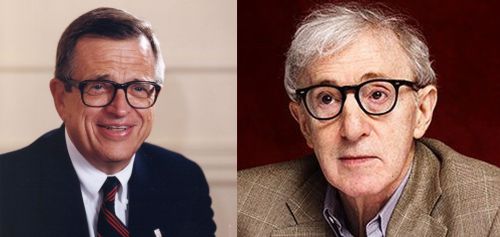
Chuck Colson (1931-2012) died this past weekend. His ruthless loyalty to Richard Nixon led to his central role in the Watergate scandal and to time in prison. That experience in turn led to his rebirth as an Evangelical Christian and to a lifetime of writing books (23 of them) and of helping the least among us—prisoners and others—to achieve fuller and better lives, at least by Colson’s religious lights.

If many were turned off by Colson’s politics before his conversion, it was not always easier after. Some questioned his sincerity. Others wondered whether any amount of transformation, however sincere, could balance his responsibility for helping to bring our democracy to its knees. Others saw the politics of his Christianity to be as socially destructive as the politics of his pre-Christian ruthlessness.

Two notes about Chuck Colson.

His first book Born Again (1976) is distinguished from all other books by participants in Watergate, from Nixon down through all his men. Most readers with particular political or religious inclinations didn’t read the book then, and even fewer do now. It is a compelling, candid, sincere confession of malfeasance and faith. Whether Colson’s work of the past forty years is to your liking or loathing, if you believe in the possibility of turning—in Hebrew, teshuvah—then you should believe in this. Personal transformation is not limited to those we approve of.

The second note is that Chuck Colson was a big Woody Allen fan. This was revealed last fall in an article  by Washington Post religion writer Michele Boorstein. Theories of humor and religion aside, this really isn’t hard to understand. Funny and smart is funny and smart, and this is probably something Colson appreciated. There’s no evidence that Colson and Allen ever met (though Boorstein did uncover a tape of Allen interviewing Billy Graham!). If they had, maybe they would have shared their experiences and views about the power of turning and confession for everyone, including artists and political operatives.