Bob Schwartz

If Not Now When: Today Is the Day to Talk About Guns

National Rifle Association - Newtown
In the immediate hours after the Newtown, Connecticut shootings, Presidential spokesman Jay Carney was asked whether this would move the President on the issue of gun control. “Today is not the day to talk about guns,” he replied. The focus, he said, should be on the victims and their families.

A few massacres ago, around the time of the Colorado movie theatre shootings, that sounded better. The boldness of those activists wanting to instantly seize the moment and make a point about gun control seemed insensitive. There would be time enough, soon, to talk about public policy.

“Today is not the day,” doesn’t sound so good or so responsible any more. Whether or not we go for years without another incident like this, or whether, as is more likely, it is a matter of a few weeks or months, the day to talk is today.

The National Rifle Association and the related Second Amendment groups are the most powerful and successful lobby in modern America. Grover Norquist is a pretender, thinking that his threats of losing elections have changed America. As much as Americans hate taxes, many love having their guns, and the NRA has helped those Americans get them, keep them and be allowed to use them.

The NRA’s biggest, though not only, problem is that they have constitutional paranoia. They perceive even the slightest hint of regulation as the first step on a slippery slope. That paranoia has mutated and spread to politicians of almost all types. Except that those politicians aren’t pathologically afraid of guns being taken away; they are pathologically afraid of losing their jobs.

Fortunately for him, the President just got his contract renewed for four years. Even if he has something to propose that won’t get the support of his own party, let alone Republicans, even if what he proposes will have trouble passing constitutional muster, that should not stop him, if he is the man of principle we believe him to be.

The dead can’t vote, and in the case of the children killed today at Sandy Hook Elementary School, they weren’t old enough anyway. So we have to speak for them and vote for them. Today is the day. President Obama, lead us and show us what to do.

John Boehner and the Judgment of History

John Boehner
John Boehner says he isn’t worried that compromising on taxes will result in his losing his job as House Speaker. It is a matter of principle.

He may be telling the truth, but it doesn’t matter.

When asked whether Americans will blame the Republicans for the stalemate, his answer isn’t that he doesn’t care, but that it would be wrong. President Obama and the Democrats are to blame, even if polls say that many people believe otherwise.

That doesn’t matter either.

The question isn’t whether Boehner cares about keeping his job (which he does) or whether he cares that many Americans blame him and the Republicans (which he does).

The question is about history.

Republicans have for quite a while seemed to be unconcerned about the judgment of history. There’s a practical reason for this: people vote, not history. And most people aren’t that interested in history. Anyway, history is often equivocal, so in those moments when people do care, history can be spun to say almost anything.

But, for example, history continues to be a problem for the Republicans and their most historic President. The principles of and lessons from Lincoln are not always congruent with current GOP practice and rhetoric. This is how Southern Republicans during the Civil Rights era didn’t just come to distance themselves from the Great Emancipator; they fled the party.

History is turning on the Republicans. An entire two-term Presidency—eight years of George W. Bush—has had to be nearly buried so that the party could move on. The most recent financial misstep, the 2011 debt ceiling debacle, looked at first like it could be blamed on an ineffectual President. But history has stepped in. Obama’s leadership has been established and electorally endorsed, And now that event looks like a dark mirror of this moment—a mirror featuring John Boehner’s face.

When the movie of this moment is made, the question for Boehner is who he wants to be. He’s not going to be Lincoln, he’s not going to be Thaddeus Stevens. The way it looks now, he may be one of those supporting characters, a middling Congressional leader serving as an antagonist, helping to move the action along by opposing it. He is a decent man, he may yet keep his Speakership, and the country may yet, hopefully, avoid another crisis. But history won’t care about any of that. It is ruthless in its judgment, and John Boehner still has time to sway it.

121212 Concert: The Music of Dorian Gray

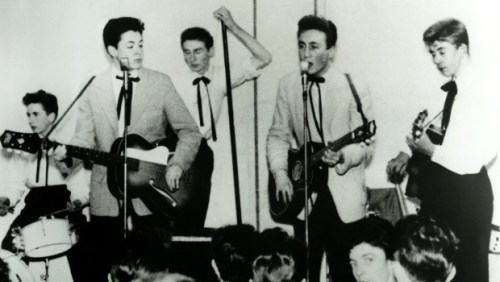
The QuarrymenThat’s a photo of a very young McCartney and Lennon, not yet the most important musicians in modern history. It’s a picture of promise, holding out the happy hope that from small things, big things one day come.

The 121212 Concert marathon was remarkable in ways related and peripheral to the core cause of Sandy relief. None of these collateral issues—not Kanye West’s leather skirt, not out of control ticket scalpers finding insane concertgoers—compares to the epiphany that rock is not, as it turns out, forever. At least not on stage.

Jethro Tull, at one time Grammy award winners for “Best Heavy Metal Album” (you can look it up), sang: “When you’re too old to rock and roll, but you’re too young to die.”

Chris Martin of Coldplay performed a sweet acoustic set, including a rare appearance by R.E.M.’s Michael Stipe. But Martin’s most interesting non-musical moments were his remarks about the age of performers. First he joked about his being their instead of One Direction because the late hour was past their bedtime. But then he turned to the other end of the life cycle, suggesting that viewers donate in the amount of the age of the performers, which would raise billions.

Rock has always been about three things: how you perform musically, how you perform non-musically (dancing, stage presence), and how you look. Here, with unreserved love for the recorded music and live performances of those mentioned, are some observations about the ”veteran” rockers.

The Rolling Stones are on their 50th anniversary tour. The music sounds pretty good. Charlie Watts, the most stoic drummer ever—maybe the most stoic rock musician ever—just sits there, an older version of his younger self. Keith Richards no longer looks like junkie and instead looks like a grandmother. Mick…is scary. His singing is not what it was, but it isn’t frightening either. But he is skeletal, his face drawn, his hair of questionable ownership, and his moves jerkily frenetic enough to raise fears of his falling down. Listening is still enjoyable, but you may seriously consider closing your eyes.

The Who were better musically than the Stones. They are on tour performing the entire Quadrophenia album live, and their set included instrumentally near-perfect renditions of those songs. Pete Townsend’s guitar windmills were a little slower and less emphatic than they used to be, but we know he can still play. It has been decades, and still no one will ever replace Keith Moon (tied with John Bonham as the all-time greatest drummer). The Who did what Queen and others have done with deceased essential bandmates: showed a video performance integrated into the live show. There was the video of Moon doing his distinctive vocals from Bell Boy, microphone in one hand, sticks working in the other, and at the end, Roger Daltry saluting him from the stage. Roger Daltrey. He can’t get all the notes, but it’s still an inimitable voice. The singing, it turned out, was not the problem. For reasons still (or never) to be fathomed, Daltrey believed that billions in the audience wanted to see his chest—including the stitch-scars from heart surgery—and so he obliged by keeping his shirt open for a couple of hours. It was actually just a few songs, but it seemed much longer.

Billy Joel redeemed the old guys. He has always written great songs suited to his vocal strengths and limitations, and both his playing and singing were so enjoyable and so not embarrassing.

Which brings us back to where we began, with the cute half of Liverpool’s very young Quarrymen. Paul McCartney has had a good number of big public performances in the past months. He dropped in on Bruce Springsteen in Hyde Park. He closed the Olympics. Some of what we heard was just okay, but unlike everybody else in the 121212 Concert, just okay would have been forgiven and enough because…it’s Paul. As it turns out, no apologies are needed. His own set was fun and memorable. But his fronting the one-time-only reunited Nirvana was a big moment. Kurt Cobain was a Beatles fan, and there is no doubt his unique introduction of hooky, clever melody into hard and dark rock and punk was done under their influence. At the end of the one song, Nirvana’s locomotive Dave Grohl looked down from his drum kit at McCartney, beaming, maybe amazed to be there, maybe thinking how much Cobain would have loved this.

In Praise of Congressional Mediocrity

Roman Hruska
Roman Hruska was United States Senator from Nebraska from 1954 to 1976. He was a leading conservative, and was anything but a mediocre legislator. But when Richard Nixon appointed G. Harold Carswell to the Supreme Court in 1970, Hruska had this to say about claims that Carswell was less than qualified:

“Even if he were mediocre, there are a lot of mediocre judges and people and lawyers. They are entitled to a little representation, aren’t they, and a little chance? We can’t have all Brandeises, Frankfurters and Cardozos.”

Carswell was not confirmed. And despite Hruska’s accomplishments, he is best known today for his defense of public mediocrity.

As we watch many in Congress talk and talk and talk about why they are not doing anything—except talking—we might remember what Lincoln said: “Better to remain silent and be thought a fool than to speak out and remove all doubt.” Or we might go back to Hruska.

Both the Senate and the House have had their share of greatness. The Senate has been a particularly notable body, even if we can’t have all Henry Clays, Daniel Websters and Robert Tafts. The House is a more mixed bag and, as “the people’s house,” maybe it should be.

But at the heart of Hruska’s statement is the question that faces us every day when we look at our national legislators. Do we want to be represented by people at least as good and capable as us—as honest, as hard-working, as smart, as trustworthy, as caring as us? Do we lower that down to a standard of people merely capable of getting elected? Or do we, contra Hruska, raise our standard and look for people better than we are in all the ways that matter? Even if we can’t have all the best, should we ever settle for mediocre?

Reductio Ad Scalia

Justice Antonin Scalia
Supreme Court Justice Antonin Scalia was asked yesterday why his writings compare homosexuality to bestiality and murder. Answering a Princeton freshman, Justice Scalia said:

“It’s a form of argument that I thought you would have known, which is called the ‘reduction to the absurd’. If we cannot have moral feelings against homosexuality, can we have it against murder? Can we have it against other things?”

(“I thought you would have known” seems a bit of a put down. This may have something to do with Justice Scalia having attended Georgetown undergrad, as opposed to Justices Samuel Alito, Sonia Sotomayor and Elena Kagan, all of whom attended Princeton.)

This is a common theme in the logical argument against cultural and moral relativism, particularly when it comes to homosexuality. And it is a provocative argument, as far as it goes. If we are to make no moral judgments about sexuality, then each and every type and instance of behavior is a matter of choice—polygamy, bestiality, you name it. Once we admit morality, we are broadly entitled to hold to it and the distinctions we make, even in the face of popular disagreement.

This is something worth thinking about as we make private and public policy, but it is far from dispositive. Some think we are at our best and doing our best when we hold strictly—including the “strict” construction of the Constitution, or for that matter of the Ten Commandments. But the real world has a funny way of demanding flexibility and fluidity from our philosophers, lawmakers, law interpreters and enforcers.

So Justice Scalia is not entirely wrong. He and all of us are, to avoid the absurd, allowed to attach particular values to homosexuality, bestiality, polygamy, divorce, whatever. There are probably still some out there who believe that slavery is moral; we know at least that it still thrives in the world. As for killing, morals differ for different circumstances; if not we would have outlawed killing entirely, or would admit that we don’t make a clear enough distinction when we seem to be legislating hypocritically.

But the story doesn’t end when we prove logically that different morals are legitimate. In the real world, people suffer at the hands of our “moral feelings” as Justice Scalia calls them. In some ways, it’s always about the suffering. In the face of “moral feelings” among some that there was nothing wrong with slavery, much of America agreed to its greatest national conflict to relieve an equally great suffering. Those who have legitimate “moral feelings” about homosexuality and marriage might want to be weighing their profound discomfort against the suffering of millions, not to mention against the arc of history.

Happy Hanukkah from Matisyahu

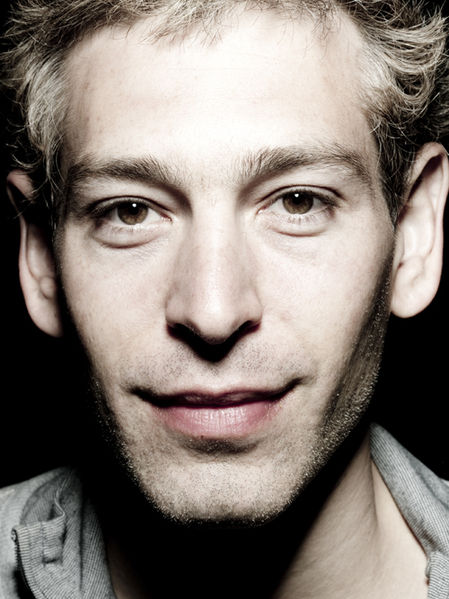
Matisyahu
Matisyahu is a Hanukkah miracle.

Not because suburban native Matthew Miller named himself after Mattathias, head of the family that took back the Temple in Jerusalem from the Assyrians, giving us the holiday. Not because he became a Chassidic reggae superstar. Not because last Hanukkah he shaved his beard and announced: “No more Chassidic reggae superstar.” Not because this Hanukkah his latest album Spark Seeker is Number 1 on the Billboard Reggae chart, a position it has held for weeks. Not even because his single Happy Hanukkah  is a joyous and irresistible rap reggae celebration about all that is good about the holiday, from which all proceeds go to Hurricane Sandy relief:

Happy Hanukkah
I wanna give a gift to you
Light up the night, my love shine through
From Mount Zion, this is what we do
Bring love to you

Matisyahu is a miracle because he did and is doing what we are supposed to do. Follow your light where it takes you, wherever it takes you. Wherever that is, when you get there, if you get there, shine a light of your own. It is a chance to make yourself happy and to make other people happy. And even if you are not sure you are there, or even sure where you are, celebrate anyway. It’s Hanukkah.

Republicans and the Heroism of Doing the Right Thing

Sir Walter Raeligh
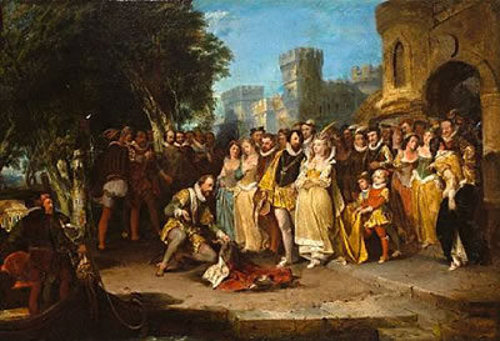
Most of the time, there are no medals for doing the right thing. Holding open a door for someone whose arms are laden with packages is just a civil idea. Laying down your cloak so that the Queen doesn’t get her feet wet probably earns you some bonus points (and a dirty cloak), but it’s not exactly heroic.

It’s now clear that at this moment, the right thing to do about the fiscal [precipice you can fall from] is to extend tax cuts for all but the highest incomes, and have the just-elected new Congress come back in a month to do the hard work of reaching a long term solution. Who knows? Maybe that Congress will find a way to maintain lower tax rates for incomes above $250,000, along with carefully considered spending cuts and overall tax reform.

Republicans and their leaders find themselves caught between irreconcilable considerations. Among them is not just the past election but the evidence that, more than not, they will be blamed if no agreement is reached. Pulling another direction is an absolutist and ideological demand that anything looking like a tax increase is almost literally profane.

In spite of that, there are reports that at least some Republicans are in the mood to make that tax deal—maybe because of realpolitik, but maybe because it is the right thing. Either way, there seems to be some fear in the party that those Republicans will be seen as weak and capitulating to the President and the Democrats. That is one of the last cards that hardliners will play.

Those sensible Republicans shouldn’t worry. They will be seen as heroes by many Americans. That’s one of the dynamics going on right now. Some Republicans are worried about being on the wrong side of demographics and national electoral politics, and they should be. It’s worse, though it takes a bit more vision, to see that you might be on the wrong side of history.

Somewhere in between is being on the wrong side of heroism. Not being a hero is not equivalent to being a coward. Standing by and letting the wrong, or at least not optimal, thing happen is not universally indictable. But nothing beats being hero. Here’s another chance.

Dave Brubeck

Dave Brubeck - Time OutJazz legend Dave Brubeck is dead at the age of 91.

There is going to be a lot written, but with musicians, the best way to remember or learn is to listen. There’s plenty of Brubeck on YouTube and elsewhere. Here’s Take Five, from the Time Out album.

Right now, the VEVO Hot This Week includes a Justin Bieber song (100,701,925 views), P!nk (27,490,445) and Lana Del Rey (14,931,653). These are talented musicians, and even with the added attention that comes with passing, Brubeck is unlikely to hit numbers like that.

Take Five, one of the most recognizable jazz recordings ever, was written by Dave Brubeck Quartet saxophonist Paul Desmond and recorded in 1959. It’s still hypnotically appealing and head-noddlingly cool today. Time will tell which of the Bieber, P!nk or Del Rey records are listened to, let alone remembered, in 53 years.

In the meantime…

Dadadadada dada da da, dada da da…

Citizens United Lives: Money Will Still Buy Elections

Thomas Nast
In the aftermath of the election, a certain joyous complacency has set in regarding Citizens United and the impact of Big Money on the electoral process. A derisive attitude of “epic fail” has attached to Sheldon Adelson, Karl Rove and all the others who seemingly wasted their billions (or other people’s billions) on influencing the results. Some have wondered out loud about how much real good those billions would have done for a country and world in need.

In fact, the money was merely mismanaged, channeled into outdated and ineffective strategies, and thereby wasted. But that will not last. There are plenty of talented operatives and strategists out there, even now working on better ways to address electoral problems using modern means. Yes, they are outnumbered by old school consultants relying on some combination of charm, reputation and useless technique, but like the blind squirrels, even Big Money will find the acorns sometimes.

And when the billionaires do find the operatives working on the cutting edge of 21st century electoral influence, what many feared would happen in the 2012 election—but didn’t—will eventually happen. Elections will be bought, even on behalf of those candidates who appear to some as unqualified and even clownish.

It’s time to stop laughing at Karl Rove’s misfortunes and start doubling up on the efforts to neutralize the impact of Citizens United. Proposals are out there, ranging from enhanced disclosure to a constitutional amendment. Whatever the approach, pursue it now. It’s the only way to avoid the Wednesday morning in November we didn’t have, the one where we wake up shaking our heads and asking: How in the world did that happen?

I Did Not Know That

Rabindranath Tagore
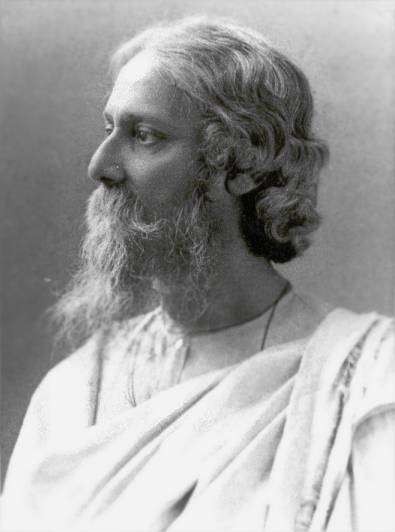
The Nobel Prize-winning poet and playwright Rabindranath Tagore wrote, “If you shut the door to all errors, truth will be shut out.”

There is a corollary: If you think you know it all, truth will be shut out.

Smart people are busy people. They gather knowledge for a lot of reasons—to help complete projects they are working on, to help solve puzzles that perplex them, or sometimes, simply because they are curious and interested in people and the world. But busyness demands a sort of instant knowledge filtering, where information is quickly classified as something not helpful or, frequently, something already known.

That last one is a funny thing. It may seem that what you hear or read is knowledge you already have, and easy to dismiss. But maybe there’s a small spin, a tiny different take, a detail that sheds surprising light on something you thought you knew. No matter how smart you are—or think you are—it can happen.

That’s why, as far as practical, one of the more enlightening ways to go about is ignorant, assuming you know little or nothing. Of course you know things, some very complex things, and that helps you get through your days and your life. You want to build on your knowledge base, and with limited time, you can’t spend it hearing about what you already know.

And yet…that person or thought you are tuning out, because it is something you think you already know, something you can’t waste your valuable time hearing, might be just the thing to advance your work, to solve that puzzle. Think about it. All you had to believe and say is this: I did not know that.