Bob Schwartz

Terry Riley Is Cool

Terry Riley
You probably think you’re cool. You might be right. You can list a bunch of qualifications. They might be good enough.

But if you’ve never listened to Terry Riley’s magical music, there’s a cute trick in store for you. When you listen, you will simultaneously learn that you were not as cool as you thought and instantly become cooler than you ever were. Now that’s magic.

Terry Riley is one of the earliest American minimalist musicians. Some consider him one of the fathers of trance and ambient music, which immediately turns some people off from even considering listening. Don’t be put off. Trance and related genres have gotten a bad rap and rep from too many players who were adept at the technology but neither artful nor soulful.

At age 77, Terry Riley still has enough art and soul for any thousand composers and players. He has a long list of compositions and performances, but everyone should start with In C (1964) and A Rainbow in Curved Air (1969). In C is composed of 53 separate patterns based on the C note, played  over the course of 42 minutes. That may sound boring, but sex sounds boring when you describe it clinically too. A Rainbow in Curved Air is differently kinetic, brightly climbing and wiggling way up and down and all around the aural universe.

For a view of Terry Riley’s place in music history, listen to this show from the WFMT San Francisco series 13 Days When Music Changed Forever. The day is November 4, 1964: The Premiere of Terry Riley’s In C (as a bonus, the series is hosted by Suzanne Vega).

You can find Terry Riley on Spotify and other music outlets. Try the original recordings, which have been remastered, first. If you like, go on to newer performances of these and later compositions. You have nothing to lose but your last vestige of uncool. Of course, you’re never going to be as cool as Terry Riley. But who is?

The Postal Service Loves Modern Art

Postal Service - Modern Art
We are becoming inconstant cultural historians. History, cultural and otherwise, requires more than knowing what happened when, or even knowing its significance. Real history is about an overwhelming sense of appreciation for just how major something was, both in its time and as a precursor of today.

This trajectory is unwelcome but not surprising. We have never lived in a time when the trip from new to newer to newest is as breathtakingly fast, which means that the past exists as a distant dot, visited on a need to know, need to show basis.

One hundred years ago, an art exhibition was held in New York that changed America. The International Exhibition of Modern Art, better known as the Armory Show, took place in February and March of 1913. It is the most important art exhibition in American history and an inspirational watershed for culture of all types.

Armory Show

The exhibition was organized to showcase the state of the art—the contemporary work that was being done by European and American artists, work that was well ahead of what most American audiences were familiar with and had yet seen. It would be years before a major American museum took up the mission: the Museum of Modern Art in New York did not open until 1929.

This is from the New York Sun newspaper in 1912, announcing the upcoming event:

Show of Advance Art Promises a Sensation

Futurists and Cubists Will Be Featured Here in February

Whole Room of Cezannes

Founder of Post Impressionism Is Hardly Known in New York

Cezanne is virtually unknown in America except by his name, and there will be great curiosity…

Matisse has been seen and shuddered at in the little New York gallery of Photo-Seresston…

Every art museum and art program should be giving at least a nod to this, if not a full-blown celebration. Some are, some aren’t.

Here comes the U.S. Postal Service to the cultural rescue. Ironic, because the Postal Service itself is in dire need of rescuing. But when it comes to celebrating modern art, and this particular moment, there it is.

On March 7, the Postal Service will issue a set of stamps called Modern Art in America 1913-1931. They explain, “In celebration of the triumph of modern art in America, the U.S. Postal Service commemorates 12 important modern artists and their works, 100 years after the groundbreaking Armory Show opened in New York in 1913.”  On the full sheet of stamps is a quote from Marcel Duchamp, one of the more than 300 artists who exhibited at the Armory Show: “American is the country of the art of the future.”

The set includes stunning reproductions of works by Stuart Davis (House and Street),  Charles Demuth (I Saw the Figure 5 in Gold), Aaron Douglas (The Prodigal Son), Arthur Dove (Fog Horns), Marcel Duchamp (Nude Descending a Staircase, No. 2), Marsden Hartley (Painting, Number 5), John Marin (Sunset, Maine Coast), Gerald Murphy (Razor), Georgia O’Keeffe (Black Mesa Landscape, New Mexico / Out Back of Marie’s II), Man Ray (Noire et Blanche), Charles Sheeler (American Landscape), Joseph Stella (Brooklyn Bridge).

Through its stamps, the Postal Service has served for decades as a chronicler of culture, well-known and less-known. This year alone we have muscle cars, Johnny Cash, Rosa Parks, Grand Central Terminal and Lydia Mendoza (one of the greatest stars of Tejano music). And, of course, the Armory Show.


Marchel Duchamp - Nude Descending A Staircase

Celebrate the Armory Show this month. Revel in art, its past and its present. Visit galleries. Buy some art. Visit an art museum. Join an art museum. And then go to the post office (yes, there are still post offices). Buy a couple of sheets of the Modern Art in America stamps ($5.20). Keep one, and maybe frame it and hang it on a wall. Use the other stamps on letters or even bill payments. It’s an easy way to make the world more beautiful and interesting, and to show that art still and always matters.

NASCAR Follows NRA Off the Roof

NRA 300
The National Rifle Association jumped off the public relations roof in the wake of Newtown and the legislative attempts to curb gun violence.

Which is fine. The First Amendment guarantees the right of individuals or groups to jump off any rhetorical roof, so long as no one is harmed (except maybe for the jumper). There is money to be made and power to be gained by taking extreme or contrarian positions, sometimes the louder and more insistent the better.

But as your parents advised you—though you may have willfully ignored the advice—just because Johnny jumps off the roof doesn’t mean you should do the same.

As recently as last September, the NRA sponsored a NASCAR race, the NRA American Warrior 300 in Atlanta.

Today it was announced that the NRA will be sponsoring a NASCAR Sprint Cup race at Texas Motor Speedway this April, to be called the NRA 500.

Something happened between September and April: Newtown, Sandy Hook, twenty children slaughtered.

The NRA believes that if anything happened, it only makes it more important than ever to pretend that nothing happened, or to pretend that whatever happened can’t be prevented by any proposed measures, or to pretend that what happened is being unfairly used to threaten their existence and the Second Amendment. The NRA believes it has the support of millions, and that its obstruction is massively appreciated, all national polls to the contrary. It believes that even if it is jumping off some roof, there is a safety net to catch it.

NASCAR may believe that it will be caught by that same safety net, since many NASCAR fans are also gun owners, if not NRA members. NASCAR may feel it is caught between a rock and a hard place: damned if they continue to work with the NRA, damned if they don’t. Of course, even many NRA members are skeptical, some embarrassed, by the NRA’s current extremism and obstruction. On top of that, the NRA PR safety net, even if it does still exist, is probably big enough for just one.

Maybe an NRA race this April won’t be such a big deal for NASCAR. But maybe it will be. If it is, NASCAR shouldn’t expect that there will be a net to catch it. We will know in the days to come whether this is a brilliant move, just business as usual, or a thud.

Dennis Rodman Fired from Council on Foreign Relations

Dennis Rodman
For the record, that headline is a joke.

Former NBA Star Dennis Rodman has never been a member of the Council on Foreign Relations, either before or after his surreal visit with Kim Jung Un in North Korea. The CFR says, “With nearly 4,700 members and term members, CFR’s roster includes top government officials, renowned scholars, business leaders, acclaimed journalists, prominent lawyers, and distinguished nonprofit professionals.” Dennis Rodman is not one of those.

If you have followed the story of Rodman’s North Korean visit, you may be amused.

If you have not, please do not spend a single brain cell on learning anything more. If you want any engagement at all, just take a look at the photo above of Dennis Rodman in a wedding dress (he was not getting married). Consider that he is one of the biggest stories in America today, at least for fifteen minutes. Then consider why we have difficulty solving real problems.

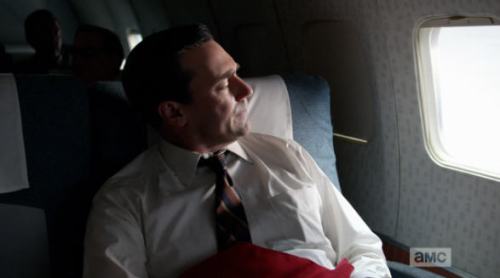
The Pope and the H-Bomb

Richard Chaberlain in The Thorn Birds
From The Guardian

The Vatican has attacked reports in the Italian media linking Pope Benedict XVI’s resignation to the alleged discovery of a network of gay prelates as attempts to influence the cardinals in their choice of a new pontiff.

The Vatican secretariat of state said in a statement: “It is deplorable that as we draw closer to the time of the beginning of the conclave … that there be a widespread distribution of often unverified, unverifiable or completely false news stories that cause serious damage to persons and institutions.”

Whether or not that statement was written by Church lawyers (and even for lawyers, they serve the cause of language and reasoning with uncommon precision and conscientiousness), the denial is carefully constructed. The stories are described as one of three things: unverified, unverifiable or completely false. Note bene that two of these categories do not necessarily include or even imply falsity. Just verification. The reason for this care is that there is a top ten directive about false witness—which includes labeling as false that which is not.

Almost everyone willing to talk openly about the workings of the Church, and particularly its seminaries, will admit that there is a homosexual element of the enterprise. To say “everybody knows” is a ridiculous overstatement. But to say “nobody knows” or “not true” are equally ridiculous. Many know, some talk, most don’t.

The speculation that Pope Benedict resigned because the H-Bomb was about to drop will remain unverified and unverifiable, if the Vatican firewall holds, and it may. But whether you call it a code or a conspiracy of silence, speculation calls for and ultimately begs for verification.

Both law enforcement and the Church depend on the urge to confess. That urge is rooted in the complex and inchoate thing called conscience. In the case of the police, suspects are torn between punishment and a clean(er) heart. This is exactly the same tension for Catholics in the booth. But at this much higher level, the stakes and the choice to tell are much more momentous.

Plows. Guns.

Plow - Dorothea Lange
Above is one of the photos taken by Dorothea Lange for the Farm Services Administration during the Depression. Shot in 1937, it is captioned “The cotton sharecropper’s unit is one mule and the land he can cultivate with a one-horse plow. Greene County, Georgia.”

The plow is a thing that made America what it is. Whether pushed by hand, or pulled by an animal or an engine, it embodies the hard work that helps bring food from the earth to feed a family or a nation, especially during hard times.

The gun is also a thing that made America what it is. Unlike the plow, about which there is little controversy, guns have played an equivocal role, sometimes for good, sometimes not.

There is no constitutional amendment about plows.

There is no biblical passage about guns.

There is, as is often pointed out, a very famous biblical verse about plows. And about pruning hooks. And about their value relative to swords and spears.

Isaiah seems certain that plows and pruning hooks are good. He seems less enthusiastic about the downside of swords, spears and, presumably, guns.

Nothing absolute or definitive, no unconditional endorsement of pacifism or non-violence, unless maybe you are someone who takes the Bible seriously or even literally. Just a little something to think about.

They will beat their swords into plowshares
and their spears into pruning hooks.
Nation will not take up sword against nation,
nor will they train for war anymore.
Isaiah 2:4

When Brands Are Like Packaged Bad Mortgages

Once upon a time, a home loan was a simple but powerful thing. It allowed people who could not afford a house get one and get on the path to full ownership. And it allowed financial institutions to have a concrete obligation that could be sold, the value of which was based on the house and on the ability and duty of the borrower to pay.

If the solid simplicity of that is not completely gone, we know that over the last few decades, culminating in a mighty disaster, very creative financial craftsman were able to turn this into something supposedly bigger and better, but something not rooted in anything other than itself. Once that became obvious, as with the naked emperor, all hell broke loose, and the economy collapsed

Every maker and marketer of goods and services should be students of this phenomenon. Brands, for example, are truly things, and things of value. So much value that we attach a measure to it—brand equity—and for some companies, it is their greatest asset.

The idea that brand, or marketing, or messaging, exists independent of some more basic thing is seductive but silly. In American politics, we are witnessing this debate on a grand scale. Is reliance on creating or refurbishing a brand, ignoring the unvarnished nature of the product you’re selling, a form of denial? Or is it an implicit acknowledgement that adapting products to the times, to demographics, and to competition is just really, really hard—and sometimes impossible.

This isn’t only, or primarily, about politics. It is about business, about companies who may have come to believe that marketing is all there is, and that ever more sophisticated approaches can leave the basic realities behind for fancier and more valuable derivatives. The sophisticated and fancy can be important, but it’s not all of it, or even most of it.

The smartest people in the room (they would say in the world) forgot that a mortgage was nothing more than a house and borrower. We all, sadly, paid the price for that arrogance and, let’s say it, stupidity. Products and services of all kinds are exactly the same. Businesses, no matter how big, no matter how branded, forget those basics at their peril.

Howard Finster on the Day after Washington’s Fake Birthday

Howard Finster - George Washington in Another World

This is about Howard Finster, “Man of Visions”, not strictly about George Washington. But Finster, America’s greatest modern folk/self-taught artist, loved Washington and frequently pictured him (above is Washington in Another World, where Finster believed he would meet the great man one day).

Finster also liked Abraham Lincoln, and some of the artist’s more than 10,000 works featured that former President.

Howard Finster - Abraham from a Penny

Knowing Finster’s biography and back story is interesting and helpful, but looking at his pictures (and there are plenty to be found online) is much more enlightening and uplifting. This is from Artnet:

Howard Finster (American, December 2, 1916–October 22, 2001) was a Modern Folk artist from Summerville, GA. He was one of 13 children raised on a farm, and he attended school only until the sixth grade. Finster’s interest in the gospel began at a Baptist revival when he was just 13 years old. A preacher at age 16, he wrote articles for the local newspaper while giving sermons in churches. In the late 1940s, Finster built his first garden park museum, featuring the exhibit The Inventions of Mankind.

The exhibit was intended to be a representation of all the inventions ever created, and it included a duck pond and a flock of pigeons. In 1961, Finster ran out of space and decided to purchase four additional acres of land in Pennville, GA. This is where he envisioned the Plant Farm Museum, a collection of Garden of Eden-like creations featuring attractions such as The Mirror House, Bible House, and the Folk Art Chapel. Scattered throughout were signs containing Bible verses, because Finster believed that “They stuck in people’s heads better that way.”

Finster did not learn how to paint in a university; instead he was self-taught, and most of his work was inspired by visions. He believed he was sent to Earth to spread the word of God, and he retired from preaching in 1965 to improve his Plant Farm Museum. This lasted until 1976, when he was inspired to paint only sacred art of religious inspiration that was intended to uplift and inspire. These images ranged from Pop icons to religious figures, such as his interpretation of John the Baptist. A year earlier, Finster was featured in Esquire magazine, and was eventually asked to create four paintings for the Library of Congress in 1977, one of which was titled He Could Not Be Hid.

Finster often created images on flat picture planes with Bible verses squeezed in. Each one also included a number because, under God’s direction, he felt he had to generate a total of 5,000 paintings. Finster finished this feat in 1985, but continued to paint until his death in 2001. By then, he had created over 10,000 works of art.

You can think real hard about how we celebrate Washington’s birthday on a day that isn’t his birthday, and how some people mistakenly call it President’s Day, and how we don’t celebrate Lincoln’s birthday at all, despite the fact that he might win an Oscar this year.

Save yourself the trouble. Immerse yourself in the visions of Howard Finster, and everything will make sense to you.


Phone, Wallet, Keys

It would take a million pages just to start talking about the differences between men and women. Here’s just one.

Many of us run through a checklist before leaving home for the day. Whether you are forgetful or just overloaded with thoughts, this is a good way to avoid inconveniences and annoyances.

The simplest checklist in these times is “phone, wallet, keys.” This is elegant and practical. Missing any one of these can be a problem, but the other two can help solve it. Missing all of them is a big problem, with a lot of downside, and nothing up.

In most cases, men have pockets, and they often use these pockets to carry things. And, not coincidentally, three primary things are phone, wallet, keys. The checklist doesn’t have to be mental. A quick self-pat-down does the trick. This can take literally a few seconds, and is minimally invasive.

Women may have pockets, but frequently they do not carry much in them. Many women carry some sort of handbag or shoulder bag for items such as…phone, wallet, keys, and more. They may use the same bag each day or day part, but they also may change bags for style or size.

This makes the morning checklist for women complicated. Even when care is taken to make sure that a bag includes the essential items, there is no true certainty until the contents of the bag is inspected. No pat down is available. And then, there are multiple bags, so at any moment, the phone may be one place, the wallet another, the keys another.

As with all the differences, we can’t over generalize. And we can’t fix—because there’s nothing to fix. We celebrate the way things are, even when—or especially when—that includes the occasional missing essential. As much fun as it might be to pat down your favorite woman, completely aware that her pockets are empty, you make do with a very short and sweet, “Got everything?” Which whether it works or not, does say it all.

Political Speeches As Mass Shout-Outs

Some political audiences still get fired up by pandering platitudes and principles, even if the words are not backed up by any substantive proposals, or by any proposals at all.

This is sometimes punctuated by the occasional mention of a target interest group, just to show that the politico is paying attention to them. Once again, this might not be attached to anything concrete, but it often does the trick.

It is time for this to be taken to the next level.

A really bold and innovative politician could skip the platitudes, principles and proposals. Instead, entire speeches could be built out of the names of places, organization and people. If this sounds too much like reading an atlas, almanac or phone book out loud, without context, that is precisely the idea.

Depending on the crowd, this would be a string of guaranteed cheer and applause phrases. Las Vegas. Wichita. National Rifle Association. Veterans of Foreign Wars. Latinos. Blacks. Women.

This is far from an uncreative exercise. In fact, it is a sort of minimalist poetry, idea and intention reduced to the smallest possible expression. Obviously, there are a few pitfalls, so care must be taken. Saying the word “Nazi” out of context can be trouble; saying it in relation to saying “Jews” may be more or less trouble, without the benefit of further explanation.

All in all, this would be an exciting and enlightening direction for our politics to take. We can stop wondering and fretting about speeches filled with air and little more. The pretense would be gone; speeches could once again be rooted in reality, or at least in one political reality. That reality, which lives alongside the genuine value of getting things done, is the value of getting elected or getting someone else defeated. And then there is the value, if just for a moment, of giving a little harmless recognition to folks who are waiting, maybe quixotically, for much more.