Strands

Strands
Separate the strands of spring song
From these ten thousand birds.
Sweet and strident
Simple and symphonic.
Follow just one
I am already lost
Follow them all
I am gladly ready
To listen and disappear.
©
Strands
Separate the strands of spring song
From these ten thousand birds.
Sweet and strident
Simple and symphonic.
Follow just one
I am already lost
Follow them all
I am gladly ready
To listen and disappear.
©

Did I dream the butterfly last night
Or remember yesterday gazing at it
Or both? Either way
Remembering the dream or the butterfly
Was a sweet syrup shot into my heart,
Which lightly fluttered.
As bad as dreams or days may get
There is a butterfly and a flower to feed from
In the heat of the sun
Or the cool mists of phantasmagoric sleep.
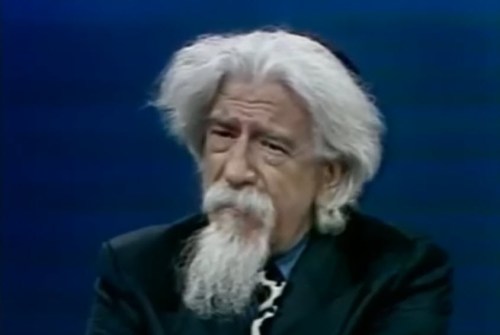
“I consider the heart of the problem of human existence is to fight against mendacity, against lying. I would like to use a word which may be too often used, but it’s still the most important word—and that is “honesty,” or “sincerity,” or “trust.””
“I am against the word “politician.” I have great respect for the word “statesman.” It’s very interesting, the word “statesman” is not used. “Politician” is used. “Statesman” is a great word….The task of a statesman is to be a leader, to be an educator, and not to cater to what people desire almost against their own interests. To be a leader.”
From an interview with Abraham Joshua Heschel at the University of Notre Dame in 1967, published in Moral Grandeur and Spiritual Audacity, essays by Heschel.
Q: Your esteem for religious colleagues is greater than your esteem for politicians. I think you once said that the most depressing word in the English language is “politician.” Politicians are necessary, aren’t they? Why disparage them?
A: No, I’m not against politicians in their vocation. I’m against politicians in their tactics. Against the very meaning, the semantic meaning of the word “politician.”
Now let me elaborate. It may take me two minutes to explain it to you. I consider the heart of the problem of human existence is to fight against mendacity, against lying. I would like to use a word which may be too often used, but it’s still the most important word—and that is “honesty,” or “sincerity,” or “trust.”
The tragedy of our time is, we don’t trust each other. The Golden Rule today is not “Love thy neighbor as thyself” but “Suspect thy neighbor as thyself.” We suspect all politicians because we know in advance they don’t mean what they say and they don’t say what they mean.
Q: Is that justified? That suspicion?
A: Ask the people in the country. You’re asking me? I’m only one citizen. I have only one vote.
If you go to the country and ask them, “What do you think of politicians?,” they’ll say a politician is a synonym for a person who is not necessarily truthful. Right? Do you mind my elegant way of speaking?
We have a type of politician today—I suppose we’ve always had, and I don’t want to identify anyone—who tells us that he is doing what the peoples want. And, in fact, that may be so. Of course, that doesn’t reach to the question of leadership. Should our leaders give us what we want, or is there some other role?
I think there is another role. By the way, I am against the word “politician.” I have great respect for the word “statesman.” It’s very interesting, the word “statesman” is not used. “Politician” is used. “Statesman” is a great word.
Now, about doing what the people want—I’ll tell you what the people want. One of the major inclinations in every human being is a desire to be deceived. Self-deception is a major disease.
Q: To be told what one wants to hear?
A: Yes. You want to be deceived.
The task of a statesman is to be a leader, to be an educator, and not to cater to what people desire almost against their own interests. To be a leader.
The great question of today is mendacity. We live in a world full of lies. And the tragedy that our young people—or maybe it’s good—the young people have discovered how many lies are uttered daily and every moment. They can’t stand it. If there’s anything they despise, it’s someone who is phony, false rhetoric. We call it “credibility gap”—what we mean really is lying.

© Bob Schwartz

Discomfort and despair has led to dark laughter as we listen to Trump’s half-hour unraveling/meltdown in his call-in monologue on Fox and Friends yesterday. Of course it is not actually funny.
Except for willfully oblivious Republicans, Trump’s instability is obvious to everyone. There is wide agreement not only that the thirty minutes of nearly uninterrupted chatter was often nonsensical and non-sequitur, but that if the Fox and Friends hosts—who were clearly aghast—had not intervened (“you have a million things to do, Mr. President”), Trump might have gone on blathering for hours.
Why Republicans ignore, excuse and put up with just about anything Trump dishes out, including rants that beg for a psychological evaluation, is best told by an old and wise joke:
Guy walks into a psychiatrist’s office. “Doc,” he says, “my brother thinks he’s a chicken.” Doctor says, “Bring him in and I’m sure I can help him.” Guy says, “I would Doc, but we need the eggs.”

© Bob Schwartz
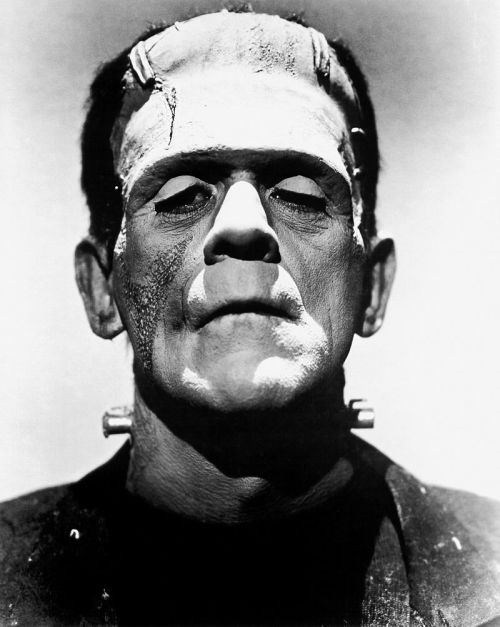
“The Creature showed unparalleled malignity and selfishness in evil; he destroyed my friends; he devoted to destruction beings who possessed exquisite sensations, happiness, and wisdom; nor do I know where this thirst for vengeance may end. Miserable himself that he may render no other wretched, he ought to die. The task of his destruction was mine, but I have failed.”
Frankenstein
I was at first touched by the expressions of his misery; yet, when I called to mind what Frankenstein had said of his powers of eloquence and persuasion, and when I again cast my eyes on the lifeless form of my friend, indignation was rekindled within me. “Wretch!” I said. “It is well that you come here to whine over the desolation that you have made. You throw a torch into a pile of buildings, and when they are consumed, you sit among the ruins and lament the fall.”
Frankenstein
This year marks the 200th anniversary of the publication of Frankenstein, Mary Shelley’s monumental work of modern literature. The characters and story have been fashioned into hundreds of forms, some truer to the original than others. One basic element is inescapable: the story of a skilled technician trying to create something new, only to discover that the Creature is ultimately destructive of much that is cherished and good.
That is where the Republican Party finds itself with Trump. Admittedly, Trump has more fans than Victor Frankenstein’s Creature ever did, but is similarly an uncontrollable force of twisted nature.
In the final chapter of Frankenstein, Captain Walton concludes the narrative letters that chronicle his passenger Victor Frankenstein’s relating the tale of the Creature he created:
You have read this strange and terrific story, Margaret; and do you not feel your blood congeal with horror, like that which even now curdles mine?…
Sometimes I endeavoured to gain from Frankenstein the particulars of his creature’s formation, but on this point he was impenetrable. “Are you mad, my friend?” said he. “Or whither does your senseless curiosity lead you? Would you also create for yourself and the world a demoniacal enemy? Peace, peace! Learn my miseries and do not seek to increase your own.”…
“Oh! My friend, if you had known me as I once was, you would not recognize me in this state of degradation. Despondency rarely visited my heart; a high destiny seemed to bear me on, until I fell, never, never again to rise.”…
“If I were engaged in any high undertaking or design, fraught with extensive utility to my fellow creatures, then could I live to fulfil it. But such is not my destiny; I must pursue and destroy the being to whom I gave existence; then my lot on earth will be fulfilled and I may die.”…
“He [the Creature] showed unparalleled malignity and selfishness in evil; he destroyed my friends; he devoted to destruction beings who possessed exquisite sensations, happiness, and wisdom; nor do I know where this thirst for vengeance may end. Miserable himself that he may render no other wretched, he ought to die. The task of his destruction was mine, but I have failed.”…
I entered the cabin where lay the remains of my ill-fated and admirable friend. Over him hung a form which I cannot find words to describe — gigantic in stature, yet uncouth and distorted in its proportions. As he hung over the coffin, his face was concealed by long locks of ragged hair; but one vast hand was extended, in colour and apparent texture like that of a mummy. When he heard the sound of my approach, he ceased to utter exclamations of grief and horror and sprung towards the window. Never did I behold a vision so horrible as his face, of such loathsome yet appalling hideousness….
I was at first touched by the expressions of his misery; yet, when I called to mind what Frankenstein had said of his powers of eloquence and persuasion, and when I again cast my eyes on the lifeless form of my friend, indignation was rekindled within me. “Wretch!” I said. “It is well that you come here to whine over the desolation that you have made. You throw a torch into a pile of buildings, and when they are consumed, you sit among the ruins and lament the fall.”

It has been more than twenty years since the epic, iconic movie Titanic was released. More than a century since the “unsinkable” biggest ship sank. Yet until today, when the movie popped up, I hadn’t fully focused on its metaphoric value. Which makes me one of the last to catch on, but I’m known to be slow.
On the same day, the rich president, whose only “achievement” has been to help other even richer people get even richer, was spouting normal nonsense—all based on America being unsinkable (thanks only to its being in his “capable” hands). Meanwhile, the stock market, a bellwether of confidence, is suffering another difficult day, pointing to an inevitable big correction, or worse.
We’ve had over a hundred years to consider the Titanic, a situation combining arrogance, incompetence, selfishness, ignorance, stubbornness, pride, wealth, along with the tragic power of nature and chance. King of the World doesn’t matter if you’re the captain or just a passenger heading for an avoidable iceberg.

This isn’t about baseball, though the quote is from a baseball writer. Bill James is not just a superb writer; he is a thinker whose analysis of the game has changed baseball more than any other thinker has ever changed any game. You can look it up.
This is about optimism and hope. I was reading The New Bill James Historical Baseball Abstract (a 998-page volume whose title alone should tell you just how thoughtful Bill James is). He describes Robin Yount, who as of the time of publication James considered the Number 4 shortstop in baseball history:
Robin Yount (1974–1993, 2856 G, 251 1406 .285)
Robin Yount was a major league regular when he was 18 years old. We always wondered how good he would be, how much he would improve. In 1978, after Yount had been in the major leagues four years, he held out in the spring, mulling over whether he wanted to be a baseball player, or whether he really wanted to be a professional golfer.
When that happened, I wrote him off as a player who would never become a star. If he can’t even figure out whether he wants to be a baseball player or a golfer, I reasoned, he’s never going to be an outstanding player.
Yount was unhappy about suggestions that the Brewers would move him to the outfield. According to Dan Okrent in Nine Innings, “Yount didn’t merely reject the suggestion; he brooded about it, resented it, and lost himself in self-doubt. Members of the front office… saw Yount’s reaction as immature sulking.”
But as soon as he returned to baseball, Yount became a better player than he had been before; his career got traction from the moment he returned. What I didn’t see at the time was that Yount was in the process of making a commitment to baseball. Before he had his golf holiday, he was there every day, he was playing baseball every day, but on a certain level he wasn’t participating; he was wondering whether this was really the sport that he should be playing. What looked like indecision or sulking was really the process of making a decision.
This is often true. What Watergate was about was not the corruption of government, as most people thought, but rather, the establishment of new and higher standards of ethical conduct. Almost all scandals, I think, result not from the invention of new evils, but from the imposition of new ethical standards. Same thing with Yount; he wasn’t backing away from baseball; he was just putting the bit in his teeth, accepting new responsibilities. In the biographies of men and nations, success often arrives in a mask of failure. (emphasis added)

Superstar musician Avicii (Tim Bergling) has died at the age of 28.
You will see him identified as a DJ and producer, which is true as far as it goes. Actually, he was simply a musician—an extraordinarily talented one. So if someone asks “what did he play?” you can just reply “music.”
Producers have always been important for recording music, and became more important in the modern pop era. Beatle’s producer George Martin was appropriately called “the Fifth Beatle”; without him, the epic music would never have sounded the same.
Hip-hop and dance music introduced performers who “played” turntables and mixed bits of recorded music, which collaboration evolved into full-scale production and creation. The role is a combination of composition and conducting. Avicii came along with a new generation of young DJs and producers, and in the ears of many, was top of the class.
From Billboard:
Bergling started out releasing music on Laidback Luke Forum in the late ’00s, where DJs and producers would post music and seek feedback from budding peers. In 2011, he broke through to an international audience with the progressive house track “Levels,” which hit No. 1 in his native Sweden and on the U.S. Billboard Dance Club Songs chart — and earned him a Grammy nod. His 2012 David Guetta collab “Sunshine” earned him a Grammy nomination as well, and that same year, he became the first electronic artist to headline New York City’s storied Radio City Music Hall.
In 2013, Avicii released his debut studio album, True, which featured the game-changing, massive international hit “Wake Me Up!” ft. Aloe Blacc. Combining EDM, folk and country music, the song became a No. 1 hit in many countries and peaked at No. 4 on the Billboard Hot 100. His second album, Stories, dropped in 2015 and featured vocals from Chris Martin, Wyclef Jean, Robbie Williams, Matisyahu, Brandon Flowers, Gavin DeGraw and more. The EP Avīci (01) came out in Aug. 2017 and featured his Rita Ora collaboration “Lonely Together.”
The place to start, if you don’t know Avicii, is with his debut album True. When I first heard it, my joy was mixed with a sense that this was some new kind of music that he had created. Losing artists of that talent and achievement is difficult and sad.

