Bob Schwartz

Passover 2020: With stay-at-home seders, Elijah will be making many more wine stops

The tradition of Elijah at the seder is common in many Jewish communities. The practice of pouring a fifth cup of wine and opening the door for Elijah has a complex history. The theme is the prophet as a harbinger of redemption. The scholarship on this is voluminous, and it is generally concluded that the practice is not ancient, only coming into use after the Crusades.

Setting aside the fascinating history of the cup of Elijah, this much is clear: at Passover 2020, Elijah will be visiting a lot more seders. Instead of big groups, single family seders—many of them virtually connected—will be pouring that extra cup for Elijah to drink. Not to mention all the other extra cups that will be poured and drunk on this Passover, different than all other Passovers.

According to the Bible story, Elijah, like Moses before him, fled to the wilderness. Pursued by Ahab and Jezebel, Elijah wanted to give up. Instead, he found water and food to sustain him, ending up at the very same mountain where Moses stood:

And He said, “Go and stand on the mountain before the LORD, and, look, the LORD is about to pass over, with a great and strong wind tearing apart mountains and smashing rocks before the LORD. Not in the wind is the LORD. And after the wind an earthquake. Not in the earthquake is the LORD. And after the earthquake—fire. Not in the fire is the LORD. And after the fire, a sound of minute stillness.” (1 Kings 19:10-12, Robert Alter translation)

Wilderness, food, wine, a sound of minute stillness. Happy Passover.

Pandemic Passover and Easter: Faith without form

Our religious traditions, from their beginnings, have been about form. Practices, beliefs, texts, communities. These are all forms that are required, recommended, unifying.

It is unavoidable to see an identity between the traditions and forms. That is, the point of the traditions seems to be the forms themselves.

There is a Zen thought that the finger pointing at the moon is not the moon itself. We point because the finger shows us which way to go and where something may be found. But the finger is not the way or the thing. The form is not the way or the thing.

There is unique value in gathering around the Passover table, following the order (seder) of together retelling a central story. There is unique value in gathering in church on Easter Sunday and retelling another central story.

The Passover seder is important but not essential. The Easter service is important but not essential. These are forms, the finger pointing at the moon.

What exactly is the moon of Passover and the moon of Easter? To be transformed and to transform the world and all the people in it. If you need examples of that, just look at the central stories of the two holidays and the teachings that surround them. You and the world start off one way and, by the time you are done wandering, you and the world are better. The dark places are a little bit lighter.

How do you get there? You take part in a seder, in person or virtually, or maybe you don’t. You attend a church service, in person or virtually, or maybe you don’t. You wander in a wilderness and find yourself and something new. You die and are reborn spiritually. The seder and the service are forms, valuable but not necessary. You can wander and arrive without them.

Apart but not alone, happy Passover and happy Easter.

After the Virus: To seek a newer world

We do not and should not like paying the tragic price the Virus is demanding. But the current catastrophe, so far from over, does offer an opportunity to review, revise and, in some areas and in some ways, to begin again.

I’ve written before about the leaders I miss. No one more than Bobby Kennedy. He was a hard-nosed pragmatist and an idealist, a lover of literature and poetry. He frequently quoted the poem Ulysses by Alfred, Lord Tennyson. It is the tale of an old warrior who fights the urge for ease and comfort, and sets out one more time to pursue a dream. The poem closes:

…Come, my friends,
‘T is not too late to seek a newer world.
Push off, and sitting well in order smite
The sounding furrows; for my purpose holds
To sail beyond the sunset, and the baths
Of all the western stars, until I die.
It may be that the gulfs will wash us down:
It may be we shall touch the Happy Isles,
And see the great Achilles, whom we knew.
Tho’ much is taken, much abides; and tho’
We are not now that strength which in old days
Moved earth and heaven, that which we are, we are;
One equal temper of heroic hearts,
Made weak by time and fate, but strong in will
To strive, to seek, to find, and not to yield.

We are all hermits now: Song of the Grass Roof Hut

Thomas Merton hermitage in Kentucky

Though the hut is small, it includes the entire world.

Hermit—one who lives in solitude—is from Greek erēmia desert, which is from erēmos desolate. In the fourth century, Christians dissatisfied with the artificial complexities of the Church fled to the Egyptian desert to be alone and closer to God. Thus began Christian monasticism. On the other side of the world, Buddhists in China went to the mountains, also to be alone.

Both the Christian desert fathers and mothers and the Buddhist hermits left behind a treasury of wisdom. Centuries later, in another part of the world Thomas Merton fled the chaos of civilization to build a hermitage of his own in Kentucky, and similarly provided an inspiring record of his experiences.

The following Song of the Grass Roof Hut is the work of Shitou Xiqian [Japanese: Sekitō Kisen] (700–790, China).

Song of the Grass Roof Hut

I’ve built a grass hut where there’s nothing of value.
After eating, I relax and enjoy a nap.
When it was completed, fresh weeds appeared.
Now it’s been lived in – covered by weeds.

The person in the hut lives here calmly,
Not stuck to inside, outside, or in between.
Places worldly people live, he doesn’t live.
Realms worldly people love, he doesn’t love.

Though the hut is small, it includes the entire world.
In ten square feet, an old man illumines forms and their nature.
A Great Vehicle bodhisattva trusts without doubt.
The middling or lowly can’t help wondering;
Will this hut perish or not?

Perishable or not, the original master is present,
not dwelling south or north, east or west.
Firmly based on steadiness, it can’t be surpassed.
A shining window below the green pines –
Jade palaces or vermilion towers can’t compare with it.

Just sitting with head covered, all things are at rest.
Thus, this mountain monk doesn’t understand at all.
Living here he no longer works to get free.
Who would proudly arrange seats, trying to entice guests?

Turn around the light to shine within, then just return.
The vast inconceivable source can’t be faced or turned away from.
Meet the ancestral teachers, be familiar with their instruction,
Bind grasses to build a hut, and don’t give up.

Let go of hundreds of years and relax completely.
Open your hands and walk, innocent.
Thousands of words, myriad interpretations,
Are only to free you from obstructions.
If you want to know the undying person in the hut,
Don’t separate from this skin bag here and now.

Shitou Xiqian

(translation by Taigen Daniel Leighton)

FDR in time of crisis: Hard truths and inspiring lies

DJT is not FDR. Or Abraham Lincoln. Or any other crisis president. Or any other non-crisis president.

FDR faced not one but two monumental crises—the Great Depression and World War II.

In his First Inaugural Address, FDR uttered these famous words:

This is preeminently the time to speak the truth, the whole truth, frankly and boldly. Nor need we shrink from honestly facing conditions in our country today. This great Nation will endure as it has endured, will revive and will prosper. So, first of all, let me assert my firm belief that the only thing we have to fear is fear itself—nameless, unreasoning, unjustified terror which paralyzes needed efforts to convert retreat into advance.

“Nothing to fear” was something of a lie. In the depth of the Depression, Americans had plenty to fear. There was the possibility that recovery might never come and that things would get even worse. There was the possibility, predicted by some, that Americans would actually revolt in desperation.

The lie was beneficent in a couple of ways. It was spoken in a context of hard truths that FDR wouldn’t and couldn’t deny because Americans were experiencing them first-hand. And it was clear that FDR was speaking from a place of competence, strength and empathy, so that the lie was, as some lies can be, inspiring.

In a time of crisis, hard truths and inspiring lies have a valuable place. Hidden truths and uninspiring, self-serving lies don’t.

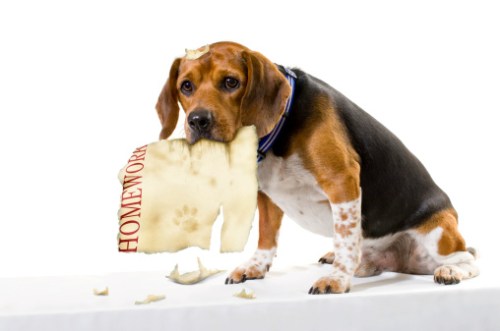
Trump on pandemic: I never heard about the problem before, it’s Obama’s fault, the dog ate my homework

Excuses, excuses, excuses. Millions sick, thousands dead, much of it was preventable by timely and responsible executive management. Even a child knows that eventually they will get caught. And punished.

We fire wartime generals, don’t we?

General George B. McClellan, fired by President Lincoln during the Civil War

War is the crucible for generals. They have worked their entire careers, demonstrating courage and competence, to reach that level. Those qualities are never more tested than in battle.

Winning every battle is hoped for but not expected. Loss is a natural part of war. But a general who leads the army into a costly and catastrophic loss knows that their leadership position is on the line. Generals who make those kinds of mistakes are fired, both to avoid further losses and to increase the chances of victory.

When the failing general can’t be fired, we do what we can, we hope that other leaders will step in, and hope that the losses can be minimized. The enemy, we know, will not give up.

You don’t miss your water till your well runs dry: Learning the need for personal contact in a social media world

Social media began as a supplement to other media and social life. Social media came in some domains to dominate.

Some have observed that social media are out of balance, supplanting personal face-to-face. An emblematic modern picture shows people sitting around the same dining table, each one with a phone in front of them, busily “talking” to someone else not present.

Right now, in large parts of America and the world, that gathering of friends and family is a memory. Social media is the primary, to some extent only, means of mingling and gathering, whether for personal relations or for business.

At least for some isolated people, there may be a sense that they took live and in-person socializing for granted, just a little bit.

They say you don’t miss your water till your well runs dry. In the next chapter of this unprecedented novel, people will get back to getting together, gathering around that table. Maybe a little balance will return, and the phones will be put down.

Putting religion in its ordinary place: more or less for breakfast

If you put religion in its ordinary place, two things happen.

For those who are followers and believers, and have promoted religion to some exalted position, it is a demotion.

For those who are not followers and believers, and may aggressively reject and oppose religion, realizing that it is nothing more than ordinary, it may be a revelation.

If religion is ordinary, no more than, say, the meal you eat when you wake from sleep—breakfast—it is worthwhile but, depending on what different people make of it, nothing special. Some will try to make something elaborately fancy out of it, convincing themselves and demanding of others that it be a big deal. Others will grab something, anything, just enough to get by. Either way, it is just that thing that fills the fast of sleep. Nothing more.

Consider this if you are one who believes religion—particularly your religion—must involve a very particular, strict and nutritious form. And consider this if you are weary of other people telling you exactly what breakfast you’re supposed to be eating. It’s just breakfast. It’s just religion.

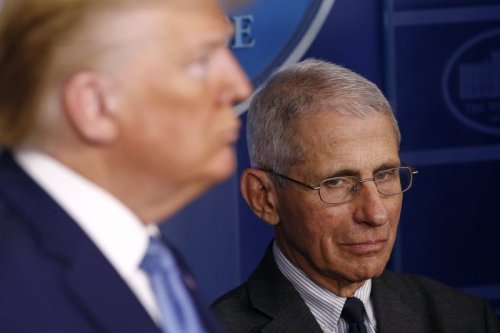
If You Pray, Pray for Dr. Fauci

In her New York Times column today, Maureen Dowd interviews Dr. Anthony Fauci.

If you have been paying attention, you know that 79-year-old Dr. Fauci has been the trusted national voice of fact and reason in response to the pandemic. He is currently director of the National Institute of Allergy and Infectious Diseases, and has served six presidents.

In the interview, we learn that Dr. Fauci has been working 18-hour days, and at one point worked four or five days on three hours sleep each day. Because as a doctor, scientist and public servant he wants us to understand, wants us to behave appropriately, and wants as few Americans as possible to suffer and maybe die.

Part of that interview:


Thank God the Doctor Is In

By Maureen Dowd

March 21, 2020

WASHINGTON — It’s not easy being a national treasure.

“I’m exhausted,” confessed Tony Fauci when I reached him Thursday evening in the middle of another 18-hour workday.

“I have changed my tune a bit, probably thanks to my wife,” said the 79-year-old director of the National Institute of Allergy and Infectious Diseases. “About a week ago, I was going about four or five days in a row on about three hours of sleep, which is completely crazy, ’cause then I’ll be going on fumes. The last couple of nights, I’ve gotten five hours’ sleep, so I feel much better.”

He said he misses the endorphins of power walking, and he is wracked when he gets home at midnight and it’s too late to answer calls and emails.

“I gotta get rid of this guilt feeling,” he murmured about that moment’s 727 emails.

He said he has not been tested for the coronavirus but takes his temperature every day and usually has it taken another couple times before White House press conferences and meetings in the Oval.

When I spoke with him, he had been missing from the White House briefing for two days and Twitter blew a gasket, with everyone from Susan Rice to Laurence Tribe seeking an answer to the urgent query, “Where is Dr. Fauci?”

Donald Trump, the ultimate “me” guy, is in a “we” crisis and it isn’t pretty. The president is so consumed by his desire to get back his binky, a soaring stock market, that he continues to taffy-twist the facts, leaving us to look elsewhere — to Dr. Fauci and governors like Andrew Cuomo and Gavin Newsom — for leadership during this grim odyssey.

Dr. Fauci chuckled at speculation that he was banished due to his habit of pushing back on Trump’s hyperbolic and self-serving ad-libbing.

“That’s kind of funny but understandable that people said, ‘What the hell’s the matter with Fauci?’ because I had been walking a fine line; I’ve been telling the president things he doesn’t want to hear,” he said. “I have publicly had to say something different with what he states.

“It’s a risky business. But that’s my style, Maureen. You know me for many years. I say it the way it is, and if he’s gonna get pissed off, he’s gonna get pissed off. Thankfully, he is not. Interestingly.”

The first time I talked to Dr. Fauci was during a panic in the mid-80s about stopping another virus, the cause of the heartbreaking AIDs crisis. Then, as now, he was honest, brave and innovative. He told me that he tries to be diplomatic when he has to contradict the president about what “game-changer” cures might be on the horizon and whether everyone who wants to be tested can get tested.

“I don’t want to embarrass him,” the immunologist says, in his gravelly Brooklyn accent. “I don’t want to act like a tough guy, like I stood up to the president. I just want to get the facts out. And instead of saying, ‘You’re wrong,’ all you need to do is continually talk about what the data are and what the evidence is.

“And he gets that. He’s a smart guy. He’s not a dummy. So he doesn’t take it — certainly up to now — he doesn’t take it in a way that I’m confronting him in any way. He takes it in a good way.”

On Friday, a trigger-happy Trump was so quick to talk up the fabulous possibilities of an antimalarial drug in combating the virus that Dr. Fauci had to pump the brakes, taking the microphone to explain that we do not know yet because controlled testing is needed.

The president returned to the lectern to press his unscientific case and compliment himself: “I’m a smart guy,” he said. “I feel good about it. And we’re going to see. You’re going to see soon enough.”

Probably thinking about all his government staffers working round-the-clock, Dr. Fauci could not help rubbing his forehead and cheek — going against his own advice to the public — when Trump cracked a joke about the “Deep State Department.”

Though the scientist listens respectfully when the president and the vice president are talking, he somehow manages to emit an “Oh my God, please don’t say that” vibe when the two men scamper over the line. When Mike Pence went into false-hope overdrive, saying, “I just can’t emphasize enough about the incredible progress that we have made on testing,” Dr. Fauci and Dr. Deborah Birx, the administration’s virus response coordinator, exchanged a whispered aside that sent the internet into a frenzy.

Dr. Fauci assured me that, despite their crosscurrents and an early overconfidence about how easy it would be to control the path of the virus, the president “absolutely” now gets the threat of “the invisible enemy,” as Trump calls the virus.