Bob Schwartz

Category: War

Ukraine Sanctions: Who Is Poking Which Bear

Bear
The most interesting message about this morning’s U.S. sanctions to protest Russian actions came from one of those sanctioned. The travel bans and freezing of U.S. assets are aimed at a handful of Putin advisers and others complicit in the Crimean takeover, but not at the highest level (including Putin) or at any businesspeople.

Russian Deputy Prime Minister Dmitry Rogozin, who is being sanctioned, tweeted this:

“Comrade Obama, and what will you do with those who have neither accounts nor property abroad? Or didn’t you think of that?”

On this day when a prominent Russian television journalist, with an atomic mushroom cloud as background, pointed out—correctly—that Russia is the only country that can reduce the U.S. to “radioactive ash,” the tweet from Comrade Rogozin is most telling.

The U.S., even more than our allies, is being poked. Taunted. “Is that the best you’ve got? You can do better than that!” The U.S. and Europe can of course do better (meaning: more severe) than that, from big business sanctions to military intervention, all of which threaten global instability.

This is the point in every fight when power has to be harnessed in the service of strategy. Russia wants nothing more than any excuse to throw away the rulebook they don’t believe in anyway. They aren’t so much bringing guns to a knife fight as brandishing guns to bring out the other guns and look like the victim. The aggressor victim.

Let’s hope or pray for our leaders to be strong, wise, unselfish, non-partisan, and honest (with us and with themselves), who can interpret the language of pokes, and can act appropriately.

Beyond Anger: How to Hold On to Your Heart and Your Humanity in the Midst of Injustice

Beyond Anger
The crisis in Ukraine is deepening, and with that lots of thought, opinion, and calls for action. It may seem like the wrong time for self-awareness and contemplation. Enough talk. This is a Nike world, so let’s just do it.

Whether it is about the Russian invasion of Ukraine or about unfairness in our own nation, our desire for justice and aversion to injustice is a good thing. But it can be so powerful and overwhelming that we easily get lost. It isn’t that we shouldn’t act decisively; it’s that in our zeal, we can be confused or overly certain about what the right decision is.

Last summer, in the face of terrible killings in India that had profound implications for Buddhist communities, Shambhala Publications published a free book you can get, Beyond Anger: How to Hold On to Your Heart and Your Humanity in the Midst of Injustice.

The publisher explains:

In July 2013, multiple bombs exploded in Bodh Gaya, India, in and around the holiest Buddhist pilgrimage site, the Mahabodhi temple that marks the spot where the Buddha attained enlightenment. In response, Shambhala Publications offers this free eBook consisting of excerpts from some of our books from a variety of Buddhist traditions that encapsulate values of love and nonviolence, which we can all practice ourselves.

You may not be a Buddhist, or care about Buddhist philosophy. You may or may not be angry about what is going on around the world, or about what some people say about how to solve the problems. You may believe that you have a better way, and you may be right. It’s just that no matter what, a different perspective can always be helpful.

In a section of the book called Conflict Resolution: Anger Is the Problem, The Karmapa, Ogyen Trinley Dorje talks about Global Conflicts, Global Solutions:

When bigger and more powerful nations step in to offer guidance to other nations, many of the same principles apply as when individuals intervene to resolve interpersonal conflicts. A sincere motivation is absolutely key, and on top of that, the intervention must be done with sensitivity and skill.

In this small world we live in, nations coexist interdependently. The actions of one country affect others deeply. Countries with more power have the potential to influence others more. I believe that with this power comes a great deal of responsibility, and that includes the responsibility not to exercise one’s power over others in pursuit of the private interests of one’s own nation….

Before you approve the actions proposed, you should be confident that they are in the best interest not only of your country, but of the world as a whole. To be a responsible, conscious citizen, it is important that you think for yourself, and take universal peace, stability, and well-being into account. Use your discernment and take a stand that serves the whole world, not just one corner of it.

Even when we are sure that the motivation to contribute positively to the well-being of the world is sincere, we also have to scrutinize the means used to pursue that aim. For example, in the name of bringing freedom to other countries, weapons are produced and wars are waged. As powerful countries themselves expand their arsenals and wage more war, the peace and stability of their own country and of the world are both placed at risk.

Again, a pure motivation needs to be applied with wisdom. I feel very strongly that war and fighting are not an effective means to bring about peace or prosperity, stability or freedom. I am certain that history will demonstrate war to be ineffective and counterproductive in the long run.

I have met many people from powerful countries who are deeply unhappy with how their leaders wield their power internationally. This seems especially common when people have failed in their efforts to urge the decision makers to pursue a more compassionate and skillful course. Some of these people become angry at their own governments. In other cases, people direct their anger at the governments of other countries.

If you find yourself angry at any government, please recollect how harmful anger is to yourself and others, and steady yourself with a firm resolve. Make an unwavering commitment to yourself that you will not allow your mind to become perturbed. Be immovable—unshakable from a peaceful state of mind.

With Syria

With Syria by Banksy

“On the 6th March 2011 in the Syrian town of Daraa, fifteen children were arrested and tortured for painting anti-authoritarian graffiti. The protests that followed their detention led to an outbreak of violence across the country that would see a domestic uprising transform into a civil war displacing 9.3 million people from their homes.”
Banksy

On March 13, stand with Syria in a global vigil.


Putin’s Bizarro World: Simultaneously Defending and Attacking Jews

Babi Yar Momument Kiev
In the last few days, Vladimir Putin has represented himself as the enemy of anti-Semitism and therefore the friend of Jews. He says, with a selective bit of truth, that among the many constituencies who deposed former Ukraine President Viktor Yanukovych were ultra-nationalists and neo-Nazis who are themselves anti-Semitic. By this logic, Putin claims that his intervention in Ukraine is in part to restore Yanukovych and deny power to those anti-Semites.

In those same last few days, synagogues in the Ukraine have been vandalized and attacked, according to Russia by those same ultra-nationalists and neo-Nazis. Few believe that. Instead it is widely believed that Russia is responsible for this anti-Semitic mischief, which conveniently fits the Russian story line.

Jews have had a tough time in Europe, in Eastern Europe, in Russia, and certainly in Ukraine. In September 1941, about 33,000 Jews were rounded up by the Nazis in Kiev, and along with tens of thousands of others, massacred in a ravine known as Babi Yar. Say what you will about the execrable, pathological and murderous Hitler, he knew how to play the strategic blame game. He regularly blamed the Jews for just about everything, but he rarely blamed someone else for hating and attacking the Jews. That was something he wanted full credit for.

So the suggestion for Putin is this: leave the Jews out of this particular rationale. The Jewish community in Ukraine is small, and it is true that in the just-evolving democratic regime, Jews will be uncomfortably standing side-by-side with people who don’t like them. Democracy makes for strange bedfellows, or at least that’s the lesson in America. Jews have enough problems without Putin as their friend and defender. Because with friends like that…

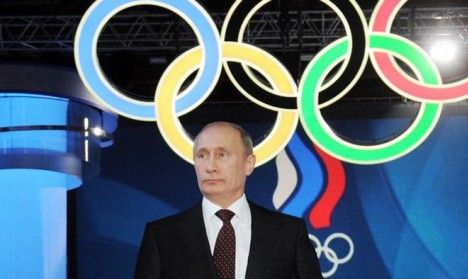
Putin About to Win Post-Olympics Invasion Competition

Putin Olympics
In August 1936 Adolf Hitler hosted the Olympics in Germany. In March 1938 he invaded Austria. He waited about 18 months.

In February 2014 Vladimir Putin hosted the Olympics in Russia. Just a few days after the closing ceremonies, Putin is hosting ousted Ukraine President Viktor Yanukovych. Putin is also engaging in rhetoric and military movements that reasonably look like a prelude to some sort of Russian intervention in the Crimea region of eastern Ukraine, or he is at least engaging in bullying and sabre rattling.

Putin is on his way to winning the gold for post-Olympics invasions, moving Hitler down to the silver. Well done.

The Gates Book and the Gates Speeches

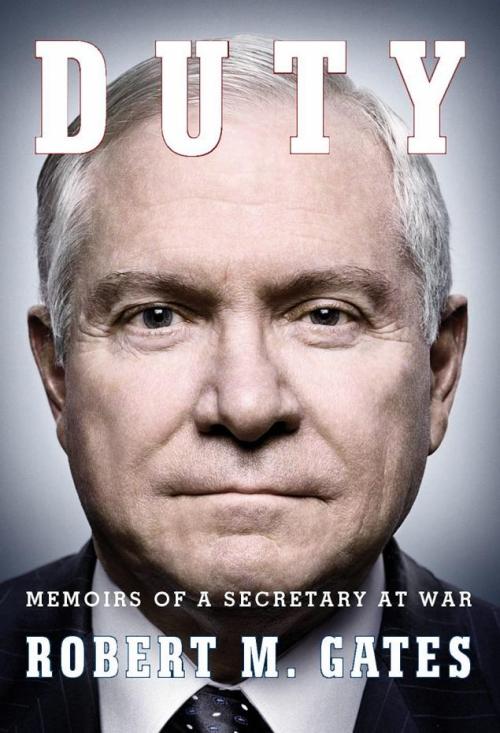
Duty
Former Secretary of Defense Robert M. Gates is about to release a memoir of his tenure under Presidents Bush and Obama. Provocative advance excerpts from Duty are now being released, and these explosive devices are anything but improvised.

Every news outlet, pundit and politician is already busy making points about President Obama, Vice President Biden, former Secretary of State Hillary Clinton and others, based on comments clipped from these excerpts, rather than having read the whole book. Even out of context, it is clear that Gates has formed some definite opinions based on working for and with these American leaders. That is anyone’s privilege, but particularly that of a man who spent forty-five years in laudable public service, much of it at the highest levels of government.

As always, though, opinion and criticism is a matter of perspective, that is, where the critic stands underlies what a critic sees and says.

You can read all the speeches that Gates delivered as Secretary of Defense. This is guaranteed not to be as titillating as reading or hearing about the “best parts” of Duty, but it might give you additional insight that will make the context of the book clearer.

Here, for example, are excerpts from remarks he made to the Heritage Foundation on May 13, 2008, when he was serving under President George W. Bush. (You can read the entire speech here) At that point, the Iraq war was five years old, only halfway to its conclusion. At that point, he had been Secretary of Defense for two years, and from that point, he would remain in that position under President Obama until July 2011.

But there is a more fundamental point that I will close with – and again, historical perspective is important. It is impossible to separate discussions of the “broken” Army following Vietnam – a conscription army – from the ultimate result of that conflict. At a congressional hearing last year, General Jack Keane, former Vice Chief of Staff of the Army, recounted the profound damage done to the Service’s “fiber and soul” by the reality of defeat in that war.

The risk of overextending the Army is real. But I believe the risk is far greater – to that institution, as well as to our country – if we were to fail in Iraq. That is the war we are in. That is the war we must win.

There it is, the context: Iraq was “the war we must win.” Gates’ insights into military matters is often brilliant and sensible, informed by his intelligence, experience and education. But on this point he candidly reveals a premise that for some colors everything else he offers. We must win Iraq because the failure to win would “break” the military the way that Vietnam did.

We did not win in Iraq, but technically, we did not lose. That current events in Iraq point to some devolution doesn’t really settle the question. That some U.S. Senators are calling for us to return to Iraq to avoid that loss or at least to avoid the appearance of futility is a partial reflection of exactly what Gates said.

We know that Gates’ personal critiques are based on close working relationships and observations. We also know, or should recognize, that those critiques are grounded in a worldview that others may not, very legitimately, share. If for Gates one of the measuring sticks is whether someone believes that Iraq had to be won, that measure may be skewed by genuine differences in informed opinion. One opinion is that as valorous as the service and sacrifice was, Iraq was a mistake, to be abandoned as prudently as possible; others might now say the same about Afghanistan. What Gates has to say about our leaders is certainly worth listening to, provided we pay equal attention to the mindset of the speaker.

Veterans Day and Busby Berkeley

Gold Diggers of 1933
Gold Diggers of 1933 may be the strangest of all classic movies—and the one that has the most to say about Veterans Day 2013.

It is classic because it is still entertaining: snappy, cynical dialogue; singing and dancing that may be a little out of style, but Busby Berkeley production numbers that are still wonders of the world, in part because they were actually performed and filmed on sound stages—no special effects or shortcuts. Your jaw will drop in astonishment and delight.

The strangeness is that framing this jollity is a movie about the Depression—not as a backdrop but about it, head on. Nowhere is this incongruity more obvious than the close of the movie. There is a penultimate mega-happy ending, where the three down-on-their-luck showgirls marry the three rich Boston bluebloods. But just then, there is one last song and production number: Remember My Forgotten Man.

In 1932, most veterans of World War I were out of work, as were so many others. In 1924 the government had authorized a longstanding practice of offering bonuses to those who served in war. This took the form of Certificates of Service, which matured over 20 years, and were to be paid in annual installments. But in the midst of the Depression, the veterans didn’t need that money down the road—they needed it right now. A movement for immediate redemption of the certificates gained momentum (the amount was tens of billions of dollars in today’s money). So in 1932, 43,000 marchers—veterans, their families and their supporters—gathered in Washington in what came to be called the Bonus Army, to demand cash payment. This was rebuffed. President Hoover and Republicans in Congress believed that this would require a tax increase, and that a tax increase would delay the recovery of the economy.

These were the Forgotten Men. As the tragic climax of a musical comedy, we watch a sordid street scene, narrated in song by Gingers Rogers. She is now surviving as a prostitute, married to a war veteran abandoned by the government and the nation. On stage we see the troops marching off in glory to cheers and flag-waving, only to return broken and injured, with no one to greet or comfort them—or even to remember them.

Remember My Forgotten Man

I don’t know if he deserves a bit of sympathy,
Forget your sympathy, that’s all right with me.
I was satisfied to drift along from day to day,
Till they came and took my man away.

Remember my forgotten man,
You put a rifle in his hand;
You sent him far away,
You shouted, “Hip, hooray!”
But look at him today!

Remember my forgotten man,
You had him cultivate the land;
He walked behind the plow,
The sweat fell from his brow,
But look at him right now!

And once, he used to love me,
I was happy then;
He used to take care of me,
Won’t you bring him back again?
‘Cause ever since the world began,
A woman’s got to have a man;
Forgetting him, you see,
Means you’re forgetting me
Like my forgotten man.

Maybe the musicals of the 1930s are old-fashioned and for a lot of people unwatchable. Maybe Busby Berkeley is just some campy choreographer whose over-the-top numbers are funny but incomparable to today’s digital masterpieces. Then again, maybe ending a popular entertainment with a bleak and uncompromising plea to our national conscience isn’t a bad idea—and never goes out of style. Remember Our Forgotten People, circa 2013.

There Is Still a War in Syria

Paris Hilton As Miley Cyrus
When there was less to people’s news and info lives—a newspaper or two a day, a half-hour network news show, a couple of news magazines a week—there were stories that rose to the top and stayed there, depending on importance. This didn’t mean that second-tier or frivolous stories didn’t get coverage or traction. People always loved celebrities, always loved hearing gossip, and when man bites dog, that’s always news. The down side was a certain provincialism that came with a narrow channel and less worldly attitudes: if millions were suffering in a place nobody heard of, with people unlike us, most readers and viewers might have no idea.

Now we can know anything, though we don’t know everything, or care about everything. This has left news leaders in a delicate position. There are going to be stories that appeal to a journalist sense and a humanist sense, that deserve at least regular mention, if not coverage that might only say, “And in the misery of this place or that war, it’s still happening, with no end in sight.” The dual problem is that people can find and figure that out for themselves, without a multi-billion dollar media enterprise telling them, and those media consumers might just as well pay attention to something else.

Which is why, unlike its predecessors World War II, Korean War and Vietnam War, the Iraq War was not the top story every day of its ten years. Which is why the current violence in Iraq is barely covered, a turning away that in part must come from some profound but unspoken embarrassment.

For a few moments a few months ago, Syria was a bright shiny object. Red lines, chemical warfare, threats of military action, etc. After some erratic movement, slight progress is being made. But that progress does not include ending the civil war.

The New York Times, still possibly the world’s greatest news enterprise, has an ongoing section devoted to the Crisis in Syria. The increasing numbers stupefy: 6.5 million Syrians displaced from their homes, more than 2 million of them seeking refuge in other countries. Now we hear about a cluster of polio cases among Syrian children.

We have plenty of our own problems, individually and as a country. Some of those are not small at all. But there is no polio. And the entire population of the state of Tennessee or Indiana has not had to leave their homes behind, dodging mayhem, unsure if they will ever return, or if there will be anything to return to.

We shouldn’t expect ourselves to be exhausted or crushed by the miseries of the world; that’s what keeping track of all the problems all the time would do. So yes, you can argue that it is important to learn from the news today that Paris Hilton has spent $5,000 on Halloween costumes so that she can dress up as Miley Cyrus. But for a change of pace, a regular, maybe daily, reminder that there is still a war in Syria might be of value.

Which Comes First: Evolution or Revolution?

Tea Party
The 20th century gave us two world wars and an atomic bomb, but the most interesting of the Big Events of the century may be the Russian Revolution. An inequitable and unbalanced way of life gave bloody way to abstract enlightened visions of a better world. The particular inequities ended, Russia moved into modern times, but competition for the “right” vision and ineradicable baser human natures seeking power and control led to decades of national and global troubles. “Meet the new boss, same as the old boss,” the Who said.

The Russian Revolution was grounded in a Marxist vision, which was in turn a Christian vision: a community on earth as it is in heaven, a brotherhood of people in which suffering and want would be softened, if not alleviated, by those who have a surplus of comfort and resource. It was Lennon, not Marx, who said, “You can say I’m a dreamer, but I’m not the only one. I hope someday you’ll join us, and the world will live as one.”

What went wrong?

What almost always goes wrong is that evolution and revolution are out of sync. It is easy to say that people and society should first evolve for a while, and then at some critical moment, all that’s needed is that next faster-than-evolution event to take it to the next level.

That turns out rarely to be the case.

Evolution is slow, erratic, and always engenders resistance and reaction. The cliché is that people and society fear change, but that is too easy. They fear the unknown. The expression “better the devil you know than the one you don’t” sums it up. It takes a substantial leap—you might say a leap of faith—the walk into a vision rather than remain in a lesser but familiar reality.

Revolution is both an attempt to make evolution more real and to create conditions where that evolution can continue more broadly and forcefully. But, as pointed out with the Russian experience, it doesn’t always work that way. Revolution is conflict, and conflict creates its own set of conditions sometimes antithetical to evolution. “Fighting for peace” is oxymoronic (some would say just plain moronic), but we have had to live through that. (Note the moment in Stanley Kubrick’s brilliant film Dr. Strangelove where the President scolds his arguing advisers, “Stop it. There’s no fighting in the War Room.”)

One of the exceptional examples of evolution and revolution working together is the American Revolution. It is one of the reasons it worked so well. The founders may have been the fathers of our country, but they were the children of the Enlightenment. That multi-faceted evolution—philosophical, political, economic, spiritual—had gone as far as it could go when it hit a wall. They believed that if they could break through, which did mean war, they could establish an enlightened nation. And, to an extent greater or lesser than some might like or expect, they did.

Evolution, or lack of it, is at the heart of some current American problems.

America is heir to two great evolutions, sometimes unrecognized, often distorted. Some of those obstructionists who fight today hark back to the patriots who were mad as hell and wouldn’t take it any more, and so upended a cargo of British tea. Others who claim this is a Christian nation have the idea that if alive today, Jesus would certainly choose to be an American.

Every American in these dynamic times is free to pick the evolution they aspire to. There are plenty to choose from. We do have two very big ones on the menu. If a rabid revolutionary patriot, you might choose to follow the path of a 21st century version of Enlightenment; you might even study the work of those founding Enlightenists—Jefferson, Madison, Monroe, et al.—for guidance. If a committed Christian it’s even easier. No slogging through the Federalist Papers, or even the whole Bible. Just read and read again the words of Jesus—the ones in red type—and consider just how much evolution he was asking for and expecting. Then again, maybe it’s not evolution he was talking about at all.

Syria: So This Was the Plan All Along

The Sting
The Syria strategy may have looked improvised or haphazard. It turns out that all along it was a master plan. A sting. A long con. Aimed at having Assad turn over his chemical weapons.

It began with President Obama’s mention of a chemical weapons red line two years ago. Even after there was evidence that chemical weapons were being used a year ago, it was too soon to make a play. And then it was time.

Everybody knew their part. The President beat the limited and unbelievably small war drums. The international community and Congress demurred, feigning reluctance. Most of all, John Kerry’s penchant for overtalking was the most valuable tool. One loose remark after another, and then the trap was sprung. He mentioned the “impossible” possibility that Assad would turn over his chemical weapons in a week. The State Department would pretend that this offhanded remark was not administration policy. Assad and his Russian handler took the bait. Very soon—maybe not a week but soon—Syrian chemical weapons would be in the hands of the international community, ready to be destroyed.

Back in the real world, here is another possible behind the scenes scenario.

John Kerry continued to say stuff, lots of stuff. Asked if there was any way for Assad to avoid a strike, Kerry did indeed mention turning over the chemical weapons in a week. It was an accident.

Vladimir Putin and Bashar al-Assad are power hungry political survivors, one more venal and voracious than the other. One or both of them sensed an opening.

It was Putin who may have said: This chemical weapons business is bad for all of us. The world knows you are our client state, and while I don’t mind defending you most of the time, this isn’t in either of our best interests. You can do whatever you want to hold on to power by conventional means; we will continue to help. The chemical weapons can be our trump card and it is time to play it. Once we come to the table, we can keep this negotiation going for months. As long as there is the appearance or the slightest possibility of progress, there will be no military action. Meanwhile, you can continue to pursue your war with no interference. I get to look a little bit like a hero and statesman—I don’t expect miracles—and you get to look like someone who isn’t averse to being part of civilized humanity. We both win.

The American scenario is already unfolding. While the administration is cautious about this latest development, it does claim that whatever good comes out of it will be due to their willingness to respond militarily. For the moment, it is hard to say who is more relieved, the President or Congress. The President may avoid having his request for authorization turned down. In Congress, those who continued to sit on the fence may be gloating, as a vote may be delayed or never taken.

And John Kerry? With all due respect, when you are smart and articulate, if you keep talking long enough, something good is bound to happen.