Bob Schwartz

Category: Veterans

Ebola Stress Test

Kaci Hickox

Stress tests. We see them in medicine, in banking, in construction.

How well will the patient’s heart perform when he is on a treadmill? How sound are a bank’s finances in the worst case scenario? How will building materials stand up under maximum pressure?

Public crises are stress tests. So far, Ebola is the latest demonstration of the tendency for our civic infrastructure to crack—or show signs of it—under pressure.

Quietly, where no one can hear, some leaders and citizens are probably worried that if this was a real Ebola outbreak in the U.S., and not the thankfully tiny and so far isolated problem it is, we would fall apart. Utterly fail the test.

The latest episode concerns this weekend’s rapid response by multiple states to Craig Spencer, a doctor returning from West Africa and becoming sick with Ebola in New York City last week. In addition to New York and New Jersey, other states are now or may be requiring returning health care workers to be quarantined.

There is a problem: none of these states appear to have thought through any of it—most especially the practical aspects of whisking someone coming home from a heroic medical mission into isolation that is supposed to be comfortable, suitable, sensible, and sensitive under the circumstances. It now seems the scenario is act first, plan later.

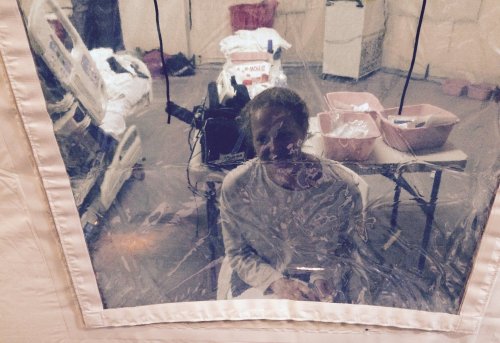
Nurse Kaci Hickox is the first one caught in this trap. She is not sick and is showing no symptoms. Arriving at Newark Airport Friday night, she was taken to a tent behind a hospital, with a portable toilet, no shower, no television, and little cellphone reception. She castigated all involved, particularly Governor Chris Christie, who said she had symptoms and was sick, when she hadn’t and wasn’t. She plans a federal lawsuit challenging the quarantine.

“I also want to be treated with compassion and humanity, and I don’t feel I’ve been treated that way in the past three days. I think this is an extreme that is really unacceptable. I feel like my basic human rights have been violated.”

(Update: Governor Christie has relented, allowing her to return home to Maine, where, if you read between the lines, the message is that it will then be Maine’s problem to monitor her and where, if something goes wrong, it will be on their head.)

We seem to have forgotten how to solve problems, enthralled by our own voice either positing solutions, making points, or complaining. Or maybe it is that this is America, with a history of being bigger, stronger, smarter, and most of all, righter, in all circumstances. Even if that was ever true, politics—in the big sense of privileging positions over effective and thoughtful answers—has poisoned that well. Worthy questions and deliberate solutions are rejected out of hand because of the source, because they don’t fit some preconceived notion or program, or simply because they won’t help win or not lose elections.

Whether or not quarantine of heroic Ebola care givers returning from West Africa is a good idea, it is certainly a good idea to evaluate and plan exactly how you are going to practically handle it. Maybe, though, we shouldn’t be at all surprised. In recent years we did, after all, send hundreds of thousands of troops abroad, and when the promised rewards for their heroic service came due, we seemed unable to fulfill and, worse, were suddenly unenthusiastic about keeping the promise anyway.

If this is a war on Ebola, we better make sure we are committed to those who are sacrificing, part of which is actual planning and resourcing, not ignorant and reflexive pontificating and politicking. So far, this is looking too much like some of our other recent wars. Maybe we can use this as an opportunity to get better and be better at it.

VA Health Crisis: Listen to IAVA

VA IG Report

We should listen to the Iraq and Afghanistan Veterans of America about this VA health system crisis.

As the name implies, IAVA represents the latest generation of American war veterans. They are in some ways the most attuned to the current realities and sensibilities of veterans’ issues in 2014. Not because they have been around the longest, but because they are native to the way things work, or don’t, here in the early 21st century in America.

Those realities regarding the health care crisis in the VA are shocking to some, but come as no surprise to those who have watched it happening, including Congress (both parties) and the President.

Is it fixable? What won’t fix it is political posturing, handwringing, or even the delayed but imminent departure of VA Secretary Shinseki.

What will fix it? Good policy well executed, without excuses or cover up. The IAVA can help with that.

In the wake of yesterday’s Inspector General Report about the Phoenix VA health system, IAVA CEO and Founder Paul Rieckhoff said:

The new IG report on the Phoenix VA is damning and outrageous. It also reveals the need for a criminal investigation. Each day we learn how awful things are in Phoenix and across the country. The VA’s problems are broad and deep – and President Obama and his team haven’t demonstrated they can fix it. As one of only two combat veterans, Senator John McCain’s call for Secretary Shinseki’s resignation is particularly impactful…

Today’s report makes it painfully clear that the VA does not always have our veterans’ backs. Even before this report came out, IAVA members were losing confidence in Secretary Shinseki and President Obama. At Memorial Day events across the nation, our members voiced outrage, anger, and impatience at the growing VA scandal. This new report only increases the belief that the promise to veterans has been broken. We are sharing this report now with our members and seeking their reaction. In the coming days, we will share the voices of our members with the President, VA leaders and those in Congress.

In the IAVA 2014 Policy Agenda, the VA health system was just one of a number of initiatives offered for consideration. On that score, IAVA recommends this (excerpted):

I. Establish a Presidential Commission to end the VA claims backlog.

II. Transform the Veterans’ Benefits Administration’s (VBA) adversarial culture…

III. Reform VA’s work credit and productivity evaluation system for claims processor….

IV. Outline the VA’s responsibility about the requirements to substantiate a claim….

V. Adopt the “treating physician rule” for medical evaluations for compensation and pension…

VI. Require appeals form to be sent along with the Notice of Decision letters in order to expedite the appeals process.

VII. Evaluate the Segmented Lanes work initiative to continually assess whether it is meeting the goals of fast tracking…

VIII. Report the intake of new compensation and pension claims on the Monday Morning Workload Report.

IX. Report separated statistics on the intake and processing of supplemental and original claims in the Monday Morning Workload Report…

XIII. Continue to engage veteran stakeholders in updating the VA Schedule for Rating Disabilities (VASRD).

XIV. Require the VA to accept a PTSD diagnosis provided from a qualified private medical provider.

X. Establish a model to accurately project the claims workload and the resource and staffing requirements needed to meet the demand.

XI. Make all disability benefits questionnaires available to private medical providers.

XII. Simplify notification letters to provide easily digestible, specific and clear information about the reasons for rating decisions.

XV. Allow the VA to incentivize private medical providers to furnish medical health records to the VA for processing.

XVI. Clarify and report accuracy ratings for each regional VA….

This is an agenda, and if the President and the good people of Congress want to adjust or add, that is their prerogative and duty. But you have to start somewhere, with something on the table, and this is a good place for that. If these warriors are smart enough and capable enough and honorable enough to fight our wars, they are surely able to suggest the smart, honorable, and capable ways of treating them when those wars are over.

Veterans Day and Busby Berkeley

Gold Diggers of 1933
Gold Diggers of 1933 may be the strangest of all classic movies—and the one that has the most to say about Veterans Day 2013.

It is classic because it is still entertaining: snappy, cynical dialogue; singing and dancing that may be a little out of style, but Busby Berkeley production numbers that are still wonders of the world, in part because they were actually performed and filmed on sound stages—no special effects or shortcuts. Your jaw will drop in astonishment and delight.

The strangeness is that framing this jollity is a movie about the Depression—not as a backdrop but about it, head on. Nowhere is this incongruity more obvious than the close of the movie. There is a penultimate mega-happy ending, where the three down-on-their-luck showgirls marry the three rich Boston bluebloods. But just then, there is one last song and production number: Remember My Forgotten Man.

In 1932, most veterans of World War I were out of work, as were so many others. In 1924 the government had authorized a longstanding practice of offering bonuses to those who served in war. This took the form of Certificates of Service, which matured over 20 years, and were to be paid in annual installments. But in the midst of the Depression, the veterans didn’t need that money down the road—they needed it right now. A movement for immediate redemption of the certificates gained momentum (the amount was tens of billions of dollars in today’s money). So in 1932, 43,000 marchers—veterans, their families and their supporters—gathered in Washington in what came to be called the Bonus Army, to demand cash payment. This was rebuffed. President Hoover and Republicans in Congress believed that this would require a tax increase, and that a tax increase would delay the recovery of the economy.

These were the Forgotten Men. As the tragic climax of a musical comedy, we watch a sordid street scene, narrated in song by Gingers Rogers. She is now surviving as a prostitute, married to a war veteran abandoned by the government and the nation. On stage we see the troops marching off in glory to cheers and flag-waving, only to return broken and injured, with no one to greet or comfort them—or even to remember them.

Remember My Forgotten Man

I don’t know if he deserves a bit of sympathy,
Forget your sympathy, that’s all right with me.
I was satisfied to drift along from day to day,
Till they came and took my man away.

Remember my forgotten man,
You put a rifle in his hand;
You sent him far away,
You shouted, “Hip, hooray!”
But look at him today!

Remember my forgotten man,
You had him cultivate the land;
He walked behind the plow,
The sweat fell from his brow,
But look at him right now!

And once, he used to love me,
I was happy then;
He used to take care of me,
Won’t you bring him back again?
‘Cause ever since the world began,
A woman’s got to have a man;
Forgetting him, you see,
Means you’re forgetting me
Like my forgotten man.

Maybe the musicals of the 1930s are old-fashioned and for a lot of people unwatchable. Maybe Busby Berkeley is just some campy choreographer whose over-the-top numbers are funny but incomparable to today’s digital masterpieces. Then again, maybe ending a popular entertainment with a bleak and uncompromising plea to our national conscience isn’t a bad idea—and never goes out of style. Remember Our Forgotten People, circa 2013.

The Wait We Carry

The Wait We Carry
IAVA has been at the forefront of modern veterans advocacy—something desperately needed in the face of modern veterans benefit challenges (that is, much talk, little action).

The latest of these advocacy tools is dazzlingly innovative and personalizing. Here is the IAVA introduction:

This is the true face of the backlog. Introducing: The Wait We Carry.

By now, you’ve seen the big numbers behind the VA disability benefits backlog — over 565,000 vets waiting too long to get their claims resolved. But it’s not enough to talk about the numbers. We wondered: what are those vets going through? How is their wait for benefits affecting them and their families?

We asked vets to tell us about their experiences while waiting for their benefits. Their stories blew me away. I knew immediately that I wanted to do something that would give a voice to their struggle. Harnessing the power of technology, we have created a state-of-the-art data visualization tool to bring those stories to the world. It’s called The Wait We Carry.

The Wait We Carry is an interactive way for anybody to engage with the folks waiting for their benefits through their stories. There are several different search options so you can find a specific story, or you can simply take your time browsing through all of the stories. It drives our point home that there isn’t just one backlog experience. The weight of the wait is different for everybody.

The power of this tool is that it holds everybody accountable for the unacceptably long wait times. That’s why it’s crucial that this thing goes viral.

I’ve been working on this for months, and I am certain that The Wait We Carry is powerful enough to end the VA backlog for good. Make sure you check it out today — thewaitwecarry.org

Thanks,

Jacob Worrell
OIF Veteran, US Army 2004-2007
Product Strategy Associate
Iraq and Afghanistan Veterans of America (IAVA)

Go Silent on Memorial Day

Go Silent
Iraq and Afghanistan Veterans of America (IAVA) this week launched a new campaign asking all Americans to “Go Silent” this Memorial Day in honor of all those who have made the ultimate sacrifice. The “Go Silent” campaign encourages Americans to pledge at IAVA.org to pause and be silent for a full minute at 12:01 p.m. EDT on Memorial Day, Monday, May 27.

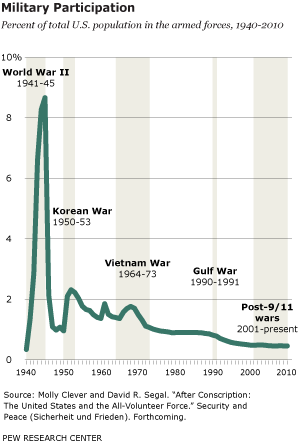
The Pew Research Center has reported extensively on the Military-Civilian Gap:

America’s post-9/11 wars mark the longest period of sustained combat in the nation’s history – and never before has America waged war with so small a share of its population carrying the fight.

Military Participation

For more about IAVA.

To donate to IAVA.