Who wants to be a prophet? Preaching and predicting Making enemies of friends Exhausted and enraged By the constant gloom Dying alone in the end. Except Elijah. Attending dinner parties Seated in a special chair As honored guest Surrounded by admirers Drunk on wine Leaving bleak visions behind Never dying. Open the door.
It is obvious to feature Pink Floyd’s Dark Side of the Moon for an eclipse soundtrack. The final track is called Eclipse so yeah, duh. And of course it is an awesome record. But listing it is so lazy that it hurts.
Instead I started today with Donovan and his song Sun. Donovan has 1.7 million Spotify monthly listeners so he isn’t quite as forgotten as some others. He is still performing and recording, and he long ago brought spirit and the spirit of the times to popular music in lyrical and listenable ways.
Sun is only one of the many Donovan songs that includes the sun. His most famous hit song (#1 in America) is Sunshine Superman:
Sunshine came softly through my a-window today Could’ve tripped out easy but I’ve changed my ways
There are other examples of sun-related songs by Donovan. But Sun is the one for today.
Sun, the earth is turning It’s turning round And love is the axis And they chop the tree down The proud trees are standing As green as the sky As green as the greenstone That makes seabirds fly
Ovens are baking And rivers run dry As dry as the ocean On the wings of a fly Go if you’re able And come if you can Life’s very unstable It’s built upon sand
Well, Marianne, set the table An old friend I see Marianne, fetch the paper There’s two for tea
Among Freud’s most controversial and often rejected concepts is what he termed Todestrieb—death drive—also fashioned as Thanatos—death instinct. Death drive or instinct, he proposes that as people we aim to reduce psychic tension to the lowest possible point, that is, death. Supposedly the drive is first directed inward as a self-destructive tendency and later turned outward in the form of the aggressive behavior. It stands opposed to the life instinct, Eros.
A total solar eclipse is a rare and spectacular event that has fascinated and enraptured humankind forever. The rarity of the spectacle is alone enough to explain the interest. Images won’t do. Just like attending a concert by a favorite performer is so much more than remotely listening and watching. Being there in the flesh as a participant is needed. The difference between pornography and sex.
But maybe more is at play. Maybe watching the sun go out, even for minutes, means something, or everything. Maybe, as R.E.M. sings, “It’s the end of the world as we know it and I feel fine.” Maybe we want to see it and, if possible, be there when it happens.
Freud can no longer help us with this because, death drive or not, he succumbed to the death reality eighty-five years ago in 1939. (Note that he missed seeing a total eclipse that happened just a couple of weeks later.)
There is another more uplifting explanation. Maybe we want to experience the sun going out so we can experience the sun coming back to life. People don’t want to watch the eclipse—they want to watch the eclipse ending. They want the victory of eros. They want to be there for that. Who can blame them?
”When are we going to learn that controlling something does not take it out of the minds of people?” Rosko
I was going to write today about radio. How it was a social medium for a generation, how formative it was for me.
I listened today to recordings of radio shows and personalities that I listened to growing up in New York, first thing in the morning to last thing doing homework and falling asleep. Today I touched base with some of the radio stations (found at http://www.nyradioarchive.com).
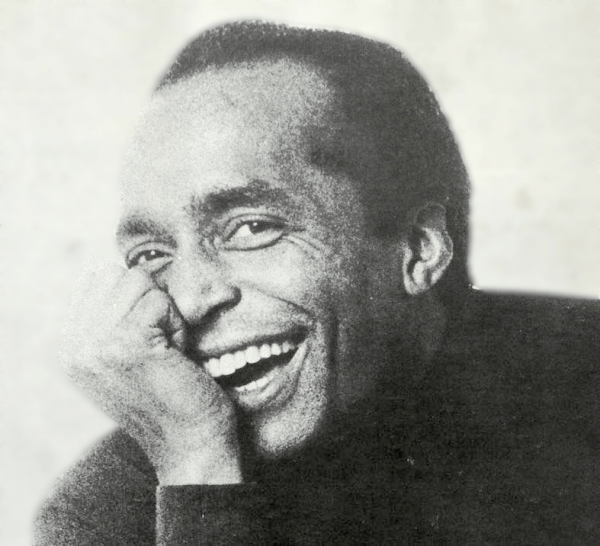
One standout station was WNEW-FM. In the late 1960s, it reformed from mainstream music to progressive anything and everything. The station personalities changed too. Among them was Alison Steele, the Nightbird. And then there was Rosko.
It wasn’t just Rosko’s inimitable voice at night. It was his sensibility, musical and otherwise. As the New York Times obituary below reflects.
Listen to an hour of Rosko from November 27, 1967. If this is distant history for you, listen without prejudice, and you will hear great music and a radically humane radio personality.
Rosko Is Dead By Jon Pareles New York Times Aug. 6, 2000
William Roscoe Mercer, known for decades to New York radio listeners simply as Rosko, died on Tuesday. He was 73 and lived in New York.
The cause was cancer, according to his daughter Valerie J. Mercer.
Mr. Mercer was the first black news announcer on WINS in New York and, as Rosko, the first black disc jockey on KBLA in Los Angeles. He went on to become a pioneer of free-form FM radio in New York City. On WOR-FM in 1966 and on WNEW-FM from 1967 to 1970, his calm, husky voice with its hint of Southern drawl and his wide-ranging programming made him an authoritative companion amid the musical ferment of the late 1960’s.
He delved into rock, soul, folk and jazz; he read poetry and conversed with his unseen listeners in almost fatherly monologues. In one set during the late 1960’s, he recited antiwar poetry by Yevgeny Yevtushenko to the Mormon Tabernacle Choir singing the Lord’s Prayer, then played Richie Havens’s antiwar song ”Handsome Johnny” as a lead-in to a news report about bombing in Vietnam.
Mr. Mercer was born on May 25, 1927, in New York City and attended a Catholic boarding school in Pennsylvania as a charity student. His first jobs were as a government clerk and then a men’s-room attendant at the Latin Casino in Cherry Hill, N.J. He began his radio career as a jazz disc jockey at WHAT in Chester, Pa., moved to WDAS in Philadelphia, and then to WBLS in New York, playing jazz in live broadcasts from Palm Cafe in Manhattan. He played rhythm-and-blues on WNJR in Secaucus, N.J., in the late 1950’s, but after refusing to cross a picket line at the station during an effort to create a union for disc jockeys, he was blacklisted for six months.
He became the first black announcer for WINS, and was then hired as a disc jockey by KDIA in Oakland, Calif. Radio station KGFJ in Los Angeles sought to hire him away, leading to a precedent-setting lawsuit that changed the way disc-jockey contracts were written. For a time in the early 1960’s, Rosko was heard live on KGFJ and on tape in Oakland six nights a week; he spent the seventh in Oakland, live on KDIA. Then he was hired by KBLA, playing rock and rhythm-and-blues at a formerly all-white station.
He returned to New York to work at WBLS. In 1966, the Federal Communications Commission required radio stations to broadcast separate content on AM and FM stations, and rock music beyond the Top 40 rushed to fill the new air time. The disc jockeys Murray the K and Scott Muni, along with Rosko, moved to WOR-FM to introduce a new style, with disc jockeys freely choosing the music and speaking conversationally to listeners.
But in October 1967, WOR-FM decided to change to a restrictive format. On his last show, without warning the station’s management, Rosko spoke for five minutes about why he was resigning, saying, ”When are we going to learn that controlling something does not take it out of the minds of people?” and declaring, ”In no way can I feel that I can continue my radio career by being dishonest with you.” He added that he would rather return to being a men’s-room attendant.
But within the month, he was hired for an evening shift by WNEW-FM, which picked up WOR-FM’s format; soon afterward, WNEW-FM also hired Mr. Muni. Rosko stayed at WNEW until 1970, then moved to France for five years; there, he worked for the Voice of America. He returned to the United States and was heard during the 1980’s on the dance-music station WKTU in New York; he also did voice-over work for commercials. Most recently, his voice was heard in announcements for CBS Sports. In 1992, when he learned he had cancer, he refused chemotherapy, turning instead to alternative medicine.
You say this is what God wants God told you Or told someone who heard And told you Told someone Who wrote it down Figured out That this is what God wants. I am no more than Moses or others But no less. Here is what I read and heard And write. “Bereshit bara elohim et hashamayim v’et ha’aretz. V’ha’aretz hatah tohu v’bohu.”* In the beginning was tohu and bohu, a formless wasteland. All the rest is commentary For us not God to write create destroy. Write we did Create we did Destroy we did And do. This is what we want.
It is the day after April Fools’ Day. Maybe that means that today we can return to our normal level of wisdom. Or maybe we should conclude that every day, more or less, is a fools day.
I have written before about the legendary Fools of Chelm (here and here) also known as the Wise Men of Chelm, because that is how they saw themselves.
There are many stories and many versions. No one has done it better than Isaac Bashevis Singer. The Fools of Chelm & the Stupid Carp can be found in his Stories for Children.
The story deserves to be read whole, as does all of Singer. My attempts to excerpt it failed. So here is the entire story, demonstrating just how “wise” the sages of Chelm really were. And us too. Here on April Fools’ Day, Part 2.
In Chelm, a city of fools, every housewife bought fish for the Sabbath. The rich bought large fish, the poor small ones. They were bought on Thursday, cut up, chopped, and made into gefilte fish on Friday, and eaten on the Sabbath.
One Thursday morning the door opened at the house of the community leader of Chelm, Gronam Ox, and Zeinvel Ninny entered, carrying a trough full of water. Inside was a large, live carp.
“What is this?” Gronam asked.
“A gift to you from the wise men of Chelm,” Zeinvel said. “This is the largest carp ever caught in the Lake of Chelm, and we all decided to give it to you as a token of appreciation for your great wisdom.”
“Thank you very much,” Gronam Ox replied. “My wife, Yente Pesha, will be delighted. She and I both love carp. I read in a book that eating the brain of a carp increases wisdom, and even though we in Chelm are immensely clever, a little improvement never hurts. But let me have a close look at him. I was told that a carp’s tail shows the size of his brain.”
Gronam Ox was known to be nearsighted, and when he bent down to the trough to better observe the carp’s tail, the carp did something that proved he was not as wise as Gronam thought. He lifted his tail and smacked Gronam across the face.
Gronam Ox was flabbergasted. “Something like this never happened to me before,” he exclaimed. “I cannot believe this carp was caught in the Chelm lake. A Chelm carp would know better.”
“He’s the meanest fish I ever saw in my life,” agreed Zeinvel Ninny.
Even though Chelm is a big city, news traveled quickly there. In no time at all the other wise men of Chelm arrived at the house of their leader, Gronam Ox. Treitel Fool came, and Sender Donkey, Shmendrick Numskull, and Dopey Lekisch. Gronam Ox was saying, “I’m not going to eat this fish on the Sabbath. This carp is a fool, and malicious to boot. If I eat him, I could become foolish instead of cleverer.”
“Then what shall I do with him?” asked Zeinvel Ninny.
Gronam Ox put a finger to his head as a sign that he was thinking hard. After a while he cried out, “No man or animal in Chelm should slap Gronam Ox. This fish should be punished.”
“What kind of punishment shall we give him?” asked Treitel Fool. “All fish are killed anyhow, and one cannot kill a fish twice.”
“He shouldn’t be killed like other fish,” Sender Donkey said. “He should die in a different way to show that no one can smack our beloved sage, Gronam Ox, and get away with it.”
“What kind of death?” wondered Shmendrick Numskull. “Shall we perhaps just imprison him?”
“There is no prison in Chelm for fish,” said Zeinvel Ninny. “And to build such a prison would take too long.”
“Maybe he should be hanged,” suggested Dopey Lekisch.
“How do you hang a carp?” Sender Donkey wanted to know. “A creature can be hanged only by its neck, but since a carp has no neck, how will you hang him?”
“My advice is that he should be thrown to the dogs alive,” said Treitel Fool.
“It’s no good,” Gronam Ox answered. “Our Chelm dogs are both smart and modest, but if they eat this carp, they may become as stupid and mean as he is.”
“So what should we do?” all the wise men asked.
“This case needs lengthy consideration,” Gronam Ox decided. “Let’s leave the carp in the trough and ponder the matter as long as is necessary. Being the wisest man in Chelm, I cannot afford to pass a sentence that will not be admired by all the Chelmites.”
“If the carp stays in the trough a long time, he may die,” Zeinvel Ninny, a former fish dealer, explained. “To keep him alive we must put him into a large tub, and the water has to be changed often. He must also be fed properly.”
“You are right, Zeinvel,” Gronam Ox told him. “Go and find the largest tub in Chelm and see to it that the carp is kept alive and healthy until the day of judgment. When I reach a decision, you will hear about it.”
Of course Gronam’s words were the law in Chelm. The five wise men went and found a large tub, filled it with fresh water, and put the criminal carp in it, together with some crumbs of bread, challah, and other tidbits a carp might like to eat. Shlemiel, Gronam’s bodyguard, was stationed at the tub to make sure that no greedy Chelmite wife would use the imprisoned carp for gefilte fish.
It just so happened that Gronam Ox had many other decisions to make and he kept postponing the sentence. The carp seemed not to be impatient. He ate, swam in the tub, became even fatter than he had been, not realizing that a severe sentence hung over his head. Shlemiel changed the water frequently, because he was told that if the carp died, this would be an act of contempt for Gronam Ox and for the Chelm Court of Justice. Yukel the water carrier made a few extra pennies every day by bringing water for the carp. Some of the Chelmites who were in opposition to Gronam Ox spread the gossip that Gronam just couldn’t find the right type of punishment for the carp and that he was waiting for the carp to die a natural death. But, as always, a great disappointment awaited them. One morning about half a year later, the sentence became known, and when it was known, Chelm was stunned. The carp had to be drowned.
Gronam Ox had thought up many clever sentences before, but never one as brilliant as this one. Even his enemies were amazed at this shrewd verdict. Drowning is just the kind of death suited to a spiteful carp with a large tail and a small brain.
That day the entire Chelm community gathered at the lake to see the sentence executed. The carp, which had become almost twice as big as he had been before, was brought to the lake in the wagon that carried the worst criminals to their death. The drummers drummed. Trumpets blared. The Chelmite executioner raised the heavy carp and threw it into the lake with a mighty splash.
A great cry rose from the Chelmites: “Down with the treacherous carp! Long live Gronam Ox! Hurrah!”
Gronam was lifted by his admirers and carried home with songs of praise. Some Chelmite girls showered him with flowers. Even Yente Pesha, his wife, who was often critical of Gronam and dared to call him fool, seemed impressed by Gronam’s high intelligence.
In Chelm, as everywhere else, there were envious people who found fault with everyone, and they began to say that there was no proof whatsoever that the carp really drowned. Why should a carp drown in lake water? they asked. While hundreds of innocent fish were killed every Friday, they said, that stupid carp lived in comfort for months on the taxpayers’ money and then was returned sound and healthy to the lake, where he is laughing at Chelm justice.
But only a few listened to these malicious words. They pointed out that months passed and the carp was never caught again, a sure sign that he was dead. It is true that the carp just might have decided to be careful and to avoid the fisherman’s net. But how can a foolish carp who slaps Gronam Ox have such wisdom?
Just the same, to be on the safe side, the wise men of Chelm published a decree that if the nasty carp had refused to be drowned and was caught again, a special jail should be built for him, a pool where he would be kept prisoner for the rest of his life.
The decree was printed in capital letters in the official gazette of Chelm and signed by Gronam Ox and his five sages—Treitel Fool, Sender Donkey, Shmendrick Numskull, Zeinvel Ninny, and Dopey Lekisch.
Translated by the author and Ruth Schachner Finkel
Rhetoric doesn’t end war and save lives. Whatever the rhetoric he and his administration announce, Biden continues to arm a nation pursuing a questionable war strategy that is killing thousands. Reported just yesterday:
US reportedly approves transfer to Israel of bombs and jets worth billions Sources say weapons package authorized even as Washington expresses public concern over anticipated offensive in Rafah Friday, March 29, 2024
The US in recent days authorized the transfer of billions of dollars worth of bombs and fighter jets to Israel, two sources familiar with the effort said on Friday, even as Washington publicly expresses concerns about an anticipated Israeli military offensive in Rafah.
The new arms packages include more than 1,800 MK-84 2,000lb bombs and 500 MK-82 500lb bombs, said the sources, who confirmed a report in the Washington Post.
Whether you lived through the Vietnam War or know it only as history, this is seeming oppressively and depressingly familiar, not just as an unnecessary tragedy, but as a political nightmare.
LBJ accomplished a lot of important things for America, but his stubborn support of the war in Vietnam doomed his reelection in 1968, leading him to drop out of the race, and leading to the horrors of the Nixon White House.
Biden has also accomplished a lot of important things for America. But he already goes into the 2024 election with widespread questions about his age. Now added to that is his stubborn support, despite his rhetoric, for a war that is already tragic and a situation that will not look better by the time of the election.
The analogy isn’t perfect. But as the saying goes, history may not repeat itself, but it rhymes. This is looking a lot like Biden’s Vietnam. And as terrible as the Nixon presidency was, the Trump regime would be more evil and dangerous. Is there still time for Biden to do more than talk, to stand up and use American military support as leverage? Even if he does, is it too late to make a difference in what is almost certainly a toss-up election, with Biden in the eyes of some voters—especially some Democratic voters—a villain?
You know or should that Dolly Parton has written and recorded many great country and pop songs, including Jolene:
Jolene please don’t take my man Jolene please don’t take him just because you can
You know or should that Miley Cyrus, another talented artist, is Dolly’s goddaughter, who has performed a number of her godmother’s songs, including Jolene.
You may guess that Beyonce is not related in that way, but did just release her version of Jolene.
How do they compare? You be the judge. Just for the record, my order of preference is: Dolly, Miley and Beyonce. Your results may vary.
There are now as many musical genres and sub-genres as stars in the sky.
Speaking of stars, we cannot escape learning that Beyonce has a new album that is identified by many as country music. Her PR folks are stressing that it isn’t a country album, it’s a Beyonce album, all the while stirring the genre pot for maximum coverage.
The best and most creative pop music frequently crosses genres. The individual Beatles grew up loving to listen to everything—music hall, R&B, Little Richard, rockabilly, country, rock, etc.—and turned that love into a lasting catalog of ever-listenable songs. (If you want pure country, listen to the Beatle’s I Don’t Want to Spoil the Party below.) Years later, Kurt Cobain put his love of the Beatles into the strangely melodic sound of grunge.
George Michael had something else in mind when he titled his 1990 album Listen Without Prejudice. But that message also applies to musical silos, or for that matter cultural silos of all kinds. When you listen, or read, or watch, pay less attention to the tags and more attention to the actual work and its qualities for you. It isn’t a crime to love a particular track or artist. It isn’t a crime to not love a particular track or artist. Just listen to it on its own terms, whatever it’s called. Otherwise you might miss something.